Meaning at a glance
Rose cut engagement ring durability depends less on the name “rose cut” and more on four verifiable factors: the gemstone’s inherent toughness, the quality and disclosures for any treatments, the stone’s proportions and girdle, and the setting style and metalwork. Buyers should seek written disclosures, professional inspection for chips or weak girdles, choose protective settings for softer materials, and budget for routine checks and possible repair—only a qualified jeweler or gemological laboratory can confirm treatment, origin or structural weaknesses reliably.
Direct answer — short and practical
Short answer: rose cut engagement ring durability is conditional. The cut itself—typically a low, domed crown with multiple triangular facets and a flat or slightly concave base—changes how a stone sits and how forces are distributed, but it does not by itself determine long-term durability. Durability for daily wear depends primarily on the gemstone’s material toughness, any treatments performed, the presence of thin girdles or chips, and the choice of setting and metalwork. For a safe purchase you should obtain written seller disclosures, request a professional inspection of the stone and setting, and understand that only a qualified jeweler or gemological laboratory can verify treatment, structural weaknesses, or authenticity.
What a rose cut is and why its shape matters to wear
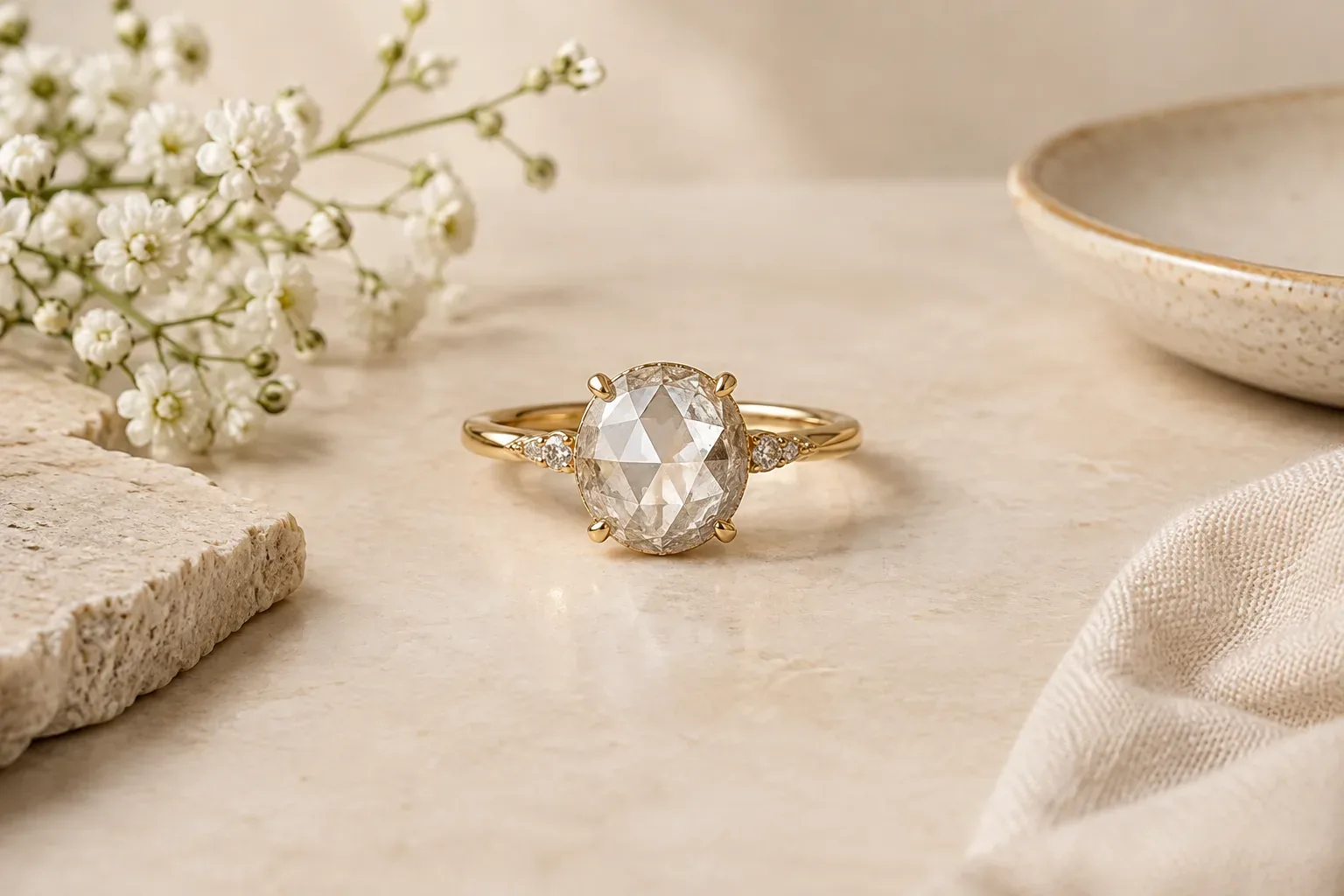
In trade terms, a rose cut describes a faceting style rather than a single gem material. The typical rose cut has a broad, flat base and a relatively low, domed crown made up of triangular facets that meet at a point or small table. That profile generally produces a softer, antique-style sparkle and often sits lower above the finger than a tall brilliant-cut stone.
How this geometry affects wear is straightforward: a lower profile can reduce the likelihood of catching on clothing or hair compared with higher, more exposed cuts. At the same time, a large, flat table and shallow pavilion change how impacts and pressure are transmitted through the stone; depending on the specific stone material, that can alter the risk of chips or fractures. Because those mechanical effects vary with gemstone type, girdle quality, and setting, the cut alone is not a reliable predictor of toughness.
Historical evidence and cultural notes (what the approved sources support and what they do not)
The approved contemporary sources for this article focus on consumer questions, treatments, and market trends rather than primary historical scholarship on specific cuts. The Gemological Institute of America emphasizes that treatments, disclosures, detectability and special care create distinct consumer questions for gemstones, which is directly relevant to durability and purchasing decisions. Jewelers Mutual and Imaginaire Digital document modern market behavior and preferences, such as demand for versatile, craft-focused engagement styles and online search patterns, but they do not provide a detailed historical chronology of the rose cut.
Antique and historical attributions commonly encountered in the trade—associating rose cuts with earlier European periods such as Georgian or Victorian jewelry—are part of gemological and collector literature but are not established by the approved sources used here. If historical origin, provenance, or period attribution matters to you, have the piece examined and documented by a qualified appraiser or a recognized gemological laboratory, because those organizations are the reliable authorities for period dating and provenance.
Documented meanings versus modern personal interpretations
Documented historical meanings tied specifically to the rose cut are not cited in the approved evidence. Historical symbolism is often inferred from the contexts in which a cut was fashionable, but such inferences require primary historical references or period documentation to confirm.
Modern interpretations are common and personal: many people choose a rose cut engagement ring for its vintage, subtle sparkle and understated silhouette, or because they prefer a softer, romantic aesthetic. Those are contemporary, subjective meanings and are distinct from any historical claims about symbolism; they are valid personal reasons for choosing the cut, but they do not affect the stone’s physical durability.
How the rose cut appears in engagement jewelry
In modern engagement rings the rose cut often appears in single-stone solitaires, cluster arrangements, and halo settings. Jewelers sometimes use rose-cut center stones with small accent melee to preserve a vintage look while adding brightness. Settings that protect the edge—bezel settings or secure low prongs—are a frequent choice because they reduce exposure to knocks while maintaining the period aesthetic.
Designers and customers also pair rose cuts with colored gemstones to emphasize a softer luster rather than the high brilliance of a modern brilliant cut diamond. Market trends support diverse consumer demand for such stylistic choices: Jewelers Mutual reports that modern consumers value craftsmanship, versatility and gender-neutral styling, and Imaginaire Digital shows strong ongoing search demand for engagement rings and related categories in the UK market.
Durability decision criteria — what really determines risk
When assessing rose cut engagement ring durability, evaluate four verifiable factors. First, the gemstone material: inherent hardness and toughness determine how well a stone resists scratches, chips, and breaks. Second, treatments and enhancements: some treatments affect durability and require disclosure; the Gemological Institute of America emphasizes that treatments and detectability raise consumer questions about care and long-term performance. Third, the stone’s condition and proportions: thin girdles, pre-existing chips, or internal fractures increase the chance of future repair. Fourth, the setting and metalwork: prong count and quality, bezel protection, and how low the stone sits all affect vulnerability to snagging and impact.
These criteria give you a practical checklist to weigh trade-offs. A harder gemstone set low in a protective bezel will typically survive daily wear better than a softer stone mounted in high, delicate prongs. Conversely, if you choose a softer material to achieve a specific look, expect to trade some long-term resilience for that appearance and plan appropriate care and insurance.
Practical selection and gifting guidance
Ask the seller for written disclosure of any treatments, whether the stone is natural or lab-grown, and any known history of damage or repair; the Federal Trade Commission stresses that consumers need clear distinctions among natural, lab-created, treated, and imitation materials and written seller disclosures. Request photographs or magnified images showing the girdle and pavilion, and ask for a third-party inspection or appraisal before finalizing a gift if provenance or structural soundness is important to you.
Choose a setting that complements the cut’s low profile. A bezel, partial bezel, or well-made low prong setting reduces snag risk and protects vulnerable edges. If the recipient leads an active life, prioritize protective settings and harder gem materials. Consider warranty, repair policy and insurance: Jewelers Mutual and similar professional bodies note consumer interest in craftsmanship and after-sale protection, so a reputable seller will offer clear policies.
Daily wear, snagging and repair risk — realistic expectations
For typical daily activities, a low-set rose cut is often less likely to catch on fabric or hair than a tall, high-set stone. However, being low-set reduces snagging risk but does not eliminate the possibility of knocks, especially if the stone’s girdle is thin or the gem is brittle. Repairs most often involve rebending prongs, resetting displaced stones, and in some cases replacing chipped stones. The exact frequency and difficulty of those repairs depend on stone material and the original quality of setting construction.
Routine inspections by a jeweler are a practical way to manage repair risk. A professional can detect early signs of wear—loose prongs, girdle nicks, or faint fissures—and advise whether a preventive repair is appropriate. Budget for periodic maintenance and consider insurance that covers accidental damage for a realistic cost comparison when choosing a ring.
Safe care guidance
Clean rose cut jewelry gently and according to the stone type; avoid ultrasonic cleaners for stones that are treated or for brittle materials, and follow professional guidance for chemical exposure. The Gemological Institute of America highlights that treatments and special care create distinct consumer questions, so confirm cleaning recommendations with the seller and a qualified jeweler. Store low-profile rings in a way that avoids abrasive contact with harder stones and materials.
Schedule an annual or semi-annual inspection with a jeweler to check settings and confirm that the stone is secure. Keep written receipts and documentation of any disclosures or lab reports with the piece; that documentation is essential for insurance and for future repair or resale.
What you can and cannot verify without specialists
You can verify several practical things yourself or with your seller: the setting type, whether the ring sits low or high, the presence of visible chips or nicks, and a seller’s written disclosure about treatments and whether the stone is natural or lab-grown. The Federal Trade Commission recommends written disclosures for these aspects.
You cannot reliably verify more technical attributes—whether a stone has undergone subtle treatments, the exact nature of internal fissures, or precise origin and dating—without a qualified jeweler’s loupe, professional gemological testing, or a laboratory report. The thesis guiding this article underscores that only a qualified jeweler or a gemological laboratory can confirm treatments, structural weaknesses, or authenticity with confidence.
Bottom line
A rose cut engagement ring can be a durable, low-profile, and attractive choice for daily wear when material, setting and workmanship are chosen with care. Prioritize a hard, stable gemstone as your first line of defense; insist on written treatment disclosures and photographic evidence of the stone’s condition; choose a protective setting if the wearer is active; and arrange professional inspections and insurance. These practical steps will manage snagging and repair risk far more effectively than relying on the name of the cut alone.
Frequently asked questions
Are rose cut rings less likely to snag on clothing?
Often yes: because many rose cuts sit lower above the finger than tall brilliant cuts, they tend to catch less on fabric and hair. However, snagging also depends on the setting style—bezel and low-prong settings reduce snag risk—so evaluate the setting as well as the cut.
Does a rose cut make a stone more prone to chipping?
Not inherently. The cut’s shallow pavilion and flat base change how stress is distributed through a stone, but chipping risk depends more on the gemstone’s inherent toughness, any existing chips or thin girdles, and how well the stone is set. Have a jeweler inspect for pre-existing damage before you buy.
What disclosures should I insist on when buying a rose cut engagement ring?
Request written disclosures that state whether the stone is natural or lab-grown, any treatments performed, and any known history of damage or repair. The Federal Trade Commission advises clear written seller disclosures for these attributes.
Can I verify a stone’s treatment or origin at home?
No. Some treatments and origin questions require specialized equipment and expertise; only a qualified jeweler or a gemological laboratory can provide reliable verification or a formal report.
How often should I have a rose cut engagement ring inspected?
A practical schedule is an inspection every six to twelve months, or sooner after any noticeable knock. Regular inspections let a jeweler detect loose settings or early damage and recommend preventive repairs.
Sources and further reading
- Imaginaire Digital — Imaginaire Digital
- Jewelers Mutual — Jewelers Mutual
- Gemological Institute of America — Gemological Institute of America
- Federal Trade Commission — Federal Trade Commission