Meaning at a glance
Before buying a rose cut engagement ring, ask the seller for clear descriptions and images, written disclosures about origin and treatments, certification when available, details about setting and resizing, care instructions, return and warranty terms, and get a professional appraisal or lab report for any claim you can’t verify yourself.
Direct answer: the checklist in one sentence
If you want a rose cut engagement ring, ask for clear photos and a written description identifying the cut and material, request disclosure of origin and any treatments, confirm setting and resizing limits, check the seller’s return and warranty policy, verify what documentation (lab report or appraisal) accompanies the stone, and budget for proper care and insurance—then have a qualified jeweler or gemological laboratory confirm anything you cannot verify visually or in writing.
What the modern market and professional bodies say
Current market analysis and trade guidance help explain why a buying checklist is useful. Imaginaire Digital’s 2026 UK search estimates show continued strong interest in engagement rings and related categories, which means many sellers now list vintage or vintage-style cuts in crowded marketplaces. Jewelers Mutual’s 2026 trends guidance highlights demand for craftsmanship, versatility and gender‑neutral styling, and notes the consumer focus on colored gemstones and modern stacking, which affects how rose cut rings are offered and paired.
Those market signals mean sellers may use a variety of terms and photos to describe the same visual style. For consumer protection, the Federal Trade Commission advises that sellers make clear written distinctions among natural, lab‑created, treated, cultured and imitation materials and provide honest item descriptions. The Gemological Institute of America emphasizes that treatments, detectability, durability and special care create distinct consumer questions for gemstones. Use these institutional recommendations as the backbone of your checklist: insist on clear disclosures and documentation before you complete the purchase.
Historical evidence and limits in the approved sources
If your purchase is motivated by historical or cultural meaning, be careful to separate documented history from modern interpretation. The four approved sources used for this article provide market, trade and consumer‑protection guidance but do not supply a detailed, period‑by‑period history of specific cuts or consistent cultural meanings attached to them. For precise historical attributions—such as which culture or century first used a particular faceting style—you will need specialist historical or museum sources, or a qualified gemologist familiar with period jewelry.
In short: the professional sources cited here support consumer questions about disclosure, durability and documentation, and they document recent market trends. They do not provide the detailed cultural histories you might find in museum catalogs or specialized gemological literature, so treat any historical claims you encounter from a seller as a prompt to ask for provenance evidence.
Documented historical meanings versus modern personal interpretations
Documented historical meanings for specific cuts or motifs are not established in the approved professional and market sources used here. Where sellers or designers claim historical symbolism for a particular cut or motif, ask them what documentation supports the claim and whether the piece is a period original or a modern piece made in an antique style.
Modern personal interpretations—what the ring will mean to the wearer—are valid and often the primary reason people choose a rose cut engagement ring today. Jewelers Mutual’s trends commentary underscores the contemporary emphasis on personal expression and craftsmanship. Rely on personal meaning for gift decisions, but keep documentary claims separate and ask for evidence when historic authenticity or provenance is important to you.
How the cut and styling typically appear in jewelry listings (what to look for)
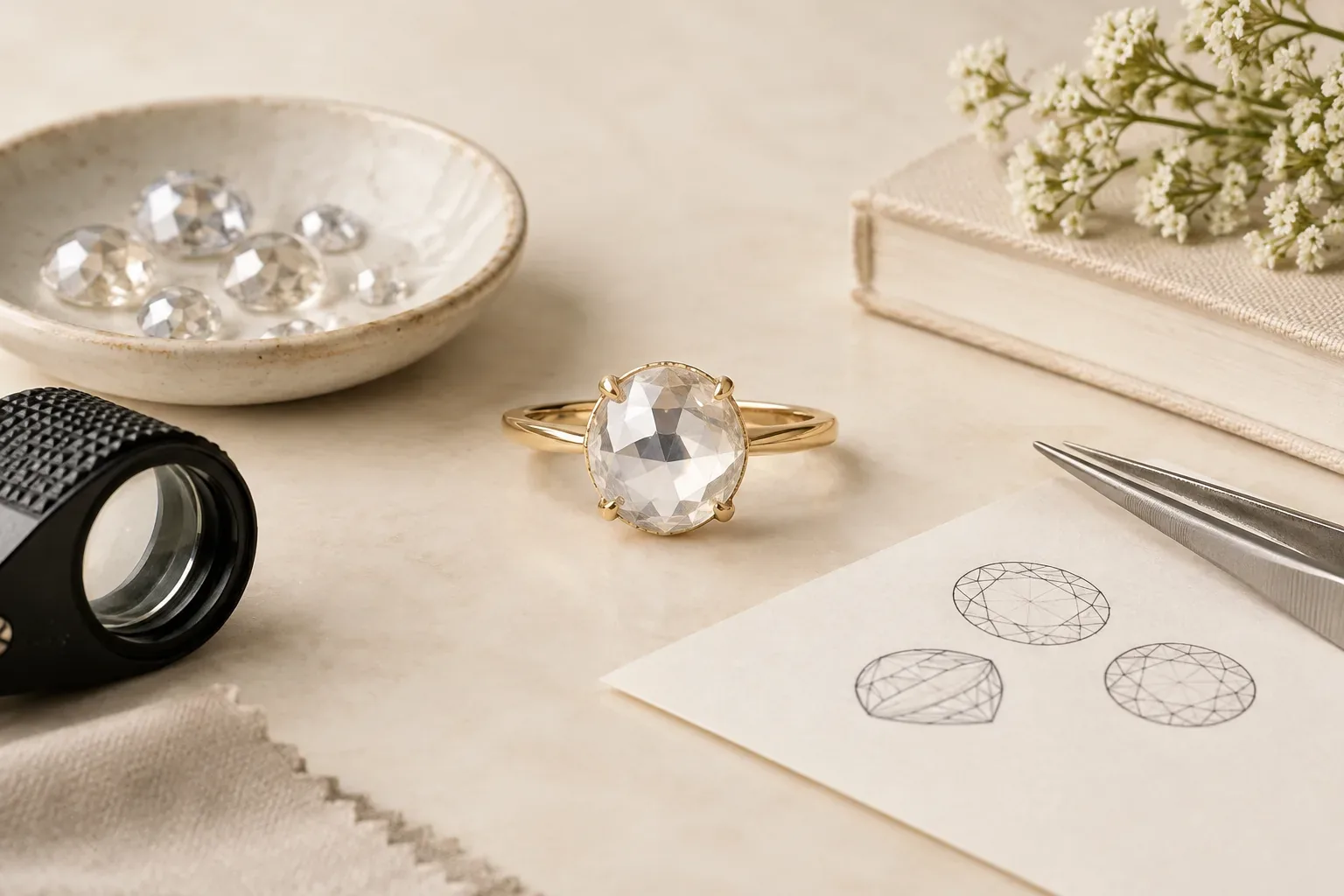
Because listing language varies across sellers, make the seller describe the object in plain language and supply images from multiple angles. Request a close view of the crown and the pavilion if visible and images of the ring on the hand or next to a ruler for scale. Ask whether the listing is for a period piece or a modern piece made in an antique style, and whether any parts (shank, setting, gallery) have been replaced or repaired.
Also ask about the metal type and hallmark, the ring’s current size and resizing history, and whether the setting is secure for daily wear. Jewelers Mutual’s guidance about versatility and craftsmanship is relevant here: how a ring is set and finished affects how it will wear, how comfortable it will be day to day, and whether it fits the wearer’s lifestyle.
Practical selection and gifting guidance
Match the ring’s construction to the wearer’s lifestyle before you buy. If the intended wearer works with their hands, confirm how high the center stone sits, how exposed the setting is, and whether protective settings (bezel or flush) are available or recommended. Ask the seller whether the ring has been stress‑tested, and whether prongs or settings have been reinforced.
Be explicit about allergies and metal preferences: request the exact metal alloy and any plating details in writing. If the ring is a family heirloom, ask about previous repairs and whether original stones were replaced. For gifts, consider timing: allow time for a jeweler to resize or make adjustments, and budget for an independent appraisal for insurance.
Trade-offs buyers should consider
Decisions about rose cut stones often involve trade‑offs between sparkle, profile and historical appearance. Sellers may describe visual attributes differently; request comparative photos or viewings in person when possible. Think about how carat weight relates to the visible face‑up size and how the setting affects the ring’s silhouette.
Also weigh documentation and price: an inexpensive unverified listing may be attractive but will usually leave you without reliable information about origin, treatments or durability. The FTC advises that consumers should require clear written disclosures about whether a stone is natural, treated, lab‑created or an imitation. If provenance matters to you, be prepared to pay for certification or an independent appraisal.
What you can and cannot verify without a qualified jeweler or gemological laboratory
You can verify photos, metal stamps, the seller’s written disclosures, return and warranty policies, and whether a lab report or certificate accompanies the stone. You can also visually assess setting type, ring size, and overall condition from good images or an in‑person inspection.
You cannot reliably verify a stone’s natural versus lab‑created origin, certain types of treatments (many of which are detectable only with instrumentation), or precise gemological parameters such as internal inclusion structure, exact refractive properties, or certain manufacture details without testing by a qualified jeweler or a gemological laboratory. For these items the FTC and the Gemological Institute of America recommend documented lab testing or a professional appraisal.
Safe care, maintenance and insurance
Ask the seller for care instructions tailored to the specific materials and any known treatments. The Gemological Institute of America emphasizes that treatments and detectability affect durability and care; follow any restrictions the seller or lab report provides. If you’re unsure, have the ring inspected by a professional before regular daily wear.
Purchase a written appraisal for insurance and check with your insurer or Jewelers Mutual about recommended coverage. Keep documentation, images and the appraisal together, and schedule routine professional cleanings and inspections to keep settings secure. If treatments are disclosed, confirm whether standard cleaning methods are safe or whether specialist care is required.
Final checklist to ask the seller before you buy
Request clear photos from several angles, a written description of the cut and materials, and whether the piece is antique or modern. Ask for written disclosure of origin (natural, treated, lab‑created, imitation), any treatments, and whether a lab report or appraisal accompanies the stone. Confirm metal type, current ring size, resizing limits, return policy, warranty, shipping and insurance options, and the seller’s credentials or professional affiliations. Finally, if provenance or technical claims matter to you, plan to obtain an independent appraisal or a laboratory report before completing the purchase.
Frequently asked questions
What should I ask to confirm a stone’s origin?
Ask the seller for written disclosure stating whether the stone is natural, lab‑created, treated or an imitation, and request any accompanying lab report or certificate. If the seller cannot provide documentation, plan to obtain an independent laboratory report or professional appraisal to confirm origin.
Do I need a lab report or is an appraisal enough?
A lab report from a recognized gemological laboratory provides scientific testing and is the best way to confirm origin and treatments. An independent appraisal documents value for insurance and can describe condition and replacement cost; if provenance or treatment claims matter, obtain both a lab report and an appraisal when possible.
What can the seller tell me about care and durability?
Ask the seller to provide written care instructions tailored to the materials and any known treatments. If treatments are disclosed, confirm whether standard cleaning or ultrasonic methods are safe. When in doubt, have a qualified jeweler inspect the ring and advise on safe cleaning and maintenance.
How can I verify a ring’s age or whether it’s an antique?
Request documented provenance such as previous appraisals, receipts, or a professional assessment. For definitive confirmation of age or period‑appropriate construction, consult a qualified jewelry historian, museum curator or specialist gemologist; sellers’ claims alone are not sufficient evidence.
What can I not verify myself from photos?
You cannot reliably determine a stone’s internal features, certain treatments, or whether it is lab‑created versus natural solely from photos. Those items require testing by a qualified jeweler or gemological laboratory.
Sources and further reading
- Imaginaire Digital — Imaginaire Digital
- Jewelers Mutual — Jewelers Mutual
- Gemological Institute of America — Gemological Institute of America
- Federal Trade Commission — Federal Trade Commission