Meaning at a glance
An Old Mine Cut engagement ring suits buyers who value antique character, hand-cut proportions, and a softer sparkle over modern brilliance; choose one after confirming seller disclosures, requesting a grading or treatment report when possible, and understanding that only a qualified jeweler or gemological laboratory can verify origin, treatments, or precise grading.
What is an Old Mine Cut (quick definition for shoppers)
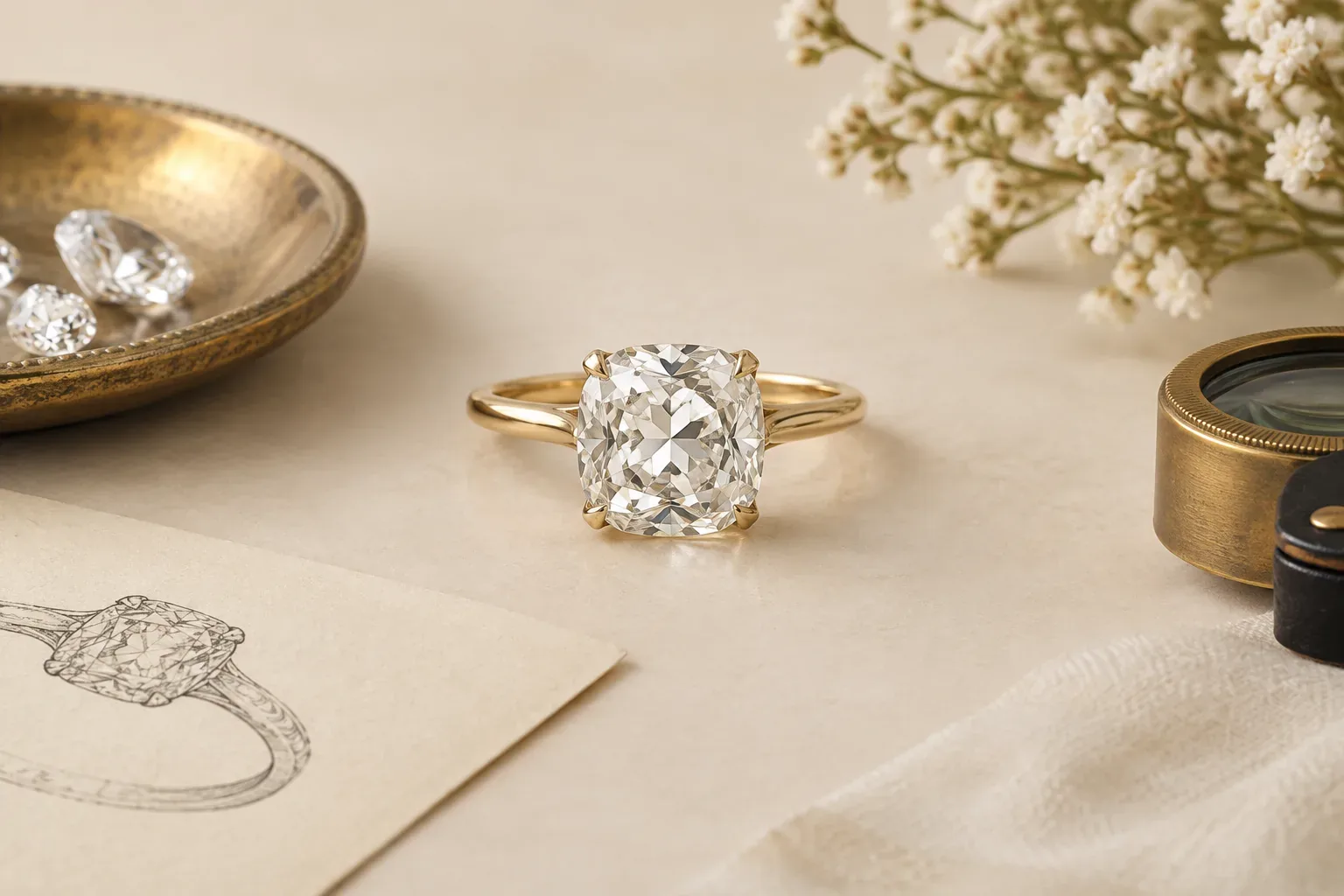
The Old Mine Cut is a hand-cut diamond shape familiar in antique jewelry markets and among collectors. Visually, it tends to be a squarish cushion outline with a high crown, a small table, and a large culet compared with modern round brilliants, producing a different pattern of light and sparkle. In engagement rings the cut reads as vintage or historic, and many buyers choose it specifically for that aesthetic.
Historical evidence and precise cultural or period associations
Authoritative primary documentation that ties a single symbolic meaning to the Old Mine Cut across a particular culture or precise date is limited in the consumer-facing sources used for this guide. Modern trade and consumer-interest reporting instead associate the Old Mine Cut with antique and vintage jewelry markets because those cuts were made by hand before mechanized modern cutting styles became common.
Industry trend reporting supports why shoppers link Old Mine Cuts to heritage styles. For example, Jewelers Mutual’s 2026 trends note strong consumer interest in craftsmanship, versatility and vintage-inspired pieces, which helps explain demand for hand-cut stones. Imaginaire Digital’s 2026 search estimates show continued consumer interest in engagement rings and related antique forms, indicating marketplace attention rather than a single historic cultural meaning.
Because the available professional and consumer-protection sources for this article focus on market behavior, disclosure and gemological verification rather than original 18th- or 19th-century treatises, treat associations to specific historical periods as trade labels used by dealers and collectors rather than as universal cultural facts.
Documented historical meanings versus modern personal interpretations
Documented historical meanings: within the scope of the professional and consumer sources cited here, there is no single documented symbolic meaning attached to the Old Mine Cut across a culture or era. The sources used for practical buying advice prioritize disclosure, durability and consumer protection instead of cataloguing historic symbolism.
Modern personal interpretations: shoppers and wearers commonly read Old Mine Cut rings as symbols of heritage, longevity and handcrafted individuality. These interpretations are personal and cultural in the modern marketplace and not universally documented. When gifting, assume the meaning you and the recipient give the ring will matter far more than any supposed historical symbolism.
How the cut and its traditions appear in jewelry
In engagement rings an Old Mine Cut most often appears as a center diamond set into settings that emphasize vintage character: low-set bezels, four-prong clutches, filigree and millegrain detailing, and cluster or halo surrounds that complement the stone’s irregular face-up proportions. Jewelers and designers also pair Old Mine Cuts with warm metal tones such as yellow or rose gold to enhance the period look.
Beyond single-stone solitaires, you will find Old Mine Cuts in three-stone rings, cluster settings with rose-cut or old European stones, and reproduction designs that mix antique-style metalwork with a newly cut Old Mine–style diamond or an antique stone.
Pros and cons: decision criteria and practical trade-offs
Pros include distinctive antique character, individuality (no two hand-cut stones are identical), and a softer, romantic sparkle that many buyers prefer for vintage-look engagement rings. Old Mine Cuts often appear at competitive prices relative to comparable modern cuts because they appeal to a smaller, more specialized market.
Cons include reduced brilliance compared with modern ideal-cut brilliants, greater variability in proportions and symmetry, and potential difficulty fitting the stone into contemporary bands or settings without remounting work. An Old Mine Cut’s face-up size and perceived brightness can differ from a modern round of the same carat weight, so visual comparisons are essential.
A buyer’s decision criteria should include the desired aesthetic (antique vs modern), budget and willingness to accept hand-cut irregularities, the ring’s intended daily wear versus occasional use, and how important lab-verified grading and treatment disclosure are to you. Market trends indicate a growing interest in craftsmanship and vintage forms, but that does not change the technical trade-offs of the cut itself (brightness, symmetry, setting compatibility).
Practical and respectful selection and gifting guidance
Start by defining what matters most to you: authentic antique stone, vintage style, or the look of an Old Mine Cut produced today. If authenticity is important, ask the seller for documented provenance and any available prior appraisals. If you prefer a new stone with antique proportions, ask whether the diamond was cut to Old Mine–style specifications.
Request written disclosures from the seller about whether the diamond is natural, lab-created, treated, or imitation. The Federal Trade Commission requires clear distinctions among natural, lab-created, treated and imitation materials, so insist on that documentation before purchase. If a grading report exists, read it closely and verify its issuer.
Be respectful and transparent when gifting. If you are buying an antique Old Mine Cut for someone who values ethical sourcing or modern performance, have a conversation about provenance and expectations. For surprise proposals, confirm return and resizing policies, and plan for insurance and appraisal shortly after purchase so the recipient can have the stone independently examined if they wish.
Care, treatments, and what to watch for
Old Mine Cuts in antique rings may be mounted in settings that show age or that contain fragile metalwork and stones. Regular cleaning and careful inspection by a qualified jeweler are sensible steps for preservation and to identify loose settings or repair needs.
The Gemological Institute of America emphasizes that treatments, disclosure, detectability and durability affect consumer choices. Because treated or filled stones exist across the market, ask sellers for written disclosure of any treatments and, when possible, a laboratory report indicating detectability or treatment status. Avoid strong ultrasonic cleaning on unstable antique settings unless a jeweler confirms it is safe.
For insurance and loss prevention, consider professional appraisals and coverage from a specialist insurer. Industry resources note demand for craftsmanship and the value of insuring treasured pieces, so protecting an engagement ring with specialist coverage is a common, practical step.
What you can verify yourself versus what requires a jeweler or laboratory
Without specialized equipment you can verify visual things: the face-up shape, visible inclusions or chips, the overall brightness relative to a modern stone, and whether the setting appears repaired or modified. You can also confirm seller-provided documentation such as invoices, past appraisals and return policies.
You cannot reliably verify a diamond’s natural origin, whether it has undergone certain treatments, its exact color grade or precise weight and proportions without a qualified jeweler or a gemological laboratory report. The Federal Trade Commission recommends written seller disclosures for natural vs lab-created and treated stones, and the Gemological Institute of America explains that some treatments require laboratory detection. If these factors matter to your purchase, plan to request or obtain a report from a reputable laboratory.
Final decision framework: who an Old Mine Cut suits
An Old Mine Cut engagement ring suits buyers who prioritize historical character, handmade irregularity and vintage aesthetics, or who collect period pieces. It also fits well for wearers who value uniqueness and tactile metalwork as part of the ring’s appeal. If you prioritize maximum sparkle per carat, ideal symmetry, or easy pairing with modern bands, a modern ideal-cut diamond might be a better fit.
Make your final decision after reviewing seller disclosures, obtaining any available reports, deciding how important provenance is to you, and confirming return, resizing and insurance options. When in doubt about treatments or origin, plan for a laboratory report: only a gemological lab or qualified appraiser can verify those technical claims reliably.
Frequently asked questions
How does an Old Mine Cut differ from an Old European Cut?
Both are antique-style, hand-cut diamonds, but the Old Mine Cut typically has a squarer cushion outline with a high crown and larger culet, while the Old European Cut is usually closer to a round shape with slightly different faceting. Exact distinctions can be subtle and are best confirmed by a qualified jeweler or laboratory report.
Is an Old Mine Cut a good choice for everyday wear?
Yes, many Old Mine Cut diamonds are durable as center stones, but the overall ring’s durability also depends on the setting and metal condition. Antique settings may need reinforcement; have a jeweler inspect prongs, shanks and mounting before regular wear.
Will an Old Mine Cut look smaller than a modern round diamond of the same carat weight?
Possibly. Face-up appearance depends on proportions. Old Mine Cuts may sit deeper or have different spread than modern ideal cuts, affecting perceived size. Compare stones in hand when possible.
Can I remount an antique Old Mine Cut into a modern setting?
Often yes, but remounting can require custom work to accommodate girdle thickness, culet size and table proportions. Consult a qualified jeweler who has experience with antique stones before altering the original mount.
Do I need a lab grading report for an Old Mine Cut?
If origin, treatment status or exact grading matters to you, obtain a report from a reputable gemological laboratory. The Federal Trade Commission advises buyers to request clear disclosures and written documentation for natural, lab-created and treated stones.
How should I care for an Old Mine Cut engagement ring?
Have the ring inspected by a jeweler periodically, avoid harsh cleaning methods unless a professional approves them, and get an up-to-date appraisal for insurance. If the ring contains modern repairs or fillings, follow any special-care advice provided by the jeweler or report issuer.
Sources and further reading
- Imaginaire Digital — Imaginaire Digital
- Jewelers Mutual — Jewelers Mutual
- Gemological Institute of America — Gemological Institute of America
- Federal Trade Commission — Federal Trade Commission