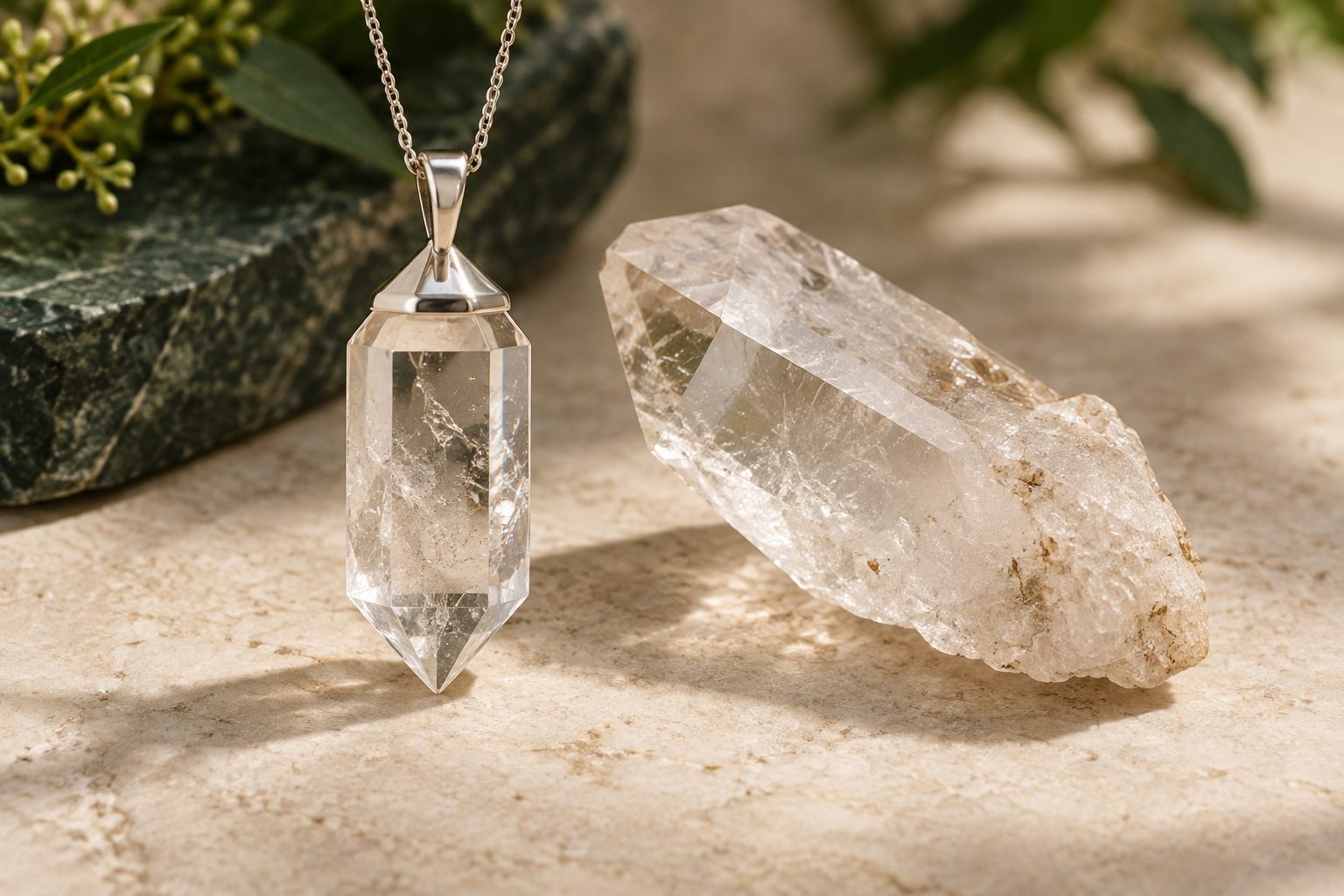
Meaning at a glance
Rock crystal is transparent, colorless quartz used in jewelry for centuries; historical uses are documented in museum collections while modern symbolic meanings are personal and separate from gem identification, inclusions, treatments, and practical care.
What rock crystal is (mineral identity)
Rock crystal is a transparent, colorless form of the mineral quartz. That classification and the range of quartz varieties are described by the Smithsonian National Museum of Natural History in its overview of quartz, which places rock crystal among quartz’s many naturally occurring forms and varieties. The mineral identity matters to collectors, designers, and wearers because it determines how the material behaves, how it takes polish, and how it is worked into jewelry.
Documented historical use in jewelry (evidence and cultures)
Museum collections provide direct evidence that rock crystal has long been used in jewelry and decorative objects. The Metropolitan Museum of Art, for example, catalogs a historic rock crystal ring in its collection, documenting that transparent quartz was cut and set into wearable objects. Such museum-held examples are primary evidence that people in specific times and places valued rock crystal for its optical and aesthetic qualities.
Archaeological and curatorial records in museums typically identify the production technique, region of origin, and approximate date for objects in their collections. When discussing historical use, it is important to rely on those documented attributions—such as the Met’s catalog entry—rather than generalizing across cultures without evidence. Different periods and regions used rock crystal in different ways: sometimes carved as intaglios or cameos, sometimes shaped into beads or cabochons, and sometimes polished and mounted for its transparent sparkle.
Separate documented historical meanings from modern interpretations
Museum documentation can confirm that a culture valued rock crystal, but it does not always record a single, universal symbolic meaning. The Metropolitan Museum of Art’s cataloging of a rock crystal ring records the object and its context, and scholars often infer or record contemporary meanings when evidence exists. However, modern labels such as “clarity,” “purity,” or “healing” attached to rock crystal are contemporary interpretive layers rather than universal historical facts.
Modern personal or New Age interpretations—where rock crystal is described as promoting clarity of mind or spiritual cleansing—are widely held today in some communities but are not the same as documented historical belief. Treat such modern meanings as personal or cultural interpretations that may guide gifting and use, but do not conflate them with the documented functions and meanings recorded in museum objects or primary historical sources.
How rock crystal appears and functions in jewelry
In jewelry, rock crystal appears in several forms: polished cabochons, faceted stones, carved intaglios or cameos, beads, and in larger objects such as pendants or compartments cut from single pieces of crystal. The transparency and colorlessness allow it to be used alone for a simple, luminous look or in combination with colored gems and metals where it can act as a neutral counterpoint.
Designers also take advantage of optical effects in clear quartz. When faceted, rock crystal reflects light differently than colored gems; when hollowed or carved, it can be used for miniature containers or reliquaries. The material’s workability and tendency to take a high polish are reasons it appears across a range of jewelry types from delicate rings to larger statement pieces documented in museum collections.
Identifying rock crystal versus other gems and the role of clarity
Clarity—the degree to which a stone is free of visible inclusions or cloudiness—is a visual characteristic, not by itself a definitive identification. As the Smithsonian notes, quartz exists in many varieties; transparent, colorless quartz is called rock crystal, but similar-looking materials can sometimes be other minerals or man-made glass. When identification matters, gemological testing or reliable dealer documentation is necessary.
Visible inclusions, fractures, cloudiness, or surface wear affect how a piece looks and should be considered when choosing jewelry. Those physical attributes are separate from symbolic language: a stone’s inclusions influence its durability and appearance but do not determine what it ‘means’ beyond personal or cultural interpretation.
Practical selection and respectful gifting guidance
When selecting rock crystal jewelry, begin by deciding what matters to you in use and appearance: do you want a flawless, transparent stone for sparkle and neutrality, or do you prefer a crystal with natural character such as internal veils or tiny mineral inclusions? Ask the seller for clear photographs, written identification, and any conservation history for antique pieces.
For historic or museum-quality pieces, respect provenance and conservation needs. When gifting rock crystal, consider the recipient’s taste and the cultural meanings they assign. If you consider symbolic language—clarity, calm, or purity—make it clear that those are contemporary interpretations and that the recipient may value the piece for other reasons such as craftsmanship, age, or aesthetic appeal.
If purchasing antique rock crystal jewelry, verify condition and any restoration work. Transparent quartz can be repaired or recut, and older settings may have been altered. Trusted dealers or independent appraisers can provide condition reports and advice on how a piece will wear in daily life.
Care and everyday handling
Rock crystal is a durable material for many types of jewelry, but like all gems it benefits from sensible care. Store rock crystal pieces separately to avoid scratching from harder materials, and wipe them after wearing with a soft cloth to remove oils and residues. Professional cleaning or conservation is advisable for antique pieces or items with fragile settings.
When laundering or storing jewelry, avoid exposing rock crystal to harsh household chemicals or extremes of temperature that could affect a setting or any attached materials. If you are unsure about cleaning a specific antique or multi-material piece, consult a qualified jeweler or conservator rather than attempting aggressive cleaning at home.
Balancing aesthetics, history, and symbolism
Rock crystal jewelry sits at the intersection of material beauty, historical craft, and contemporary symbolism. Museum pieces document the material’s long use and the craftsmanship of particular times and places, while modern wearers and designers layer personal meanings onto the same visual qualities. When choosing or gifting rock crystal, acknowledge that documented history and personal symbolism can coexist: an object can be historically significant, well made, and meaningful to its owner in different, legitimate ways.
Frequently asked questions
Is rock crystal the same as clear quartz?
Yes. Rock crystal is the transparent, colorless variety of quartz; museums such as the Smithsonian National Museum of Natural History describe it as one of the natural varieties of quartz.
Does rock crystal always mean ‘clarity’ or ‘purity’ historically?
No. While modern interpretations sometimes attach symbolic meanings like clarity or purity to rock crystal, documented historical meaning varies by object and culture. Museum catalogues provide evidence of use and context, but not a single universal symbolic meaning.
How should I clean and care for rock crystal jewelry?
Use gentle handling: wipe worn pieces with a soft cloth, store them separately from harder stones to reduce scratching, and consult a trusted jeweler or conservator for advice on cleaning antique or complex pieces. For historically important items, professional conservation is advisable.
Can rock crystal be confused with other materials?
Yes. Because other transparent materials such as glass or different minerals can look similar, identification should rely on trustworthy documentation or gemological testing rather than visual judgment alone.
What should I ask a seller when buying rock crystal jewelry?
Request clear photographs, written identification or testing information, condition details (especially for antique items), and any provenance or conservation history. If the piece is described as historically significant, ask for documentation or catalog references.
Sources and further reading
- Rock Crystal Ring — The Metropolitan Museum of Art
- All Sorts of Quartz — Smithsonian National Museum of Natural History