Meaning at a glance
Aventurine is a variety of quartz whose sparkle comes from aventurescence—light reflected from tiny, plate-like inclusions; historical records do not assign a single ancient cultural meaning to aventurine, so modern ideas of luck and opportunity are contemporary symbolic interpretations rather than documented historic beliefs.
What aventurine is and why it sparkles
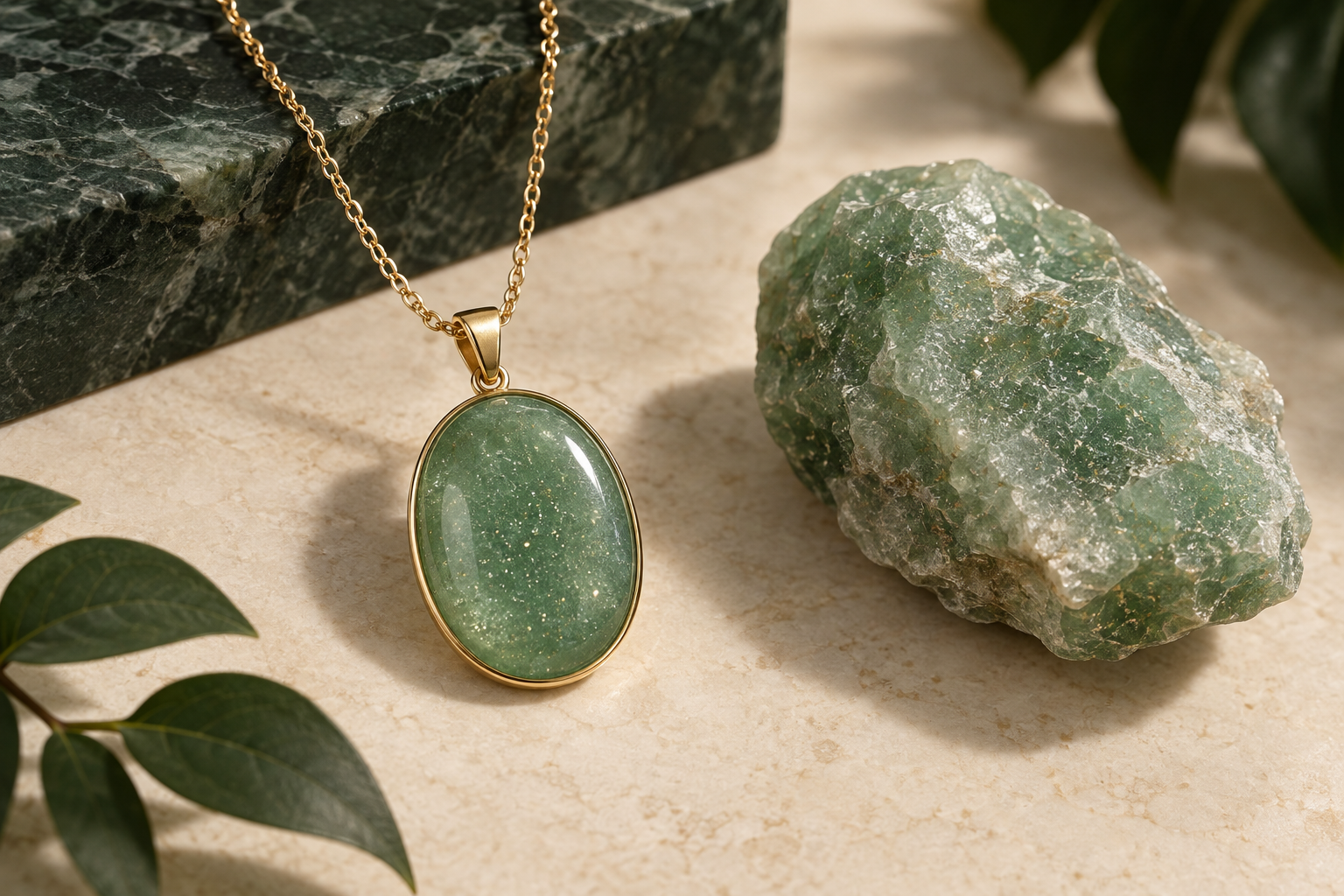
Aventurine is a variety of quartz. The Smithsonian National Museum of Natural History classifies it among the many forms and uses of quartz, emphasizing quartz’s broad mineral identity and the wide range of varieties that jewellers and collectors use. The glitter that makes aventurine visually distinctive comes from an optical effect called aventurescence. According to the Gemological Institute of America, aventurescence results from light reflecting off numerous small, flat, reflective inclusions within a host stone; when the stone is cut and polished appropriately, those reflections produce a sparkling or shimmery sheen.
Historical evidence and what the record supports
When we look to the published institutional record for historical claims, the sources supplied discuss quartz broadly but do not provide a clear, ancient cultural narrative that assigns one specific, documented meaning to aventurine across cultures. The Smithsonian’s materials on quartz describe the mineral’s varieties and long use in human objects and collections, but they do not attribute a specific, documented ritual or symbolic role for aventurine in a particular ancient culture.
Because the formal historical record provided here does not identify discrete cultural meanings, it is important to avoid presenting unverified attributions as historical facts. Where regional or folk beliefs about a stone exist, those should be cited to specific, credible historical sources for each culture; such specific attributions are not documented in the two professional sources used for this article.
Separating documented history from modern interpretation
The documented, scientific facts are straightforward: aventurine is a quartz variety and aventurescence is the optical cause of its shimmer. Those are mineralogical and optical statements supported by the Smithsonian and the Gemological Institute of America respectively.
Contemporary symbolic meanings—such as calling aventurine a stone of luck, opportunity, or growth—arise largely from modern metaphysical and commercial contexts. Presenting those symbolic associations as contemporary personal or cultural interpretations is accurate; presenting them as ancient, universally held beliefs is not supported by the institutional evidence cited here.
How aventurine is used in jewelry
Jewellers favor aventurine for pieces where its aventurescence can be appreciated. The cut and polish matter: cabochon cuts, beads, tumbled stones, and flat inlay pieces commonly showcase the shimmer because those shapes present broad, reflective surfaces. When aventurine is set in rings, pendants, bracelets, or earrings, makers often orient the stone so that light enters across the plane of the inclusions to maximize the glittering effect.
Designs range from simple, bezel-set cabochons that emphasize the stone’s surface sheen to beaded necklaces that create a subtler, all-over sparkle. Because aventurine is a quartz variety, it is widely available in multiple colors and sizes, and it is often used for both everyday pieces and statement items that rely on the stone’s visual texture rather than transparency or brilliance.
Selecting aventurine: what to look for
Choose aventurine based on the effect you want: for a bold, obvious glitter, seek stones with strong, even aventurescence that shows as you move the stone in light. For a more muted look, select pieces with a subtle shimmer and a uniform color. Evaluate color saturation and overall surface quality; a polished surface with few pits or fractures will better display the optical effect.
Ask the seller how the stone was cut and oriented in the setting, and request clear photos or, if possible, to see the piece in varying light. Verify return policies and whether the seller provides any authenticity details. Because institutional sources classify aventurine as a quartz variety commonly used in jewelry, you can reasonably expect it to be offered at modest prices compared with rarer transparent gemstones, but compare quality across sellers rather than price alone.
Gifting aventurine with respect and care
If you plan to gift aventurine, match the piece to the recipient’s taste rather than relying solely on symbolic messaging. Some buyers and recipients appreciate being told that a stone is popularly associated with luck or opportunity; others prefer a neutral, aesthetic framing. When offering symbolic meaning, describe those associations as contemporary interpretations rather than historical facts.
Consider the context of the gift. A simple beaded bracelet or pendant can be a casual, everyday present. For a milestone or formal occasion, choose a well-finished setting—such as a bezel or prong mount in precious metal—that complements the stone’s color and sparkle. If cultural or religious significance could be relevant to the recipient, check with them or with knowledgeable family members to avoid unintended insensitivity.
Caring for aventurine jewelry
General care for aventurine follows common-sense practices for most jewelry. Because aventurine is a form of quartz, museum and gemological authorities describe quartz varieties as commonly used and relatively durable for jewelry. Clean aventurine pieces with warm water, mild soap, and a soft brush or cloth, and dry them thoroughly. Avoid prolonged exposure to harsh chemical cleaners and strong acids.
Store aventurine items separately from harder gemstones and metals that could scratch or ding the stone’s polish. Remove aventurine jewelry for heavy manual work or any activity where the setting might be struck. If a stone is set in a delicate mount or combined with porous materials, follow any additional care instructions from the maker or vendor.
Summary
Aventurine jewelry meaning is best understood in two parts: the measurable mineral facts and the modern meanings people assign to the stone. Scientifically and visually, aventurine is a quartz variety that shows aventurescence because of reflective inclusions, and that optical property explains the stone’s appeal in jewelry. Symbolic claims—such as that the stone brings luck or new opportunities—are contemporary interpretations and should be presented as such when you buy, gift, or describe aventurine.
Frequently asked questions
What causes the sparkle in aventurine?
The sparkle, called aventurescence, is an optical effect caused by light reflecting from many small, flat, reflective inclusions in the host quartz; the Gemological Institute of America describes this phenomenon in detail.
Is aventurine a type of quartz?
Yes. The Smithsonian National Museum of Natural History classifies aventurine among the varieties of quartz used in collections and jewelry.
Are meanings like "luck" historically documented for aventurine?
No single, documented ancient cultural meaning for aventurine is provided in the institutional sources used here; associations with luck and opportunity are modern symbolic interpretations rather than established historical facts.
How should I clean aventurine jewelry?
Clean aventurine with warm water, mild soap, and a soft cloth or brush; avoid harsh chemical cleaners and store pieces separately to protect the polished surfaces.
Can aventurine be worn every day?
Aventurine is a form of quartz and is commonly used in jewelry, making it suitable for regular wear when set and cared for properly; remove it for heavy manual work and protect it from hard knocks.
What should I look for when buying aventurine?
Look for an even, appealing color and strong, evenly distributed aventurescence, ask to see the stone in different lights, confirm return and authenticity policies, and choose a setting that complements the stone’s visual character.
Sources and further reading
- Optical Effects in Phenomenal Cabochons — Gemological Institute of America
- All Sorts of Quartz — Smithsonian National Museum of Natural History