Meaning at a glance
Ragnarok is a destructive and transformative sequence in medieval Norse tradition; jewelry meanings centered on renewal, resilience, or beginning again are thoughtful modern interpretations rather than documented Viking Age pendant meanings.
Short, direct answer
Ragnarok jewelry meaning is best understood as a modern layer placed on a medieval Norse story: medieval Norse sources describe Ragnarok as a sequence of destruction and subsequent renewal, and the theme of 'beginning again' is a contemporary symbolic reading applied to motifs inspired by that story rather than a documented Viking Age pendant meaning.
What the historical sources actually show
When we talk about Ragnarok historically, we are referring to material and literary traditions from the Norse world. The medieval manuscript tradition contained in the Uppsala Edda (published and discussed by the Viking Society for Northern Research) presents Ragnarok as a narrative of calamity and cyclical renewal within Norse mythic cosmology. Those texts form the primary written record that later readers use to describe Ragnarok.
Archaeological and museum collections from the Viking Age provide context about what people wore and valued. The Swedish History Museum’s discussion of the Aesir and related objects highlights how deities and mythic themes appear in material culture, but museums and catalogs do not present direct evidence that Viking Age pendants explicitly commemorated Ragnarok with a single agreed symbolic meaning. The National Museum of Denmark’s overview of sources of the Viking Age similarly separates the surviving literary accounts from the varied and regionally diverse archaeological record. In short, the story of Ragnarok is well attested in medieval literary sources, while participatory beliefs or personal meanings expressed through jewelry in the Viking Age are not recorded as a uniform practice in those sources.
Separating documented meanings from modern interpretations
Documented meaning: In medieval Norse literature the sequence known as Ragnarok is described as catastrophic—battles, deaths of gods, and upheaval of the natural order—followed by a regeneration of the world. That characterization comes from the Eddic material preserved in medieval manuscripts, including the Uppsala Edda collection as presented by the Viking Society for Northern Research.
What is not documented: There is no direct medieval text or clear archaeological designation showing that people in the Viking Age wore jewelry specifically labeled or widely understood as 'Ragnarok' amulets meaning 'destruction' or 'renewal.' Museum presentations from institutions such as the Swedish History Museum and the National Museum of Denmark make a careful distinction: objects can depict gods, beasts, or mythic scenes, but assigning a single, community-wide symbolic use (for example, 'this pendant guaranteed renewal after destruction') is a modern inference rather than a documented historical fact.
Modern interpretation: Contemporary jewelers, wearers, and writers often take the narrative arc of Ragnarok—ending followed by beginning—and use it as a metaphor for resilience, life transitions, and transformation. These contemporary meanings are valid as personal or cultural reinterpretations, but they should be labeled and presented as modern symbolic attributions rather than as direct continuations of Viking Age beliefs.
How the motif or tradition appears in jewelry today
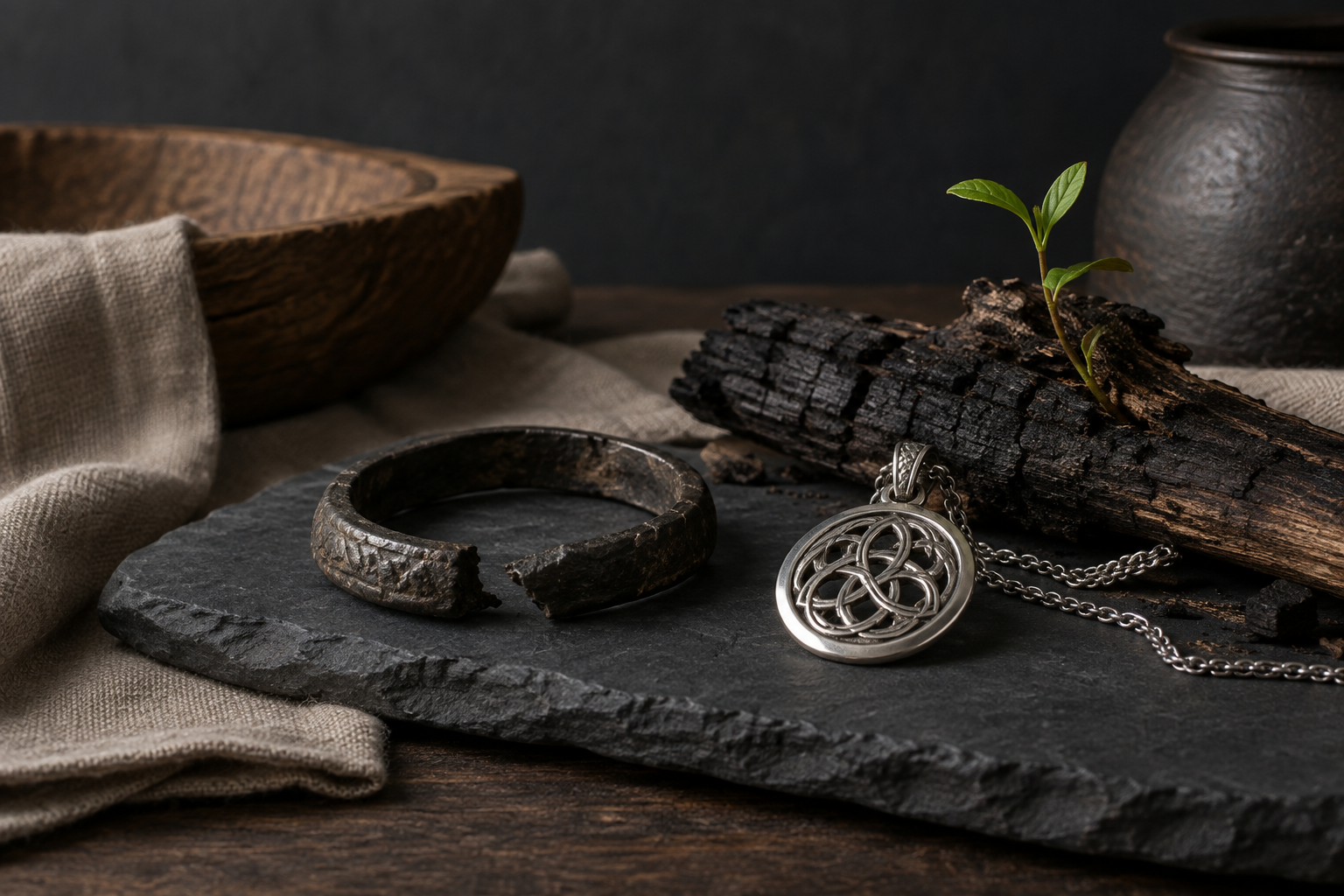
Ragnarok as a theme appears in modern jewelry mainly through imagery and aesthetic allusion rather than by replicating a single historical object. Modern pieces may depict figures associated with the Ragnarok story such as wolves, serpents, the world-tree, or scenes of conflict and fire. They can also use symbolic devices like broken forms, openwork designs, or paired elements that suggest ending and renewal.
Contemporary makers combine metalwork, finishes, patination, and stones to convey the theme: darker metals or oxidized silver can suggest ash and ruin while polished sections or bright stones may represent renewal. Designers sometimes use dualities—rough versus refined surfaces, matte versus high polish—to visually express the idea of destruction followed by rebirth. These are present-day aesthetic choices and should be described to buyers as such, not as Viking Age prescriptions.
Practical and respectful selection guidance
Consider provenance and labeling: if you want historically grounded pieces, look for sellers and makers who clearly label items as 'inspired by Norse myth' or 'modern interpretation' rather than implying direct continuity with Viking Age religious practice. Museums and scholarly resources help distinguish historical forms from modern reworkings; the National Museum of Denmark and the Swedish History Museum offer reliable context for what is documented.
Respect cultural nuance: remember that Norse mythic material is part of a distinct cultural and historical tradition. If the recipient has personal or ancestral ties to Scandinavian cultures, a respectful conversation about their preferences is appropriate. Avoid appropriation by honoring how the wearer wishes to represent the symbolism and by avoiding commercialized stereotypes that trivialize cultural material.
Choose materials and design for meaning and wearability: select a metal and finish that suit everyday wear and the symbolic tone you want. For themes of resilience and rebirth, consider pieces that incorporate contrast—such as intentionally distressed metal alongside polished elements—or a design that can be added to over time. If you want the piece to feel intimate, consider adding a short inscription that explains the modern symbolic meaning you intend, phrased so the wearer understands it is a contemporary interpretation.
Practical gifting guidance
Match symbolism to the occasion: a piece meant to mark recovery or a life change can lean into the renewal aspect of modern Ragnarok symbolism, while jewelry intended as a statement about endurance can emphasize resilience and survival motifs. Be explicit about intent: include a card or note that explains why you chose the motif and clarifies that the meaning is your modern interpretation inspired by medieval Norse stories.
Pay attention to quality and ethics: select reputable makers who disclose metal content and craftsmanship. Many contemporary designers create handcrafted pieces inspired by Norse mythology; ask about sourcing, especially if you care about recycled metals or ethical gemstone sourcing. Choosing a higher-quality item makes it more likely the piece will be worn and valued over time, which honors both the gift and the cultural material that inspired it.
Avoid simplistic assumptions: do not assume that all Scandinavian-descended people welcome myth-inspired motifs or that Ragnarok-themed items are universally appropriate. When in doubt, ask. A thoughtful gift recognizes the recipient’s tastes, identities, and possible sensitivities.
A few final notes for collectors and wearers
If you collect historically informed Viking jewelry, consult museum catalogs and academic editions—for example, the Uppsala Edda through the Viking Society for Northern Research—and consider reading source overviews provided by national museums to set expectations about what is documented and what is modern reimagining. For everyday wearers who value the metaphorical potential of Ragnarok, be transparent about the distinction between medieval narrative and contemporary symbolism. That transparency respects both the historical record and the modern meanings people derive from myth.
Frequently asked questions
What does 'Ragnarok' mean when used in jewelry?
When used in modern jewelry, 'Ragnarok' usually references the mythic Norse story of catastrophic change followed by renewal; this contemporary meaning—resilience, transformation, or new beginnings—is a modern interpretation inspired by medieval sources rather than a documented Viking Age pendant meaning.
Did the Vikings wear jewelry specifically for Ragnarok?
There is no clear archaeological or textual evidence that people in the Viking Age wore jewelry specifically labeled as 'Ragnarok' amulets. Medieval texts record the story of Ragnarok, but museum surveys and source studies indicate that assigning a single, community-wide symbolic use to jewelry for Ragnarok is a modern inference.
Is it culturally insensitive to wear Ragnarok-themed jewelry?
Wearing Ragnarok-themed jewelry is not inherently insensitive, but sensitivity depends on context. Be mindful of the distinction between historical source material and modern reinterpretation, respect the preferences of individuals with Scandinavian heritage, and avoid using mythic imagery in ways that reinforce stereotypes or political agendas.
How can I explain a Ragnarok-themed gift respectfully?
Include a note that explains your intent—why you chose the motif and that the meaning you ascribe (for example, renewal after hardship) is a contemporary interpretation inspired by medieval Norse stories. Providing context honors both the recipient and the cultural source material.
Where can I learn about historically documented Viking jewelry meanings?
Consult museum overviews and academic editions of medieval texts. Resources such as the Uppsala Edda (Viking Society for Northern Research) and object-focused materials from the Swedish History Museum and the National Museum of Denmark help distinguish what is documented in the medieval record from later interpretations.
Sources and further reading
- The Uppsala Edda: DG 11 4to — Viking Society for Northern Research
- The Aesir – the gods of the aristocracy — Swedish History Museum
- Sources of the Viking Age — National Museum of Denmark