Meaning at a glance
Natural zircon is the mineral zirconium silicate, not the lab-made cubic zirconia; it shows strong dispersion and brilliance, is often heat-treated, can be brittle, and requires informed selection and careful handling.
What natural zircon is, and how it differs from cubic zirconia
Natural zircon is a naturally occurring mineral made of zirconium silicate. The Gemological Institute of America (GIA) and the Smithsonian National Museum of Natural History both emphasize that zircon is distinct from cubic zirconia, which is a synthetic, crystalline form of zirconia used widely as a diamond simulant. The two materials differ in origin, chemical composition, and gemological properties.
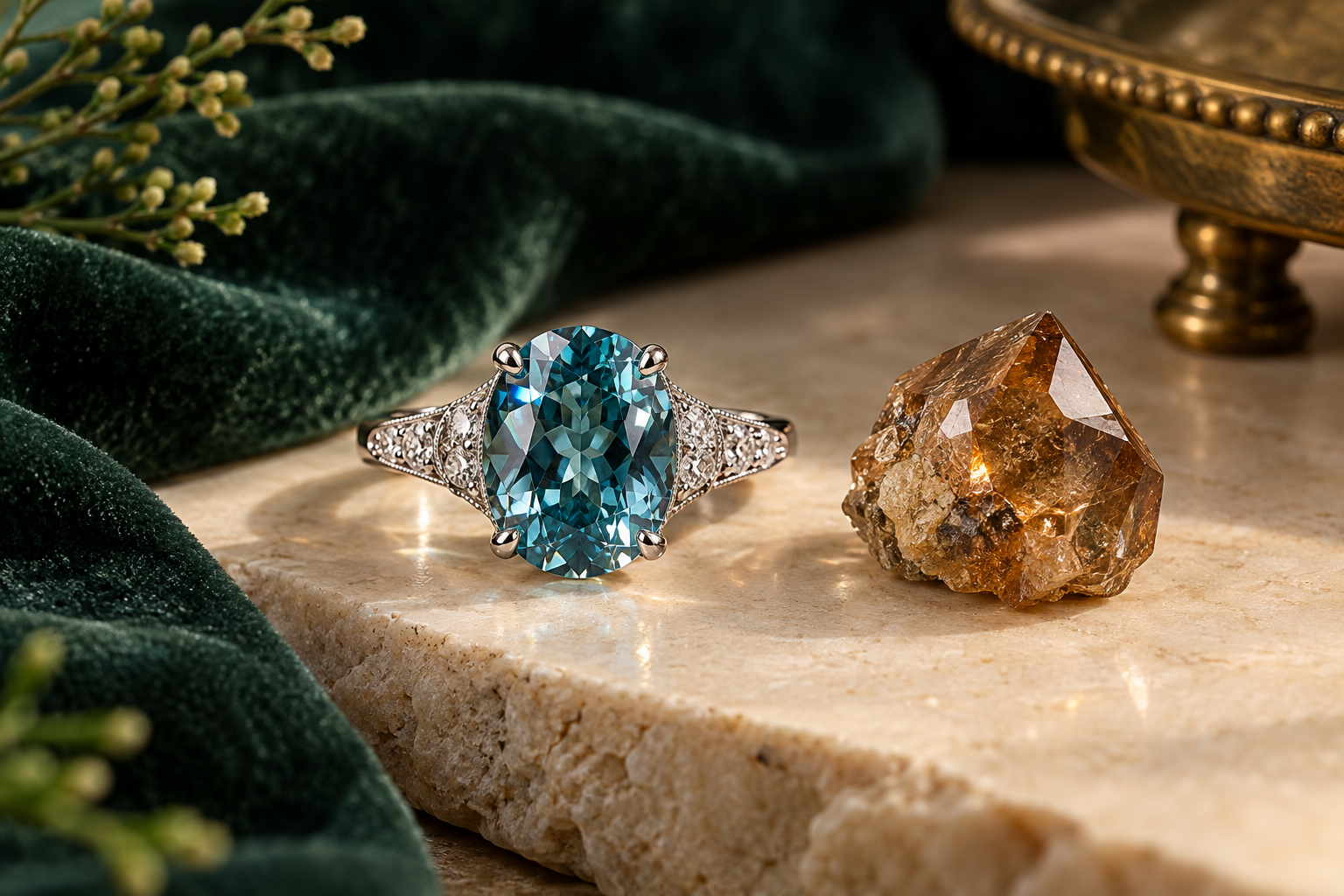
Gemological descriptions note that natural zircon exhibits strong dispersion and a characteristic brilliance when properly cut, qualities that contribute to its visual appeal. Both the GIA and the Smithsonian make clear that despite occasional visual similarity to other sparkly stones, natural zircon is its own mineral species and should be identified and marketed accordingly.
Historical evidence and cultural context
The Smithsonian National Museum of Natural History records zircon’s deep geological history, including the fact that zircon crystals can be among the oldest known mineral grains on Earth. That geological record is the clearest historical evidence linked to zircon: it is a witness to ancient processes rather than a reliably documented bearer of a single cultural meaning across time and place.
Professional gemological sources such as the GIA focus on zircon’s physical and optical properties rather than detailed cultural symbolism. Where specific cultures assigned meanings to particular gemstones, those claims require primary historical or ethnographic citation. The approved sources here do not provide a comprehensive catalogue of culturally specific, historically attested symbolic uses for zircon, so any claim that zircon had a single, universal symbolic role in ancient societies would be unwarranted based on the available evidence.
Documented properties versus modern personal interpretation
Documented, evidence-based properties of natural zircon include its chemical identity as zirconium silicate, its strong dispersion (a contributor to fire and brilliance), the fact that gem-quality stones are often heat-treated to alter or stabilize color, and its relative brittleness compared with tougher gem materials. These points are stated explicitly in the referenced materials from the GIA and the Smithsonian.
Modern personal or cultural interpretations—such as wearing zircon for wisdom, protection, prosperity, or other subjective intentions—are a separate category. Those meanings can be meaningful to individuals and communities today, but they are not interchangeable with the documented mineralogical and gemological facts. Distinguish personal belief and contemporary symbolic practice from the scientifically recorded attributes of the stone.
How zircon appears in jewelry
Jewellers use natural zircon primarily as a faceted gemstone to showcase its dispersion and fire. When cut to emphasize its optical effects a zircon can present lively flashes of color and brilliance that are visually distinct from many other stones. The Smithsonian and GIA both discuss the gem’s optical qualities and treatments that influence color.
Because many gem-quality zircons are heat-treated to achieve or enhance desirable colors, and because zircon can be brittle, jewelers often choose mounting styles and protective settings that reduce the risk of knocks. Settings that offer some protection to the girdle and pavilion are common choices for wearable pieces intended for frequent use.
Practical selection and gifting guidance
When selecting or gifting natural zircon, first confirm the stone’s identity. Ask the seller whether the stone is natural zircon or a lab-made simulant such as cubic zirconia; reputable sellers should disclose this and, for higher-value pieces, provide a gem identification report from a recognized laboratory. The Gemological Institute of America warns that zircon and cubic zirconia are distinct materials, and clear identification prevents misunderstanding at purchase.
Ask about treatments. The Smithsonian notes that many gem zircons are heat-treated, and sellers should disclose such treatments because they affect color and, in some cases, stability. If you prefer untreated stones, request written confirmation. Consider the receiver’s lifestyle: because zircon can be brittle, choose protective settings such as bezels for rings or pendants intended for daily wear rather than exposed prongs for an active wearer.
Be mindful of expectations. If the recipient wishes to emulate the look of a diamond on a strict budget, understand that cubic zirconia is an affordable simulant with different properties. If the intent is to gift a natural gem with its own character and history— including its geological antiquity—natural zircon offers a distinct story and appearance, but it also requires more careful handling than some other gems.
Care and maintenance
Because professional sources identify brittleness as a practical concern with zircon, treat zircon jewelry gently. Avoid hard knocks and sudden impacts that could chip or cleave the stone. Remove zircon rings during strenuous or manual activities and consider wearing pendants and earrings for situations where accidental blows are less likely.
Have settings inspected periodically to ensure the stone is secure, and ask your jeweller for cleaning recommendations that respect any heat treatment or structural sensitivity. The GIA and Smithsonian emphasize zircon’s optical beauty but also its physical vulnerabilities, so conservative cleaning and cautious handling are prudent. If the piece is valuable, consider professional maintenance and insurance appropriate to its worth.
Buying considerations and verification
For any purchase of natural zircon, verify identity and treatment history through documentation or a reputable seller. Request disclosure of heat treatment and, when available, a gemological report. Because natural zircon and cubic zirconia are materially different, clear labeling, paperwork, and transparent communication protect buyers and recipients alike.
If you plan to mount a zircon in a ring or other frequently worn piece, discuss setting options with a jeweller who understands gemstone toughness and mounting design. Protective settings and regular maintenance extend the useful life of zircon jewelry and help retain its visual impact. Finally, balance aesthetic preference, budget, and intended use: zircon offers distinctive fire and a story of geological antiquity, but it is not an indestructible substitute for more durable gems.
Summary
Natural zircon is a distinct, naturally occurring gemstone (zirconium silicate) and should not be confused with cubic zirconia. The GIA and the Smithsonian document zircon’s strong dispersion and brilliance, its frequent heat treatments, and its susceptibility to brittleness. Historical evidence in the approved sources highlights zircon’s geological age rather than a universal cultural symbolism, so any symbolic meanings are contemporary or personal rather than universally documented. For selection and gifting, verify identity and treatment, choose protective settings for wear, and handle zircon jewelry with care.
Frequently asked questions
Is natural zircon the same as cubic zirconia?
No. Natural zircon is a naturally occurring mineral (zirconium silicate), while cubic zirconia is a lab-created zirconia material used as a diamond simulant. Both the GIA and the Smithsonian explicitly distinguish the two.
Are zircons treated?
Many gem-quality zircons are heat-treated to enhance or stabilize color. The Smithsonian National Museum of Natural History documents the common use of heat treatment for gem zircons, so always ask sellers about treatments.
How should I care for zircon jewelry?
Because zircon can be brittle, avoid hard knocks and remove jewelry for strenuous activity. Have settings inspected regularly and follow your jeweller’s cleaning recommendations; conservative handling prolongs the life of the stone.
Can zircon be used for engagement rings?
Zircon’s brilliance can make it attractive for meaningful jewelry, but its tendency toward brittleness means protective settings and careful wear are important if it will be worn daily. Discuss mounting and maintenance with a jeweller before selecting zircon for an engagement ring.
How can I verify a natural zircon purchase?
Request written identification and disclosure of treatments from the seller. For higher-value stones, seek a gemological report from a recognized laboratory or buy from reputable dealers who provide certification.