Meaning at a glance
Historically responsible Viking jewelry is chosen by checking whether a seller distinguishes archaeological replicas from modern Norse-inspired designs, names the relevant period and rune row, describes materials honestly, and avoids unsupported claims of universal ancient meaning.
What the archaeological evidence actually shows — culture and period specified
Archaeological work in Scandinavia and surrounding regions has recovered many kinds of personal adornment from the Viking Age and nearby periods. The National Museum of Denmark describes clothing and jewellery finds as specific types made from particular materials, and it emphasizes that archaeological evidence supports careful, evidence-led descriptions of those objects. Museum collections therefore form the most reliable base for statements about what people actually wore in particular places and times.
When discussing runes, the Swedish History Museum notes that runic inscriptions from the Viking Age are largely written in the Younger Futhark rune row. That means when a seller claims a piece reproduces or bears genuine Viking-runic text, the expected historical reference point for runic form is the Younger Futhark unless the seller explicitly states a different period or dialect.
The British Museum’s collection and commentary also highlight a modern problem: some objects on the market are misattributed or are modern forgeries styled to look ancient. Because of that reality, reputable institutions recommend clear provenance and honest labeling as part of responsible collecting and commerce.
Documented historical meanings versus modern interpretation
Museum documentation is cautious about asserting specific, universal symbolic meanings for Viking Age jewellery. Archaeology can show that particular object types, motifs, or materials were used, and it can place them in time and geography; but attributing a single, ancient meaning to a motif is often not possible from the material record alone. The National Museum of Denmark and other institutions encourage distinguishing observable facts from later interpretation or modern spiritual attributions.
Modern Norse-inspired meanings—such as personal identity statements, reconstructed spiritual symbolism, or contemporary uses of runes as talismans—are valid as personal or community choices today, but they are interpretive layers rather than strictly documented Viking Age facts. Responsible sellers and buyers should therefore separate what is archaeologically attested from what is a contemporary meaning the buyer ascribes.
How motifs, rune rows, gemstones, and traditions appear in jewellery
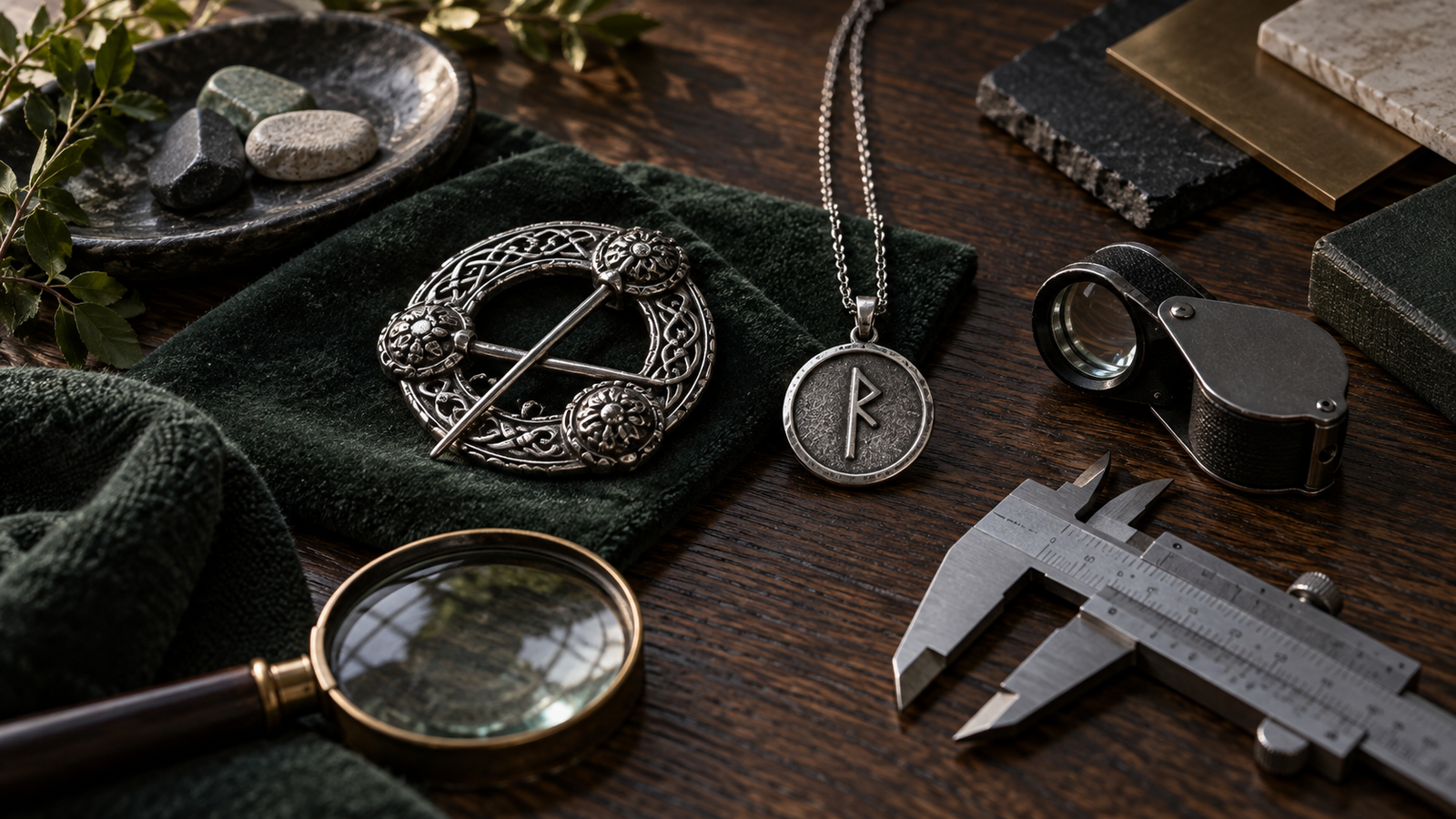
Archaeological finds show certain object types commonly associated with Viking Age dress and ornament: brooches, arm rings, finger rings, pendants, and pins, often made in bases of silver, bronze, or gold and sometimes inlaid or decorated. The National Museum of Denmark catalogs such finds and their materials, and uses those finds as a reference when describing replicas or inspired pieces.
Motifs in surviving objects include animal interlace, stylized animals and humans, and geometric patterns. Sellers frequently reproduce these motifs on pendants and brooches. When inscriptions appear on ancient artefacts, they are most often in the Younger Futhark rune row for Viking Age material, as noted by the Swedish History Museum. Modern pieces may copy Younger Futhark forms or combine runic characters from other periods for aesthetic reasons; responsible descriptions should identify which rune row is being used.
Gemstones and glass beads appear in archaeological contexts as well. The specific types of stones and how commonly they occur vary by site and by social and regional context. Contemporary pieces marketed as “Viking” may use historically plausible materials or modern substitutes; sellers should describe the material honestly (for example, naming if a stone is a modern lab-grown variant or a historically attested raw material).
Finally, traditions such as twisting arm rings or wearing certain brooches with particular garments are reconstructed from the archaeological and textile record. Museums base these reconstructions on the physical evidence in their collections and archaeological contexts rather than on a single definitive source.
Red flags and practical checks to choose responsibly
Ask whether the seller distinguishes archaeological replica from modern inspired design. A clear label that a piece is a museum replica, copied from a defined find, or simply inspired by Viking motifs is the first mark of responsible practice. The National Museum of Denmark’s guidance and cataloguing practice shows the value of this distinction: it helps buyers understand whether they are purchasing a studied reproduction or a contemporary interpretation.
Check whether the seller names the relevant culture or period and, when runes are used, the rune row. If runes are present, a responsible listing will say whether those are written in Younger Futhark (the typical Viking Age runic row identified by the Swedish History Museum) or another system. If a listing uses runic shapes but does not identify the row or claims they ‘are Viking’ without detail, treat the claim as weak.
Look for honest material descriptions and provenance. The British Museum catalogue includes a Thor’s-hammer pendant classified as a modern forgery, a concrete reminder that age and authenticity claims need evidence. Sellers who provide clear materials lists, documented provenance, or references to museum finds they used as models are more reliable than those offering vague statements about age or origin.
Avoid listings that claim a single ancient meaning for a motif or claim that wearing a piece will confer historic powers. Such claims move from historical description into modern belief without archaeological basis, and they are common in marketing for modern reproductions. Responsible vendors will separate fact (what the object type and decoration are) from interpretation (what people today see it as).
Practical and respectful selection or gifting guidance
Decide why you want the piece. If your goal is a faithful replica for historical study or reenactment, prioritize sellers who reference museum finds, provide clear photographic or catalogue comparisons, and state the find’s provenience. If your goal is a contemporary piece inspired by Norse aesthetics for personal meaning or fashion, choose an artisan who clarifies that the design is modern and explains the inspiration.
When gifting a piece tied to another culture’s past, be explicit about the object’s nature. Give the recipient accurate context: whether the item is a museum replica, a modern interpretation, or a blend. This avoids unintentionally presenting an object as an archaeological artefact and shows respect for the historical record.
If runes are included, verify the inscription. Ask the seller for a transcription and, if possible, an explanation of which rune row was used and why. A short, accurate transliteration is better than a decorative string of rune-like shapes that may have no historic precedent.
For higher-budget purchases, request documented provenance and, where appropriate, certificates of authenticity. Reputable dealers and museum shops often provide transparent documentation. If a seller declines to clarify the piece’s status or makes grand historical claims without backing, consider buying elsewhere.
Respect cultural nuance. Different regions and periods within the Viking Age had varied styles and uses of jewellery. Treat motifs as historically situated designs rather than universal Norse symbols. Saying, for example, that a motif is “inspired by late Viking Age animal styles” is more accurate and respectful than claiming it represents the beliefs of all Viking-age people.
Final checklist before you buy
Confirm whether the piece is a replica, inspired design, or claimed to be ancient. Look for references to specific finds, museum catalog numbers, or photographic comparisons. Check whether the seller names the period and, if applicable, the rune row.
Ensure materials and techniques are honestly described. If a piece mimics ancient silver or gold, verify whether the metal is modern alloy, plated, recycled, or authentic precious metal.
Ask about provenance and supporting documentation for older items. Beware of pieces presented as archaeological without clear evidence; the British Museum’s catalogued modern forgery shows why object-level documentation matters.
Decide on the intended meaning. If the meaning you want to convey is modern, be clear with yourself and the recipient that it is a contemporary interpretation rather than a direct, documented continuity from the Viking Age.
Frequently asked questions
How can I tell if a piece is an archaeological replica or a modern-inspired design?
Responsible sellers will label items clearly as museum replicas, documented reproductions, or contemporary inspired designs. Look for references to the source find, museum catalogue numbers, or photographs of the original. If the listing does not clarify, ask the seller directly and consider buying elsewhere if they cannot provide documentation.
Are runes on modern jewellery the same as historic Viking runes?
Historic Viking Age inscriptions are commonly written in the Younger Futhark rune row, as noted by the Swedish History Museum. Modern jewellery may use Younger Futhark forms, mix runic characters from different periods, or use rune-like shapes decoratively. A responsible listing will state which rune row it uses and provide a transliteration when possible.
Do museums sell authentic Viking artefacts?
Museums sometimes sell authorised replicas based on items in their collections; these are usually clearly labelled and documented. Genuine archaeological artefacts typically remain in public collections unless legally deaccessioned with full provenance. Always check the seller’s documentation and the institution’s policies.
What should I do if a listing claims a symbolic meaning for an ancient design?
Treat single, definitive claims about ancient symbolic meanings with caution. Museums and archaeological publications generally avoid asserting universal meanings because the material record rarely supports them. Ask the seller for the basis of the claim and whether the meaning is a modern interpretation rather than a documented historical fact.
How important is provenance for older pieces?
Provenance is very important. The British Museum highlights the existence of forgeries and misattributions on the market, so documented provenance and clear ownership history reduce the risk of buying misdescribed or illegal artefacts. For higher-value purchases, request written documentation and independent verification.
Can I gift Viking-style jewelry respectfully?
Yes. Be transparent in your gift note about what the piece is: a museum replica, a modern design inspired by Viking motifs, or an interpretation with a contemporary meaning. That respects the historical record and ensures the recipient understands the piece’s cultural and temporal context.
Are specific gemstones historically Viking?
Archaeological finds include beads and stones in different contexts, but the prevalence of specific gemstones varies by site and region. Sellers should describe materials honestly, naming whether a stone is natural, treated, or a modern substitute rather than implying a direct, universal historical use.
What is a quick checklist before purchase?
Confirm whether the item is a replica or inspired design, check for period and rune-row identification if relevant, verify materials and provenance, ask for documentation on older pieces, and avoid sellers who make unsupported claims about ancient meanings.
Sources and further reading
- Clothes and jewellery — National Museum of Denmark
- The first runes — Swedish History Museum
- Pendant, amulet, forgery — British Museum