Meaning at a glance
Princess cut engagement rings are suitable for daily wear when paired with protective settings (V‑prongs, bezel, or low profile), regular inspection, and appropriate insurance; the square corners create a higher snag and corner‑chip risk than round cuts, and consumers should confirm gemstone identity, treatments, and setting quality with a qualified jeweler or gemological laboratory before assuming long‑term durability.
Direct answer — quick decision guidance
A princess cut engagement ring can be durable enough for everyday wear, but its square, pointed corners create distinctive vulnerability compared with rounded cuts. That vulnerability is manageable through a combination of protective setting choice, routine care and inspection, and making purchase decisions based on verifiable information from a jeweler or laboratory. Without a professional inspection or lab report you cannot reliably verify a gemstone’s treatments, exact identity, or the sufficiency of the mounting’s metal thickness and prong construction.
What the published evidence supports
Market and trade sources cited for this article describe contemporary demand and consumer questions rather than ancient symbolism. Imaginaire Digital and Jewelers Mutual report that modern ring buyers focus on versatility, craftsmanship and contemporary forms, which helps explain why square and angular cuts like the princess remain popular among engagement ring styles. The Gemological Institute of America (GIA) highlights how treatments, disclosure and detectability affect consumer durability concerns for gemstones, and the Federal Trade Commission (FTC) underscores the need for written seller disclosures about whether a stone is natural, treated, lab‑created or an imitation.
Those four sources together support an evidence‑led approach: a buyer should weigh aesthetic trade‑offs, rely on professional testing and documentation to confirm claims about the stone, and maintain the mounting in line with the vendor’s and insurer’s guidance to manage everyday wear risks.
Historical evidence and cultural context
The approved sources used for this article focus on current market behavior and consumer protection rather than historical origins of particular modern cuts. They do not provide cultural or period‑specific documentation linking the princess cut to older societies or long‑standing symbolic meanings.
Because the sources emphasize modern consumer trends and disclosure standards, any historical or cultural meanings you encounter elsewhere should be treated separately from the practical durability considerations discussed here. Distinguish documented history from contemporary personal or cultural interpretations: the trade and regulatory sources cited address durability, treatments and buyer protection, not historical symbolism.
How the princess cut appears in jewelry and why that matters
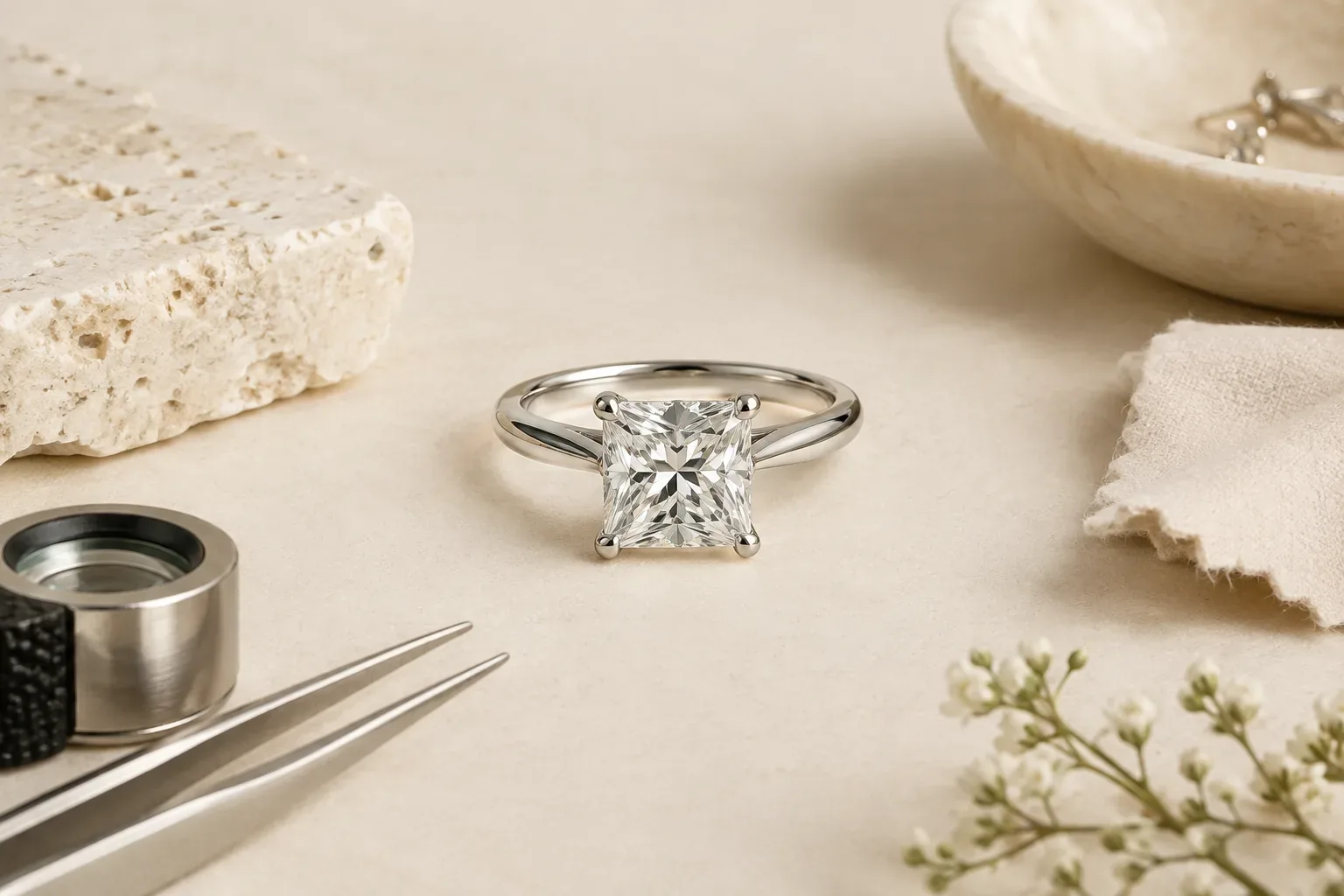
In jewelry practice, the term “princess cut” refers to a square or nearly square brilliant faceting style that emphasizes sparkle and a modern geometric look. In finished rings the cut is often set with prongs that protect each corner, with variations including four‑prong, V‑prong, halo, channel or bezel styles. These setting choices directly influence how the ring behaves in daily use.
Because the shape presents four pointed corners at the girdle, corners are the parts that are most exposed to knocks and fabric. A protective V‑prong or bezel that wraps the corner reduces snagging and helps protect the stone’s girdle and corners from impact. Conversely, settings that leave corners exposed or that use thin, worn prongs increase the risk of catching on fabric or of localized chipping if the stone receives a sharp blow.
Durability factors you can evaluate before purchase
Durability for an engagement ring depends on several separable factors: the gemstone’s material properties and any treatments, the geometry of the cut (corner shape and faceting), the quality and style of the setting (prong thickness, number and design), and ongoing maintenance. The GIA emphasizes that treatments and material identity affect care and longevity, and the FTC requires accurate disclosure so consumers can make informed comparisons.
When you shop, ask for documentation that specifies whether the stone is natural or lab‑created and whether it has been heat‑treated, fracture‑filled or otherwise enhanced. Only a qualified gemological laboratory or an experienced independent jeweler can reliably verify those details. Without such verification, you cannot depend on vendor statements alone to assess the stone’s long‑term durability or required special care.
Snagging, chips and realistic repair risks
Snagging: Square corners can catch jewelry threads, knitwear and other textured fabrics more than rounded stones. A low‑profile mount and protective prongs reduce but do not eliminate this risk. If you work with fabrics or wear gloves often, select a setting that shields the corners or choose a lower profile ring.
Chips and impact damage: Even very hard gemstones can chip on thin points or vulnerable facets. Where the corners are exposed and the prongs are thin or worn, a blow at the corner is likelier to produce localized damage than the same blow to a rounded girdle. Regular inspection and timely re‑tipping or reinforcement of prongs are the primary ways to reduce long‑term repair need.
Repair risk and cost: Repair typically involves re‑tipping or replacing prongs, resetting a loose stone, or in the case of a chip, potentially recutting or replacing the stone. Jewelers Mutual and other trade resources recommend insurance and regular preventive maintenance as the most effective way to limit repair cost surprises. Exact repair options and costs depend on the metal, setting complexity, and whether a damaged stone can be repaired or must be replaced.
Safe care and maintenance guidance
Routine care reduces both snagging and repair risk. Have prongs and settings inspected by a qualified jeweler at least once a year, or more often if the ring is worn during manual tasks. Clean the ring using the method recommended by the seller and by reference authorities: many stones and settings tolerate a warm, soapy water soak and a soft brush, but some treated or porous gems need specialist care as the GIA notes.
Remove your princess cut engagement ring for heavy manual work, contact sports, and activities with abrasive surfaces. If you notice a bent, loose or worn prong, stop wearing the ring until a jeweler confirms the stone is secure. Keep paperwork, certificates and seller disclosure in a safe place and update your insurer after significant repairs or modifications.
Selection and gifting guidance — practical and respectful
When selecting or gifting a princess cut engagement ring, balance aesthetic preference with realistic wear patterns of the recipient. If the wearer has an active daily routine or works with fabrics often, favor protective setting styles such as V‑prongs, partial bezel or low‑profile mounts. For wearers who prioritize maximum sparkle and modern lines, a halo or robust prong design can be a compromise.
Always request written disclosures about whether the stone is natural, lab‑created or treated, and where applicable, ask for a gemological report from a recognized laboratory. The FTC and GIA resources cited here underline that written seller disclosures and professional testing protect buyers and recipients. Offer to include an inspection schedule or insurance as part of the gift if the recipient values practical protections.
Limits on what you can verify and when to call a professional
A non‑specialist cannot reliably verify a stone’s exact material, the presence or absence of certain treatments, or fine details of mounting integrity without professional tools. The GIA and FTC are clear that treatments, disclosure and lab testing matter for durability and care decisions. If durability is a top priority, ask a qualified jeweler to examine the mounting and request a gemological certificate before finalizing a purchase. If the seller does not provide clear, written answers or a lab report, treat any verbal assurances as insufficient.
Final decision checklist
Before you buy or gift a princess cut engagement ring, confirm the following: the seller’s written disclosure of the stone’s origin and any treatments; whether a recognized gemological laboratory report is available; the chosen setting style and how it protects the corners; a documented inspection and maintenance schedule; and an insurance or repair plan. These steps, supported by the trade and consumer protection sources cited, give you the best evidence‑led path to a ring that balances the princess cut’s distinctive look with long‑term wearability.
Frequently asked questions
Is a princess cut diamond less durable than a round brilliant?
The corners of a princess cut create localized vulnerability that can increase the risk of snagging and corner chipping compared with a rounded shape. Proper protective settings and routine inspection reduce the practical difference, but only a professional inspection and, where appropriate, a gemological report can confirm whether a specific stone and setting will withstand daily wear.
What setting is best to protect a princess cut engagement ring?
Settings that protect the corners, such as V‑prongs, partial bezels or low‑profile mounts, offer better protection against snags and impact than exposed four‑prong designs. A halo can add visual protection but does not substitute for well‑built corner protection and regular maintenance.
Can treatments affect a princess cut’s durability?
Yes. Certain treatments and enhancements can change how a gemstone responds to heat, chemicals and impact. The GIA recommends checking for treatments because they influence care and longevity, and the FTC requires sellers to disclose material treatments; a laboratory report will provide definitive information.
How often should prongs be inspected?
Have a qualified jeweler inspect prongs and the setting at least once a year and after any hard impact. More frequent inspections are sensible for active wearers or if the ring experiences frequent contact with hard surfaces.
Can a chipped corner be repaired?
Some chips can be polished out or partially reshaped, but severe corner damage may require recutting or replacing the stone. Repairability depends on the stone’s size, material and the extent of the damage, so consult an experienced jeweler for an assessment.
What documentation should I ask for when buying a princess cut engagement ring?
Request written seller disclosures about whether the stone is natural, lab‑created or treated, and ask for any available gemological laboratory report that confirms identity and treatments. The FTC and GIA advise that these documents are essential for understanding durability and care requirements.
Should I insure a princess cut engagement ring?
Yes. Given that repairs or replacement can be costly in the event of damage, Jewelers Mutual and other trade organizations recommend insurance or a repair plan as part of a responsible ownership strategy.
Sources and further reading
- Imaginaire Digital — Imaginaire Digital
- Jewelers Mutual — Jewelers Mutual
- Gemological Institute of America — Gemological Institute of America
- Federal Trade Commission — Federal Trade Commission