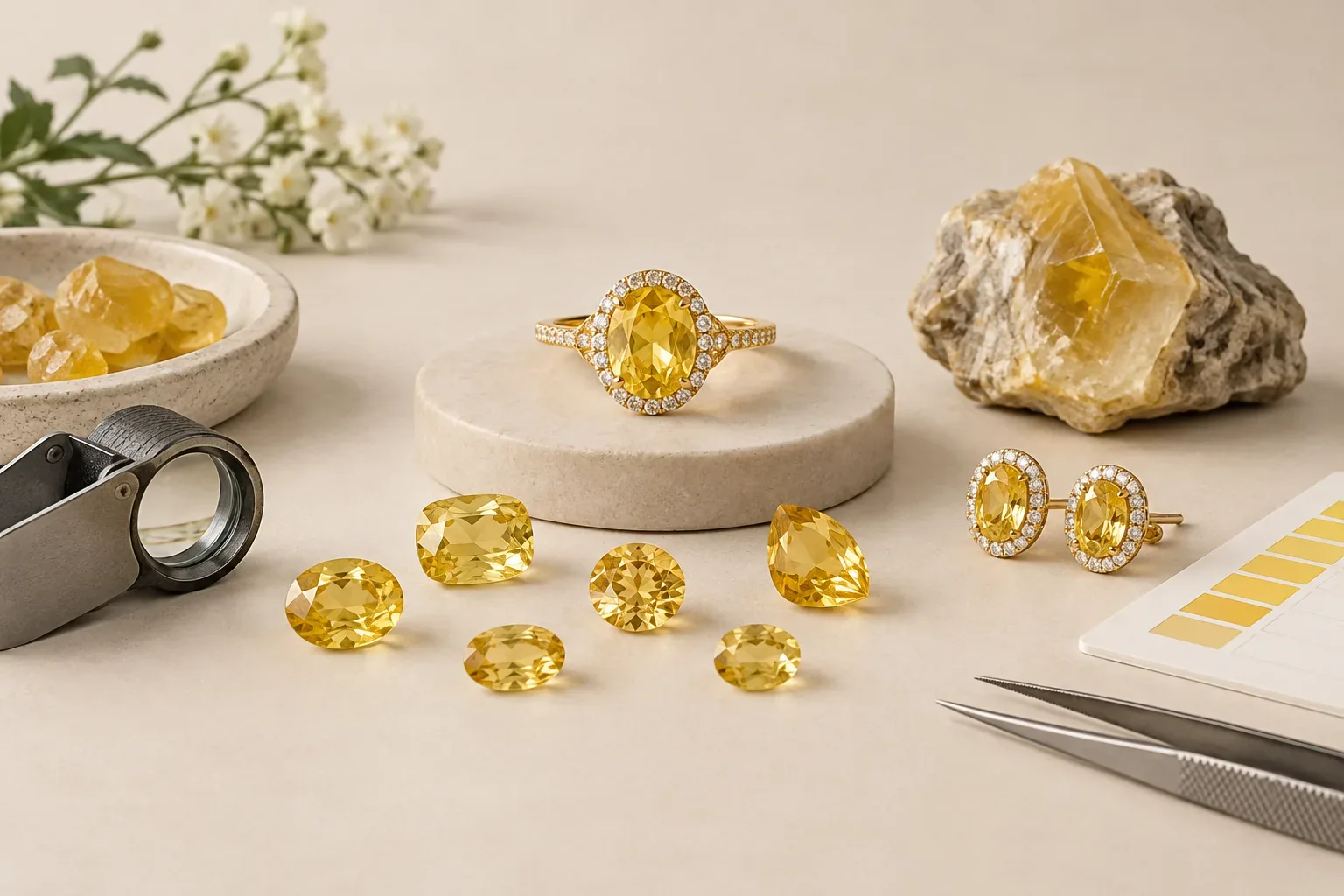
Meaning at a glance
This guide explains how to judge yellow sapphires by color, clarity, and cut; how treatments and origin affect value; practical buying and gifting tips; safe care; and what requires a gemological report or qualified jeweler to verify.
Quick, direct answer
A good yellow sapphire purchase balances vivid, evenly distributed color, clean appearance to the eye, a cut that maximizes brilliance without masking tone, and transparent disclosure about treatments and origin; final verification of natural origin and undisclosed treatments requires a qualified jeweler or an independent gemological laboratory report.
Use color as the primary aesthetic and value driver, clarity as a secondary factor for transparency and durability, and cut to optimize optical performance for the chosen setting and finger size; insist on seller disclosures and, for higher-value stones, a laboratory report before purchase.
What this guide covers and its evidence limits
This article follows the editorial thesis supplied with this brief: it gives evidence-led definitions, decision criteria, practical trade-offs, safe care guidance, and clear limits on what a shopper can verify only with a qualified jeweler or gemological laboratory.
The approved sources for this piece do not provide direct archaeological or primary historical documentation specific to yellow sapphire meanings in particular cultures or periods. Where modern trade, treatment, disclosure, and style trends are relevant, this guide cites the named, approved publishers for those points.
Historical evidence and cultural meanings (what the sources do — and do not — document)
Among the approved sources used here there is no specific historic record catalogued for yellow sapphire symbolic meanings tied to a particular culture or precise historical period. Because the supplied evidence set is focused on contemporary trade, consumer protection, and jewelry trends, any historic-attribution statements would require sources outside the approved list and therefore are not presented as documented history in this article.
Modern personal interpretations and symbolic uses of yellow sapphire exist widely today, but those are distinct from documented historical claims. Treat modern symbolic meanings as contemporary preferences or personal beliefs rather than universal or historically verified facts. This distinction preserves accurate sourcing: documented historical meanings cannot be asserted here without additional primary historical evidence.
Color: the primary value driver
For yellow sapphire, color is the dominant factor for beauty and price. Buyers typically evaluate hue (the pure yellow or yellow with secondary tones such as green or orange), tone (how light or dark the color is), and saturation (the color's intensity). The most desirable stones tend to show a clear, lively yellow with good saturation and even distribution.
When comparing stones in person or in consistent lighting, choose a color that pleases the eye for the intended jewelry use. A pale, lemon-yellow may be more subtle and wearable daily, while a richer golden yellow can read as more vivid and may command a premium. Balance personal taste with price expectations because richer saturation often increases cost.
Clarity and durability considerations
Clarity in sapphires reflects visible inclusions, overall transparency, and structural features that can affect durability. Sapphires commonly contain inclusions; many are eye-clean and attractive, but surface-reaching fractures or brittle inclusions reduce toughness and may make a stone less suitable for rings worn daily.
Because treatments can alter clarity and stability, follow disclosures closely. The Gemological Institute of America (GIA) highlights that treatments, detectability, and durability are important consumer questions for gemstones, and a qualified jeweler can advise whether a particular clarity characteristic affects long-term wear.
Cut and shape: maximizing color and brilliance
Cut determines how a yellow sapphire displays color and sparkle. A well-proportioned cut distributes color evenly and allows light to return to the eye, while a poor cut can make an otherwise attractive color look washed out or too dark. For yellow stones, deep cuts can intensify color but may reduce apparent size; shallow cuts can increase face-up size but risk dullness.
Choose a shape and cut to match the setting and how the piece will be worn. For engagement rings that receive daily wear, a cut that balances fire and durability is preferable. Professional Jeweller's trend reporting notes continued consumer interest in gemstone rings and sculptural styles, so consider how the cut interacts with the chosen design.
Treatments, disclosure, and lab reports
Treatments are common in colored gemstones and materially affect price and care. The GIA emphasizes that treatments, disclosure, detectability, durability and special care create distinct consumer questions for gemstones. The Federal Trade Commission advises consumers need clear distinctions among natural, lab-created, treated, cultured and imitation materials and written seller disclosures.
Before buying, ask whether a yellow sapphire is natural, heat-treated, diffusion-treated, or lab-created, and request any available laboratory report for clarity on origin and treatment. For higher-value stones, an independent report from a reputable gemological lab is the only reliable way to verify claims about natural origin and undisclosed treatments.
Value trade-offs: size, color, clarity, and treatment
Price reflects a combination of color saturation, hue preference, clarity, carat weight, cut quality, and treatment status. A smaller, vivid, eye-clean natural stone often commands a higher price than a larger pale or heavily included stone. Treated stones can offer dramatic value advantages, but buyers should understand the treatment's permanence and impact on care.
Decide which attributes matter most to you. If color is paramount, you may accept moderate inclusions. If you want maximum durability for daily wear, prioritize fewer surface-reaching inclusions and verified treatments that do not compromise toughness. For any premium paid, require a written disclosure and, ideally, a laboratory report.
How yellow sapphire appears in jewelry today
Contemporary jewelry trends reported by Imaginaire Digital and Professional Jeweller show strong demand for engagement rings, gemstone rings, and birthstone necklaces. Yellow sapphires commonly feature as center stones in rings, as accent stones in vintage and Art Deco–inspired settings, and in colored-stone pendants and earrings where their warm color complements gold and mixed-metal designs.
Design choices influence how a yellow sapphire reads visually. Warm yellow stones pair naturally with yellow gold, while cooler mounting metals or contrasting accent stones can change perceived hue. Consider the setting, metal, and accent stones together when assessing the final look.
Practical selection and gifting guidance
Set a clear budget and prioritize attributes within it. If you are buying for a gift, discreetly learn whether the recipient prefers subtle or vivid color and what styles they wear. For engagement rings, consider whether daily wear and durability are essential and choose a setting that protects the stone.
Request written disclosures about treatments and whether the seller will provide a gemological report for higher-value stones. If buying online, ensure clear return policies and consistent, accurate photography; for significant purchases, arrange an independent appraisal. The Federal Trade Commission's guidance underscores the consumer right to clear differentiation among natural, lab-created, treated, or imitation materials.
Care, cleaning, and long-term ownership
Yellow sapphire is a corundum and is durable for most jewelry uses, but specific care depends on any treatments. Heat-treated sapphires are usually stable for routine cleaning, but diffusion treatments or surface coatings can be more fragile and require gentler care. The GIA recommends following treatment-specific guidance and professional advice for cleaning and maintenance.
For routine care, avoid harsh chemicals and ultrasonic cleaning if you have not confirmed treatment status. When in doubt about a stone's treatment or internal features, consult a qualified jeweler before using ultrasonic or steam cleaning and consider periodic professional inspections for settings and prongs.
What a buyer can and cannot verify without a lab
You can verify visible color, apparent clarity to the unaided eye, cut quality, and whether a seller provides written disclosure. You can also evaluate the stone's appearance in the intended setting under consistent lighting and confirm the seller's return policy and guarantees.
You cannot reliably verify natural origin, specific treatment types, or geographic origin without a reputable gemological laboratory report. For these attributes, seek an independent lab certificate or an appraisal from a qualified gemologist before completing a high-value purchase.
Final checklist before you buy
Confirm the stone's color, inspect for eye-visible inclusions that affect durability, assess the cut for the intended setting, and verify any treatment disclosures in writing. For meaningful price differentials or high-value stones, obtain a laboratory report and check return policies and aftercare services.
Keep expectations realistic about what can be determined visually versus what requires laboratory analysis, and choose a reputable seller who will provide transparent information and documentation.
Frequently asked questions
How important is treatment disclosure when buying a yellow sapphire?
Treatment disclosure is essential. The Federal Trade Commission emphasizes that consumers should be given clear written distinctions among natural, lab-created, treated and imitation materials. The Gemological Institute of America also notes that treatments, their detectability, and durability affect care and value. Always request written disclosure and, for higher-value stones, an independent lab report.
Can I tell if a yellow sapphire is natural just by looking?
No. While you can evaluate color, apparent clarity, and cut with the unaided eye, verifying natural origin or subtle treatments (for example, diffusion) generally requires testing by a qualified jeweler or a gemological laboratory report.
Are yellow sapphires durable enough for everyday rings?
Yellow sapphire is corundum and is generally durable for daily wear, but durability depends on internal features and any treatments. Surface-reaching fractures or certain treatments could affect toughness. Have a qualified jeweler inspect the stone and setting, and follow treatment-specific care guidance.
Should I prioritize color or size when choosing a yellow sapphire?
Color is usually the primary value driver for yellow sapphires; vivid, evenly distributed color often commands premium prices. If color is most important to you, choose the best color within your budget. If size is the priority, be prepared to accept compromises in saturation or clarity for a larger stone.
What documentation should I ask for when buying a high-value yellow sapphire?
Ask for written disclosure of any treatments, the seller’s return policy, and an independent laboratory report that verifies natural origin and treatment status. The FTC recommends clear, written disclosures, and a laboratory report is the reliable way to confirm claims about origin and undisclosed treatments.
How should I clean a yellow sapphire?
Cleaning depends on treatment. Heat-treated sapphires are usually stable for routine cleaning, but diffusion-treated or coated stones can be more fragile. Avoid harsh chemicals and, if treatment status is unknown, avoid ultrasonic and steam cleaning until a qualified jeweler advises it is safe. The GIA recommends following treatment-specific care guidance.
Sources and further reading
- Imaginaire Digital — Imaginaire Digital
- Professional Jeweller / PRYA Jewellery Search Insights — Professional Jeweller / PRYA Jewellery Search Insights
- Gemological Institute of America — Gemological Institute of America
- Federal Trade Commission — Federal Trade Commission