Meaning at a glance
Oval cut engagement rings are not inherently fragile, but their durability for daily wear depends on the gemstone material, any treatments, the setting style, and wearer habits; the right setting and regular professional checks minimize snagging and repair risk, while written disclosures and laboratory reports are needed to confirm treatments and origins.
What ‘durability’ means for an oval cut engagement ring
When shoppers ask about oval cut engagement ring durability they are asking several different questions at once: will the shape resist chipping or breaking; will the setting keep the stone secure under daily knocks; how likely is the ring to catch on clothing; and how easy and risky are repairs if something goes wrong. Each of those is a separate decision criterion.
A gemstone’s physical properties (how it resists scratching, chipping, or cleavage) are central. Treatments or enhancements can change those properties, and disclosure and detectability of treatments are an important consumer question, as described by the Gemological Institute of America (GIA). The mounting—prongs, bezel, or halo—affects both scratch and snag risk and the potential complexity of any repairs. Seller documentation, warranties, and written disclosure likewise affect what you can verify before purchase; the Federal Trade Commission emphasizes the need for clear, written distinctions among natural, lab-created, treated, and imitation materials.
Modern evidence and popularity — what the market shows
Most concrete evidence about oval cuts in jewelry comes from recent market and search patterns rather than ancient texts. Industry visibility and search estimates for 2026 show strong consumer interest in oval engagement rings in the UK market, indicating that the oval silhouette is a significant modern preference, according to Imaginaire Digital. That demand has implications for availability of setting styles and repair services: a popular shape tends to be better supported by retailers and independent jewelers.
Trade and consumer-insurance commentary for 2026 also highlights broader styling trends—fluid forms, stacking, colored gemstones, craftsmanship and versatility—that put oval cuts in context, as observed by Jewelers Mutual. Those modern trends influence how designers make settings (for example, low-profile or protective bezels) and how insurers and repairers see likely claims and maintenance needs.
Documented history versus modern personal meanings
Documentation in the approved evidence focuses on market trends, materials and consumer protection rather than ancient or universal symbolic meanings for the oval cut. Modern personal interpretations—such as seeing an oval as elegant, elongating the finger, or evoking vintage styles—are valid but subjective, and they are not the same as documented, historical fact. The sources used here report on demand and care considerations; they do not assert a single cultural symbolism for the oval shape across time.
If you want a ring that carries a specific symbolic meaning, treat that meaning as a contemporary personal or cultural choice rather than as a universal historical attribute. For shopping and safekeeping decisions, documented facts about materials, treatments and setting construction are more relevant than symbolism.
How the oval cut and related motifs typically appear in jewelry
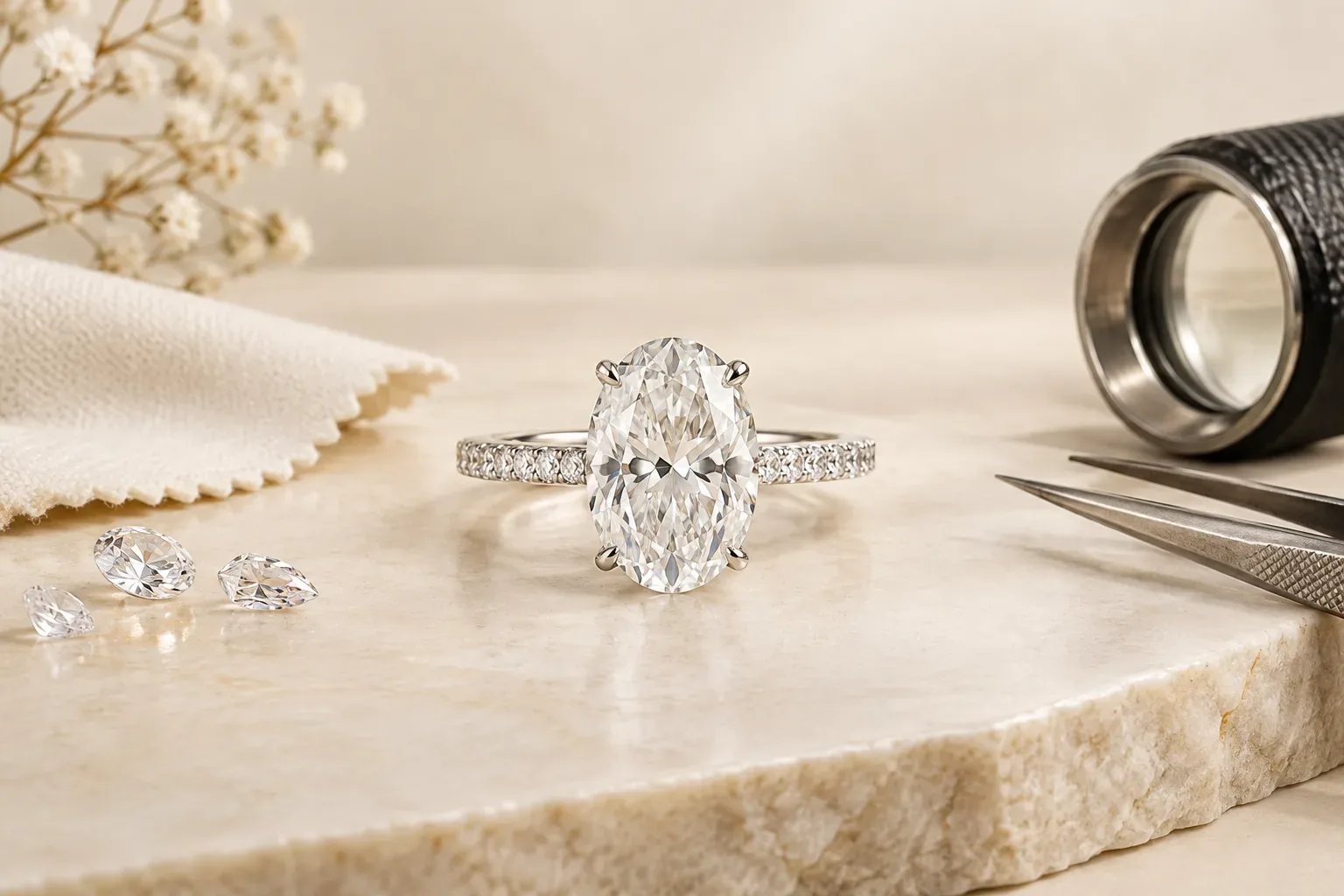
The oval cut is an elongated brilliant-style shape commonly used for diamonds and many colored gemstones. Jewelers set oval stones in a variety of mounts—classic solitaires, halo designs, three-stone rings, bezel settings, and side-stone pavé mounts—each changing exposure and risk. The oval’s length-to-width proportions and its tapered ends are attractive stylistically but can concentrate stress at the short tips unless the setting protects those points.
Designers and buyers combine the oval with motifs such as halos (a ring of small stones around the center) to increase visual size and provide partial edge protection, or with low-profile bezels that wrap metal around much of the stone’s girdle for greater resistance to snagging. Because contemporary demand favors versatility and fluid forms, as Jewelers Mutual notes, many modern mounts attempt to balance sparkle with protection.
Common durability trade-offs: sparkle, profile, and protection
Open prong settings maximize light and sparkle but leave more of the stone exposed to knocks and snagging on fabrics. A high-set oval solitaire can be more likely to catch than a low, close-to-finger bezel. Conversely, a full bezel or channel setting reduces snagging and protects the stone’s edges but can slightly reduce the perceived brilliance because more metal surrounds the gem.
Halos and side stones add visual mass that can reduce how much a center oval catches, but they also create more small crevices where dirt can collect and where repairs to multiple stones become necessary if there is damage. The practical choice is a trade-off between the aesthetic you want and how much protection you need for the intended wearer’s daily activities.
Care, maintenance, and repair risk
Routine care greatly reduces long-term repair risk. Professional jewelers recommend periodic inspections (frequency depends on wear—see the FAQ) to check prongs, settings and any wear to the metal. Cleaning to remove grit from settings keeps small chips from propagating into larger problems. If a ring is worn during heavy manual tasks, risk of bent prongs, loose stones or scratches increases.
When repairs are needed, complexity depends on what is damaged. Re-tipping or replacing prongs, re-setting a loose stone, or repairing a damaged halo require different skill levels; a multi-stone halo repair can be more time-consuming than fixing a single-prong issue on a solitaire. Only a qualified jeweler can assess the extent of any damage and the best repair approach, and in questions of treatment stability or origin you may need a gemological laboratory report for a definitive answer—an important limit on what a shopper can verify without professional help.
What shoppers should verify before buying
Ask the seller for clear, written disclosures about whether the center stone is natural, lab-created, treated or an imitation—the Federal Trade Commission explicitly advises consumers to seek such written distinctions. For gemstones and treatments, consult the Gemological Institute of America’s guidance on how treatments affect detectability, durability and care so you understand any special handling your chosen stone requires.
Request a grading report when purchasing high-value diamonds or gemstones, inspect return and warranty policies, and consider getting an independent inspection if you have specific durability concerns. Visual checks can show obvious chips, worn prongs or loose side stones, but tests for treatments or internal weaknesses generally require a qualified jeweler or a gemological laboratory.
Practical selection and gifting guidance
Match the ring’s construction to the wearer’s lifestyle. For an active wearer or someone who uses their hands regularly, prioritize protected mounts (low-profile bezels, well-supported prongs, or small halos) and more durable metals. For someone who values maximum brilliance and is comfortable with periodic maintenance, a classic prong-set oval might be a better aesthetic fit.
When gifting, ask questions discreetly or select options with easy resizing and return policies. Obtain and keep written disclosures and any grading reports, and consider adding insurance or a maintenance plan. If you are unsure about treatments, origins, or the long-term durability of a particular stone, tell the recipient that a professional inspection can clarify those points and offer to cover that service—this both respects personal choice and reduces the chance of surprises.
Limits on what you can verify without a pro
Shoppers can visually inspect a ring and check the seller’s paperwork, but they cannot reliably determine certain things without expert tools: the presence and permanence of some treatments, whether a stone is natural or lab-created in all cases, or micro-fractures and internal cleavage planes that affect breakage risk. The GIA explains that treatments and their detectability create distinct consumer questions and that laboratory testing is sometimes required for definitive answers.
If a seller cannot provide written disclosure or a reputable lab report for a high-value stone, treat that as a red flag. For consumer protection, the Federal Trade Commission advises written seller disclosures and clear labeling for treated, lab-created, and imitation stones.
When to consult a qualified jeweler or gemological laboratory
Have a jeweler inspect the ring if you see loose prongs, chips, a stone that moves, bent shanks, or significant wear to the setting. Consider a laboratory report if you need confirmation of treatment, origin, or a precise grading of a high-value diamond. For routine care, a yearly inspection is a practical baseline for many wearers, with more frequent checks for very active wear or older settings.
A professional can also advise on best repair methods and whether a design change—adding a bezel, re-setting low, or reinforcing prongs—would materially reduce future repair risk given the wearer’s activities.
Frequently asked questions
Is an oval cut more likely to snag than a round cut?
An oval cut can be more prone to catching at its narrow ends than a round cut because of its elongated shape, especially in high-prong mounts. Setting choice matters more than shape alone: bezels and low-profile mounts reduce snag risk, while exposed prongs and high settings increase it.
How often should I have an oval engagement ring inspected?
Frequency depends on wear. A general guideline is at least once a year for routine inspection, with more frequent checks for very active wearers or if you notice looseness, noise or visible wear on prongs or the shank.
Do gemstone treatments affect durability?
Yes. Some treatments alter a gem’s stability or require special care. The Gemological Institute of America notes that treatments and their detectability raise distinct consumer questions, so you should get written disclosure about any treatments and ask how they affect long-term care.
Can I verify if a stone is treated or lab-created without a lab report?
You can ask the seller for written disclosure and for any laboratory reports the seller provides, but definitive verification of many treatments or origin claims typically requires testing by a qualified gemological laboratory.
Does choosing a protective setting make repairs less likely?
Yes. Settings that enclose more of the stone—full bezels, protective halos and lower profiles—reduce snagging and the likelihood of chips to the stone’s edges. However, protective settings may change the ring’s appearance and can make some repairs more complex if multiple small stones are involved.
Should I insure an oval engagement ring?
Insuring a valuable engagement ring is a practical step to protect against loss, theft or damage. Check with insurers about coverage options and any required appraisals or documentation. Jewelers Mutual and other industry sources note that insurer and repair expectations are influenced by current styling and wear patterns.
Sources and further reading
- Imaginaire Digital — Imaginaire Digital
- Jewelers Mutual — Jewelers Mutual
- Gemological Institute of America — Gemological Institute of America
- Federal Trade Commission — Federal Trade Commission