Meaning at a glance
Tanzanite's value depends primarily on observable gemstone factors — color, clarity, cut, carat weight and treatment — together with rarity and market demand; buyers should verify-condition, ask about treatments and disclosures, and choose stones that suit both budget and personal meaning.
Direct answer — what determines tanzanite quality and value
The primary factors that determine tanzanite quality and value are the gem’s color, clarity, cut and carat weight, together with any treatments, the stone’s rarity in the market, and the reputation or disclosure practices of the seller. These are the same broad criteria used across many gemstones, so assessing tanzanite is about balancing visual appeal, durability for the intended use, and documented information about treatments and origin.
Historical evidence and cultural context
The Victoria and Albert Museum (V&A) places gemstones within a long history of jewellery use and changing social meanings, noting that some gems have deep historical associations while others are products of more recent trade and marketing. In that framework, tanzanite is best described as a modern gemstone in terms of its cultural life: it does not carry centuries of documented ritual or folk meanings in the way that historically traded gems like sapphire, ruby or emerald do.
Because the historical record that links specific meanings to gemstones varies widely across cultures and periods, museum scholarship like the V&A’s treats each gem on its documented evidence rather than on later popular claims. For tanzanite, available museum summaries emphasize its place among 20th-century and later gemstone markets rather than long-standing devotional or ceremonial roles in older civilizations.
Documented historical meanings versus modern interpretations
Documented historical meanings are those that can be tied to particular cultures, museums or archival records. The V&A’s resources distinguish between jewelry with long-established cultural symbolism and gemstones whose associations arose more recently through trade, design trends and advertising. For tanzanite, documented historical meanings are therefore limited: authoritative museum accounts treat it as a gemstone with a largely modern provenance and fashion history rather than an object with ancient, widespread cultural symbolism.
Modern personal interpretations—how someone today might read meaning into tanzanite—are common and valid as personal or contemporary cultural expressions, but they differ from documented historical associations. Buyers and gifters should treat modern interpretations (for example, ideas about spiritual properties or birthstone status) as contemporary layers of meaning created in recent decades rather than as historical facts.
How tanzanite appears in jewellery
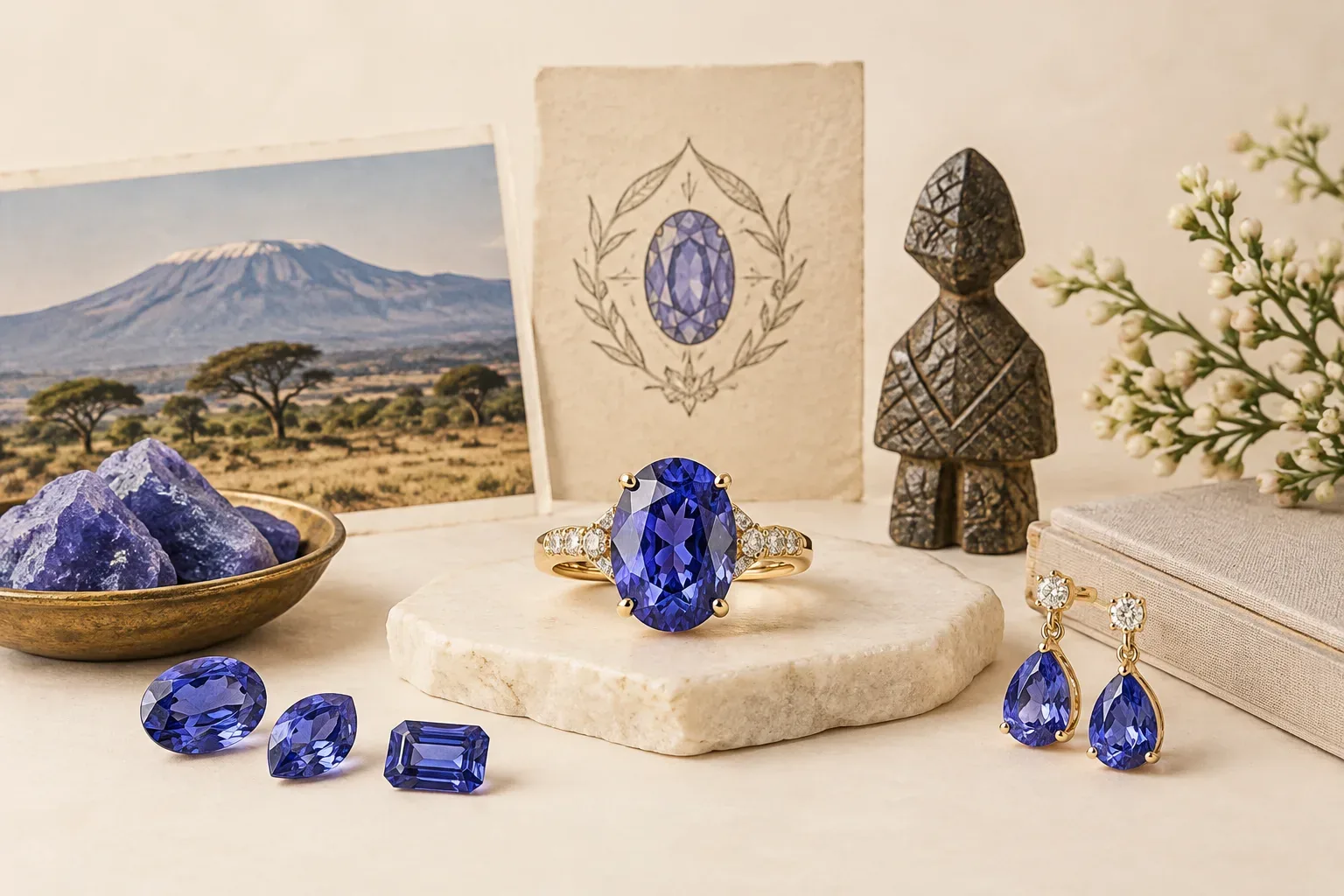
In practice, tanzanite is most often set as a faceted gemstone in rings, pendants, earrings and brooches where its color and light performance are visible. Designers typically use faceted cuts that emphasize color and brilliance, and settings that protect the stone from knocks; bezel, halo and prong settings are all common depending on design and the size of the stone. Jewellery context matters: a delicate pendant will present a different risk profile for wear than a ring intended for everyday use.
Because a gem’s cutting style changes how its color and light look, cut is both a stylistic and value factor. A cut that maximises color and minimises visible inclusions will typically make a stone more desirable in the marketplace, while a cut that emphasises weight at the cost of face-up colour may lower perceived quality even at higher carat weights.
Practical quality factors to inspect when buying
Color is usually the primary visual factor. Buyers should look for a strong, even saturation and a pleasing hue in the face-up view of the stone. Because lighting affects appearance, inspect tanzanite in both natural daylight and a consistent indoor light source to judge color consistently.
Clarity affects value where inclusions are visible to the naked eye. Examine the stone in good light and, if possible, under magnification to see whether inclusions interrupt the face-up appearance. Many gemstones are attractive with small, internal inclusions; the key is whether they affect the look or durability of the gem.
Cut influences both beauty and apparent size. A well-cut tanzanite will deliver balanced brilliance and show color evenly. Consider whether the cutter prioritized weight over optical performance, and whether the cut suits the intended setting and wear.
Carat weight affects price non-linearly: larger stones are rarer and typically command higher per-carat prices, but value always depends on the interaction of size with color, clarity and cut.
Treatments and imitations matter for value. The Federal Trade Commission (FTC) emphasises that sellers must disclose treatments and any imitations, and buyers should request written confirmation. Thermal or other common treatments that enhance color are widely used in the trade for many gemstones; disclosure preserves trust and helps you compare like for like.
Origin and rarity are contextual value drivers. When provenance is meaningful to you, seek documentation from reputable sellers. A trustworthy seller will share information about sourcing practices and any available laboratory reports without pressure.
Practical buying and gifting guidance
Decide first how the jewellery will be worn. For pieces intended for daily wear, prioritise secure settings and consider the gem’s hardness and toughness relative to the activity of the wearer. For occasional pieces, you can prioritise a larger or more finely coloured stone even if the setting is more delicate.
Buy from reputable sellers who provide clear disclosures and return policies. Ask specifically about treatments and whether the seller will provide a laboratory report or written confirmation of treatment and origin. The FTC advises that such material treatment and imitation disclosures are important for informed purchases.
Request good-quality photographs and, if possible, examine the stone in person or through a trusted third-party appraiser. For higher-value purchases, obtain an independent gem laboratory report that identifies any treatments and provides basic grading information, and keep that report with the jewellery for future resale or insurance.
Consider the recipient’s taste and the symbolic meaning you want to convey. Since tanzanite’s cultural meanings are largely modern and personal, think about whether you are giving the gem for its color and beauty, for a contemporary symbolic reason, or as a market investment. Frame your gift message accordingly so the recipient understands what you intended.
When budgeting, weigh long-term considerations: well-cut stones with appealing color often retain desirability better than larger stones with poor color or visible inclusions. If resale or investment is a goal, documentation and treatment disclosure are especially important.
Caring for tanzanite in jewellery
Store tanzanite separately from harder gems to avoid surface scratches and choose settings that protect the gem from impact. Clean gently with a soft brush and mild soapy water; avoid ultrasonic cleaners or harsh chemicals unless a jeweller or lab report confirms it is safe for a specific stone.
For high-value pieces, maintain paperwork including purchase receipts and any laboratory reports; these help with insurance and future resale. Regular professional checks of prongs and settings will reduce the risk of loss.
Making meaning and respecting cultural differences
If you seek to attach symbolic meaning to tanzanite, make a clear distinction between museum-documented cultural associations and contemporary personal meanings. The V&A’s work shows how wearable objects accumulate layered meanings over time; many modern gemstone meanings emerge through design, marketing and personal narratives rather than long-standing communal rituals.
Be respectful when attaching cultural or spiritual meanings that draw on traditions from specific cultures. If you wish to reference a historical or cultural symbol in a gift, research its origins and ensure you are not appropriating or misrepresenting its significance; our related guide on choosing meaningful jewelry offers practical steps for respectful gifting.
Frequently asked questions
What are the most important visual factors to check when buying tanzanite?
Check color, clarity, cut and carat weight in that order of practical importance. Inspect the stone in natural light where possible, look for even color saturation and minimal visible inclusions, and evaluate whether the cut shows the gem's color and brilliance well.
Do tanzanite stones receive treatments, and should sellers disclose them?
Yes, many gemstones are treated to enhance color or clarity in the trade; the Federal Trade Commission advises that sellers must disclose treatments and any imitations so buyers can make informed choices. Always ask for written disclosure and, for higher-value purchases, ask for a laboratory report.
How should I care for tanzanite jewellery?
Store tanzanite separately from harder gems to prevent scratches, clean gently with mild soap and a soft brush, and avoid ultrasonic cleaners or harsh chemicals unless a professional jeweller confirms they are safe for your specific piece. Have settings and prongs checked periodically.
Is provenance important for tanzanite value?
Provenance can affect perceived value, especially for collectors; if provenance matters to you, request documentation from the seller and, when appropriate, an independent report. Reliable documentation helps for insurance and resale.
Should I prioritise size or color when choosing a tanzanite?
Prioritise color and cut over raw size if you want the most visually attractive stone for the money. A smaller stone with richer color and a good cut typically presents better than a larger stone with poor color or a weak cut.
Can I wear tanzanite every day?
You can, but consider the setting and the wearer’s lifestyle. Choose protective settings for rings intended for daily wear, and be mindful of activities that expose the stone to knocks or abrasion. For frequent wear, secure settings and regular professional inspections are wise.
Sources and further reading
- Bedazzled: A History of Jewellery — Victoria and Albert Museum
- An A-Z of Gemstones — Victoria and Albert Museum
- Buying Gemstones, Diamonds, and Pearls — Federal Trade Commission