Meaning at a glance
High-profile setting engagement ring styling balances visible presence with comfort and durability by considering height, stone dimensions, finger anatomy, and lifestyle; use proportion rules (table-to-finger ratio, band width, and height for clearance), accept trade-offs (visibility vs snag risk), follow safe-care guidelines, and rely on a qualified jeweler or gemological lab to verify identity, treatments, and precise measurements.
What we mean by a 'high-profile' setting
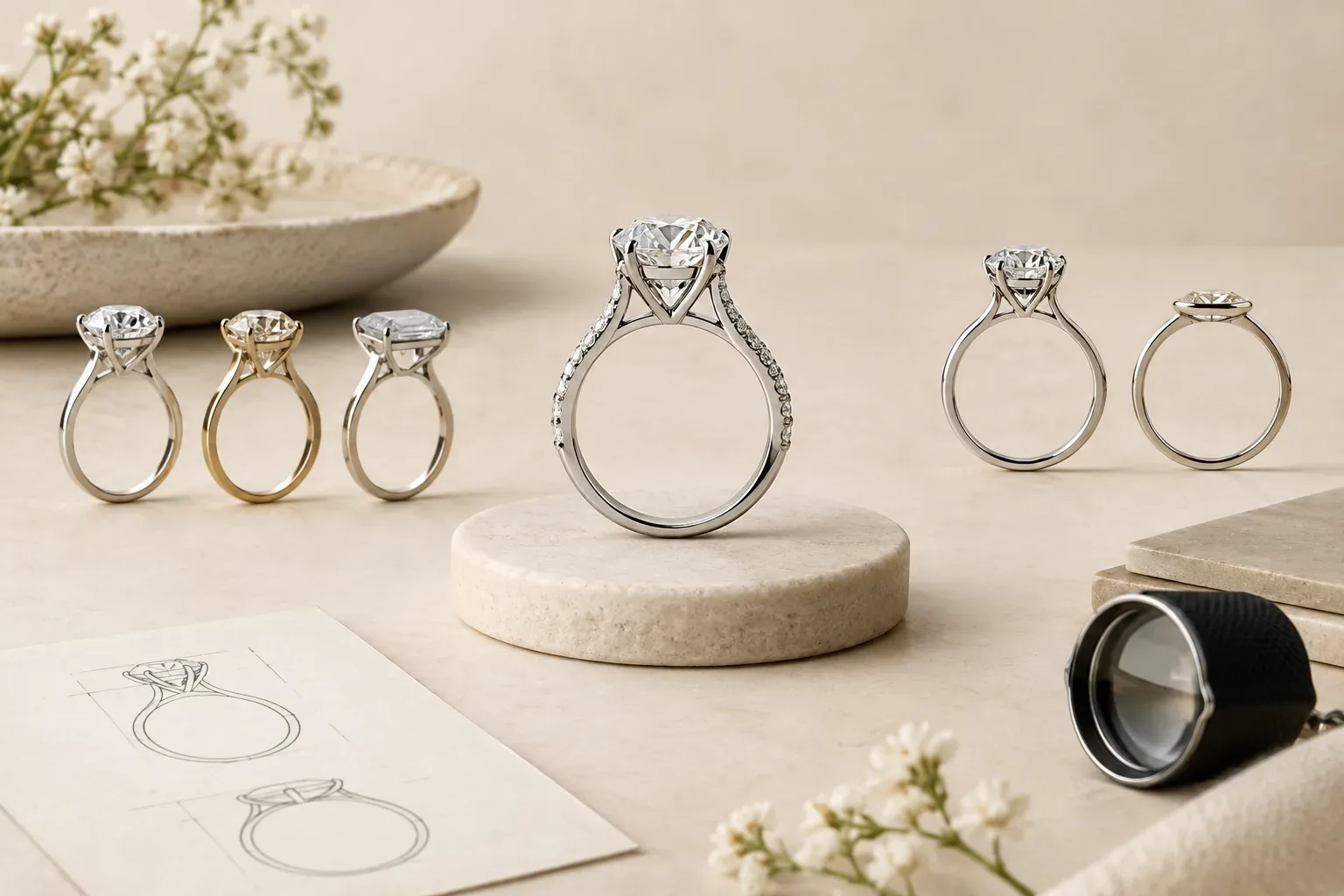
In contemporary trade usage, a 'high-profile' setting describes a mounting that lifts the gemstone well above the band plane so the stone shows more of its pavilion and crown from the side and receives greater light. High profile may include tall basket, cathedral, or elevated solitaire mounts. The modern industry conversation treats profile as a functional and stylistic choice affecting finger coverage, snag potential and the perceived size of the center stone.
Historical evidence and scope limits
The four industry sources used for this guide focus on present-day market behaviour, consumer protection and gemological disclosure rather than primary historical cataloguing of setting profiles. Imaginaire Digital reports on 2026 UK search demand for engagement rings and related styles, showing a focus on specific cuts and high consumer interest in visible stone shapes. Jewelers Mutual documents 2026 trends that emphasize craftsmanship, versatility and modern stacking, which frame how high-profile styles are interpreted today. The Gemological Institute of America concentrates on gem treatments and detectability, and the Federal Trade Commission provides guidance on truthful disclosure of gem origin and treatment. Because these sources do not provide detailed primary historical documentation, readers who need precise period-attribution (for example, how exactly Edwardian, Art Deco, or Victorian trade practice treated mounting height) should consult specialist museum catalogues, academic jewellery histories or primary trade publications.
Documented meanings versus modern personal interpretation
Documented meanings attached to a ring's setting—such as those derived from inscriptions, provenance records, or formal trade descriptions—require primary historical or archival evidence. The contemporary sources cited here support modern interpretations: Jewelers Mutual links present trends to how buyers wear rings today, and Imaginaire Digital shows which forms shoppers search for. Personal interpretations—what a tall setting signifies emotionally or symbolically to an individual—are modern and subjective. Treat those as personal meaning rather than documented cultural fact.
How a high-profile setting appears in jewelry and why it changes finger coverage
A high-profile mounting changes apparent finger coverage in three visible ways: the vertical distance from the band raises the visual centre of gravity, the stone's pavilion becomes more visible in side profile, and side metalwork (baskets or galleries) creates light and shadow that make the centre stone appear larger. That changed silhouette affects how much of the finger appears covered by metal and gem surface area when the hand is at rest or in motion.
Practically, a tall setting increases the viewer's angle into the gem, which often enhances perceived size for the onlooker but also increases the space between adjacent rings when stacking is attempted. High-profile settings therefore influence both the aesthetic proportion and the functional relationship with other jewellery and clothing.
Proportion and finger coverage: practical styling guidelines
Aim for harmony between stone diameter and finger width. As a broad rule of visual balance, the visible table diameter should not exceed roughly two-thirds to three-quarters of the visible width of the finger at the placement point, but personal taste matters. For very slender fingers, a large table can overwhelm; for broader fingers, a larger table can be flattering.
Consider band width relative to setting height. Narrow bands paired with very tall settings may look top-heavy and flex more under force. A mid‑weight band (for example, 1.8–2.5 mm for many engagement rings) often supports a moderate high profile without creating a disproportionate look; thicker bands are appropriate when the setting is tall or when the wearer prefers a more grounded silhouette.
Think about finger length and knuckle placement. A tall setting visually lengthens shorter fingers but can draw attention to prominent knuckles; if knuckles are a concern, select a slightly lower profile or a setting with side stones that visually distribute coverage.
Account for posture and daily activities. If the wearer uses hands heavily for work or sports, a lower profile or protective gallery is prudent. If social presentation and maximal brilliance are priorities, a higher setting will maximize light return and presence.
Styling trade-offs and decision criteria
Visibility versus snag risk: higher settings increase visibility and perceived size but raise the chance of catching fabrics, hair or tools. Decide which outcome is more important based on lifestyle.
Stacking and wedding band pairing: tall mounts frequently prevent flush stacking. If pairing a wedding band is planned, consider a shaped (contoured) band, a low-profile shared-mount band, or reduce the setting height to permit a closer fit.
Durability versus brilliance: taller prongs expose more pavilion but can be more vulnerable. A well-made high-profile mount with sufficient prong mass and good metal choice will reduce risk, but trade-offs remain between maximum brilliance and day-to-day robustness.
Comfort versus presence: settings that cover more finger surface and sit higher can be more noticeable to the wearer. Try rings on for several hours in-store or as part of a returnable trial to assess comfort over time.
Practical selection and respectful gifting guidance
When selecting or gifting a high-profile engagement ring, start with the recipient’s lifestyle and existing jewellery habits. If the recipient already stacks rings or favors low-profile pieces, choose a modified high-profile design or include a complementary wedding-band option.
Respect fit and sizing needs. High-profile rings distribute pressure differently; sizes that fit low-profile bands can feel tighter or looser on a tall mount. Always size based on the actual ring being purchased, and confirm the seller’s resizing policy.
Ask about disclosures and documentation before purchase. The Federal Trade Commission advises consumers to seek clear written disclosure about whether a gemstone is natural, lab-created, treated or simulated. The GIA explains that treatments can affect durability and care requirements, so prioritize transparent written information.
If gifting as a surprise, consider a temporary stand-in ring or a clear conversation about resizing and returns so the recipient is empowered to confirm comfort and proportion.
Safe care and limits on what a shopper can verify
Routine care: high-profile settings often require more frequent inspection for loose prongs and accumulated debris. Clean gently with a soft brush and warm soapy water, avoid ultrasonic cleaners for some treated or fragile gems, and follow specific guidance from the stone’s authority such as the Gemological Institute of America regarding treatments and care.
When to consult a jeweler: have a qualified jeweler check prong security and mounting alignment at least annually, and immediately after any hard knock. Jewelers Mutual recommends regular maintenance as part of responsible ownership and trend-aware upkeep.
What only a gemological laboratory or qualified jeweler can verify: exact gemstone identity, presence and type of treatments, precise carat weight, clarity and color grading, and metal fineness are verifiable only with proper instruments and certifications. The FTC emphasizes written disclosures; GIA describes which treatments are detectable and how they affect value and care. Do not rely solely on verbal assurances for these technical items.
Final considerations
Styling a high-profile engagement ring is an exercise in balancing presence with proportion, and aesthetics with practical wear. Use the visual guidelines above, prioritize disclosures and documentation at purchase, and schedule regular professional checks. If in doubt about how a particular height will pair with daily life or other rings, test alternatives in person or consult a trusted jeweler for mock-ups or mounting adjustments.
Frequently asked questions
How high is too high for an engagement ring setting?
There is no universal maximum, but 'too high' is when the wearer experiences frequent snags, discomfort, or difficulty wearing a wedding band flush. Test a candidate ring by wearing it for several hours and assess snagging, catch on clothing, and stackability. If these are problematic, choose a lower profile or a shaped wedding band solution.
Will a high-profile setting make a diamond look larger?
Yes, because raising the stone changes viewing angles and lets more light enter the gem, which can increase perceived size and brilliance. However, perceived size also depends on stone cut, table diameter and surrounding metalwork.
Can I verify gemstone treatments myself?
No. While some treatments are visible to an experienced buyer, only a qualified jeweler with proper tools or a gemological laboratory can reliably identify most treatments and disclose their implications. The Gemological Institute of America explains which treatments affect care and detectability, and the FTC requires clear written disclosure from sellers.
How often should I have a high-profile ring checked?
Have a qualified jeweler inspect prong security and mounting alignment at least once a year and after any hard impact. Frequent checks reduce the risk of loss due to loose settings.
Will a tall setting prevent resizing?
Not usually, but extreme resizing may require remounting or modification when the setting includes integrated side stones or shanks. Confirm resizing policies with the seller before purchase.
Sources and further reading
- Imaginaire Digital — Imaginaire Digital
- Jewelers Mutual — Jewelers Mutual
- Gemological Institute of America — Gemological Institute of America
- Federal Trade Commission — Federal Trade Commission