Meaning at a glance
Yes: use this checklist to define 'high-profile' for your purchase, confirm seller disclosures about stone and treatment, weigh trade-offs in comfort versus visibility, arrange professional verification when needed, and plan ongoing care and insurance.
Quick answer
If you are shopping for a high-profile setting engagement ring, start by deciding how high and visible you want the center stone, then ask the seller for written disclosures about the stone (natural versus lab-created, treatments), mounting construction (prong count, metal, under-gallery), warranty and return terms, and arrange a qualified inspection or laboratory report for anything you cannot verify in writing.
What people mean by a 'high-profile' setting
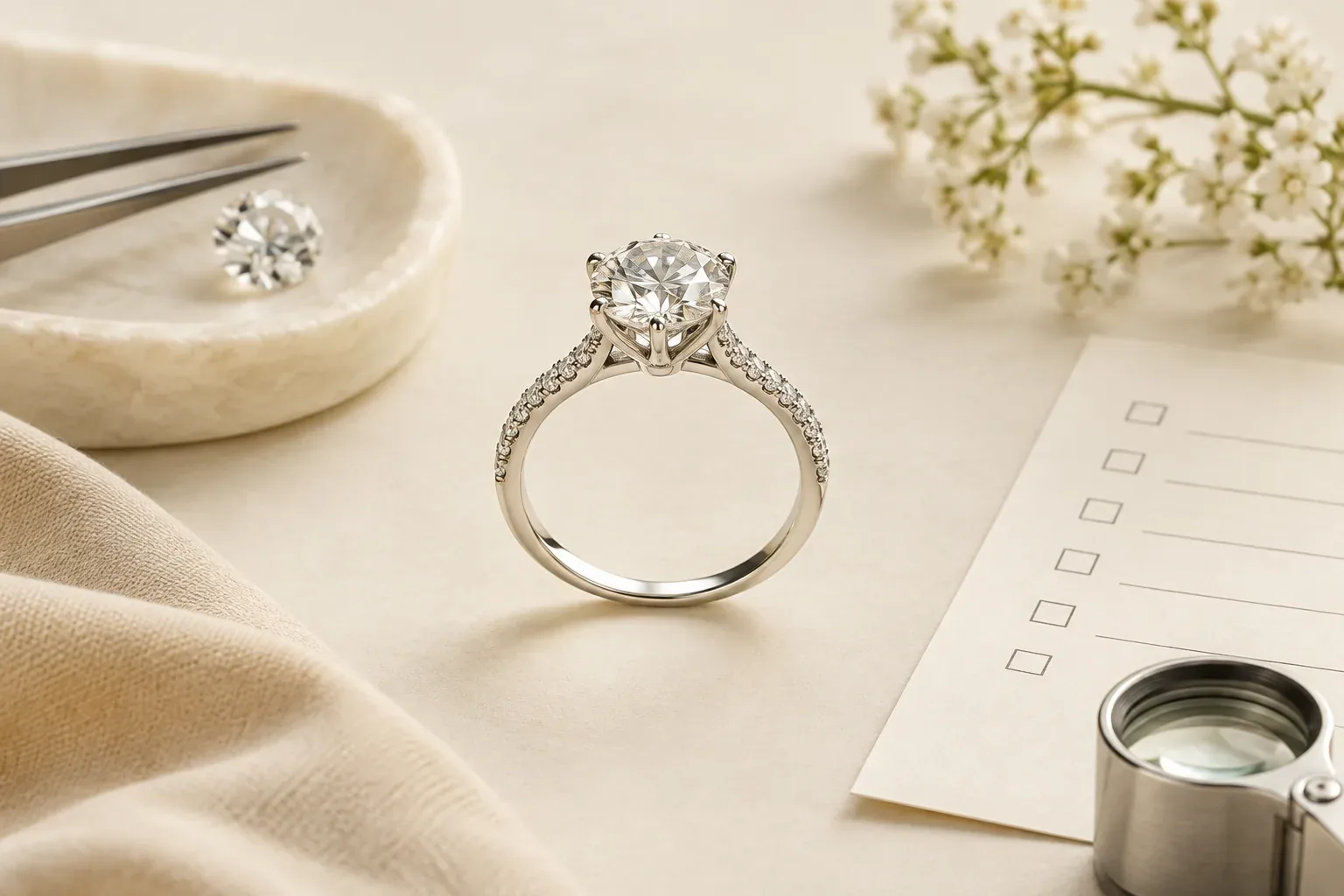
In contemporary jewelry language a 'high-profile' setting describes a mounting that raises the center gemstone noticeably above the shank so that it sits well off the finger. Common technical forms are tall prong mountings, cathedral-style shoulders, and basket or bezel‑with‑open‑gallery designs that leave space under the stone. The effect is greater visibility and light entry to the stone but also more exposure to knocks and snagging.
Historical evidence and what the approved sources show
The specific cultural history of elevated or high-set mountings is not covered in the approved trade and consumer sources used for this article. Contemporary industry reports focus on present-day demand and styling rather than long-form historical analysis. For example, market and search analyses report strong interest in visible engagement styles and particular stone shapes, but they do not trace those design choices to exact historical periods or cultures. Imaginaire Digital provides search-based evidence of current demand patterns, and Jewelers Mutual documents 2026 trends in consumer preferences and styling rather than detailed provenance of mounting forms.
Documented historical meanings versus modern personal interpretations
Because the approved sources do not provide primary historical documentation of symbolic meanings tied specifically to high-profile mountings, any claim that a tall setting had a single, historically consistent symbolic meaning across a culture or period would be unsupported here. Where historical symbolism is important to you, seek museum catalogs, academic publications, or primary-source jewelry histories for the specific time and place of interest.
Modern personal interpretations are common and vary by wearer. Today many people read a high-profile setting as a statement of visibility or celebration of the center stone, and market research shows consumers increasingly prize visibility and versatility in ring design. Those contemporary interpretations align with documented 2026 market trends toward prominent cuts and visible settings, but they are personal or cultural preferences rather than universal historical facts.
How a high-profile setting appears in jewelry and how gemstones behave there
High-profile mountings commonly use prongs—often four or six—to lift a stone away from the shank. Cathedral shoulders rise toward the center stone and create extra height while keeping the profile elegant. A basket or open-gallery design can secure the stone while exposing its pavilion to light from below. These design choices affect how the stone presents light, which influences perceived brilliance and face-up size.
Different gemstones behave differently in tall mountings. Harder stones such as diamonds or sapphires tolerate exposure and repeated wear better than softer gems; however, any elevated setting increases the risk of impact to the girdle or culet. The Gemological Institute of America (GIA) notes that treatments, detectability, durability and special care vary by gem type, so the combination of setting height and the gem's physical properties must guide selection and care.
Decision criteria: questions to ask the seller before you buy
Ask for a precise description of the mounting height in millimetres and a photo or drawing that shows how the ring sits on a finger. Confirm whether the prongs, under-gallery and shank are soldered as one piece or modular, and request the metal type and karat stamped on the piece.
Request written disclosure of the center stone's identity: natural, lab-created, treated, or imitation. The Federal Trade Commission requires clear seller disclosures about whether materials are natural, lab-created, treated or imitation, so insist on that wording in writing before purchase.
Ask whether the seller will provide a laboratory report for the center stone, and which lab issued it. A recognized gemological laboratory can supply a grading report that includes carat weight, measurements, cut, clarity and color grades for diamonds and identifications for many gem types. The GIA and other labs can also test for treatments, but not every treatment is always detectable without advanced testing.
Clarify maintenance terms: what is covered by the warranty, what inspections are complimentary (if any), the cost and timeframe for routine prong tightening and polishing, and the store’s return and resizing policy. Jewelers Mutual highlights the importance of considering craftsmanship, warranty and services when buyers prioritize wearability and long-term care.
Discuss intended daily wear. If the ring will be worn for manual work or an active lifestyle, consider asking whether a lower-profile variant is available, whether the prongs are reinforced, and whether side stones are flush-mounted for extra protection.
Confirm exact sizing policy and whether resizing will affect the setting height or require re-tipping prongs. Ask for before-and-after photos of resizing work if possible, and whether any finish or engraving will be altered in the process.
Practical trade-offs to weigh
A higher setting increases visibility, face-up presence and light return, but also increases the risk of snagging clothing, chipping on impact and prong wear. Buyers must balance the desire for visibility against comfort and durability.
Higher mountings can make the stone appear larger and more dramatic, which may increase subjective value for the wearer, but they may also complicate everyday tasks and require more frequent maintenance. Consider whether you prefer the immediate visual effect or long-term low-maintenance wear.
Resale and appraisal considerations differ by market and condition. Elevated settings that have sustained damage or required multiple repairs may affect long-term value, so documented maintenance and professional servicing records help preserve resale potential.
Care and maintenance guidance for high-profile settings
Inspect prongs visually once a month for any obvious bending, thinning, or movement of the stone. A quick mirror check and a gentle wiggle test at a jeweler will reveal loose settings before a loss occurs. Jewelers Mutual emphasizes regular inspection and professional servicing as sensible risk management.
Avoid cleaning tall settings in ultrasonic baths at home unless you are certain all stones are secure and the gem type tolerates ultrasonic vibration. Use the care guidance specific to the gem type and treatment; GIA notes that treatments and gem durability affect cleaning recommendations and long-term care.
Arrange periodic professional maintenance that includes prong re-tipping, tightening and polishing. Keep records of maintenance visits and receipts to assist claims for insurance or resale documentation.
What only a qualified jeweler or gemological laboratory can verify
A qualified bench jeweler can assess construction quality, measure precise mounting height, evaluate prong integrity, and advise on the structural soundness of the setting and whether a design modification will be stable.
A gemological laboratory can provide a formal grading report, identify many treatments, and confirm whether a stone is natural, lab-created, or an imitation. The GIA provides reference material on treatments and the limits of detectability; some treatments require specialized testing not available at all labs.
The Federal Trade Commission advises consumers that certain claims—such as origin, undisclosed treatments, and some enhancements—may require laboratory analysis to verify. Buyers should not rely solely on unaudited seller statements for such claims; insist on written lab reports or independent appraisal when provenance or treatment status matters to you.
Final practical checklist
Before you buy, get the mounting height and design description in writing, confirm metal type and markings, and obtain a written identification of the center stone (natural, lab-created, treated, or imitation). Ask for a lab report if you require grading details or treatment disclosure.
Verify warranty, return policy and servicing options in writing, ask how often the seller recommends professional inspections, and consider insurance that covers loss, theft and accidental damage. If you or the wearer lead an active lifestyle, explicitly discuss lower-profile alternatives or protective design choices with the retailer.
If anything is critical to you—treatment status, country of origin, exact grading—arrange independent laboratory testing or an independent appraisal. Record all documentation and keep service receipts to support future valuation and insurance needs.
Frequently asked questions
What exactly should I ask about the center stone when buying a high-profile ring?
Ask whether the center stone is natural, lab-created, treated, or an imitation and request that wording in writing. Ask for a laboratory report if you want grading details, and confirm any known treatments and their disclosure. The Federal Trade Commission expects sellers to disclose these distinctions, and the GIA explains that treatments and detectability affect care and value.
Can I verify treatment or origin at home?
No. Some treatments and claims of origin require laboratory equipment and gemological expertise to verify. If treatment status or origin matters to you, obtain a report from a recognized gemological laboratory or an independent appraisal.
How often should a high-profile ring be professionally inspected?
Inspect visually each month for obvious prong wear and arrange a professional inspection at least once a year or more frequently if the ring is worn daily; Jewelers Mutual recommends regular servicing to reduce the risk of loss or damage.
Are high-profile settings riskier for certain gemstones?
Yes. Softer stones or stones with cleavage are more vulnerable when set high because they are more exposed to impact. The GIA notes that stone durability and any treatments influence how you should set and care for a gem.
Will resizing change the setting height or integrity?
Resizing can affect shank thickness and, in some designs, the relative height or balance of the setting. Ask the seller whether resizing is performed in-house, how it will be done, and whether re-tipping prongs or re-profiling is included.
What documentation should I keep after purchase?
Keep the sales receipt, written disclosures about stone identity and treatments, any laboratory reports, warranty details, and all service or repair receipts. These help with insurance claims, appraisals and future resale.
Sources and further reading
- Imaginaire Digital — Imaginaire Digital
- Jewelers Mutual — Jewelers Mutual
- Gemological Institute of America — Gemological Institute of America
- Federal Trade Commission — Federal Trade Commission