Meaning at a glance
Pairing a wedding band with a high-profile setting requires clear definitions, deliberate choices about shape, gap management, and metal compatibility, trade-offs between comfort and aesthetics, care practices based on gemstone durability and treatments, and an understanding of what only a jeweler or laboratory can verify.
Definitions and what counts as a high-profile setting
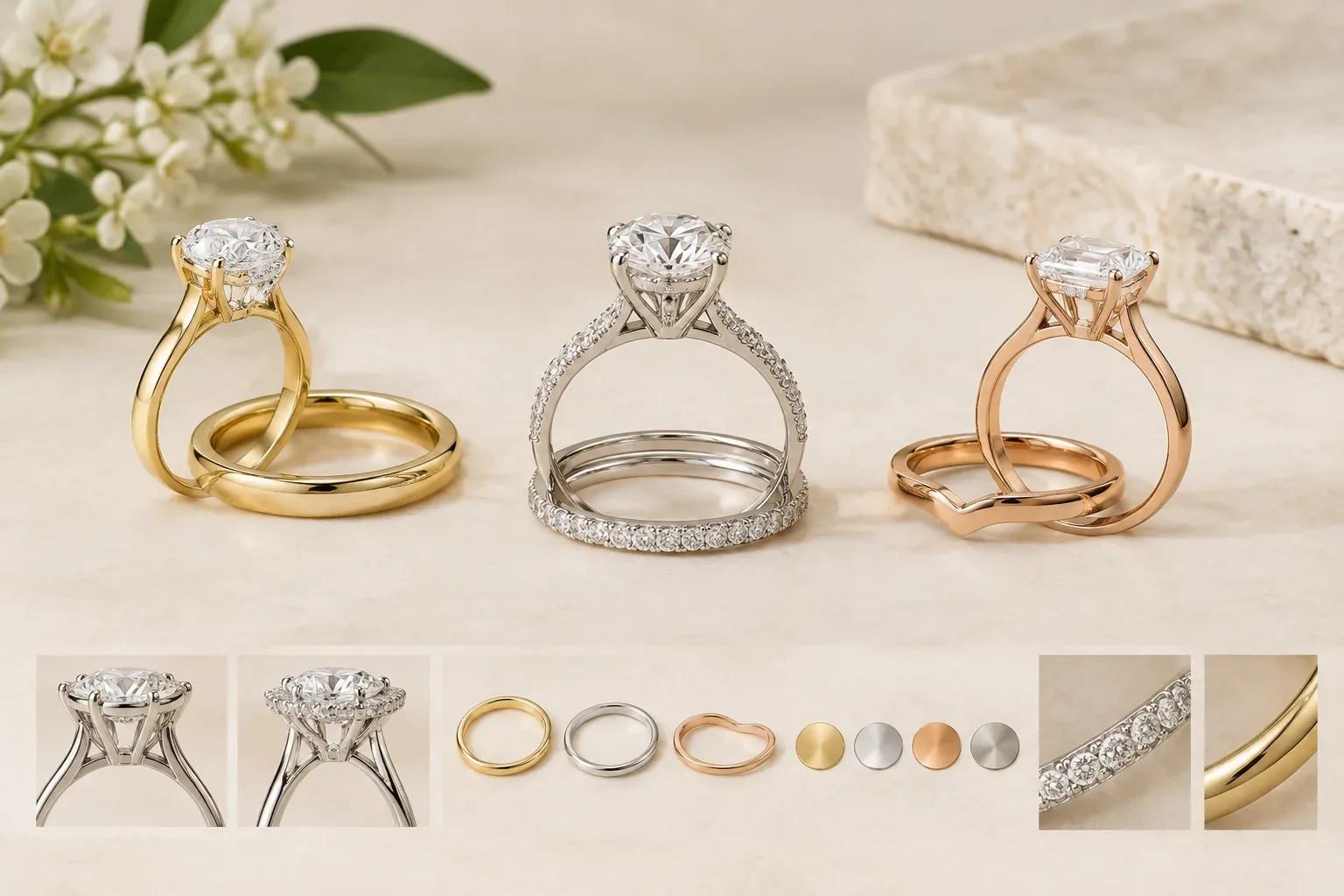
A 'high-profile setting' describes a mounting where the table (top) of the center stone sits noticeably above the plane of the wedding band when both rings are worn together. High profile designs include cathedral backs, tall prong settings, and multi-level halos that raise the center gemstone for light return and visual presence.
For the shopper, key measurable features are the vertical distance from the finger to the gem's table, the height of the gallery or prongs, and the overall silhouette. These physical measurements determine whether a standard straight wedding band will sit flush or require a contoured, notched, or spacer band.
Historical evidence and cultural periods
The professional and consumer sources reviewed for this guide (Imaginaire Digital, Jewelers Mutual, the Gemological Institute of America, and the U.S. Federal Trade Commission) focus on modern trends, consumer protection, gem treatment, and search demand rather than on primary historical archives of ring silhouettes. Those sources do not assign the ‘high-profile setting wedding band pairing’ concept to a single culture or historical period with documented evidence.
Because the approved evidence set emphasizes contemporary market behavior and technical disclosure, this article separates what is documented in those modern sources from any broader historical narratives and avoids attributing specific cultural meanings to the high-profile pairing without citation.
Documented historical meanings vs modern interpretations
Documented meanings within the approved sources relate to modern practices: Jewelers Mutual and Imaginaire describe current consumer demand for versatile, stackable and gender-neutral styling, which influences how couples choose bands to pair with high-profile engagement rings.
By contrast, modern personal interpretations—such as viewing a tall setting as a sign of status, sentiment, or a specific symbolic tradition—are personal or cultural readings that vary by wearer and are not established facts in the reviewed professional literature. Separate your personal or cultural meaning from practical choices about fit, comfort, and durability when advising a gift or purchase.
How motifs, gemstones, and traditions show up in pairing
Design motifs—halos, millegrain, filigree galleries, and side-stone shoulders—affect how a band sits against an engagement ring. A halo or ornate gallery increases the ring’s effective footprint and often forces a gap unless the band is contoured to match the halo’s curve.
Gemstones influence choices because stone shape and setting style change clearance needs. For example, elongated stones set in tall prongs create a different profile than a low-set cabochon. The Gemological Institute of America explains that treatments, detectability, and durability vary by gemstone and inform care instructions; a softer or treated stone may dictate avoiding tight, abrasive band pairings or heavy daily contact.
Traditions such as stacking multiple bands or adding anniversary bands are modern continuations and vary by personal preference. Jewelers Mutual’s trend reporting notes consumer interest in modern stacking and versatility, which has pushed demand for bands that either nest around a high setting or sit as a separate spacer ring.
Decision criteria: shape, gap, and metal
Start by measuring or estimating the engagement ring’s profile height and the shape of the gallery and shoulders. A straight, flat band is simple but often produces a visible gap beneath a high setting; a contoured band or ring with a cutout is designed to follow the engagement ring’s curve and close that gap.
Consider band width and shape. Narrower bands (1.5–2.5 mm) typically allow closer visual proximity around the engagement ring, while wider bands emphasize the gap and can crowd fingers. For very high profiles, a graduated or tapered band can balance the silhouette without appearing bulky.
Metal choice is both aesthetic and practical. Matching the engagement ring metal provides a seamless look; mixing metals is stylistically valid and noted in contemporary styling trends. Hardness and wear should figure in your choice: higher-carat yellow gold is softer than 14k or 18k white gold or platinum, so if the engagement ring is platinum, a matching platinum band resists wear more consistently over time and minimizes differential abrasion.
Practical trade-offs
A flush fit produces the cleanest appearance but is often impossible with taller galleries. Contoured bands close gaps visually but can complicate future resizing; a precisely fitted contoured band may need more extensive reworking by a jeweler to resize than a plain flat band.
Spacer bands and half-eternity rings allow flexibility: you can wear them separately on other fingers, stack them in variable orders, and they reduce the need for precise nesting. However, they change the look and add complexity to daily wear and cleaning.
Metal mixing offers visual contrast and a contemporary look but can introduce different wear patterns. For example, pairing a platinum engagement ring with a yellow-gold wedding band creates two metals that age and wear differently; customers should accept that repolishing and maintenance intervals may not match.
Care guidance and longevity considerations
Follow guidance from the Gemological Institute of America: know whether a stone has been treated, whether treatments are stable, and what special care a treatment requires. The GIA explains that some treatments affect durability and detectability, which changes cleaning and service recommendations.
Jewelers Mutual emphasizes craftsmanship and durability trends; regular inspections are recommended for high-profile settings because taller prongs and galleries are more likely to catch and suffer impact. Schedule professional checks of prongs and settings at least annually and after any significant impact.
Avoid harsh ultrasonic cleaners for stones that are treated or brittle; when in doubt, consult the seller for recommended cleaning methods and follow conservative at-home care—gentle soap, warm water, and a soft brush—until a professional gives clearance for more aggressive cleaning.
What a shopper can (and cannot) verify without a professional
You can verify visual compatibility, comfort, and immediate fit by trying rings together in person or by asking for high-resolution images and exact measurements if shopping online. Measure profile height, band width, and the engagement ring’s shoulder geometry.
You cannot reliably verify treatment history, natural versus lab-grown origin for some gems, or certain durability claims without a qualified jeweler’s inspection or a gemological laboratory report. The Federal Trade Commission requires clear written disclosure for natural, lab-grown, treated, cultured, or imitation materials; insist on written disclosures and request lab reports for high-value stones.
If the seller cannot provide appropriate documentation or refuses to disclose treatments, consider getting an independent appraisal or a lab report before purchase to confirm claims about the gemstone and metal.
Practical selection and gifting guidance (respectful and useful)
When selecting or gifting, prioritize fit and comfort first and ornament second. If you’re unsure about the recipient’s preferences, choose a versatile option such as a contoured or spacer band that accommodates a high-profile setting without committing to a single flush style.
Ask the recipient or their jeweler for the engagement ring’s exact measurements or bring the engagement ring when buying the wedding band—this is the most respectful and practical method. If giving a surprise, select a band that is easy to resize or exchange and keep the receipt and seller’s warranties accessible.
Communicate about maintenance: high-profile settings need periodic inspection. When gifting, include a note suggesting annual checks and the seller’s care instructions. For higher-risk gemstones or treated stones, include the lab or treatment disclosures so the wearer knows how best to care for the piece.
Final checklist before purchase
Measure or try the rings together for silhouette and clearance. Decide whether you want a flush, contoured, spacer, or stackable solution. Match or deliberately contrast metals with awareness of wear behavior. Request written disclosures about gem treatments, origin, and metal compositions. If you require proof beyond disclosures, arrange a qualified jeweler inspection or a lab report.
Following these steps aligns with modern consumer protection and trend expectations: sellers should be able to disclose treatments and material origin per FTC guidance, and Jewelers Mutual’s trend reporting supports choosing durable craftsmanship and versatile styling for long-term satisfaction.
Frequently asked questions
Can a standard wedding band ever sit flush against a high-profile engagement ring?
Often not. High-profile engagement rings usually raise the center stone and gallery above the plane of a wedding band, creating a visible gap. A contoured or notched band can reduce or close that gap, but achieving a perfect flush fit depends on the exact geometry of both rings and may require a custom band.
Is it better to match metals between engagement ring and wedding band?
Matching metals creates a seamless look and more consistent wear characteristics over time. Mixing metals is an accepted and fashionable choice; however, different metals can wear at different rates and may need different maintenance intervals, so weigh aesthetics against long-term care.
How can I be sure a gemstone is natural or treated before buying?
Request written seller disclosures and any available laboratory reports. The U.S. Federal Trade Commission requires clear distinction among natural, lab-grown, treated, and imitation materials; for definitive verification of origin or certain treatments, you will need a qualified jeweler’s inspection or a gemological laboratory report.
Will a contoured wedding band be harder to resize?
Yes. A contoured or notched band that precisely nests around an engagement ring often needs more extensive work to resize than a plain band. Discuss resizing policies with the seller and consider future finger-size changes when choosing a fitted band.
How often should a high-profile engagement ring be checked by a professional?
Annual inspections are a common recommendation, and more frequent checks are warranted after knocks or impacts. Jewelers Mutual notes that modern demand for craftsmanship and durability makes regular maintenance an important part of long-term wear.
Sources and further reading
- Imaginaire Digital — Imaginaire Digital
- Jewelers Mutual — Jewelers Mutual
- Gemological Institute of America — Gemological Institute of America
- Federal Trade Commission — Federal Trade Commission