Meaning at a glance
A halo setting frames a center stone with a ring of smaller stones to increase perceived size and brilliance; this guide explains definitions, practical pros and cons, selection criteria, care guidance, and what consumers must verify through a qualified jeweler or gem laboratory, citing consumer and trade authorities.
What a halo setting is (definition and how it appears in jewelry)
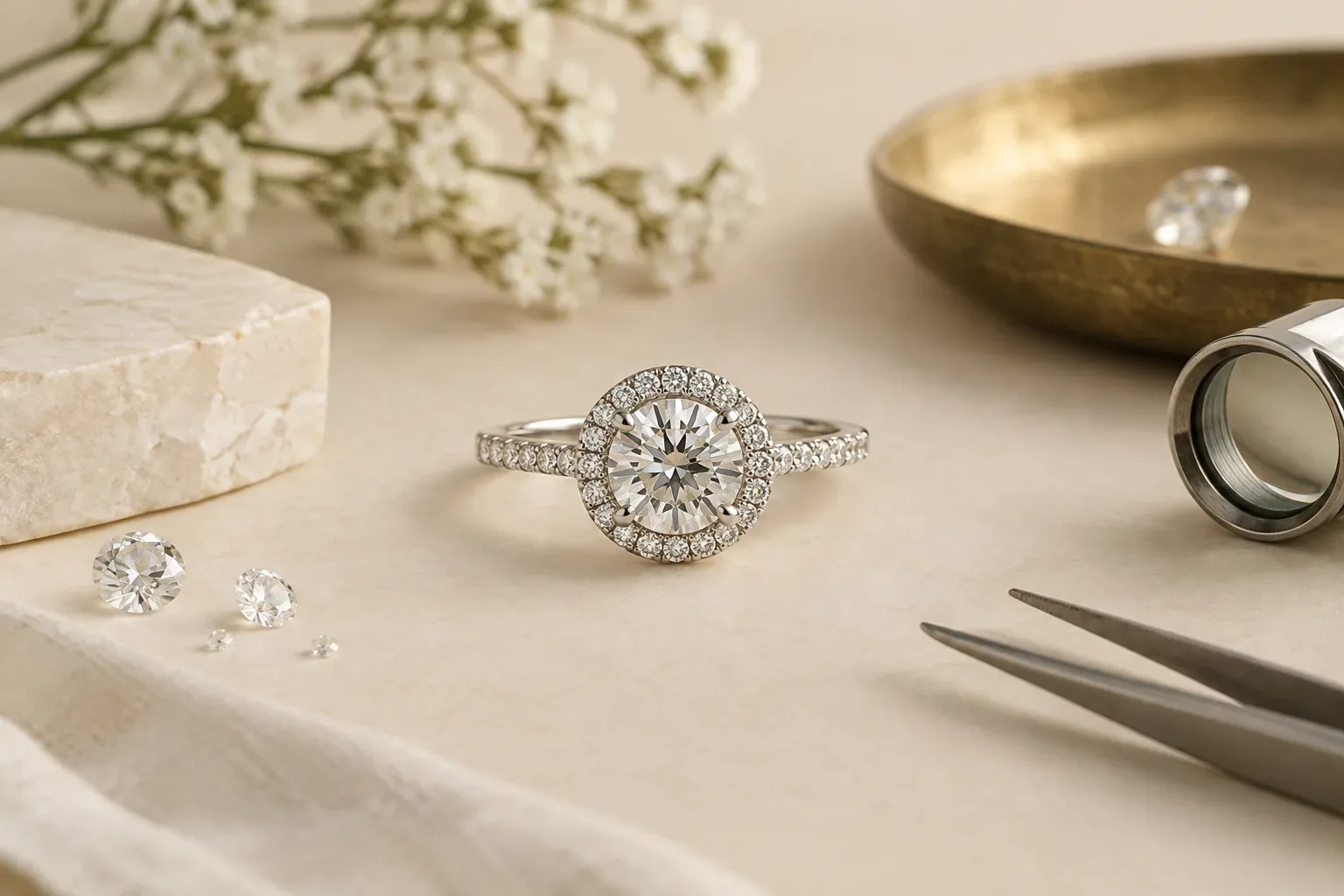
Practically, a halo setting places a visible ring of smaller accent stones—most commonly diamonds—around a larger center stone so the center appears larger and brighter. Designers use halos around round, oval, cushion, and fancy-shaped centers; the halo can sit flush against the center (close-set) or rise above it (gallery or cathedral-style).
Beyond a single outer ring, halo motifs appear in jewelry in a few ways: repeated micro-halos for added texture, double halos for maximum size illusion, and colored-stone halos that contrast with a white diamond center or vice versa. Jewelers blend halo design with pavé bands, split shanks, and cathedral settings to influence how much light reaches the center stone and how the ring sits on the finger.
Historical evidence and what the approved sources say
The limited set of approved sources for this guide does not include primary historical research documenting the exact origin of halo settings in a named culture or precise period. The absence of detailed historical documentation in these sources means this article separates verifiable modern trade and consumer information from broader historical narratives that would require museum catalogues or specialist jewellery history works.
For modern market context, trade and consumer authorities show clear contemporary demand patterns. Imaginaire Digital's 2026 search data notes strong consumer demand for engagement rings and certain shapes which helps explain why halo styles remain visible in searches for engagement rings. Jewelers Mutual's 2026 trends reporting highlights contemporary preferences such as fluid forms, versatility, colored gemstones and gender-neutral styling, all of which inform how halo settings are adapted today.
Documented historical meanings versus modern personal interpretation
Because the approved evidence here focuses on present-day market and consumer issues rather than historical symbolism, this guide treats historical meanings as unverified in these sources and classifies them separately from modern interpretation. Where historical meanings are cited in specialist literature, they should be named and sourced to those works; the present approved sources do not provide those specifics.
Modern personal interpretations of halo rings are common: many buyers view a halo as symbolic of protection, a circle of light around the relationship, or simply as an aesthetic choice that emphasizes glamour. Those are contemporary, subjective meanings that vary by wearer and culture and are not universal claims.
Pros: Why buyers choose halo settings
A halo setting makes the center stone appear larger and increases apparent brilliance at a lower cost than a larger center gem because the added visual impact comes from many small stones rather than a single, more expensive carat weight.
Halos can offer design versatility. Jewelers combine halo styles with colored gemstones, pavé bands, and modern stacking-friendly profiles to meet the trends Jewelers Mutual identifies: fluid forms, colored gemstones and versatile styling.
For those who like maximum sparkle, the halo multiplies reflective facets and creates more light return around the center, a visual effect many buyers prize for engagement rings.
Cons and practical trade-offs
A halo setting typically requires more maintenance than a solitary solitaire because multiple small stones, beads, or prongs create additional points of potential wear or loosening. Jewelers and insurers note that any ring with many accent stones can need more frequent cleaning and occasional professional tightening.
Halos can collect dirt and oils in the small gaps between stones, which diminishes sparkle if not cleaned regularly. The design can also make certain styles harder to resize without disturbing the halo structure.
If a buyer prefers a minimalist look or wants the cleanest possible profile for everyday practicality, a halo may not suit that aesthetic or lifestyle.
How gemstone choice and treatments matter
Gemstone choice affects appearance, durability, and care. Colored centers can be striking in contrast with a white-diamond halo, while a colored-stone halo can change the ring’s tone entirely. Jewelers Mutual's trends reporting shows increasing consumer interest in colored gemstones and versatility, which helps explain hybrid halo choices.
The Gemological Institute of America emphasizes that treatments, detectability and durability vary by gem type. Certain gemstones are commonly treated to improve color or clarity, and those treatments influence how a ring should be cared for and what disclosures a buyer should expect.
What you can and cannot verify without a professional
There are practical limits to what a shopper can and should try to verify alone. The Federal Trade Commission advises consumers to seek clear written disclosures about whether a gem is natural, lab-created, treated, cultured or an imitation. Claims about origin or treatments require vendor documentation or a report from a qualified gem laboratory to be reliable.
The Gemological Institute of America explains that some treatments are detectable only with specialized equipment and training. Likewise, independent grading of diamonds—cut, color, clarity and carat weight—should be confirmed by a reputable grading laboratory if those attributes are consequential to your decision or insurance.
Practical selection and gifting guidance
Start by defining priorities: appearance (maximum illusion of size), everyday wearability, budget, metal preference and whether you prefer a natural or lab-created center stone. Use Jewelers Mutual’s guidance on modern preferences to think about whether you want a ring that stacks well or suits gender-neutral styling.
Ask the seller for written disclosures about the center and accent stones, including any treatments, whether stones are natural or lab-created, and what grading or certification is available. The FTC advises requiring such disclosures in writing so you can compare offers accurately.
Consider lifestyle: if the wearer has an active routine or works with their hands, discuss protective options with a jeweler such as lower-profile halos, bezel accents, or harder center stones. Choose a metal and setting profile that balances the halo’s design with daily comfort and durability.
If gifting a surprise engagement ring and you want a halo, consider more conservative halo widths and classic center shapes that are easier to resize or modify later. Pair the ring purchase with an appraisal or condition report and keep receipts and documentation to facilitate insurance and future servicing.
Care and maintenance basics
Because halos include many small stones, clean your ring regularly with a soft brush and an appropriate mild cleaner recommended by a jeweler; frequent gentle cleaning reduces grime build-up. Jewelers Mutual’s industry guidance on craftsmanship and longevity suggests that good maintenance prolongs a ring’s life and appearance.
Have a qualified jeweler inspect the halo annually or when you notice a stone sitting unevenly or loose. The Gemological Institute of America notes that different gemstones and treatments require different care regimes, so disclose any treatments to the jeweler so they can recommend safe cleaning and handling.
Keep written documentation of any care recommendations and service visits so insurers and future owners can understand past care and provenance.
Final decision checklist
Confirm the visual priorities: do you want illusion of size, maximum sparkle, or a particular color contrast? Ask the seller for clear written disclosure about stone origin and treatments in line with FTC guidance. Decide how important independent grading or a laboratory report is to your purchase, and budget for professional verification if needed. Plan for routine cleaning and annual inspections to keep a halo secure and brilliant.
Frequently asked questions
Does a halo setting make a diamond look bigger?
Yes. A halo frames the center stone with smaller accent stones and increases perceived size and brilliance. The effect depends on halo width, accent-stone size and the cut of the center gem.
Are halo rings harder to maintain than solitaires?
Generally yes. Because a halo uses many smaller stones and additional setting work, it typically requires more frequent cleaning and periodic inspections to ensure stones remain secure.
Can I tell if the stones are treated or lab-created without paperwork?
No. The Federal Trade Commission recommends written disclosures from sellers. The Gemological Institute of America explains that certain treatments and origin claims require laboratory testing or professional equipment to detect reliably.
What center stones suit a halo best?
Many center shapes suit halos, including round, oval, cushion and fancy shapes. Your choice should balance desired look, durability and any treatments—discuss options with a jeweler familiar with the gem you want.
Should I get a laboratory report for a halo engagement ring?
If the center stone's grade, treatment status or origin matters to you for insurance or resale, obtaining an independent laboratory report is advisable. The FTC recommends clear written disclosures and reputable documentation.
Sources and further reading
- Imaginaire Digital — Imaginaire Digital
- Jewelers Mutual — Jewelers Mutual
- Gemological Institute of America — Gemological Institute of America
- Federal Trade Commission — Federal Trade Commission