Meaning at a glance
A useful bezel setting engagement ring checklist defines the bezel style, material and stone, weighs the trade-off between security and light return, confirms written disclosures about treatments or origin, checks resizing and warranty terms, asks for clear measurements and photos, and recognizes limits: treatment and origin often need a qualified jeweler or gemological laboratory to verify.
Quick answer
If you want a short, practical answer: a bezel setting engagement ring checklist should ensure you know the bezel style (full, partial, or flush), the metal and its hardness, the exact gemstone type and any treatments, the stone’s dimensions and setting height, practical trade-offs such as protection versus brilliance, return and warranty terms, care recommendations, and which claims require lab reports or a qualified jeweler to confirm.
What a bezel setting is and why it matters
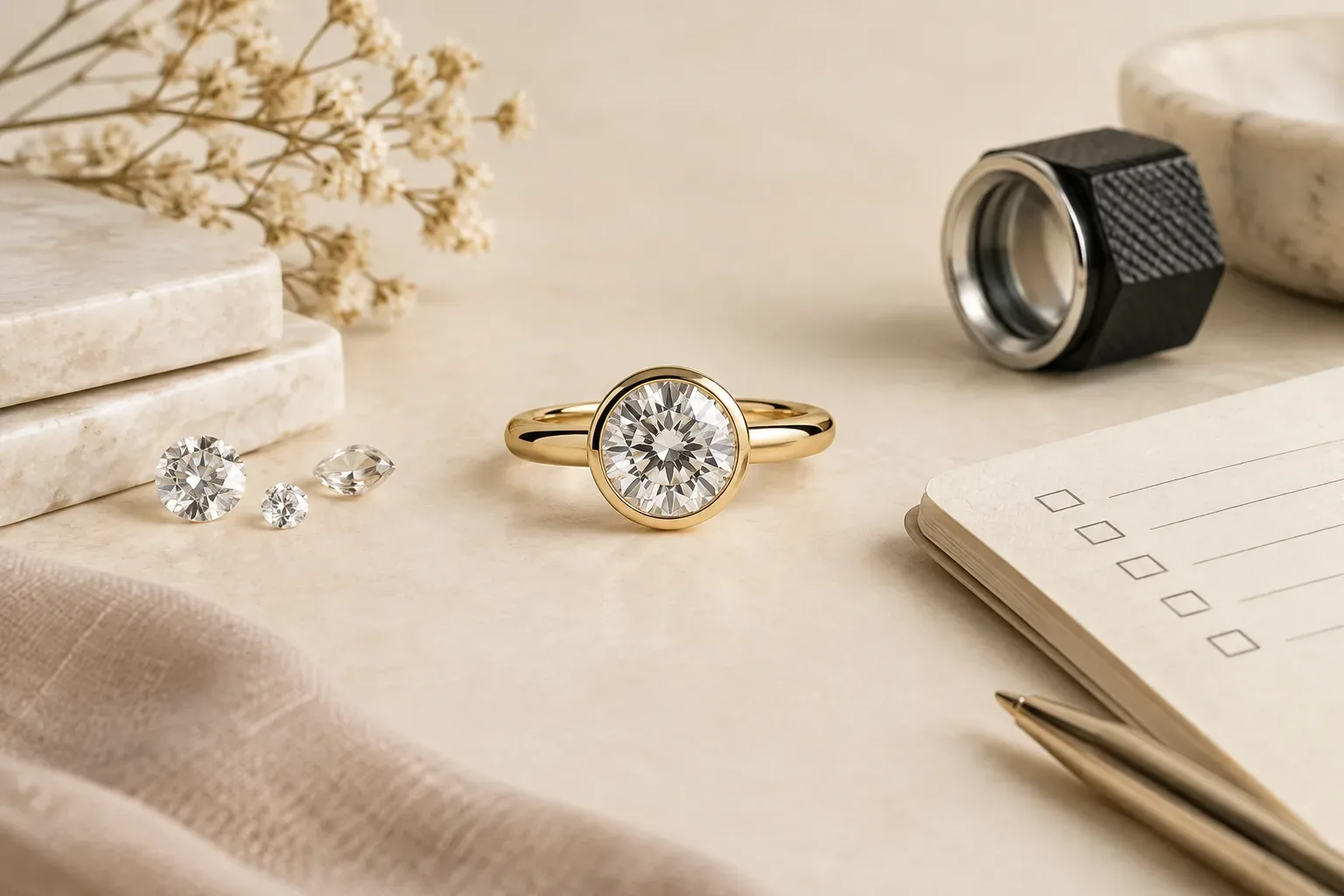
A bezel setting is a metal rim that encircles all or part of a gemstone to hold it in place and protect its edges. Bezel styles include full bezels that surround the entire girdle, partial bezels that cradle only a portion of the stone, and flush bezels where the stone sits level with the band. The setting affects security, profile height, how much light reaches the stone, and how the ring wears over time.
Documented historical evidence and limits of our sources
The approved sources for this article do not provide primary historical documentation of bezel origins or use in specific ancient cultures. Because the supplied evidence set focuses on contemporary market trends, consumer protections and gem treatment issues, I cannot attribute ancient or period-specific bezel usage to any named culture using these sources alone.
If you need precise archaeological or historical attributions for bezel use in particular cultures or periods, consult academic jewelry history texts, museum catalogues, or specialized publications. For purchase decisions today, the contemporary sources cited here better support choices about style, disclosure and care.
Separate documented meanings from modern personal interpretations
Within the approved evidence there is no authoritative claim that bezel settings carry a fixed symbolic meaning across cultures. Historical symbolism is outside the scope of the present sources and should be treated as context-dependent and variable.
Modern interpretations tied to bezel settings are documented in contemporary trend reporting: industry commentary links bezel and low-profile styles to modern, versatile and gender-neutral preferences, and buyers often choose bezels for practical or aesthetic reasons rather than a single universal symbolic meaning. Attribute for modern trend context comes from Jewelers Mutual and Imaginaire Digital, which report demand for fluid forms, versatility and gender-neutral styling.
How bezel settings, motifs and gemstones appear in jewelry today
Bezel settings appear across engagement rings, stackable bands, pendants and rings designed for active wear. Designers use full bezels for round or cabochon stones, partial bezels for fancy cuts to preserve more light, and flush bezels for rings intended to be low-catching and comfortable for everyday use.
Gemstones commonly set in bezels include diamonds and colored gems. Colored gemstones may be treated or enhanced, and those treatments affect care and disclosure requirements; the Gemological Institute of America emphasizes the importance of treatment disclosure and notes that certain treatments change detectability, durability and required care.
Checklist: Questions to ask the seller before buying
What exact bezel type is used and can you provide close-up photos from multiple angles and measurements of the bezel height and width. Ask whether the bezel is full, partial or flush and whether the stone sits proud or level with the band.
What is the metal type and grade, including karat or alloy information, and how resistant is it to wear. Harder metals such as platinum and certain gold alloys resist abrasion better than soft gold, but finish and maintenance differ.
What is the precise gemstone identification, including whether the stone is natural, lab-grown, treated, or an imitation, and ask for written disclosure. The Federal Trade Commission requires clear distinctions among natural, lab-created, treated and imitation materials and written vendor disclosures.
If the center stone is a diamond, request a grading report from a recognized lab. If it’s a colored gemstone, ask about treatments and whether a gemological report is available; the Gemological Institute of America notes that treatments and detectability create distinct consumer questions and that disclosure matters.
What is the carat weight, exact dimensions, and any grading report numbers. Confirm whether the seller will provide exact measurements and whether the bezel modifies visible facets or light performance.
What are the return policy, warranty, resizing limits, and service options. Ask how resizing affects the bezel design and whether the vendor will warranty the bezel against loss or damage.
What care recommendations does the seller give and are there any treatments or stones that should avoid ultrasonic cleaning or aggressive chemicals. The GIA emphasizes that treatments and durability require different care regimes.
Can the vendor provide an independent appraisal or recommend a qualified jeweler for pre-sale inspection. Understand that certain claims, such as origin or some treatments, often require laboratory testing to verify.
Practical trade-offs to weigh
Security versus brilliance: bezels protect the girdle and reduce the chance of chipping, making them an excellent choice for active wearers, but they can slightly reduce the amount of light entering the stone compared with open prong settings, which can affect perceived sparkle.
Profile and comfort versus resizing flexibility: a low or flush bezel sits close to the finger and is less likely to snag, but full bezels and wide shanks can complicate future resizing. Ask about the vendor’s resizing policy and whether the design allows for size adjustments.
Metal choice and maintenance: platinum and harder gold alloys hold bezels well but will develop visible surface wear over time and may require occasional polishing or repushing of the bezel. Thin bezels, in particular, are more susceptible to deformation from knocks or repeated ring resizing.
Care and inspection guidance
Clean gently with warm water, mild detergent and a soft brush unless the seller or gemological advice says otherwise. Avoid ultrasonic cleaners for stones known to have sensitive treatments or internal fractures, and follow the Gemological Institute of America’s guidance that treatment type affects recommended care.
Have the bezel and mount inspected by a qualified jeweler at regular intervals to check for loosening, thinning of the bezel edge, or wear to the metal. Keep documentation of inspections and any maintenance.
If you insure the ring, provide the insurer with an up-to-date appraisal and the seller’s documentation about the stone and metal. Jewelers Mutual’s market reporting highlights the importance buyers place on craftsmanship, warranty and insurability when assessing long-term value.
What you cannot reliably verify without a professional
You can visually confirm bezel style, polish, dimensions, and the general appearance of a stone, but you cannot reliably confirm origin, certain types of treatments, or precise grading attributes such as some clarity or color determinations without a qualified gemologist or laboratory analysis.
Ask the seller for laboratory reports if origin or specific treatments are material to your decision. The Federal Trade Commission advises consumers to insist on clear, written disclosures and to seek lab verification for high-value purchases when needed.
Selection and gifting guidance with respect and practicality
When gifting a bezel setting engagement ring, prioritize the intended wearer’s lifestyle and style preferences over trends alone. If the recipient prefers low-maintenance jewelry or leads an active lifestyle, a full or flush bezel can be a respectful practical choice. For someone who values maximum sparkle, consider partial bezel styles or bezel accents that balance light return with protection.
Respect sizing concerns: obtain a reliable ring size when possible and confirm resizing policies. If the ring must be resized, discuss with the seller how that will affect the bezel and whether the vendor offers free or discounted resizing. Provide clear documentation and receipts so that the recipient can return or exchange according to the seller’s policy if needed.
Final checklist before you buy
Confirm bezel type and measurements, metal type and karat, exact gemstone identification and any treatments, request lab reports or written disclosures when applicable, obtain return and warranty terms, check resizing policy and inspect photos or in-person views, and plan for ongoing care and regular inspections. Remember that treatment and origin often require laboratory verification, so factor that into budget and expectations.
Related reading
For more context on selecting meaningful jewelry and researching symbols or styles, see our related guides on choosing meaningful jewelry, symbols for new beginnings, and how to research jewelry symbols. These links can help you connect the practical buying checklist above with the personal meanings you may want the ring to carry.
Frequently asked questions
Will a bezel setting make a diamond look less sparkly?
A bezel can slightly reduce light return compared with prong settings because the metal rim blocks some side light, but many buyers accept this trade-off for the increased protection. Partial or lower-profile bezels preserve more light than tall, full bezels.
Can I resize a bezel setting engagement ring?
Resizing is usually possible but depends on bezel design and metal. Wide bezels and continuous bezel patterns may limit resizing options; always ask the seller about resizing policy and potential costs before purchase.
How should I clean a bezel-set ring?
Clean with warm water, mild soap and a soft brush unless the stone has treatments that advise against ultrasonic or steam cleaning. Follow the Gemological Institute of America guidance and any seller-specific care instructions.
How can I verify a gemstone’s treatments or origin?
Treatments and origin often require laboratory testing or evaluation by a qualified gemologist. Request written disclosures and lab reports, and if necessary budget for an independent gemological report.
Is a bezel setting better for active lifestyles?
Yes; bezel settings protect the stone’s edges and reduce snagging, making them a practical choice for people who use their hands frequently or prefer low-profile jewelry.
Sources and further reading
- Imaginaire Digital — Imaginaire Digital
- 2026 Trends — Jewelers Mutual
- Gem Treatment — Gemological Institute of America
- Buying Gemstones, Diamonds and Pearls — Federal Trade Commission