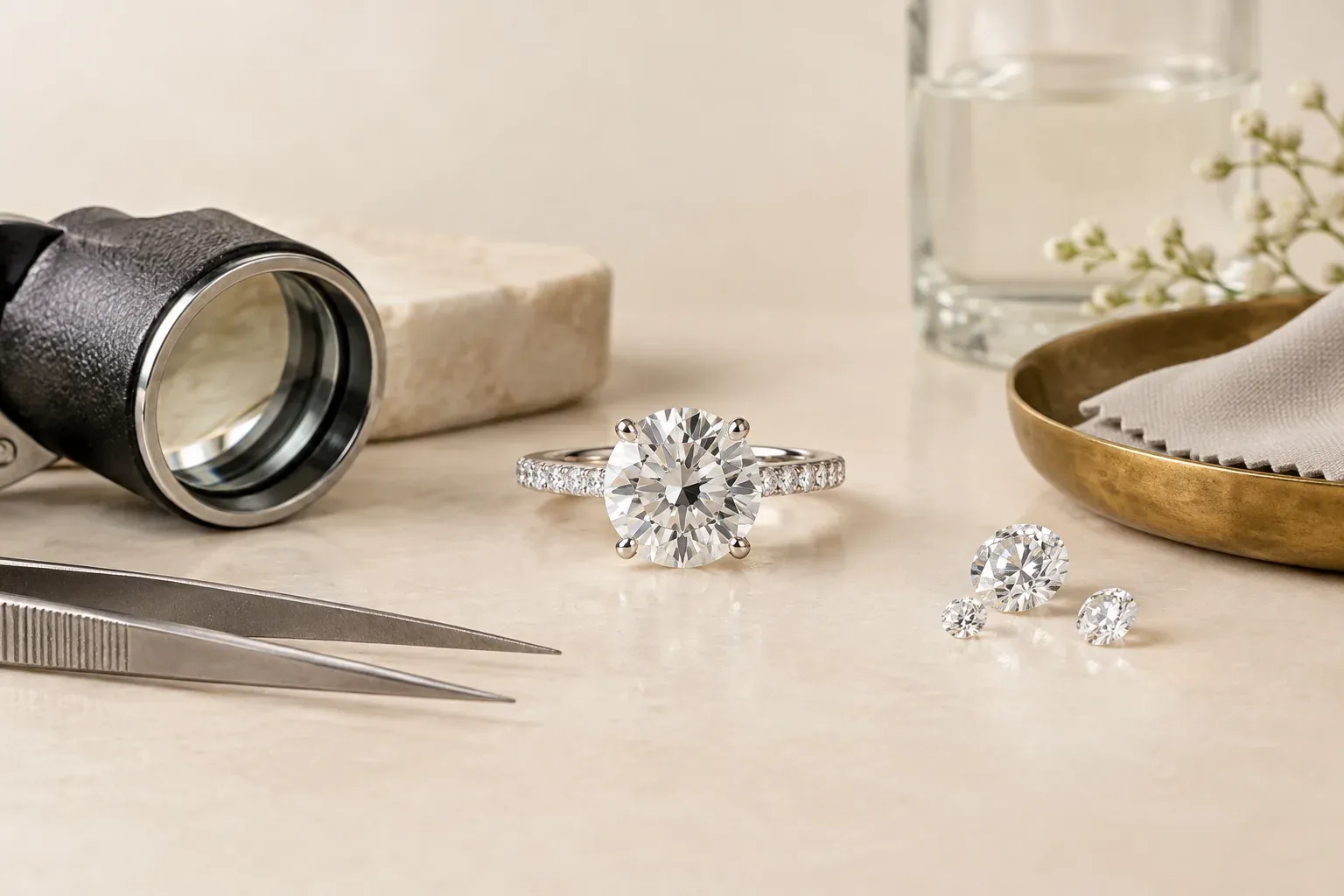
Meaning at a glance
Diamond table percentage care guide: table percentage is a modern gemological proportion that influences appearance more than intrinsic hardness; routine cleaning and careful setting checks keep diamonds safe, while exact table values, treatments and detectability require a qualified jeweler or gemological laboratory and written disclosure.
What the term means and why shoppers search for it
In trade use, “table percentage” refers to the relative size of the top flat facet of a faceted diamond compared with its overall diameter. Shoppers search for a "diamond table percentage care guide" because the table influences how light behaves in the stone and how easily surface dirt is seen, both of which affect everyday appearance and perceived value. Questions about care therefore target practical cleaning, inspection, and the limits of what a consumer can verify without instruments or expert analysis.
Historical evidence and how this metric developed
Documented historical evidence in the approved references shows that the table percentage is a product of modern gemological practice rather than an ancient cultural symbol. Contemporary organizations such as the Gemological Institute of America (GIA) focus on technical attributes, treatments and disclosure matters rather than pre‑modern cultural meanings, and consumer protection agencies like the U.S. Federal Trade Commission (FTC) emphasize written disclosure and clear distinctions among natural, lab‑created and treated stones. The table percentage concept therefore belongs to the era of scientific gemology and commercial standards rather than traditional cultural symbolism.
Documented historical meanings versus modern personal interpretation
Documented meaning: Within the scope of modern gemology, table percentage is a measurable cut proportion used to discuss optics and finish. The authoritative sources in this article address technical issues such as treatments, disclosure and detectability rather than historical symbolism.
Modern personal interpretation: Consumers and designers may attach aesthetic or symbolic preferences to table size—for example, preferring a larger table for an apparent spread of the stone or a smaller table for perceived scintillation. Those are contemporary personal or market preferences and should be kept distinct from any historical or cultural claims, which are not documented in the approved sources cited here.
How table percentage shows up in jewelry and buying demand
Table percentage is not visible terminology on most jewelry tags, but it is a measurement you will find on detailed cutting reports or lab certificates. It affects how a diamond looks in common jewelry types: solitaires, halo rings, engagement rings, studs and tennis bracelets. Market data reviewed by a UK industry analyst shows steady consumer demand for engagement rings, diamond studs, tennis bracelets and other diamond jewelry categories, meaning buyers commonly consider cut proportions when choosing pieces for these styles (Imaginaire Digital).
Durability and practical trade-offs tied to table percentage
Intrinsic durability: Diamond is the hardest common gemstone, so table percentage alone does not change the material’s resistance to scratching. Structural vulnerabilities arise from breaks, chips or weakened settings rather than from the top facet’s proportion.
Practical trade-offs: Table size influences appearance and how grime affects perceived brightness. Stones with larger tables can show surface dirt more readily because the broad flat surface reflects more of the environment, while stones with smaller tables may emphasize contrast facets and different light return behavior. These are visual trade‑offs that affect cleaning frequency and setting choice, not the stone’s inherent chemical durability.
When table percentage may matter for wear: Very shallow or very deep cuts (which relate to other proportions as well as table) can create thin girdles, exposed facets, or culet proximity that increase risk of chipping at the edges or points. Identifying those risks and understanding whether a stone’s proportions create any actual structural concern requires inspection by a qualified jeweler or a gemological laboratory report.
Cleaning guidance tied to table percentage and treatments
Everyday cleaning: For most diamonds—regardless of table percentage—start with warm water, a mild dish soap and a soft brush to remove oils and dirt that reduce sparkle. Rinse thoroughly and dry with a lint‑free cloth. Because larger tables may show dirt more easily, people often clean those stones more frequently to maintain brilliance.
Mechanical and chemical cleaning: Ultrasonic and steam cleaners are commonly used in trade settings but are not universally safe. The Gemological Institute of America (GIA) documents that treatments and certain fillings or enhancements require special care and may not tolerate heat, steam, or ultrasonic cleaning methods. If you suspect a diamond has been treated, repaired, or has a filled fracture, consult a jeweler before using aggressive cleaners (GIA).
When to seek professional cleaning: Have a trusted jeweler inspect prongs and settings annually and to perform professional cleaning. Professional services can safely remove stubborn grime and check for any treatment-related vulnerabilities that might be aggravated by home cleaning.
Repair precautions and routine maintenance
Avoid DIY repairs to prongs, shanks, or soldered joints; these require a trained bench jeweler and proper facilities. Even if the table percentage seems to make a diamond sit broadly within a setting, repolishing, re‑tipping prongs, re‑setting, or resizing may affect stones that have been previously treated or fracture‑filled. The GIA highlights that treatments can affect detectability and care needs, and the FTC requires disclosure of such treatments at sale, so always ask and get written information before authorizing repair work.
Thermal and mechanical shocks: Diamonds are tough but not indestructible; avoid exposing any diamond jewelry to high heat sources, severe knocks, or situations where a stone might be pushed against a hard edge. Settings with exposed girdles or sharp points deserve extra caution because they are the usual sites of chips and nicks, independent of table percentage.
Setting checks: Periodically inspect prongs, bezels and channel settings for wear. If a stone sits higher because of a particular cut or mounting, it may be more prone to snagging and require more frequent maintenance.
What you can and cannot verify without a jeweler or lab
What you can verify at home: Visual cleanliness, loose settings (the stone wobbles), obvious chips or cracks, and whether dirt clears with routine soapy water cleaning.
What requires a professional: Accurate numeric table percentage, in‑depth cut analysis, confirmation of treatments or enhancement, and the stone’s precise durability profile. The FTC underlines that consumers should receive clear written disclosures about whether a diamond is natural, lab‑created, treated, or imitation. A qualified jeweler or a recognized gemological laboratory is needed for reliable measurement and detection (FTC; GIA).
Selection and gifting guidance
Ask for documentation: When selecting or receiving a diamond, ask the seller for any available lab report or cutting certificate that lists proportions and treatment history, and insist on written disclosures required by law (FTC).
Balance aesthetics and lifestyle: Choose a table proportion and overall cut that match the wearer’s priorities. If the recipient prefers brilliance that hides fingerprints and grime less, plan more frequent cleaning. If they have an active lifestyle, favour protective settings, lower profiles, or bezel mounts that reduce snagging and exposure.
Be explicit about aftercare: If you gift a diamond, include guidance about cleaning and inspection frequency and advise the recipient to have a local jeweler check settings annually. If you suspect a stone has received treatments, disclose that possibility and recommend a laboratory report for certainty (GIA; FTC).
Final practical checklist
Before buying or after receiving a diamond, seek written disclosure about origin and treatments, request or review a cutting report if proportions matter to you, clean gently with warm soapy water and a soft brush, have settings inspected by a jeweler at least once a year, and defer any repair or aggressive cleaning to qualified professionals. For precise table percentage values and any treatment detections that influence care, seek a gemological laboratory or qualified professional appraisal.
Frequently asked questions
What exactly is table percentage and does it affect durability?
Table percentage is the relative size of the diamond’s top flat facet compared with its overall diameter; it is a cut proportion that affects appearance and the way dirt is perceived, but it does not change diamond’s intrinsic hardness. Structural durability concerns such as chips or loose settings must be assessed by a jeweler or lab.
Can I measure a diamond’s table percentage at home?
No. Accurate measurement requires tools and expertise; a qualified jeweler or a gemological laboratory report is the reliable way to get the exact table percentage.
Does table percentage change how often I should clean my diamond?
Larger, broader tables can show surface oils and dirt more prominently, which may lead owners to clean more often. Routine cleaning with warm soapy water and a soft brush is appropriate for most diamonds; consult a jeweler before using ultrasonic or steam cleaning if you suspect treatments.
Are there special repair risks tied to table percentage?
Repair risks are more often linked to exposed girdles, thin facets, or weakened settings than to table percentage alone. Always have repairs done by a trained bench jeweler and provide any treatment or certification information to the repairer.
How can I confirm whether a diamond has been treated or enhanced?
The Gemological Institute of America explains that certain treatments exist and can affect care; the FTC requires sellers to disclose treatments. Definitive confirmation needs a gemological laboratory report or an inspection by a qualified gemologist.
What should I ask a seller when buying a diamond?
Request written disclosures regarding origin and treatments, ask for any available lab or cut reports that list proportions, and confirm return policies and aftercare recommendations. The FTC emphasizes that consumers should receive clear written information about natural, lab‑created, and treated stones.
Is professional cleaning necessary for diamonds with large tables?
Not strictly necessary, but professional cleaning keeps the stone at its best and allows a jeweler to inspect settings. Stones that show grime easily may benefit from periodic professional cleaning and inspection.
Sources and further reading
- Imaginaire Digital — Imaginaire Digital
- Gemological Institute of America — Gemological Institute of America
- Federal Trade Commission — Federal Trade Commission