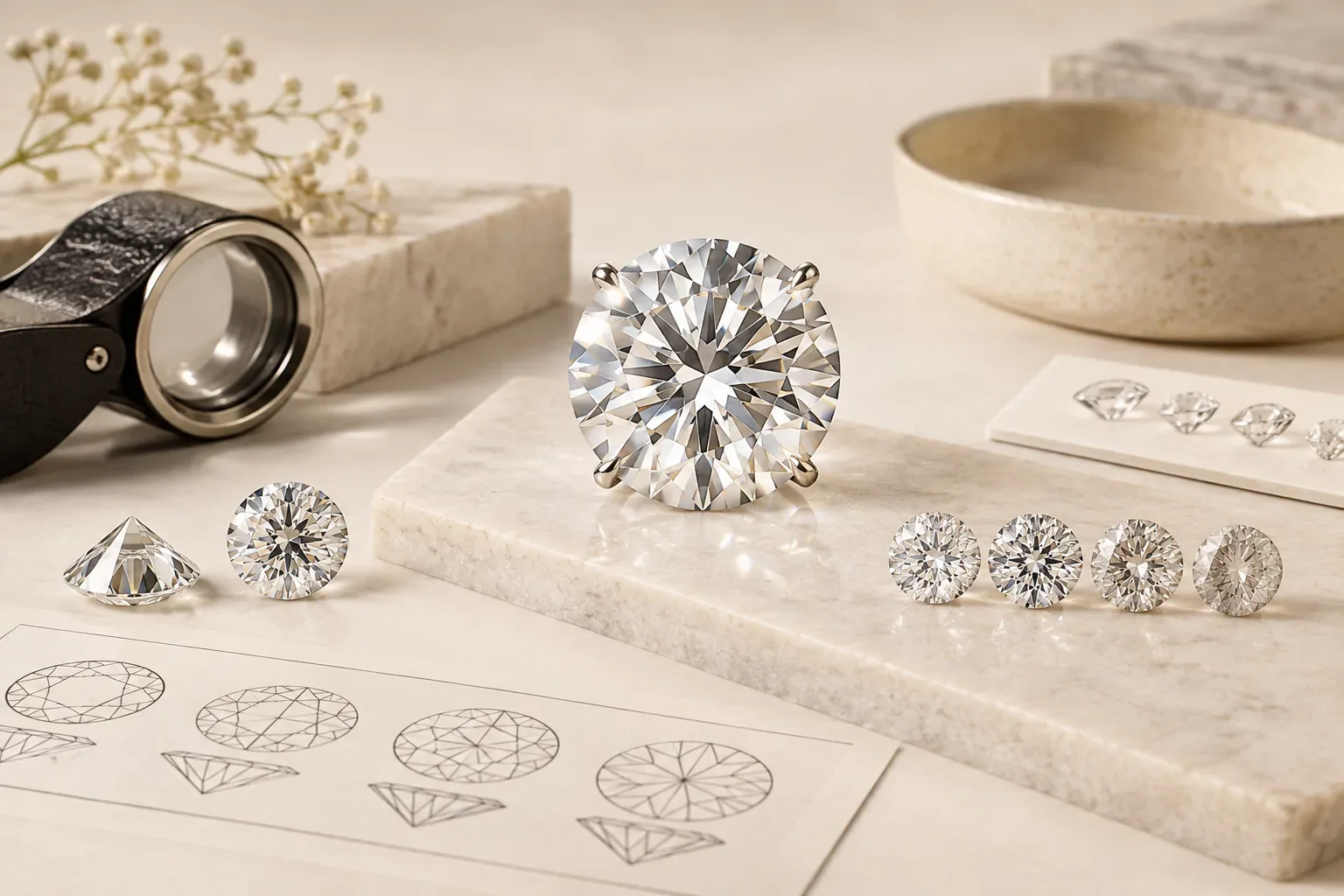
Meaning at a glance
Diamond cut grade explained: it describes how well a diamond’s proportions, symmetry and polish work together to return light; this article defines cut grade, explains the practical trade-offs buyers face, gives safe care tips, and clarifies what only a qualified jeweler or gemological laboratory can reliably verify.
Direct answer: Diamond cut grade explained
Diamond cut grade explained: a cut grade is a technical assessment of how well a diamond’s proportions, symmetry and polish produce desirable light performance (brilliance, fire and scintillation). A higher cut grade means the stone is more likely to reflect and refract light in ways that make it look lively and bright; a lower cut grade typically sacrifices that light performance for other attributes such as larger face-up size or lower price. This article provides evidence-led definitions, decision criteria, practical trade-offs, safe care guidance, and clear limits on what a shopper can verify without a qualified jeweler or gemological laboratory.
What cut grade measures (definitions and evidence-led criteria)
Cut grade is not a single physical measurement like carat weight. Instead, gemological labs and trained graders evaluate a combination of factors that influence how light behaves inside the stone. Those factors include the diamond’s proportions (for example table, depth and angle relationships), symmetry (how evenly facets align), and polish (surface finish). The overall grade is intended to predict a diamond’s light return—how much brilliance (white light), fire (colored flashes) and scintillation (sparkle in motion) a viewer will perceive.
Practically, cut grade is a comparative judgment created by gemological laboratories and by experienced graders using defined criteria and instruments. Because it depends on visual light behavior and relative proportion relationships, the grade is about performance rather than purity or mass. That performance focus is why shoppers prioritizing maximum sparkle are usually advised to give cut grade more weight than color or clarity when constrained by budget.
Historical context: how grading and meanings developed
Standardized cut grading is a modern, technical development associated with the rise of professional gemological laboratories and consumer disclosure practices in the 20th and 21st centuries. The contemporary focus on formal grades and written reports arises from institutional gemology and market regulation rather than from long-standing symbolic meanings attached to cut itself.
When discussing historical meanings attached to diamonds as symbols—marriage, status, luck, or protection—those cultural associations belong to social and cultural history and are distinct from the technical attribute of cut. Modern consumer-focused rules about disclosure and treatment are documented and enforced by bodies and organizations concerned with labelling and testing; for example, the Gemological Institute of America highlights the importance of disclosure for treatments and the distinct consumer questions treatments and durability raise, and the U.S. Federal Trade Commission requires clear written disclosures to help consumers distinguish among natural, lab-created, treated and imitation materials. These sources show that present-day grading and disclosure are products of modern gemological practice and consumer protection rather than ancient symbolic systems.
Documented historical meanings versus modern personal interpretation
Documented history recorded by professional gemologists and regulators focuses on identification, treatment disclosure and objective metrics rather than on symbolic meanings of a particular cut grade. Modern symbolic interpretations—such as associating an ‘Ideal’ or ‘Excellent’ cut with perfection in a relationship—are personal or cultural readings applied after the fact and are not documented by gemological authorities as inherent properties of the grade.
In short, historical records preserved by institutions like gemological laboratories and consumer-protection agencies deal with technical identification and disclosure; any romantic or symbolic meaning attached to a specific cut grade is a separate, contemporary cultural interpretation and will vary by individual and tradition.
How cut grade appears in jewelry and common applications
Cut grade matters most where light performance is a primary design goal: classic round brilliant center stones in engagement rings, diamond studs, and the diamonds used in tennis bracelets are often chosen for their visual sparkle. Market data shows strong consumer demand for engagement rings, bracelets, earrings, necklaces, tennis bracelets, diamond studs and certain engagement shapes, which is why cut quality is frequently emphasized for those pieces. In settings that expose the crown (top) of the stone, a higher cut grade will be more visible to the wearer and observers.
Settings and design choices can also influence how much cut grade matters to the perceived look. A halo or cluster setting can increase apparent size and mask some deficits in cut performance. Conversely, solitaire settings and open-prong mounts show the diamond to best advantage and therefore make cut grade more noticeable. Different shapes follow different cutting traditions: a round brilliant is cut to maximize light return, while step cuts like emerald or Asscher prioritize clarity and broad flashes rather than the same kind of scintillation. The practical effect is that a shopper choosing a round brilliant will often prioritize a higher cut grade more than a shopper choosing a step-cut shape.
Decision criteria and practical trade-offs for shoppers
When deciding how much to value cut grade, balance three practical trade-offs: appearance, budget, and priorities. If you prioritize maximum brilliance and want a diamond that appears lively in ordinary light, favor the best cut grade you can afford. If face-up size (visible diameter) is more important, or if the diamond will be set in a fashion that makes the stone appear larger, you might accept a slightly lower cut grade to gain carat weight within your budget.
Consider shape-specific behavior: round brilliants usually show differences in cut grade most clearly, while step cuts and fancy shapes hide or show light differently. Also weigh color and clarity: for many settings and shapes, especially when budget is limited, a G–H color and SI1–SI2 clarity may be reasonable compromises if paired with a high cut grade to preserve visual sparkle. Ultimately, choose the attribute that matters most in daily wear—sparkle, size, color absence, or clarity—and allocate budget accordingly.
What you can and cannot verify without a lab or qualified jeweler
There are meaningful checks a shopper can do independently: ask for and read a laboratory grading report, request the stone’s laser inscription (many certified diamonds are inscribed on the girdle), examine high-resolution images or video of the stone under different lighting, and confirm written seller disclosures. The U.S. Federal Trade Commission requires clear seller disclosures so consumers can distinguish natural, lab-grown, treated and imitation materials; insist on those disclosures in writing.
However, you cannot reliably determine some things at home. You cannot unequivocally confirm whether a diamond is natural or lab-grown, whether it has undisclosed treatments, or whether a reported cut grade is accurate without testing equipment and expertise. The Gemological Institute of America explains that treatments, disclosure, detectability and special care needs are technical matters that often require laboratory examination. For these reasons, request an independent laboratory report from a reputable lab and consult a qualified jeweler or gemological laboratory whenever a definitive verification is required.
Safe care guidance and durability considerations
From a care perspective, diamonds are durable but not indestructible; they can chip on sharp knocks and can be affected by certain treatments or mounting practices. The Gemological Institute of America notes that treatments and durability issues create distinct consumer questions and special-care requirements, so always ask whether a stone has been treated and follow any vendor care recommendations.
General safe-care guidelines include regular gentle cleaning with warm water, a mild soap, and a soft brush; rinsing and drying on a soft cloth; avoiding exposure to harsh chemicals such as chlorine; storing pieces separately to reduce abrasion; and having prongs and settings checked periodically by a professional to prevent loss. For stones with known treatments or for antique settings, follow any additional specialist instructions a qualified jeweler provides.
Practical and respectful selection or gifting guidance
Gift selection should begin with the recipient’s taste and lifestyle. Choose a shape and setting that match their daily wear habits: low-profile settings and bezel mounts are better for active wearers, while high crowns and open prongs highlight cut but are more exposed. If the recipient values sparkle above size, prioritize a strong cut grade. If they favor the largest visible stone for a budget, accept a measured trade-off in cut grade while ensuring the diamond still has acceptable light return.
Always request written disclosures, an independent laboratory report, and clear return or exchange policies before purchase. If you are buying for an engagement or other meaningful occasion, consider pairing the purchase with a professional appraisal and insurance. When in doubt, work with a reputable jeweller who supplies laboratory reports and a transparent buying process; the Federal Trade Commission’s guidance on disclosures is a useful reference for consumer rights and seller obligations.
When to consult experts and final limits
Consult a qualified jeweler or a gemological laboratory when you need definitive answers about origin (natural vs. lab-grown), undisclosed treatments, or the precise accuracy of a cut grade. Professionals have the instruments and training required to detect treatments, confirm inscriptions, and evaluate light performance quantitatively.
In summary, treat cut grade as a technical, performance-focused attribute that meaningfully affects a diamond’s sparkle. Use grading reports and seller disclosures to verify claims, apply personal priorities to trade-offs among cut, carat, color and clarity, and seek expert testing for any question that cannot be settled from documentation and careful inspection.
Frequently asked questions
What does a 'cut grade' tell me in one sentence?
A cut grade summarizes how well a diamond’s proportions, symmetry and polish are likely to produce desired light performance—brilliance, fire and scintillation—so it predicts how lively the stone will look to the eye.
Is a higher cut grade always the best choice?
Not always; a higher cut grade maximizes sparkle, but shoppers who prefer the largest visible stone for a given budget or who choose a step-cut shape that emphasizes clarity may reasonably accept a lower cut grade as a trade-off.
Can I verify a diamond’s cut grade at home from photos?
Photos and videos can help, but they cannot reliably confirm a cut grade; ask for an independent laboratory report, laser inscription, and multiple images or videos under different lighting, and consult a qualified jeweller for a final evaluation.
Do cut grades affect a diamond’s durability?
Cut grade primarily affects optical performance rather than inherent hardness; however, extreme cutting choices (very thin girdles, extreme culets) or compromised settings can influence a diamond’s vulnerability to chipping, and any known treatments that affect durability should be disclosed.
What documentation should I insist on when buying?
Insist on a written laboratory grading report from a reputable lab, written seller disclosures about origin and treatments as recommended by the Federal Trade Commission, clear return and warranty terms, and, when available, laser inscription references to match the stone to its report.
How should I clean and care for a diamond to preserve its appearance?
Regular gentle cleaning with warm water, a mild soap and a soft brush, periodic professional inspection of settings and prongs, careful storage to avoid abrasion, and avoidance of harsh chemicals like chlorine are appropriate general practices; follow any additional vendor instructions for treated stones.
When should I consult a gemological laboratory?
Consult a laboratory when you need definitive verification of a diamond’s origin (natural vs. lab-grown), to detect or confirm treatments, or to resolve disputes about a reported grade—these tasks require specialized equipment and trained analysts.
Sources and further reading
- Imaginaire Digital — Imaginaire Digital
- Gemological Institute of America — Gemological Institute of America
- Federal Trade Commission — Federal Trade Commission