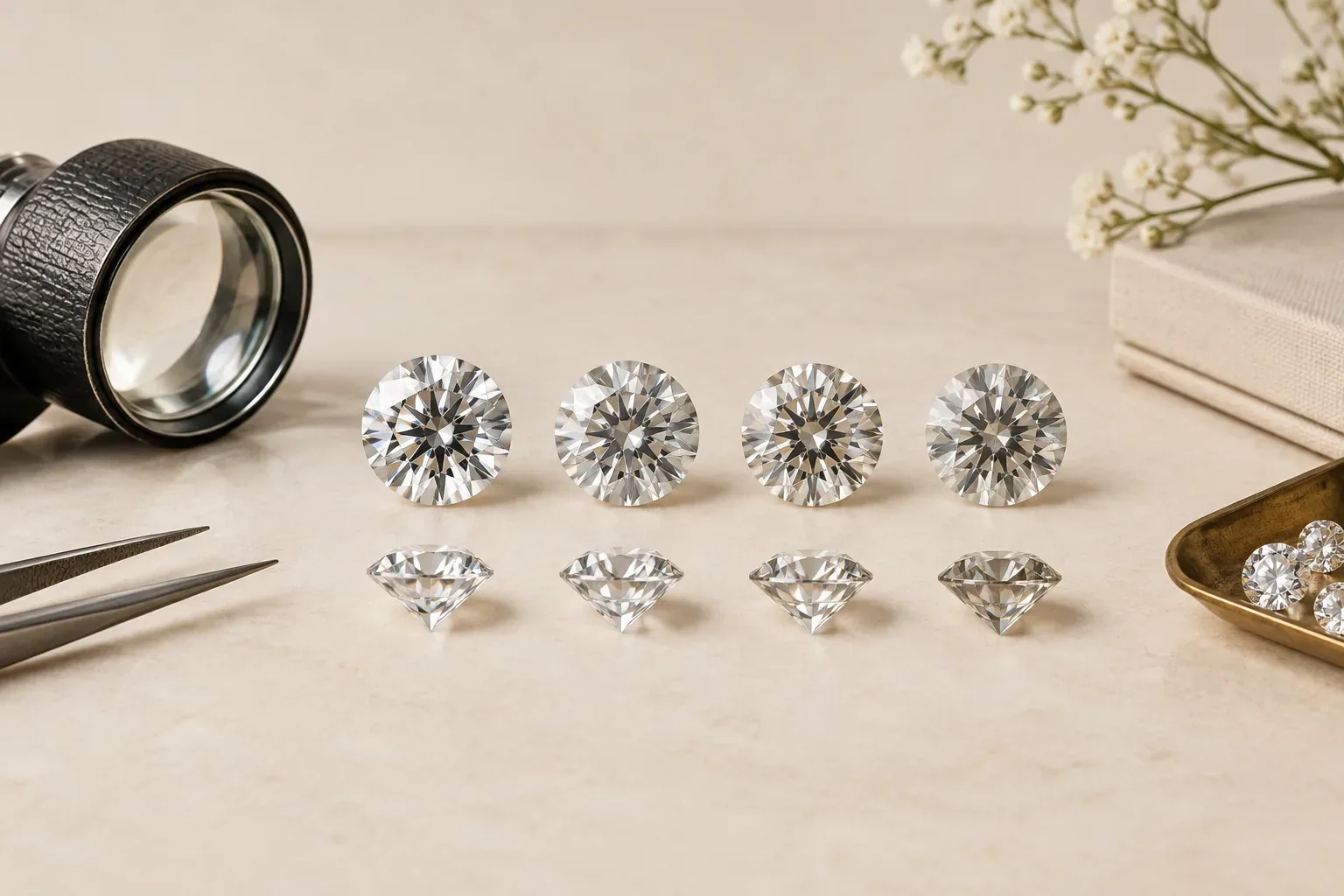
Meaning at a glance
Cut grade describes how a diamond's proportions, symmetry and polish influence light performance and face-up appearance; higher cut grades usually increase sparkle and price, but trade-offs among carat, color and clarity, certification and personal priorities determine the right choice for each buyer.
Direct answer — short and practical
Cut grade summarizes how well a diamond has been fashioned to reflect, refract and return light to the viewer. In most grading systems, a higher cut grade means more sparkle and usually a higher price, while lower grades typically sacrifice brightness, contrast and face-up size for the same weight. The best purchases pair a reliable graded report with an honest visual comparison, and you should treat laboratory reports and qualified jeweler inspection as necessary evidence for any high-value decision.
What 'cut grade' means and why it matters
In ordinary trade usage, a diamond's cut grade is an evaluation of how the stone's angles, facet arrangement, symmetry and polish work together to control light as it enters and exits the gem. Cut affects three main visual outcomes: brightness (overall light return), fire (flashes of colored light), and scintillation (sparkle and contrast from movement). These qualities are what buyers commonly call a diamond's 'sparkle' or 'brilliance'.
Cut grade is distinct from carat weight, color and clarity. Two diamonds identical in weight, color and clarity can look very different if one is cut to better proportions or has superior symmetry and polish. Because cut so strongly affects the viewer's perception of a diamond, its grade is often a major driver of retail price and consumer preference.
Historical context and how diamond cutting priorities changed
Documented trade histories note that priorities in diamond cutting have shifted as technology and fashion changed. Early historical cuts prioritized preserving weight and durability; later developments emphasized light performance as gem-cutting technology improved. Gemological institutions and trade historians trace this technical evolution, and modern grading systems developed in the 20th century formalized how cut quality is described and compared.
Recent market research highlights current consumer demand patterns, such as strong interest in engagement rings and specific styles, which affects which cuts are popular and how cut grade influences price in the marketplace. The 2026 UK search data reported by Imaginaire Digital shows robust demand across engagement rings, studs and particular shapes, reflecting how buyer priorities shape availability and pricing.
Documented historical meanings versus modern personal interpretations
Documented historical meanings for diamonds—such as status, durability and matrimonial symbolism—are recorded in trade histories and cultural studies and have influenced how diamonds were worn and valued over time. That documentation separates older societal roles for diamonds from how individuals interpret them today.
Modern personal interpretations of diamonds vary widely. For an engagement ring one buyer might prioritize maximum sparkle and a high cut grade, while another prefers larger face-up size at a lower cut grade, or values origin, ethical sourcing or lab-grown options. These are personal choices rather than universal symbolic truths, and the right decision depends on the recipient's taste and the buyer's budget.
How cut components appear in jewelry and how they affect appearance
Cut involves several measurable and observable features. Proportion relationships between crown, pavilion and table influence how light returns to the eye, while symmetry and polish affect the evenness of the stone's facets and surface. Across different shapes, those factors change how large a diamond looks 'face-up' and how lively its sparkle appears.
In settings, the same cut can read differently. For example, a well-cut round brilliant set in a simple solitaire will prioritize perceived brilliance, whereas a lower-cut stone set among accent stones may appear flatter but can create overall sparkle from the ensemble. Setting metal color and mounting height also change how a diamond reads against skin tone and in photographs.
What changes price: trade-offs and market factors
Cut grade is a major price factor because it directly influences perceived beauty. Within a given carat range, diamonds with higher cut grades typically command higher prices. However, price also depends on carat, color, clarity, certification, whether the stone is natural or lab-grown, and current market demand.
Buyers should also factor in disclosure and provenance. The Federal Trade Commission requires clear distinctions among natural, lab-created, treated and imitation materials and written seller disclosures, so a reliable report and accurate labeling are central to fair pricing. Market demand studies, such as those summarized by Imaginaire Digital, also show that consumer preferences for shapes and styles influence prices independently of technical cut quality.
Practical trade-offs buyers face
A shopper balancing budget and appearance will commonly trade among cut, carat and color. Prioritizing a very high cut grade will often mean accepting a slightly smaller carat weight for the same budget, while prioritizing carat may require compromising cut or color to stay within price targets. There is no single correct trade-off; it should reflect what the purchaser and recipient value visually and ethically.
Keep in mind that certain judgments, like whether a cut looks lively under real-world lighting, are best made in person or via high-quality video provided by the seller. Photographs alone can mislead. For any significant purchase, insist on seeing a graded report and, where practical, viewing the stone mounted similarly to its intended setting.
What you can verify without a qualified jeweler or gemological laboratory
Consumers can verify basic facts without a laboratory by checking seller-provided documentation, model photos or video, and return policies. You can confirm whether the seller discloses whether a diamond is natural or lab-grown and whether it has undergone treatments, following guidance from the Federal Trade Commission that sellers must provide clear written disclosures.
You can also compare visual performance among candidate stones under consistent lighting and examine the certificate for the cut grade, proportions and any plotted clarity characteristics. However, laboratory assurance is necessary to conclusively verify origin, detect some treatments, and confirm precise grading under a recognized standard. The Gemological Institute of America and similar authorities explain that treatments, disclosure and detectability create distinct consumer questions best answered by certified testing.
Selecting and gifting guidance — practical and respectful
When choosing a diamond as a gift, start by establishing the recipient's style preferences and non-negotiables. Decide whether visual brilliance, face-up size, ethical sourcing or budget is the priority. If uncertain, consider a classic shape such as round or oval that reads well in many settings, and pick a reputable retailer who provides clear documentation and a reasonable return window.
For engagement rings, balance cut grade with carat, color and clarity in a way that matches the recipient's taste. Ask for a lab report from a recognized laboratory and, where possible, request comparative images, video, or an in-store viewing. When gifting, include the certificate and seller paperwork so the recipient can have the stone independently inspected later if desired.
Safe care and handling
Diamonds are durable but not indestructible. Routine cleaning with mild soap and a soft brush keeps facets clear, but high heat or harsh chemicals can damage mountings or certain treatments. The Gemological Institute of America advises consumers that treatments, detectability and durability create different care requirements, so always follow the guidance associated with the stone's report.
Ask the seller whether the diamond has been treated and whether the setting includes delicate accent stones that require special care. Keep original documentation and consider insurance for higher-value pieces.
Limits of self-verification and the role of professional grading
A certificate from a recognized gemological laboratory is the single best tool most buyers have for objective comparison. While you can assess sparkle and face-up size visually, only a qualified lab can confirm origin, detect some treatments, and assign an authoritative cut grade. For high-value purchases, arrange for independent appraisal and insist on transparent disclosures in writing in accordance with FTC guidance.
Remember that trade names and marketing terms may not substitute for objective grades and that the seller's guarantee and return policy are vital protections if the purchased piece fails to meet expectations in person.
Quick checklist before you buy
Obtain and read the diamond's grading report and verify whether the seller discloses natural versus lab-grown origin and any treatments, in line with Federal Trade Commission guidance. Compare stones visually under similar lighting, ask for video or in-store viewing, and factor in the recipient's preferences around sparkle, size and sourcing. When in doubt, consult a qualified jeweler or request an independent laboratory evaluation.
Final note
A cut grade comparison guide helps you focus on what truly changes a diamond's appearance and price: how the stone is cut, certified and disclosed. Use certificates, reputable sellers and, when appropriate, professional inspection to make informed choices that match your budget and the recipient's values.
Frequently asked questions
What is the single best way to compare cut quality between two diamonds?
Compare their grading reports from a recognized laboratory and view each stone under the same lighting conditions. A lab report gives objective data about cut, proportions and any treatments, while direct viewing (in person or via consistent video) lets you assess perceived brilliance and face-up appearance.
Does a higher cut grade always cost more?
Generally, yes: higher cut grades command higher prices because they enhance a diamond's visual performance. However, total price also depends on carat, color, clarity, origin and current market demand, so a higher cut grade is one of several price drivers.
Can I tell if a diamond is treated or lab-grown without a certificate?
Not reliably. Some treatments and lab-grown origins require laboratory testing to detect. The Federal Trade Commission requires sellers to disclose treatments and origin in writing, so always request documentation and an independent report when origin or treatments are material to your purchase.
What can I verify myself before paying?
You can verify seller disclosures, read the grading report, request detailed images or video, check return and warranty terms, and confirm written statements about origin and treatments. For conclusive verification of origin and certain treatments, a gemological laboratory or qualified appraiser is necessary.
How should I balance cut with carat when gifting?
Decide whether perceived brilliance (sparkle) or face-up size is most important to the recipient. If sparkle is the priority, prioritize cut grade; if size is most important, consider accepting a modestly lower cut grade to increase carat weight, but verify the look in person to ensure you still like the stone's performance.
Sources and further reading
- Imaginaire Digital — Imaginaire Digital
- Gemological Institute of America — Gemological Institute of America
- Federal Trade Commission — Federal Trade Commission