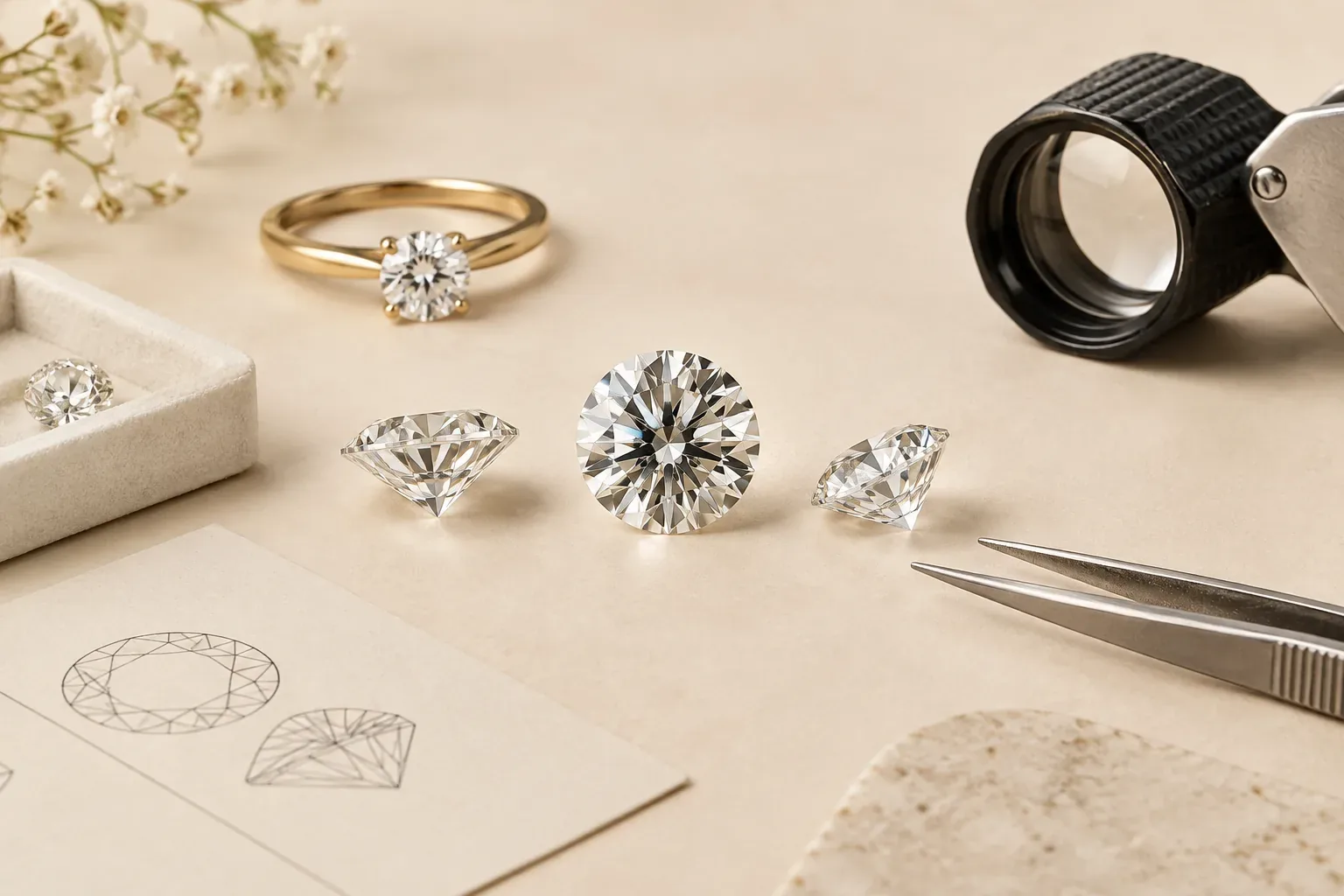
Meaning at a glance
A diamond culet is the small facet (or point) at the very bottom of a cut diamond; when buying, weigh culet size against light performance and durability, request a grading report and diagrams, and remember that lab testing or a qualified gemologist is required to confirm treatments, origin, or certain structural details.
What a culet is and how it appears in jewelry
In practice the culet is the tiny flat facet (or an unpolished pointed end) at the bottom of a diamond’s pavilion. When present and larger than very small, it can sometimes appear as a dark spot visible through the table when the diamond is set face-up. In rings, pendants and studs the culet is rarely the focal feature but it affects how light returns from the pavilion; in antique or vintage settings you may also notice larger culets that reflect the cutter’s period technique rather than a modern emphasis on maximum brilliance.
Historical evidence and precise periods
Gemological and jewelry histories record different cutting conventions over time. European cutting workshops of the 18th and 19th centuries and the early 20th century produced Old Mine and Old European style cuts in which larger culets were more common; later 20th-century and modern brilliant-cut standards generally aimed for smaller or no culet to enhance face-up light return. These distinctions are part of the technical record kept by gemological literature and are relevant when assessing antique or period-style diamonds.
Documented historical meanings versus modern personal interpretation
Documented historical evidence treats the culet primarily as a functional feature of cutting technique and durability—its size and finish reflect the tools and priorities of the cutter rather than symbolic meaning. Contemporary gemological sources and consumer guidance focus on disclosure, detectability of treatments, and cut performance rather than attributing cultural symbolism to the culet itself. Separately, modern wearers may form personal associations—some buyers prize a visible culet as a sign of an antique stone’s character, while others prefer none for maximum brilliance; these are personal taste judgments, not universal historical facts.
How the culet affects value and trade-offs to consider
Value is affected by how the culet changes the diamond’s appearance and durability. A very large culet can reduce apparent brilliance and may be visible as a dark or pale spot, which can lower face-up appeal for buyers seeking maximum sparkle. Conversely, a small culet or a pointed pavilion can have negligible visual impact and may improve light return. Larger culets sometimes reflect an antique cut that can add collector or sentimental value independent of light performance, so value impact depends on buyer intent: resale and conventional engagement-ring markets often favor minimal culet, while antique collectors may accept larger culets for historical authenticity.
Also weigh durability: a tiny flat culet can reduce the risk of chipping at a vulnerable point compared with a sharply pointed pavilion. That practical trade-off can matter for everyday jewelry such as rings. Ultimately, culet should be judged alongside cut proportions, table size, depth percentage, symmetry, and clarity—no single facet determines value in isolation.
Decision criteria and practical checks before buying
Request the diamond’s independent grading report and the pavilion diagram that shows culet size and position. Reputable reports will record the culet description (for example, pointed/none, or a size designation) and include a plotted diagram; ask the seller to point to the culet on that diagram. Insist on clear, good-quality face-up photographs and ideally short video clips of the stone under diffused lighting so you can see whether a dark spot is visible.
Ask whether the stone is natural, lab-created, treated, or fracture-filled and request written disclosure. The Federal Trade Commission advises that consumers are entitled to clear distinctions among natural, lab-grown, treated, and imitation materials and that sellers should disclose such facts in writing. The Gemological Institute of America also emphasizes that treatments, detectability and care create distinct consumer questions for gemstones. If the seller provides only a vendor-supplied description without a laboratory report, insist on a recognized laboratory certificate or be prepared to pay for independent testing.
What you can verify yourself and what requires a jeweler or lab
You can visually inspect face-up photos and videos for a noticeable dark spot, examine the seller’s plotting diagram for culet notation, and read the grading report’s culet description. You can compare photos of a mounted ring to the certificate diagram to ensure the stone matches the report. However, you cannot reliably determine treatments, origin (natural vs lab-grown), or invisible clarity enhancements without a qualified jeweler’s inspection or a gemological laboratory report. For detectability of treatment and proper disclosure, follow the Gemological Institute of America’s consumer guidance and rely on laboratory documentation when those attributes affect value or care.
If you are buying an antique stone that purports to be period-original, provenance documentation and expert appraisal are required to substantiate age claims; visual cues alone are insufficient.
Care and maintenance considerations
Care depends mainly on whether the diamond has been treated or has internal features that might be fragile. The Gemological Institute of America cautions that treatments, detectability and durability create distinct care requirements; for example, fracture-filled or fracture-repaired stones may need gentler handling and may be damaged by ultrasonic cleaning. If the seller or report indicates any treatment, ask the lab or jeweler for tailored cleaning recommendations and for any restrictions on ultrasonic or steam cleaning.
For untreated modern diamonds, standard safe cleaning practices—mild detergent, soft brush, and warm water—are typically adequate for routine care, and periodic professional cleanings and inspections preserve settings and reduce the chance of accidental damage.
Practical and respectful selection or gifting guidance
Match the culet and overall cut to the recipient’s taste and to the ring’s intended life. If the receiver prefers bright, modern sparkle, prioritize a minimal or no culet in a well-proportioned modern brilliant cut and verify with a laboratory report and photos. If the gift is an antique or heirloom where historical character matters, a larger culet can be part of the appeal; treat that feature as part of the stone’s provenance and document it in writing for the recipient.
When gifting, include the certificate and any seller disclosures with the jewelry; explain the culet’s presence and why you chose it, and offer the buyer or recipient the option to consult a local qualified jeweler for independent inspection. Given consumer-protection guidelines, insist on a clear return policy and written condition notes so that the recipient’s rights are respected if an independent appraisal reveals undisclosed information.
A short buying checklist
Request an independent laboratory report and the pavilion diagram that describes the culet. View high-quality face-up images or video under diffused light to look for a visible spot. Ask whether the diamond is natural, lab-grown, or treated and get written disclosure. Confirm the seller’s return policy and any warranty. If you need certainty about treatments or origin, pay for a gemological laboratory report or an independent appraisal from a qualified professional.
Final takeaways
Treat the culet as a technical and aesthetic variable: it can be a sign of antique character or a minor practical choice that affects durability, but it rarely should be the sole reason to buy or reject a diamond. Rely on independent reports, documented seller disclosure, and clear photographs, and accept that some confirmations—especially of treatments and origin—require a qualified jeweler or laboratory. For broader market context on engagement-ring tastes and demand patterns, industry search estimates show continued strong interest in engagement rings and related diamond jewelry, which makes transparent documentation and clear communication with your seller especially important when purchasing stones for that market.
Frequently asked questions
What exactly is a culet and does every diamond have one?
The culet is the lowest point or small flat facet at the diamond’s pavilion. Not every diamond has a polished culet: some are cut to a pointed pavilion while others have a small or very small flat culet. The presence and size are recorded on laboratory reports and plotted in diagrams.
Does a large culet make a diamond worth less?
A large culet can reduce face-up brilliance and may be seen as a defect by buyers seeking maximum sparkle, which can lower market value in those segments. However, for antique or period pieces a larger culet can be part of the stone’s character and may not reduce its value for collectors. Value depends on buyer intent and comparable market demand.
Can I tell if a diamond is treated or lab-grown from the culet or photos?
No. Treatments and origin (natural versus lab-grown) are not reliably determined from a culet or photographs alone. The Federal Trade Commission advises written disclosure from sellers, and the Gemological Institute of America recommends independent laboratory reports for conclusive information on treatments and origin.
What should I ask a seller specifically about the culet?
Ask for the laboratory grading report and the pavilion diagram showing the culet description. Request high-quality face-up photos or video under diffused light, and ask whether the culet is original to an antique piece or the result of modern re-cutting. Also confirm written disclosure about treatments and request the seller’s return policy.
Does a culet affect durability or care?
A small flat culet can reduce chipping risk at a sharp point, so in some cases it improves durability. Care recommendations depend more on treatments and internal features; if a diamond is fracture-filled or otherwise treated, avoid ultrasonic or steam cleaning unless a lab or jeweler confirms it is safe.
Sources and further reading
- Imaginaire Digital — Imaginaire Digital
- Gemological Institute of America — Gemological Institute of America
- Federal Trade Commission — Federal Trade Commission