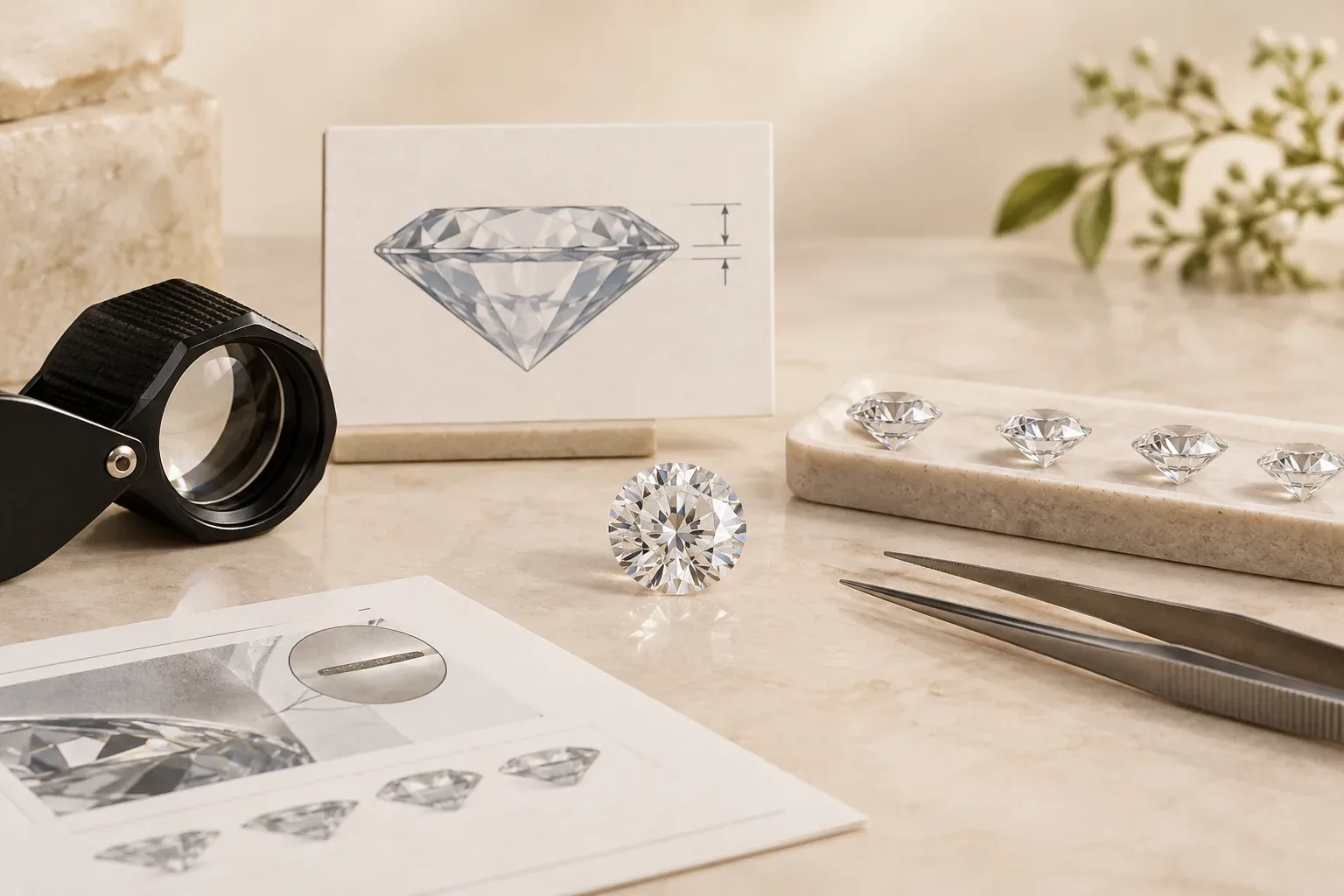
Meaning at a glance
This guide defines girdle thickness, explains how labs and the trade treat it, sets out decision criteria and practical trade-offs for selection and gifting, offers safe care advice, and clarifies what a buyer can and cannot verify without a qualified jeweler or gemological laboratory.
Quick answer
A diamond girdle thickness report guide should give you clear definitions, trade-offs, and limits: girdle thickness is a graded physical attribute reported by gemological labs and sellers that affects a stone’s durability, setting options, and appearance; the correct choice depends on intended wear, setting style, budget, and whether you prioritize maximum brilliance or extra protection, and some verifications require a qualified jeweler or an independent gemological laboratory. This article follows available institutional guidance and consumer-disclosure rules to explain the evidence and practical decisions.
What the girdle is and how it’s described on reports
The girdle is the narrow outer edge around a faceted diamond where the crown meets the pavilion. Lab reports and seller documentation typically describe the girdle as to thickness because that measurement matters for how the stone will be set, how it resists chipping, and how weight is distributed. Gemological institutions and trade descriptions place girdle thickness alongside cut, clarity, color, and carat as a technical attribute buyers should consider. The exact wording used on a report can be verbal (a graded description) or numerical (a measured range), and reputable sellers will disclose which method they use and whether the stone has been examined under magnification.
Historical evidence and the modern regulatory context
Documented, reliable evidence about how girdle measurements are described and disclosed is concentrated in the modern gemological and consumer-protection era. The Gemological Institute of America (GIA) records and reference materials reflect the development of laboratory testing, treatment detection, and reporting practices that the trade relies on today. The Federal Trade Commission (FTC) provides the consumer-protection framework that requires sellers to make clear written disclosures about a gemstone’s nature (natural, lab-created, treated, or imitation) and about material facts that affect value. In short, standardized reporting and consumer-rights rules are products of modern institutions and regulatory practice rather than ancient cultural traditions, and authoritative guidance on reporting and disclosure comes from contemporary organizations such as GIA and the FTC.
Documented technical meanings versus modern personal interpretations
Historically and technically, girdle thickness is a physical measurement with direct trade implications; that is the documented meaning found in modern gemological literature and consumer guidance. Modern personal or symbolic interpretations—such as treating a thin girdle as an aesthetic sign of delicacy or a thick girdle as a metaphor for resilience—are contemporary, subjective readings applied by individuals and retailers. Those personal meanings are valid as private symbolism but are not documented by the scientific or regulatory sources that define how girdles are measured and disclosed. Keep these two kinds of meaning separate when using a report to make buying or gifting decisions.
How girdle thickness appears in actual jewelry and why it matters
Girdle thickness influences both the visible look of a mounted diamond and the practical ways jewelers will set and secure it. A very thin girdle can make the diamond appear slightly larger face-up for a given carat weight but can leave the edge vulnerable to chips if subjected to knocks; a thicker girdle adds protection but can slightly reduce face-up spread and may add weight that increases price without visibly enlarging the diamond. The choice of setting interacts with girdle thickness: prong settings typically conceal a modest girdle and are common for engagement rings and studs, while bezel or rim settings can be preferable for stones with thinner girdles because they wrap and protect the edge. Popular consumer demand for engagement rings, studs, and other everyday-wear diamond pieces is documented in marketplace analysis, reminding buyers that intended wear—daily engagement ring versus occasional earrings—should influence the girdle choices they prioritize.
Decision criteria and practical trade-offs to consider
When you read a girdle thickness report, evaluate these practical criteria against your priorities: wear profile (daily jewelry needs more protection), setting type (open settings expose edges more), balance with other attributes (clarity and cut can interact with how a girdle’s appearance is perceived), and budget (thicker girdles can increase weight-based price without improving face-up size). The trade-offs are straightforward: thinner girdles can maximize face-up presence and light return but increase the risk of edge damage if the stone is subject to hard wear; thicker girdles enhance durability and may conceal inclusions near the edge but can contribute to heavier carat weight and slightly reduced apparent size. If maximizing brilliance is the goal and the piece will be worn carefully, a thinner-to-medium girdle might be appropriate. If the piece will be worn daily or subjected to impact, erring toward a slightly thicker girdle is a defensible choice.
How to read a seller or lab report and what to ask for
Start by confirming whether the girdle description on the report is verbal, numerical, or both, and whether the lab or seller measured it under magnification. Ask the seller for the full lab report from an established laboratory and for magnified images or a video that shows the girdle and the setting. Request written confirmation about whether the diamond is natural, lab-created, or treated, since treatments and origin have different care and value implications; the GIA provides reference guidance on treatments and what consumers should know, and the FTC requires clear seller disclosure about such attributes. If a seller cannot provide a credible independent report or reasonable magnified imagery, plan for a professional inspection before finalizing the purchase.
Care guidance and safe handling
Care for a diamond with an attention to its girdle and setting. Diamonds are hard but not immune to edge damage; have prongs and bezels checked and tightened periodically by a qualified jeweler to protect the girdle edge. Avoid exposing the piece to harsh chemicals that can damage the mounting or alter the setting’s security. For stones that received treatments or enhancements, follow any specific care instructions applicable to those treatments, and consult gemological references for details. The GIA notes that treatments, detectability, and care are distinct consumer concerns, and sellers should disclose such facts so buyers can follow appropriate maintenance routines.
What you can and cannot verify without a jeweler or lab
A consumer can examine photos, videos, and the text of a lab report to learn a diamond’s reported girdle thickness and to choose a setting appropriate to intended wear. However, several important verifications require expertise and instruments: precise microscopic measurement of the girdle, detection of undisclosed treatments or enhancements, and an independent assessment of whether a seller’s report is accurate and unaltered. The FTC’s consumer guidance makes clear that sellers must disclose material facts, but detecting undisclosed treatment or falsified reports typically requires a gemological laboratory or a qualified professional appraisal. If a transaction depends on exact measurements or on confirmation that a diamond is untreated and natural, obtain an independent lab report from an accepted gemological laboratory before completing the purchase.
Practical selection and gifting guidance
Match the girdle choice to the recipient’s lifestyle and the piece’s intended use. For everyday-wear pieces such as engagement rings or tennis bracelets, favor girdle thickness that leans toward protection and durability and choose secure settings that shield the edge. For special-occasion jewelry where maximum face-up presence is the priority and wear will be infrequent, a thinner or medium girdle combined with an open setting can be appropriate. When gifting, respect the recipient’s style preferences rather than making symbolic assumptions about technical attributes. Always request clear written documentation and, if possible, independent verification for high-value purchases so the recipient inherits not only a beautiful piece but also a verifiable record of its attributes. Imaginaire’s market analysis underscores strong consumer demand in categories like engagement rings and studs, which are precisely the settings where girdle thickness and setting choice matter most.
Summary and limits of the evidence
The available institutional evidence supports treating girdle thickness as a technical, reportable attribute with practical consequences for durability, setting choice, and apparent size. Modern gemological organizations provide the testing and reporting framework that allows consumers to compare stones, and consumer-protection authorities require transparent disclosure of material facts. Personal or symbolic meanings are modern interpretations layered onto a technical attribute and should be treated as such. For precise measurement, treatment detection, or independent verification you will need a qualified jeweler or an accredited gemological laboratory.
Frequently asked questions
Does girdle thickness affect a diamond’s durability?
Yes. A very thin girdle can leave the diamond’s edge more vulnerable to chips if the piece is subject to hard wear, while a thicker girdle adds protection. The right balance depends on how and where the jewelry will be worn.
Can I verify girdle thickness at home?
You can review photos, videos, and the text of a lab report, but precise measurement and detection of undisclosed treatments generally require a qualified jeweler or an accredited gemological laboratory.
Will a lab report always state the girdle thickness?
Many reputable lab reports and seller documents include girdle descriptions, either as a verbal grade or a numerical range. For high-value purchases, request the full independent report and ask the seller to point out how the girdle was measured.
Should I choose a thinner or thicker girdle for an engagement ring?
Choose based on lifestyle and setting. For daily-wear engagement rings, prioritize durability and a setting that protects the edge; for occasional-wear pieces where face-up size is the priority, a thinner-to-medium girdle may be acceptable. Always weigh this against the ring’s overall cut, clarity, and setting.
What disclosures should I insist on when buying a diamond?
Ask for written disclosure about whether the diamond is natural, lab-created, or treated, and request an independent laboratory report for any material claims. The FTC requires sellers to make clear disclosures about such material facts.
Sources and further reading
- Imaginaire Digital — Imaginaire Digital
- Gemological Institute of America — Gemological Institute of America
- Federal Trade Commission — Federal Trade Commission