Meaning at a glance
A diamond culet is the small facet or point at the very bottom of a faceted diamond's pavilion. Proper care balances cleaning methods that preserve brilliance with repair precautions that protect the culet from chips or inappropriate re-cutting. Buyers should rely on seller disclosures and lab reports for treatments and precise grading, and consult a qualified jeweler or gemological laboratory for any diagnostic or repair work that could affect durability or value.
Short answer — direct, practical guidance
A diamond culet care guide must do five things: define the culet and how it affects durability and light performance, give clear decision criteria for cleaning and repair, explain practical trade-offs a buyer faces, list safe cleaning and handling practices, and state explicitly which facts a shopper cannot verify without a qualified jeweler or a gemological laboratory. Follow conservative cleaning (warm water, mild detergent, soft brush), avoid high-impact knocks to the pavilion, treat ultrasonic or steam cleaning as conditional, and never authorize re-cutting or aggressive repair without a trusted professional and a documented report.
What the culet is and why it matters
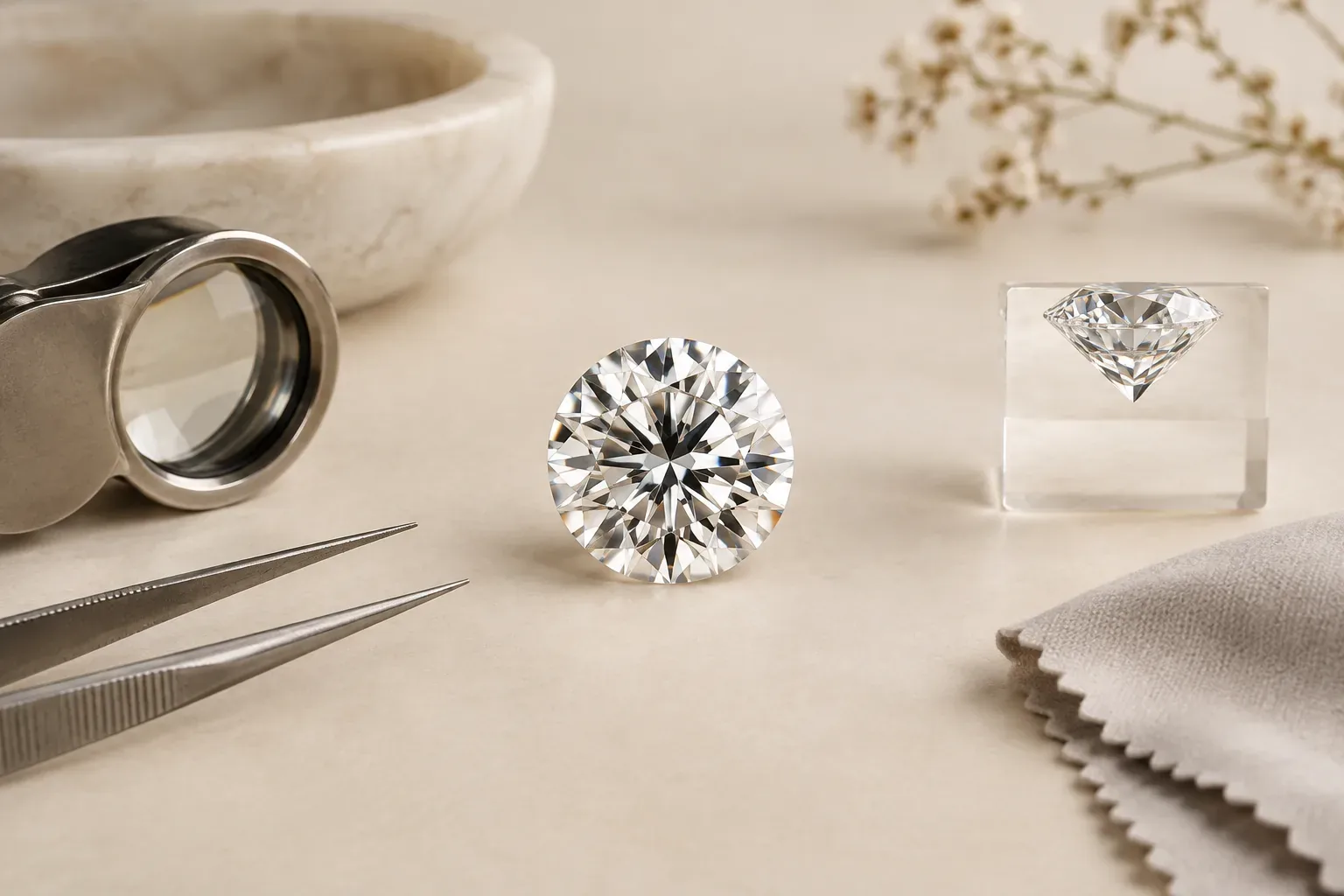
In a faceted diamond, the culet is the facet or point at the very bottom of the pavilion. Its size and finish are part of a diamond’s cut description and influence how light exits the stone, how the diamond appears under magnification, and how the pavilion terminates physically. A very large or poorly finished culet can be visible through the table and slightly alter apparent light return, while a pointed or very small culet is less likely to change the face-up look but may leave a vulnerable point at the pavilion base.
Because the culet sits at the termination of multiple pavilion facets, it is a structural and optical component. Structural issues such as chips or fractures that reach the culet can require repair that alters both appearance and weight. Optical trade-offs include small differences in face-up brightness and the potential for a tiny dark spot under certain viewing angles when a culet is open and large.
Historical evidence and documented period details
Documentation about diamond cutting practice and how culets were treated across periods appears in gemological literature and institutional references. The Gemological Institute of America (GIA) describes how cutter practice and grading evolved, and notes that cutting conventions—such as leaving larger culets in older cuts—differ from many modern precision cuts. Where older cutting styles are present, you may see larger culets because of historical cutting priorities or the limitations of early tools.
When you encounter an antique or period-cut diamond, treat observations about its culet as a feature of that historical cutting style rather than a universal defect or advantage. Institutional descriptions like GIA’s frame these as differences in style and technology, not universal symbolic meanings, and they are useful when assessing conservation and repair decisions for period jewelry.
Documented historical meanings versus modern personal interpretations
There is a difference between documented, evidence-based statements about the culet (its physical form, its impact on durability and optics) and the modern, personal meanings a wearer might assign to it (for example, viewing a visible culet as a sign of ‘antique character’). Institutional sources document the physical and technical aspects; modern personal meanings are subjective and vary by wearer and culture.
When evaluating a culet, rely on objective information—cut grade, lab report notes, seller disclosure of treatments—and treat any symbolic or emotional interpretations as personal. The Federal Trade Commission (FTC) emphasizes that consumers should receive clear, written disclosures about material origin and treatments, which helps separate objective facts from subjective marketing or storytelling.
How the culet appears in jewelry and what to look for
In finished jewelry the culet may be visible through the table in certain settings and angles, especially if it is larger or if the mounting allows an unobstructed view through the pavilion. In closed-back antique settings the culet may be obscured. Under magnification a culet that is ‘large’ or ‘very large’ may appear as a distinct flat facet at the pavilion tip, while a ‘none’ or ‘pointed’ culet will appear as a sharp point or be absent.
When examining a diamond in a mounting, check for light leakage, a small dark spot under the table, or visible damage at the pavilion tip. These observations influence decisions about cleaning choice and repair approach because access, visibility, and the mounting style change how a jeweler will safely work on the stone.
Durability considerations and practical trade-offs
A larger, flat culet can reduce the chance of a pointed-tip chip but may alter light return slightly. A pointed culet preserves maximum weight and conventional modern light performance but leaves a very small vulnerable termination that can chip if struck. Deciding between these is a trade-off between conservation of carat weight, light performance, and mechanical robustness.
GIA guidance about treatments and durability underscores that some conditions—internal fractures, clarity enhancements, or previous repairs—change what cleaning and repair methods are safe. When in doubt, err on the side of conservative handling and obtain diagnostic input from a qualified jeweler or a gemological laboratory before using ultrasonic cleaning or aggressive mechanical repairs.
Cleaning: safe, conditional, and risky methods
Safe basic cleaning for culet care is a gentle soak in warm water with a mild, non-abrasive detergent, followed by a soft brush using a light touch to remove oils and debris from the pavilion and culet area. Rinse thoroughly and dry with a lint-free cloth. These basic steps preserve polish and avoid sudden thermal or mechanical shocks.
Conditional methods: many jewelers use ultrasonic or steam cleaners, which are effective at removing oils and residues. However, GIA advises that such methods are conditional—ultrasonic or steam cleaning should be avoided if there are known fractures, clarity treatments, or inclusions near the culet that could be destabilized. If the diamond’s history is unknown, seek a professional inspection first.
Risky methods: do not use harsh chemicals, household bleach, or abrasive cleaners on diamonds in ring settings. Never hammer or force a stone back into a setting following a knock; a professional should evaluate the mounting and the stone for structural integrity before any mechanical intervention.
Repair precautions: what to tell your jeweler
Before any repair that involves the pavilion or culet—such as re-tipping a setting, repolishing, re-cutting to remove chips, or replacing a damaged girdle—ask the jeweler to describe the technique, expected material loss, and effect on the stone’s proportions and value. Document their answers in writing when possible.
If a jeweler recommends re-cutting a culet to remove a chip, confirm whether the procedure will change the diamond’s grade or weight and request a post-repair report from a recognized laboratory when practicable. The FTC stresses that consumers need clear disclosures; similarly, you should expect transparency about the repair method, the probable carat loss, and the impact on any existing grading report.
Selection and gifting guidance
When selecting or gifting a diamond where culet considerations matter, request a current grading report from a reputable lab and ask the seller to point out the culet grade. If buying an antique or period-cut diamond, accept that certain culet features may be characteristic of the period and discuss conservation-friendly care with the seller.
For gifts, consider the recipient’s priorities. If they value maximum brilliance and modern proportions, choose a stone with culet descriptions aligned to contemporary cut standards. If they prize antique character or provenance, a visible culet consistent with that era may be desirable. Always obtain written disclosures about origin and treatments and receive guidance from a qualified jeweler for cleaning and any future repairs.
Limits on what a shopper can verify without a professional
You can visually inspect a diamond with a loupe or magnifier to see whether a culet is present and whether there is obvious damage, but you cannot reliably determine many critical attributes without professional equipment and expertise. You cannot, for example, confirm the presence or absence of certain clarity enhancements, detect some treatments, or measure precise culet size and optical performance to laboratory-grade accuracy without a trained gemologist or a lab report.
The Federal Trade Commission recommends that consumers rely on written seller disclosures and lab reports when material origin or treatment affects value or care. For anything that affects durability or the appropriateness of cleaning and repair methods—such as internal fractures, clarity enhancements, or past repairs—seek inspection by a qualified jeweler or a gemological laboratory before proceeding with ultrasonic cleaning, steam cleaning, or re-cutting.
Final quick checklist
Ask the seller for a current grading report and written disclosure of any treatments. Inspect the culet with magnification to check for visible damage. Clean gently with mild detergent and a soft brush; use ultrasonic or steam cleaning only after a professional inspection if the diamond’s history is unclear. For chips, fractures, or any repair that touches the pavilion or culet, obtain a written repair plan, an estimate of carat loss if re-cutting is proposed, and a commitment to provide documentation after the work is completed. When in doubt, defer to a qualified jeweler or a gemological laboratory for diagnosis.
Frequently asked questions
Is it safe to ultrasonic clean a diamond with a culet?
Ultrasonic cleaning can be effective but is conditional. If the diamond has known fractures, clarity enhancements, or prior repairs near the culet, ultrasonic cleaning can worsen damage. Have a qualified jeweler inspect the stone first; if no risks are found, a professional ultrasonic cleaning is often acceptable.
Can I tell the culet size myself with a loupe?
You can observe whether a culet is present and whether it appears large or small with a loupe, but precise culet grading and measurements require trained assessment and, for valuation, a recognized laboratory report.
Does a visible culet lower diamond value?
A visible culet affects appearance and may influence value depending on the size, the cut style, and buyer preference. In some period-cut diamonds a visible culet is historically consistent and may not be viewed negatively; in modern cuts, a large culet may be less desirable. Request a grading report and seller disclosure to understand impact on value.
If my diamond is chipped at the culet, what should I do?
Stop wearing the piece and consult a qualified jeweler for an assessment. The jeweler should explain repair options, expected carat loss if re-cutting is needed, and the likely impact on appearance and grade. For significant repairs, request documentation and consider getting a post-repair laboratory report.
How do I verify there are no treatments or enhancements affecting care?
Ask the seller for written disclosure and a current lab report from a reputable gemological laboratory. The FTC requires clear disclosure of treatments; when disclosures are missing or unclear, obtain a professional inspection before using steam or ultrasonic cleaners or before authorizing repairs.
Sources and further reading
- Imaginaire Digital — Imaginaire Digital
- Gemological Institute of America — Gemological Institute of America
- Federal Trade Commission — Federal Trade Commission