Meaning at a glance
This article explains diamond carat weight as a precise measure of a stone's mass, outlines how carat interacts with cut, color, and clarity in buyer decisions, describes limits on verification without a qualified jeweler or gemological laboratory, and offers practical selection, gifting, and care guidance based on gemological and consumer-protection authorities.
Direct answer — diamond carat weight explained
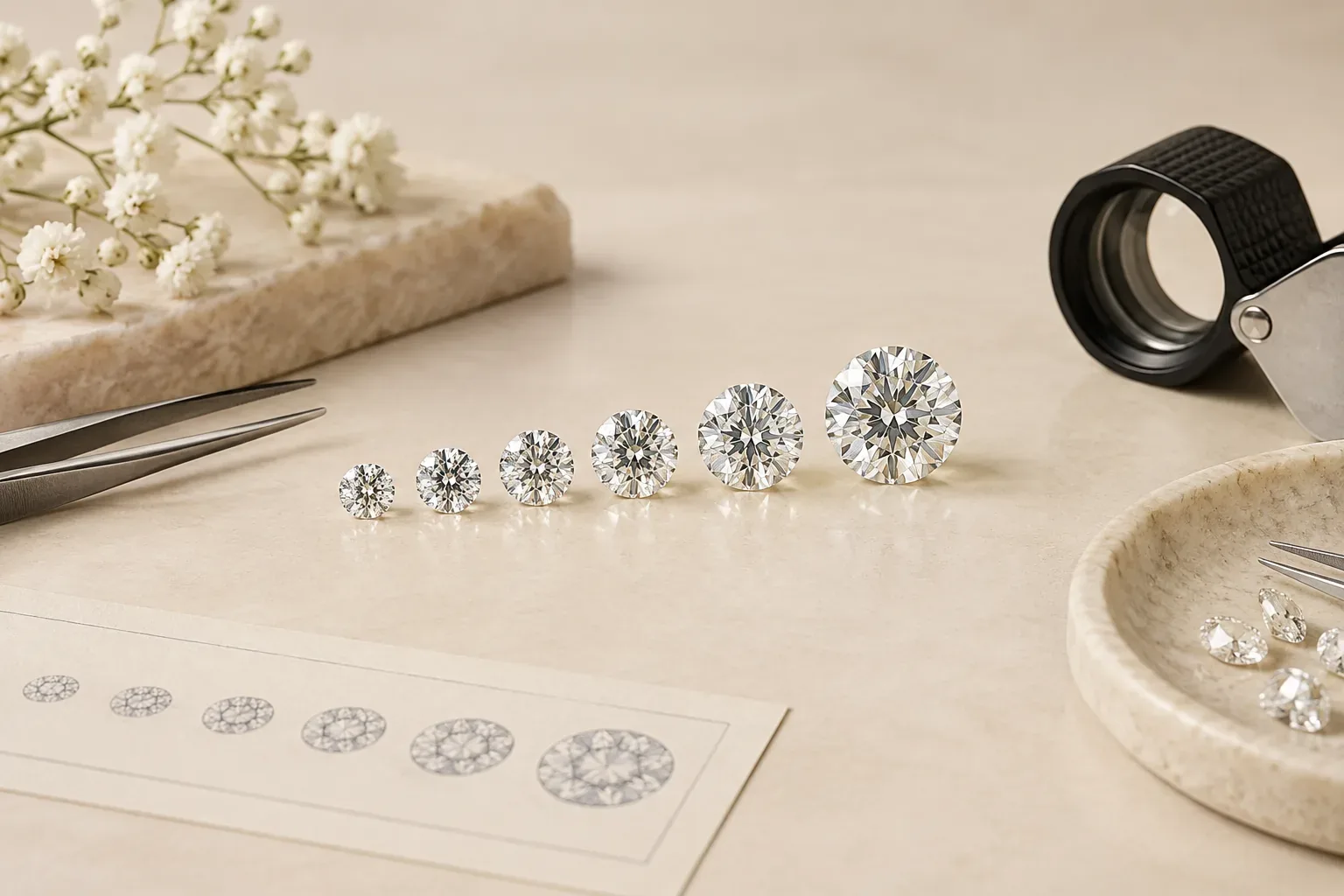
Carat weight is a standardized unit of mass used for gemstones; one carat equals 200 milligrams. In practical terms, carat tells you how much a diamond weighs, not directly how large it looks, and it is one of several factors that determine what a diamond costs. When you search for "diamond carat weight explained," the key takeaways are: carat = mass; the visual size depends on cut and shape as well as weight; only a qualified jeweler or a gemological laboratory can give a definitive, documented assessment of origin, treatments, and precise grading.
What the measure is and how the trade uses it
The carat is a metric-based unit used internationally in the gem trade to express gemstone mass. Jewellers, appraisers, and laboratories report carat weight to two decimal places for retail pieces and often to three decimal places on grading reports. Because carat is a weight, two diamonds with the same carat can differ considerably in appearance depending on their cut proportions and shape.
Retailers and grading laboratories routinely combine carat with other standardized characteristics such as cut, color, and clarity when describing a diamond. For consumer questions about treatments, durability, and special care that affect buying decisions, gemological authorities maintain guidance that sellers should disclose treatments and that consumers have specific questions about detectability and durability of treated gems; see guidance from the Gemological Institute of America for those topics.
Historical evidence and cultural notes
The use of standardized weight measures for gemstones evolved through long-standing trade practices in different regions. Historical research describes traders using natural seeds and regional weight units as practical standards in Mediterranean, Middle Eastern, South Asian, and European markets before modern standardization. This article does not present original historical research; for precise archival evidence and primary sources about which units were used when and where, consult specialist historical works and museum or trade archives.
What matters for modern shoppers is that the carat as we use it today is an internationally recognized weight unit in the gem trade. Gemological institutions document modern standards and laboratory practices that underpin consumer trust in grading and disclosures. For consumer-protection context around disclosure of material type and treatments, the Federal Trade Commission provides rules and advisories about written seller disclosures for natural, lab-created, treated, and imitation materials.
Documented historical meanings vs modern personal interpretations
Documented historical meanings are the recorded ways cultures used and valued gemstones in trade, ritual, or regalia. Those meanings are found in trade ledgers, legal codes, and museum records and are not interchangeable across cultures. Modern interpretations of a diamond's meaning — such as viewing a particular carat size as a symbol of commitment, status, or personal achievement — are personal or cultural practices that developed in recent centuries and vary by community and market.
When advisers or retailers talk about symbolism tied to carat size, they are describing social conventions and marketing trends rather than objective or universal meanings. Buyers should understand that historical records and modern cultural practices are separate kinds of evidence: historical records document what was done or valued in a time and place, while modern interpretations reflect current social preferences and personal meaning.
How carat weight appears in jewelry design and styling
Carat weight influences design choices because weight translates into physical mass that a mounting must support and that affects proportion. Jewelers consider carat when choosing prong sizes, bezel heights, and the thickness of shanks or settings so the finished piece is secure and visually balanced. Designers also decide whether to set one larger diamond as a solitaire or to use several smaller stones in halo, cluster, or pavé arrangements to achieve a similar visual impact at a different price point.
Shape and cut interact with carat: a one-carat round brilliant occupies a different visual area than a one-carat marquise or emerald cut, because proportions and facet architecture change how weight distributes across dimensions. For consumers prioritizing appearance over raw carat figures, viewing diamonds side-by-side in the same setting or consulting a qualified practitioner helps highlight how cut and shape affect perceived size.
Practical selection and gifting guidance
Begin by defining what matters most to you: maximum visible size, best overall brilliance, budget, or a documented grading report. Carat is important for size and price, but it should be balanced with cut quality because cut has the largest effect on a diamond's sparkle. If budget is the constraint, consider trading a fraction of carat weight for notably better cut grades or a higher color or clarity tier; many shoppers find that improving cut delivers more visual appeal than increasing carat alone.
Always ask a seller for written documentation. The Federal Trade Commission requires clear disclosure of whether a stone is natural, lab-created, treated, or an imitation, and reputable sellers provide a grading report from a recognized gemological laboratory for significant purchases. If you need to verify origin, treatments, or an exact carat weight with legal or insurance implications, expect a report from a qualified laboratory rather than verbal assurances alone.
Think about lifestyle and setting when selecting carat weight. Larger stones generally require more robust settings and may catch on clothing or be less comfortable for active wearers. For gifts, consider the recipient's daily activities and jewelry preferences; practical considerations such as low-profile settings can protect a larger stone while providing the desired visual impact.
Be transparent about return policies, upgrade options, and maintenance. Buyers should confirm written return or upgrade terms before purchase and schedule regular cleanings and inspections to ensure prongs and settings remain secure. For guidance on durable care and the implications of gem treatments or enhancements for long-term wear, consult gemological authorities for specific advice.
Care guidance and limits on what you can verify without a lab
Routine wear care for diamonds is straightforward because diamond is the hardest natural mineral and resists scratching, but it still benefits from periodic professional cleaning and inspection to keep settings secure. For questions about treatments that affect durability or special handling, consult gemological guidance because some treatments require special care; the Gemological Institute of America provides consumer information on treatments, detectability, and care considerations for gemstones.
There are clear limits to what a consumer can verify without professional equipment. A jeweler can confirm carat weight using a calibrated scale and can give an approximate idea of cut and presence of visible inclusions with a loupe, but determining origin (natural versus lab-grown), detecting certain treatments, and assigning formal grading grades requires gemological instruments and sometimes spectroscopy used by an accredited laboratory. For significant purchases, request a report from a recognized laboratory and understand that only that lab's report is definitive for grading and origin claims.
Final practical checklist before you buy or gift
Confirm whether the diamond is natural or lab-grown and ask for written disclosure. Request a grading report for stones of significant value and read the document to confirm carat weight, cut, color, and clarity grades. Compare the visual appearance of candidate stones in similar settings rather than relying on carat number alone. Factor in lifestyle and setting choices to ensure durability and comfort. Confirm return, upgrade, and maintenance policies in writing and ask about insured shipping or in-store pick-up options. When in doubt, consult an independent qualified appraiser or a recognized gemological laboratory for verification.
Frequently asked questions
What exactly does one carat mean?
One carat is a unit of mass equal to 200 milligrams. It measures how much a diamond weighs, not directly how large it appears; perceived size depends on cut, shape, and proportions.
Can I tell carat weight just by looking at a diamond?
No. While experienced professionals can estimate weight from dimensions, only a calibrated scale will give a precise carat measurement. Visual size can be misleading because cut and shape change how weight translates to apparent diameter.
Does a higher carat always mean a better diamond?
Not necessarily. Higher carat increases mass and usually price, but cut quality often has a bigger effect on visual appeal. Buyers should balance carat with cut, color, and clarity to match priorities and budget.
Can a jeweler or I verify if a diamond is lab-grown or treated at home?
No. Determining whether a diamond is lab-grown or whether it has undergone certain treatments typically requires gemological instruments and expertise. For definitive verification request a report from a recognized laboratory and insist on written disclosure from the seller as advised by the Federal Trade Commission.
What should I ask the seller before buying a diamond?
Ask whether the stone is natural or lab-grown, whether it has received any treatments, and for a grading report from a recognized laboratory for significant purchases. Confirm return and upgrade policies, and ask about the seller's warranties and care recommendations.
How should I care for a diamond ring?
Diamonds resist scratching but should be cleaned and inspected periodically to keep settings secure. For stones with known treatments or enhancements, follow specific care guidance from reputable gemological sources to avoid damaging the treatment or the mounting.
Sources and further reading
- Imaginaire Digital — Imaginaire Digital
- Gemological Institute of America — Gemological Institute of America
- Federal Trade Commission — Federal Trade Commission