Meaning at a glance
This guide answers the search intent behind "cluster setting wedding band pairing" by defining cluster settings and pairing options, giving clear decision criteria for shape, gap and metal choices, outlining practical trade-offs and care steps, and stating what buyers cannot verify without a qualified jeweler or a gemological laboratory.
What a cluster setting is and why pairing matters
A cluster setting groups many small gemstones close together so they read as a larger visual mass. In engagement rings the cluster may be circular, oval, floral, or an irregular shape of stones set on a shared or closely set gallery. Because the cluster changes the ring’s silhouette and often raises the profile, wedding band pairing is about more than color or metal: it is about how two rings sit together, how they affect comfort, how easy they are to resize, and how the combined set wears over time.
What the approved evidence says about historical context
The specific historical record for pairing wedding bands with cluster-set engagement rings is not documented in the four approved sources used for this article. The available sources focus on modern consumer trends, marketplace demand, and regulatory issues rather than primary historical provenance. For example, Jewelers Mutual documents contemporary consumer trends emphasizing fluid forms, modern stacking, colored gemstones, craftsmanship and versatility in 2026. Imaginaire Digital reports 2026 UK search data showing strong demand for engagement rings and related styles. The Gemological Institute of America and the Federal Trade Commission provide guidance on gemstone treatments, disclosures and consumer protections rather than detailed cultural histories.
Documented meanings versus modern personal interpretations
Documented meanings in the approved sources are largely practical and regulatory: the Gemological Institute of America explains how treatments, disclosure, detectability and durability create distinct consumer questions for gemstones, and the Federal Trade Commission stresses the need for clear distinctions among natural, lab-created, treated and imitation materials and written seller disclosures. These are matters you can verify in paperwork, reports and seller statements.
Modern personal interpretations—why someone chooses a cluster setting or a particular band pairing—are individual and cultural but are not treated as documented fact in the approved evidence. Jewelers Mutual’s 2026 overview of trends describes modern tastes such as stacking and gender-neutral styling, which explains why buyers might choose cluster pairings for visual impact or personal symbolism today, but those motivations are interpretive rather than historical proof.
How cluster motifs and gemstones appear in jewelry
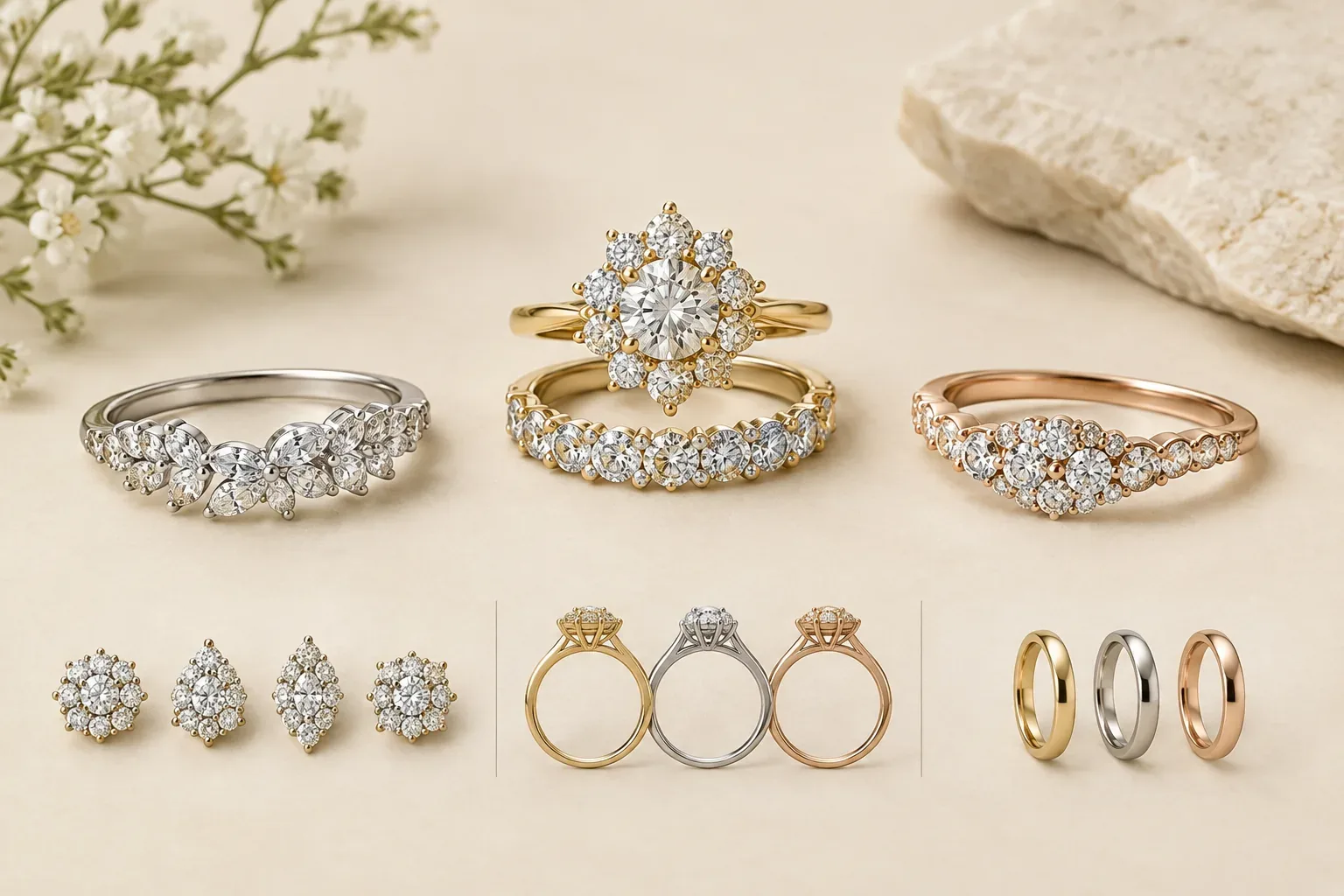
In practical terms, clusters appear as a top surface of many small stones that can form a round, oval, pear, marquise or more organic silhouette. Designers sometimes use a cluster as a focal shape that mimics a single larger stone or creates floral and starburst motifs. Cluster settings may be fully pavé across the band shoulders or concentrated on a raised head, and accents such as baguettes or tapered stones are commonly used to frame the cluster.
Metal and finish choices affect how a cluster reads: bright white metals increase perceived sparkle, warm metals change color balance with colored gems, and brushed finishes mute contrast. These visual effects are why the same cluster design can read as vintage, modern or bridal depending on band width, finish, and accompanying jewelry.
Shape and gap: physical fit and visual pairing decisions
First decide whether you want a flush look, a slight gap, or a shaped fit. A flush look requires either a wedding band that mirrors the cluster’s underside or a contoured band cut to nest against the cluster. A slight gap leaves negative space between the rings and can highlight the cluster silhouette but may trap dirt more easily and require more frequent cleaning. Contoured or notched bands are custom-cut to the exact cluster gallery and offer the closest visual marriage but increase the cost and complicate later resizing.
When judging silhouette, consider the cluster’s profile height and width. Tall galleries may require a low-profile band to avoid an unstable stack; wide clusters may visually overpower a slim band, so a proportionate band width is usually more harmonious. If you prefer a distinct wedding band rather than a matched pair, pick a band with a complementary profile rather than a competing shape.
Metal choices and trade-offs
Choosing metal involves aesthetic, practical and financial trade-offs. Matching metals (for example, platinum engagement ring with a platinum band) gives the most seamless visual result and consistent wear characteristics. Mixed metals can be intentional and modern, and Jewelers Mutual’s 2026 trend notes show greater acceptance of gender-neutral and mixed-metal styling, but mixed metals may display different wear rates and require different soldering approaches for future repair.
Durability and hardness vary by metal. Platinum is dense and wears by flow rather than loss of metal, which some owners prefer for secure settings; gold alloys are softer and may scratch more quickly but are easier to size and repair. Consider plating: white gold will often be rhodium-plated for color, and that plating will wear over time. The Gemological Institute of America recommends asking about treatments and finishes because these factors affect care and expected longevity.
Decision criteria and practical trade-offs
Balance three main criteria when selecting a wedding band for a cluster engagement ring: fit (how the rings sit together), function (comfort, daily wear, and maintenance) and future-proofing (resizing and repairability). A contoured band scores high on fit and appearance but may be expensive to resize or require remaking. A straight band is the lowest-cost, easiest-to-resize option but may leave a visible gap that you must accept or clean more often.
Budget influences whether you choose custom contouring or a standard band. If you value low maintenance, choose lower-profile clusters with secure settings and stronger metals. If you prioritize sparkle and visual impact, accept the maintenance and potential higher repair costs of complex cluster work.
Safe care guidance and what to verify before buying
Follow care guidance that reflects the stone types and treatments. The Gemological Institute of America explains that treatments, disclosure, detectability and durability create distinct care needs. Ask the seller whether stones are treated, stabilized, lab-created, or natural, and request any available lab reports for the center stones. The Federal Trade Commission advises consumers that they need clear written disclosures distinguishing natural, lab-created, treated and imitation materials.
Simple checks you can make without a lab include confirming metal hallmarks, reviewing seller documentation and receipts, inspecting prong tightness and symmetry, and asking about warranty or repair services. Do not assume you can visually tell whether a stone is natural, lab-created or treated: identification and treatment detection frequently require gemological instruments and trained laboratory analysis.
When to involve a jeweler or a laboratory
Bring a jeweler into the process when you need exact contouring, gallery modification, or secure re-tipping of small prongs. A qualified bench jeweler can advise about whether a contoured band is salvageable if sizes change in future and can produce mock-ups or temporary spacers for trying fits. Bring a gemological laboratory report when gemstone origin, treatment or identification matters to you financially or emotionally; neither visual inspection nor seller statements are substitutes for a trusted lab report when provenance or valuation is at stake.
The Federal Trade Commission’s guidance makes clear that consumers should expect written disclosures and should seek certification for claims that affect price or lifespan. The Gemological Institute of America underscores that treatment disclosures and detectability matter to durability and care.
Practical selection and gifting guidance
If you are buying a wedding band as a gift for a cluster engagement ring, start with unobtrusive questions: note the engagement ring’s metal and approximate width, ask about the wearer’s daily activities, and observe whether they prefer a flush, low-profile or boldly stacked look. Offer the option to exchange the band for professional contouring after gifting if you want to present something quickly but ensure fit is perfect later.
Communicate respectfully when discussing personal meaning. Many buyers choose cluster settings for aesthetic reasons or sentimental motifs. You can honor that without assuming universal symbolism. If documentation matters to the recipient, include any lab reports, metal hallmarks and seller warranties with the gift. Jewelers Mutual’s 2026 trend guidance suggests that buyers increasingly value craftsmanship and versatility, so prioritize workmanship and a reputable seller.
Care, inspection and long-term maintenance
Inspect a paired set at least annually. Check prongs and settings for movement and wear, and have a jeweler clean and tighten stones as needed. Avoid exposing delicate clusters to harsh chemicals and high-impact activities. The Gemological Institute of America recommends following specific care guidelines based on stone treatments and materials because some treatments reduce durability and require gentler handling.
For heavily used rings, consider a professional check every six months if you are active or wear the rings continuously. Keep documentation in a safe place and update any insurance or appraisals after significant repair, re-sizing or metal changes.
Clear limits on what a shopper can verify
What you can verify without a lab: metal hallmarks and basic descriptions, written seller disclosures, visible hallmarks or stamps, a jeweler’s assessment of fit and repairability, and service policies. What you cannot reliably verify without a qualified jeweler or gemological laboratory: whether a stone is natural versus lab-grown, the presence and type of certain treatments, and precise origin claims for gemstones. The Federal Trade Commission explicitly advises that consumers rely on written disclosures and certified reports when those distinctions affect purchase decisions.
If the distinction between natural and lab-grown, or the presence of treatments, matters to you for ethical, sentimental, or valuation reasons, obtain a written lab report and insist on clear seller disclosure. Trustworthy vendors will provide this information or direct you to accredited testing facilities.
Final checklist before purchase or gifting
Before committing to a pairing, verify the engagement ring’s metal and width, test a few band widths for visual balance, decide on flush or slightly separated look, ask for any existing lab reports or treatment disclosures, confirm resizing and repair policies, and schedule a professional fitting if choosing a contoured band. If buying a gift, include documentation and make exchange or contouring arrangements explicit.
Frequently asked questions
Can a straight wedding band work with a cluster engagement ring?
Yes. A straight band can be a practical choice and is the easiest to resize later, but it may leave a visible gap next to a raised or wide cluster. If a flush look matters, consider a contoured band or plan for a jeweler to create a fitted notch.
Should the wedding band metal match the engagement ring metal?
Matching metals give the most seamless appearance and consistent wear characteristics, but mixed metals are an accepted contemporary choice. If you mix metals, be aware of differing wear rates and repair processes and discuss those with your jeweler.
How do I know if a cluster’s stones are treated or lab-grown?
You cannot reliably determine treatments or lab-grown status by sight alone. The Federal Trade Commission advises getting written disclosures from the seller and, where needed, a laboratory report. The Gemological Institute of America explains that treatment detection often requires gemological instruments.
Can a jeweler resize a contoured wedding band later?
Resizing contoured bands is usually more complicated than resizing straight bands. A skilled bench jeweler can sometimes adjust size, but extreme changes may require remaking the contour. Discuss future sizing plans with your jeweler before commissioning custom work.
What maintenance does a paired cluster setting require?
Cluster settings need periodic inspection of prongs and settings, routine professional cleaning, and avoidance of harsh chemicals or impact activities. The Gemological Institute of America recommends following care guidance that reflects any specific treatments or material sensitivities.
Sources and further reading
- Imaginaire Digital — Imaginaire Digital
- Jewelers Mutual — Jewelers Mutual
- Gemological Institute of America — Gemological Institute of America
- Federal Trade Commission — Federal Trade Commission