Meaning at a glance
Cluster setting engagement ring durability depends on setting style, metal strength, stone hardness and treatment, wearer lifestyle, and maintenance; shoppers should weigh visual impact against higher routine inspection and potential repair needs and use a qualified jeweler or lab to verify stone treatment and structural integrity.
What a cluster setting is and why durability matters
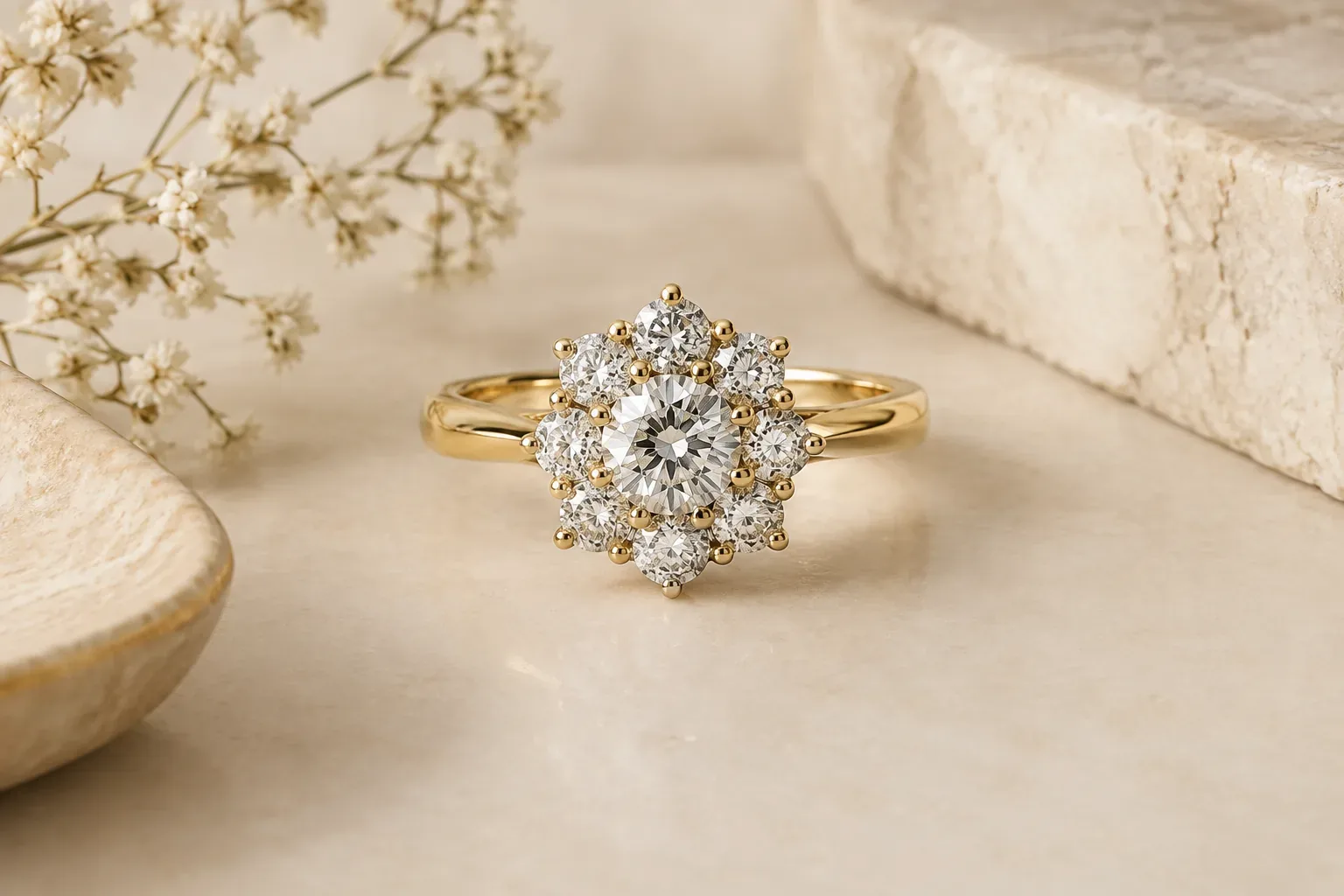
In trade usage a cluster setting groups several smaller stones tightly together to create the visual impression of a larger mass of fire and brilliance. That grouping can be done with prongs, beads, shared prongs, or micro-pavé techniques, and the geometry of the cluster—height, profile, and how stones sit relative to the shank—governs both how it looks and how it performs.
Durability matters because engagement rings are daily-worn jewelry. The more exposed edges, metal joins, and separate stones a design has, the more potential failure points there are: prongs can bend, beads can wear away, and small stones can be dislodged. For shoppers, that means balancing the desired appearance against maintenance, repair risk, and the recipient’s lifestyle.
Historical evidence and what the approved sources do — a careful distinction
The approved evidence for this article focuses on modern consumer, trade and technical concerns rather than primary historical documentation of cluster settings in specific cultures or periods. The professional and consumer sources we rely on here—industry trend reports and standards guidance—do not provide primary periodized histories that attribute the cluster motif to a named culture or precise historical era.
Because the permitted sources in this brief do not supply authoritative historical narratives, this article does not invent precise historical origins. Readers who need period-specific history (for example, Victorian cluster styles, Georgian precedents, or regional folk variations) should consult jewelry history monographs, museum catalogues, or peer-reviewed art-historical publications for verifiable, attributed claims.
Documented historical meanings vs modern personal interpretations
Within the constraints above, it is important to separate documented historical meanings from later or personal interpretations. The approved references here address consumer expectations, craftsmanship, gemstone treatment, and disclosure rather than symbolic meanings tied to a particular culture or era.
Modern wearers frequently attach personal or culturally specific meanings to cluster rings—family heritage, the idea of many elements adding up to a whole, or a vintage aesthetic—but those are interpretive and personal. They should be treated differently from documented facts about materials, treatment, and consumer protections, which are the focus of the cited professional sources.
How the cluster motif and gemstones typically appear in jewelry today
In contemporary practice cluster rings appear as tight groupings of melee diamonds or colored stones around a small center, as halo-style clusters that mimic a larger center, or as looser floral clusters that emphasize pattern over optical size. Jewelers use different techniques—shared prongs, bead settings, or micro-pavé—to hold many small stones in place while keeping the visible metal minimal.
Current demand patterns noted by industry observers emphasize versatility and colored gemstones as part of modern styling choices, which means cluster settings often feature mixed gems, alternative centers, and creative profiles. These trend observations underscore that cluster designs are commercially popular but vary a great deal in execution and finish, which directly affects durability (Jewelers Mutual; Imaginaire Digital).
Durability factors: daily wear, snagging, and repair risk
Construction quality: Strong, well-finished metalwork and properly set prongs or beads reduce failure risk. Thin, delicate rails or poorly soldered joins are more likely to deform or fail with repeated knocks. Jewelers Mutual highlights that craftsmanship and construction choices strongly influence how a ring performs under daily wear.
Number and size of stones: More stones equals more settings to inspect. Small melee stones are harder to secure and easier to lose if a prong or bead wears. Cluster rings with many very small stones need more frequent checks than rings with a single, well-set center stone.
Profile and gallery: High settings with exposed undersides and sharp edges are more likely to catch on fabric. Lower-profile cluster designs and guardable galleries reduce snagging but may compromise light return and optical size.
Gemstone hardness and treatments: Hardness (for example, diamond versus sapphire versus quartz) affects scratch and chip resistance. Treatments can change a gemstone’s care needs and toughness; the Gemological Institute of America notes that treatments, their detectability, and special care can create distinct consumer questions. Treated stones sometimes require gentler cleaning or different handling.
Metal choice and reactivity: Softer metals (some gold alloys, lower-karat gold, or thin-plated settings) can wear faster at prongs and bead mounts. Platinum is often chosen for its durability in high-wear settings, though workmanship remains the controlling factor.
Lifestyle: Active jobs, frequent hand use, or activities that expose rings to hard surfaces or chemicals increase the likelihood of snagging and repair.
Decision criteria and trade-offs for shoppers
Visual impact versus maintenance: Cluster settings can give a large visual presence for less cost than a single large stone. The trade-off is higher routine inspection and possibly more frequent small repairs. Shoppers should decide whether the immediate visual effect is worth the ongoing care commitments.
Stone and setting verification limits: Without a qualified jeweler or gemological laboratory you can check symmetry, apparent tightness of settings, obvious scratches, and whether stones sit flush, but you cannot reliably determine treatments, origin, precise durability properties, or concealed structural flaws. The Federal Trade Commission stresses the consumer need for clear written disclosure about treatments and synthetic or lab-created materials, and the Gemological Institute of America explains that some treatments are detectable only with laboratory equipment.
Insurance and repair: Antique-style clusters or highly detailed work may cost more to restore. Jewelers Mutual recommends considering insurance or service plans for rings that are intended for daily wear; that mitigates financial surprise if a repair is needed.
Practical selection and gifting guidance
Match the ring to the recipient’s lifestyle: For someone with an active job or hands-on hobbies, choose lower profiles, fewer exposed edges, larger secure prongs, or a simpler center stone design to reduce snagging and repair frequency.
Ask for written disclosures and a maintenance plan: Request written information about whether stones are natural, treated, lab-created, or simulants, and ask the seller how they recommend routine checks and how often a pro should inspect the settings. The FTC requires clear distinctions among these categories, and sellers should provide transparent answers.
Pick durable combinations: If you prefer a cluster look but want higher toughness, prioritize hard gemstones (for example, sapphire or diamond), a stronger metal such as platinum or higher-karat gold alloys with substantial prongs, and well-executed settings from a trusted maker. Jewelers Mutual’s market commentary suggests that craftsmanship and finish are decisive for everyday wear.
Plan for care and insurance: Include the ring in household insurance or specialized jewelry coverage and ask about routine maintenance packages from your jeweler. Regular professional checks reduce the chance of losing small stones and lower long-term repair costs.
When in doubt, seek third-party verification: If the purchase hinges on whether stones are treated or lab-grown, request a gemological report from a recognized laboratory; you cannot reliably confirm these characteristics by eye alone.
Care, inspection, and repair expectations
Routine inspection: Visually inspect the ring monthly for loose stones, bent prongs, or missing beads. Gently shake the ring near your ear—if you hear movement, seek a jeweler’s inspection.
Cleaning: Use mild warm soapy water and a soft brush for routine cleaning, avoiding harsh chemicals and ultrasonic cleaners when advised against for treated or fragile stones. The GIA highlights that treatments and special-care issues influence whether aggressive cleaning methods are appropriate.
Professional maintenance: Have a qualified jeweler check and retighten settings once or twice a year for daily-worn rings, more often if the wearer is active. Expect small repairs—re-tipping prongs, replacing a lost melee, or reflowing beads—over the life of the ring; this is normal for settings with many small stones.
When repairs are necessary: Complex restoration (resetting multiple stones or reworking the structure) may be more costly than simpler repairs. Ensure you get an itemized quote and consider whether the sentimental or aesthetic value justifies restoration.
Short closing summary
Cluster setting engagement ring durability is a balance: well-made cluster rings can be durable and visually striking, but their multiple stones and smaller settings mean higher inspection and maintenance needs and a greater likelihood of routine repairs than many solitaire alternatives. Use the decision criteria above, seek written disclosure and professional checks, and remember that verification of treatments and structural soundness often requires a qualified jeweler or a gemological laboratory.
Frequently asked questions
Are cluster setting engagement rings more likely to snag than solitaires?
Cluster rings often have more exposed small stones and shared prongs or beads, which increases the chance of catching on fabric versus a low-profile solitaire. Choosing a lower profile and sturdier prongs reduces snag risk.
How often should a cluster ring be checked by a jeweler?
For daily wear, have a qualified jeweler inspect settings and prongs at least once a year; more frequent checks are advisable for active wearers. Regular inspections reduce the risk of losing small stones.
Can a cluster engagement ring be resized or repaired?
Yes, most cluster rings can be resized and repaired, but complexity rises with the number of stones and the setting technique. Extensive repairs—resetting many stones or rebuilding a damaged gallery—can be costly compared with simpler designs.
What can I verify myself and what requires a lab or jeweler?
You can check for obvious loose stones, bent prongs, symmetry and surface damage yourself, but determinations about treatments, gem origin, precise durability, and hidden structural flaws require a qualified jeweler or a certified gemological laboratory, consistent with FTC guidance on disclosure and GIA advice on treatment detectability.
Do treatments make gemstones less durable in a cluster setting?
Some treatments can affect how a stone should be cleaned or handled; GIA notes that treatments and their detectability raise distinct care questions. Ask the seller for written disclosure and follow specialist care guidance if a gem is treated.
Should I insure a cluster engagement ring?
Yes—because cluster rings may need more routine maintenance and occasional repairs, including insurance or a jeweler’s service plan can protect you from unexpected repair costs. Jewelers Mutual recommends considering coverage for frequently worn pieces.
Sources and further reading
- Imaginaire Digital — Imaginaire Digital
- Jewelers Mutual — Jewelers Mutual
- Gemological Institute of America — Gemological Institute of America
- Federal Trade Commission — Federal Trade Commission