Meaning at a glance
A channel setting engagement ring places stones in a continuous groove between two metal walls, offering a sleek, secure look that suits active wearers and modern, stackable styles; this guide explains definitions, decision criteria, practical trade-offs, safe care, and what only a jeweler or gem lab can verify.
What a channel setting is and how it appears in jewelry
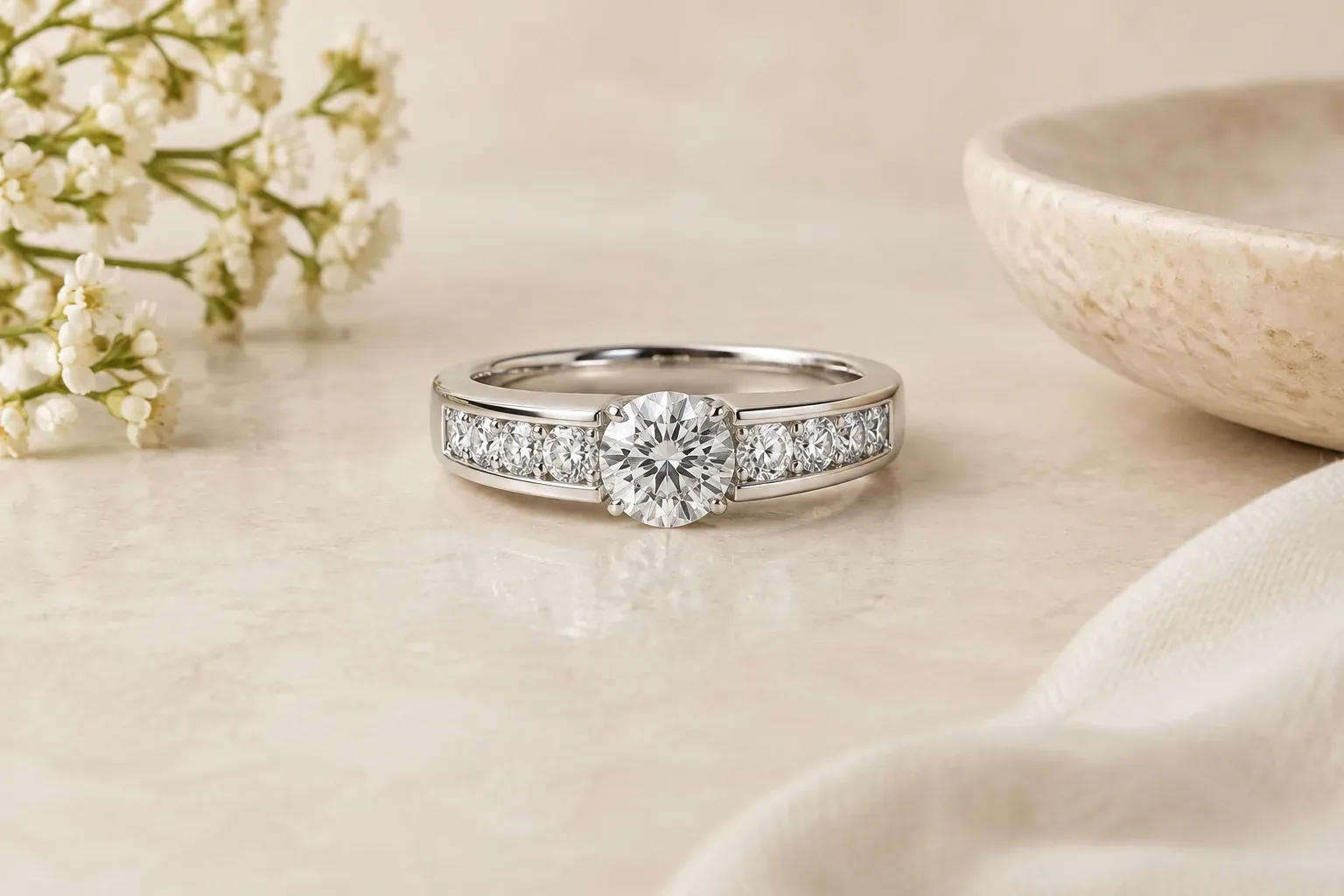
In a channel setting, a row of stones sits in a groove (the channel) formed by two strips of metal. The stones are set side-by-side with the channel edges securing them rather than individual prongs. Visually, channel settings produce a clean, continuous line of gemstones along a band or around a ring’s shank.
Design variations include a full channel that circles the band, a half- or partial channel that covers only the top of the shank, and channel-accented rings that combine a single central solitaire with channel-set side stones. Jewelers use channel setting for diamonds and colored gemstones; the exact appearance depends on stone shapes (round, princess, baguette) and how closely the stones are matched for size and color.
Historical evidence and cultural context
Among the approved sources for this guide there is no detailed historical record that traces the channel setting to a specific ancient culture or precise date. The sources used here focus on contemporary market demand, craftsmanship and material disclosure rather than a cultural origin story.
Trade and industry observers note shifting consumer preferences in the 2020s toward modern, streamlined forms and versatile, gender-neutral styling, which help explain the channel setting’s popularity today. Jewelers Mutual reports 2026 trends that center on fluid forms, modern stacking, colored gemstones, craftsmanship and versatility, all of which correlate with why channel settings appeal to current buyers. Imaginaire Digital’s 2026 search data likewise shows strong demand for modern engagement styles in the UK market, reinforcing that channel-set designs are among many sought-after contemporary options.
Documented historical meanings versus modern personal interpretations
Documented historical symbolic meanings specific to the channel setting are not identified in the approved source set. Unlike motifs with long recorded cultural symbolism (for example, certain religious or folk symbols), the channel setting is primarily a technical and stylistic choice, and the sources here frame it as a design and craftsmanship decision rather than a traditional emblem.
Modern personal interpretations, by contrast, are common and subjective. Wearers and gift-givers often read meanings into a channel setting—stability from the continuous line of stones, understated elegance, or a preference for low-profile rings that suit an active lifestyle. These are personal or contemporary cultural readings rather than documented historical meanings; they can be meaningful for the giver and recipient but are not universal facts.
Practical trade-offs: pros and cons
Pros: Channel settings offer a smooth silhouette that resists snagging, making them practical for people who use their hands frequently or prefer a low-profile ring. They provide a secure seat for small to medium-sized stones along the band because the metal walls protect stone edges. A channel of closely matched stones creates strong visual continuity and can produce excellent sparkle across the band.
Cons: Channel settings can make individual stones slightly less exposed to light compared with open prong settings, which can affect apparent brightness for some stones. Repairs, stone replacement, or resizing can be more complex and potentially costlier because the channel must often be altered by an experienced jeweler. Some stone shapes and softer gems may be less suited to channels if their cut or durability risks chipping at the girdle when seated against metal.
Decision criteria: When choosing a channel setting, consider lifestyle (active vs. formal), the primary gemstone’s hardness and toughness, desired profile (low vs. high), and long-term maintenance willingness. Budget also matters: a well-made channel setting requires precise craftsmanship and matching stones, which can influence cost.
Gemstone and treatment considerations
Not all gemstones respond the same way to the channel environment. The Gemological Institute of America (GIA) emphasizes that treatments, detectability, durability and special care create distinct consumer questions for gemstones. Buyers should consider hardness and the potential for edge chipping—hard, tough stones such as diamonds are commonly used in channel settings, but colored gemstones vary in suitability.
Because treatments (such as fracture filling or surface enhancements) and lab-grown origins affect durability and value differently, the Federal Trade Commission advises consumers to demand clear written disclosures distinguishing natural, lab-created, treated, cultured and imitation materials. Ask the seller for full, written disclosure of any treatments and certification or grading reports when available.
What you can and cannot verify without a jeweler or gem lab
You can verify visual and fit details yourself: how the channel looks on the finger, whether the profile snags on fabric, the smoothness of the metal edges, and whether stones visually match in size and color. You can also review sellers’ warranties, return policies and written disclosures for treatments and origin.
You cannot reliably verify many technical attributes without a qualified jeweler or a gemological laboratory. For example, you cannot confirm a diamond’s natural vs. lab-grown origin, detect certain treatments, or obtain an authoritative grading for cut, color, clarity and carat weight without a laboratory report. The Federal Trade Commission recommends written disclosures and gem lab reports for these attributes.
Selection and gifting guidance — practical and respectful
Choose the ring with the recipient’s lifestyle and taste foremost. If the wearer works with their hands or prefers minimal risk of snagging, a low-profile channel setting is usually a sensible option. For recipients who value a vintage look or maximal light return, discuss whether a channel setting matches that preference.
Measure finger size carefully and consider future resizing. Channel settings can limit resizing options; tell the jeweler you want sizing flexibility before purchase. If you plan to pair the engagement ring with a wedding band, bring both bands to the jeweler so they can assess fit and alignment—channel and straight-profile bands often pair cleanly, but contoured bands may require special design.
Request written disclosures about stone origin and any treatments and ask for available lab reports. Also ask the seller about insurance appraisals, repair policies, and recommended maintenance intervals. Respect the recipient’s values regarding material origin by asking about ethical sourcing or lab-grown options if those concerns matter to them.
Care and maintenance
Follow general care practices and seek professional advice for specific stones. The Gemological Institute of America advises that certain treatments and gem materials require special care; confirm with the seller or a qualified jeweler whether ultrasonic cleaners or steam cleaning are appropriate for the stones in your channel setting.
Periodically inspect the channel with a trusted jeweler to ensure stones are secure and the channel walls are intact. Because repairs can be more involved than on prong-set rings, proactive maintenance reduces the chance of stone loss or costly corrective work. Keep paperwork (receipts, disclosure statements, lab reports) in a safe place.
How current trends influence choice
Contemporary demand favors fluid forms, modern stacking, colored gemstones and gender-neutral styling—preferences that align well with channel-set designs that are low-profile and stackable. Jewelers Mutual’s 2026 trends analysis highlights these market directions, and Imaginaire Digital’s 2026 UK search data shows consistent interest in modern engagement-ring styles. If you want a ring that feels current and versatile, a channel setting can match those preferences.
Final checklist before you buy
Confirm whether the ring can be resized or repaired without undue cost. Obtain written disclosures about stone origin and treatments, and request lab reports when available. Try the ring on in person to check comfort and pairing with a wedding band. Ask about routine maintenance and insurance or appraisals. If any technical attribute (origin, treatment, grading) matters to you, get a written lab report from a recognized gemological laboratory or a verification from a qualified jeweler.
Frequently asked questions
Are channel settings safer than prong settings?
Channel settings offer a lower, smoother profile and protect the edges of stones with metal walls, reducing snag risk; however, safety depends on stone hardness, the quality of the channel work, and regular maintenance. Have a jeweler inspect the channel periodically.
Can all gemstones be used in a channel setting?
Not all gemstones are equally suitable. Hard, tough stones such as diamonds are commonly used, while softer stones or those prone to cleavage require cautious evaluation. Ask the seller about durability and any treatments; the GIA emphasizes that treatments and special care affect suitability.
Will a channel setting reduce a stone’s sparkle?
Channel settings can alter how much light reaches a stone compared with open prong settings, which may marginally affect apparent brightness for some cuts. Choosing well-cut, high-quality stones and precise channel workmanship mitigates this effect.
Can a channel-set ring be resized?
Channel-set rings can sometimes be resized, but options are more limited because resizing may disturb the channel and the fit of the stones. Discuss resize policies with the jeweler before purchase and consider sizing carefully.
How do I verify if a stone is treated or lab-grown?
You need written disclosures and, for authoritative verification, a gemological laboratory report or inspection by a qualified jeweler. The Federal Trade Commission advises consumers to obtain clear written distinctions among natural, lab-created, treated and imitation materials.
Sources and further reading
- Imaginaire Digital — Imaginaire Digital
- Jewelers Mutual — Jewelers Mutual
- Gemological Institute of America — Gemological Institute of America
- Federal Trade Commission — Federal Trade Commission