Meaning at a glance
Channel-set engagement rings are durable for everyday wear when well made and maintained, but they trade some repair complexity and potential stone loss for a low-profile, snag-resistant profile; buyers should weigh metal thickness, stone hardness, setting quality and disclosure, and rely on a qualified jeweler or gemological laboratory for decisive verification.
What people mean by 'channel setting engagement ring durability'
Searchers using that phrase usually want a practical verdict: will a channel-set engagement ring survive daily life without frequent repairs or embarrassing stone loss, and will the setting catch clothing or be difficult to service. Answering that covers definitions and decision criteria: how the channel holds stones, the mechanical stresses of routine wear, the material properties of the stones and metal, and the consumer protections and disclosures providers must give.
Historical evidence and cultural periods
Among the publishers approved for this piece, there is limited primary historical material specifically about the channel setting as a named technique. Contemporary professional and market reports emphasize modern preferences and techniques rather than deep historical lineages. For example, Jewelers Mutual describes 2026 demand focusing on modern stacking, craftsmanship and versatility, which frames why channel and similar low-profile settings are popular today. Imaginaire Digital's 2026 search data likewise highlights strong demand for specific ring styles and modern shapes but does not document ancient or medieval use of channel settings. Because the approved evidence focuses on present-day trends and consumer issues rather than archival jewelry history, this article does not attribute the channel setting to particular historical cultures or early periods without additional specialized historical sources.
Separating documented history from modern interpretation
Documented history in our approved sources centers on present market behavior and consumer concerns rather than ancient symbolism. Statements about why people choose channel-set rings now—such as a preference for fluid forms, stacking, and craftsmanship—are supported by Jewelers Mutual and Imaginaire Digital as modern trend evidence. By contrast, any symbolic or cultural meanings buyers attach to a channel setting today are modern personal interpretations rather than inherited historical meanings documented by the provided sources. A buyer may treat a channel-set band as a symbol of continuity, sleek modernity, or low maintenance; those are valid personal meanings but should not be presented as universal or historically documented claims without specialized historical sources.
How the channel setting appears in jewelry
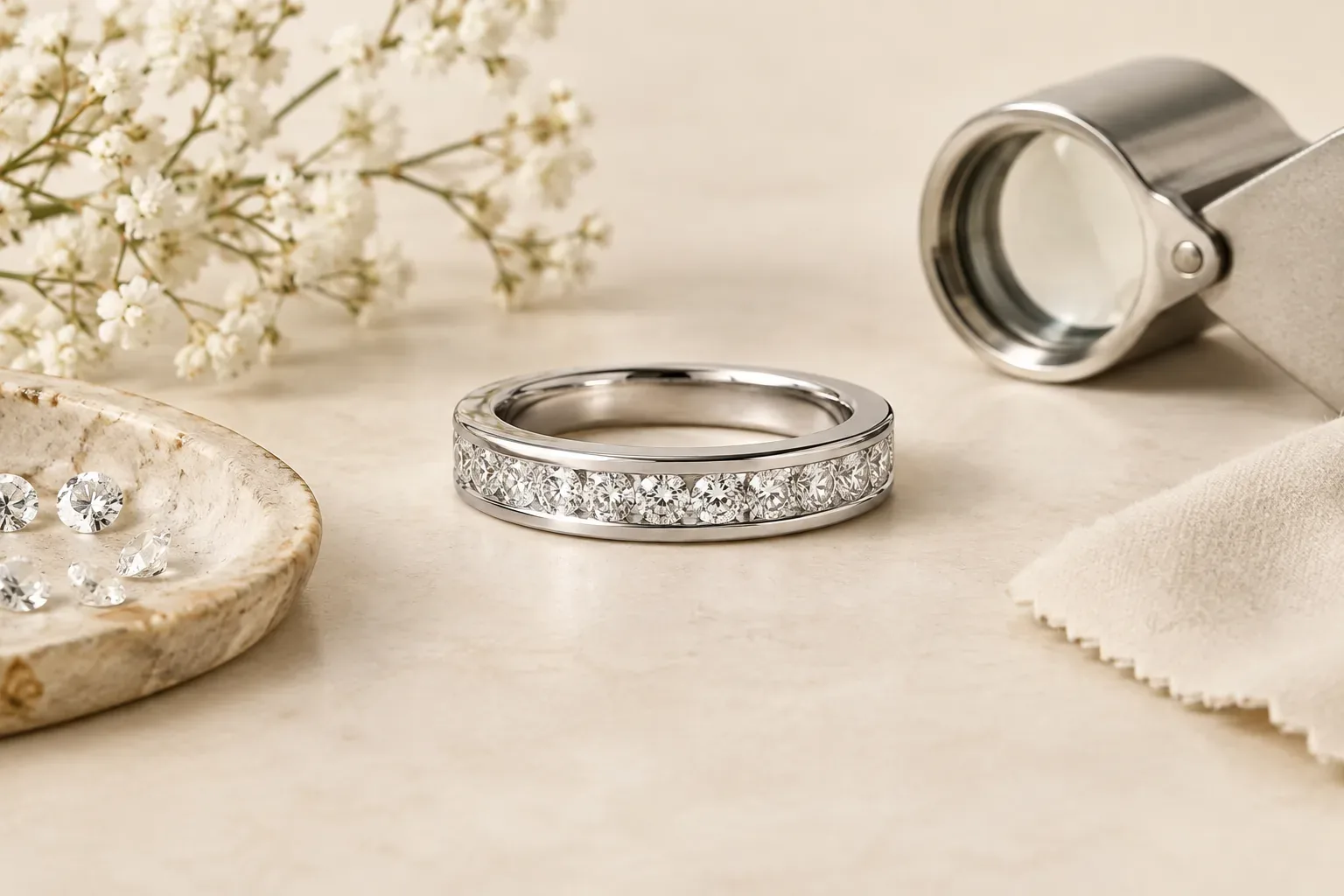
A channel setting typically seats stones in a continuous row between two parallel metal walls, creating a smooth profile where the stones’ edges are protected by the surrounding metal rather than by individual prongs. Designers use channel settings for accent rows, eternity bands, and the side stones flanking a center stone on engagement rings. Jewelers commonly set diamonds and other hard gemstones in channels because the stones’ aligned sides and durability suit the technique, and modern consumers favor these streamlined appearances in stacked and gender-neutral rings as described by Jewelers Mutual and Imaginaire Digital. The channel's visual effect is a clean row of sparkle with less exposed metalwork than prong settings and fewer elements to catch on fabrics at the stone tops.
Durability factors: daily wear, snagging and repair risk
Daily-wear durability depends first on material choices. Harder stones such as diamonds resist surface abrasion and edge chipping better than softer gems; the Gemological Institute of America notes that treatment, detectability and durability vary by gem and that consumers should know what they are buying. A properly proportioned metal channel—sufficient wall height and thickness—gives strong protection for stone edges and reduces the likelihood of snagging on clothing because the setting presents a smoother profile than many prong arrangements. However, if the channel walls are too thin or if the metal work is worn by repeated knocks, the channel can deform or the stones can loosen. Repairing or reconditioning a channel typically requires reshaping or rebuilding the channel walls and resetting or replacing stones; compared with simply re-tipping a prong, channel repairs can be more time-consuming and potentially more costly because the jeweler must preserve the line and alignment of multiple stones.
Decision criteria and practical trade-offs
When evaluating a channel-set engagement ring, weigh several trade-offs. Channel settings offer lower snag risk and a sleek look but can be harder to repair discreetly and may allow less light into the stones compared with open prong settings, which can make diamonds look slightly less brilliant if the channel is deep. Consider stone choice: harder, untreated stones are more durable under everyday impact and abrasion, while treated or softer gems demand careful handling. The Federal Trade Commission emphasizes the need for clear seller disclosures about treatments, origin and whether a stone is natural, lab-created, treated or imitation; those disclosures affect both long-term durability expectations and resale or insurance conversations. Also consider the metal: harder alloys and thicker channels resist deformation better but can add cost and weight.
Safe care guidance
To make a channel-set ring last in daily wear, follow conservative care steps. Avoid sustained exposure to harsh chemicals and high heat that can affect some gem treatments and metal finishes; the Gemological Institute of America recommends understanding specific treatment and care needs for the chosen gemstone. Routine inspection by a qualified jeweler will catch early loosening, channel thinning or stone abrasion before catastrophic loss occurs. If your ring will be worn for active tasks such as manual labor, gardening, or contact sports, remove it or use a protective alternative. Keep written records of any seller disclosures, appraisals and the ring’s specifications, because the Federal Trade Commission recommends clear documentation on material types, treatments and claims.
Practical selection and gifting guidance
If you are buying or gifting a channel-set engagement ring, start by clarifying the recipient’s lifestyle and priorities: is low snagging and a streamlined look more important than maximum face-up brilliance or ease of simple repairs? Ask the seller for written disclosure of the gemstone type, any treatments, and whether the stones are natural or lab-created, in line with FTC guidance. Request that a reputable jeweler demonstrate the channel walls under magnification and describe the metal thickness, how stones are set and how accessible the stones are for future servicing. If durability is the primary concern, choose harder stones, a robust metal and a well-reviewed independent jeweler or workshop noted for craftsmanship; trade-offs include slightly reduced light performance or higher cost. Finally, plan for periodic professional inspection and insure the ring if it is a significant financial or sentimental investment, because market and repair realities reported by Jewelers Mutual indicate that craftsmanship and versatility are central to modern buying decisions.
What you cannot verify without a professional
Some decisive verifications require a qualified jeweler or gemological laboratory. You cannot reliably confirm stone treatments, natural versus lab-grown origin, or the precise structural temper and alloy composition of the metal without laboratory testing or professional equipment. The Gemological Institute of America and the Federal Trade Commission both highlight the importance of disclosure and laboratory certificates for treatments and origin. A jeweler with appropriate tools can assess channel wall thickness, solder quality and early wear, and a laboratory can provide an authoritative grading or treatment report. For crucial issues—security of the setting, potential for hidden damage from past repairs, or whether a stone has been fracture-filled or otherwise treated—seek professional evaluation before final purchase or gifting.
Summary and next steps
Channel-set engagement rings strike a practical balance: they reduce snagging and offer a modern, streamlined look while requiring careful design and occasional professional service to maintain long-term durability. Use seller disclosures, prefer harder untreated stones for intensive daily wear, request magnified inspection from a trusted jeweler, and get laboratory documentation when needed for treatments or origin. For further reading on selecting meaningful jewelry and practical gifting approaches, consult our Jewelry Guides and related articles on choosing and researching jewelry.
Frequently asked questions
Are channel-set rings less likely to snag than prong-set rings?
Generally yes: channel-set rings present a smoother edge and fewer exposed prongs, which reduces snagging on fabrics and hair. That advantage relies on proper channel height and clean manufacturing; a worn or poorly made channel can still catch.
Can stones fall out of a channel setting?
Yes, stones can loosen and fall out if the channel walls thin, deform, or if previous repairs were poorly executed. Regular inspection by a qualified jeweler can detect early loosening before loss occurs.
Is a channel setting easier or harder to repair than prongs?
Repairs to a channel can be more complex because they often require rebuilding or reshaping the channel walls and resetting multiple stones while maintaining alignment; prong repairs can be quicker in many cases. The actual complexity depends on the specific damage and the jeweler's techniques.
How can I verify gemstone treatments or origin before buying?
You should request written disclosures from the seller and, when in doubt, ask for a gemological laboratory report. The Gemological Institute of America and the Federal Trade Commission advise buyers to obtain clear documentation for treatments and origin.
What maintenance schedule is recommended for channel-set engagement rings?
A conservative approach is an annual professional inspection to check for loosening and wear, with more frequent checks if the wearer has an active lifestyle. The precise interval depends on use, metal and stone type.
Can insurance or warranties reduce repair risk?
Insurance and manufacturer warranties protect financially against loss or damage but do not prevent wear; choose coverage that fits the ring’s value and keep documentation of purchase and disclosures to support claims.
Sources and further reading
- Imaginaire Digital — Imaginaire Digital
- Jewelers Mutual — Jewelers Mutual
- Gemological Institute of America — Gemological Institute of America
- Federal Trade Commission — Federal Trade Commission