Meaning at a glance
A baguette cut engagement ring buying guide should define the cut, weigh pros and cons (low dispersion but strong linear look; good as side stones; more revealing of inclusions), offer clear decision criteria (clarity, color, setting and metal), give safe care advice, and state what only a certified gem lab or qualified jeweler can verify about treatments and origin.
What is a ‘baguette’ cut in jewelry terms?
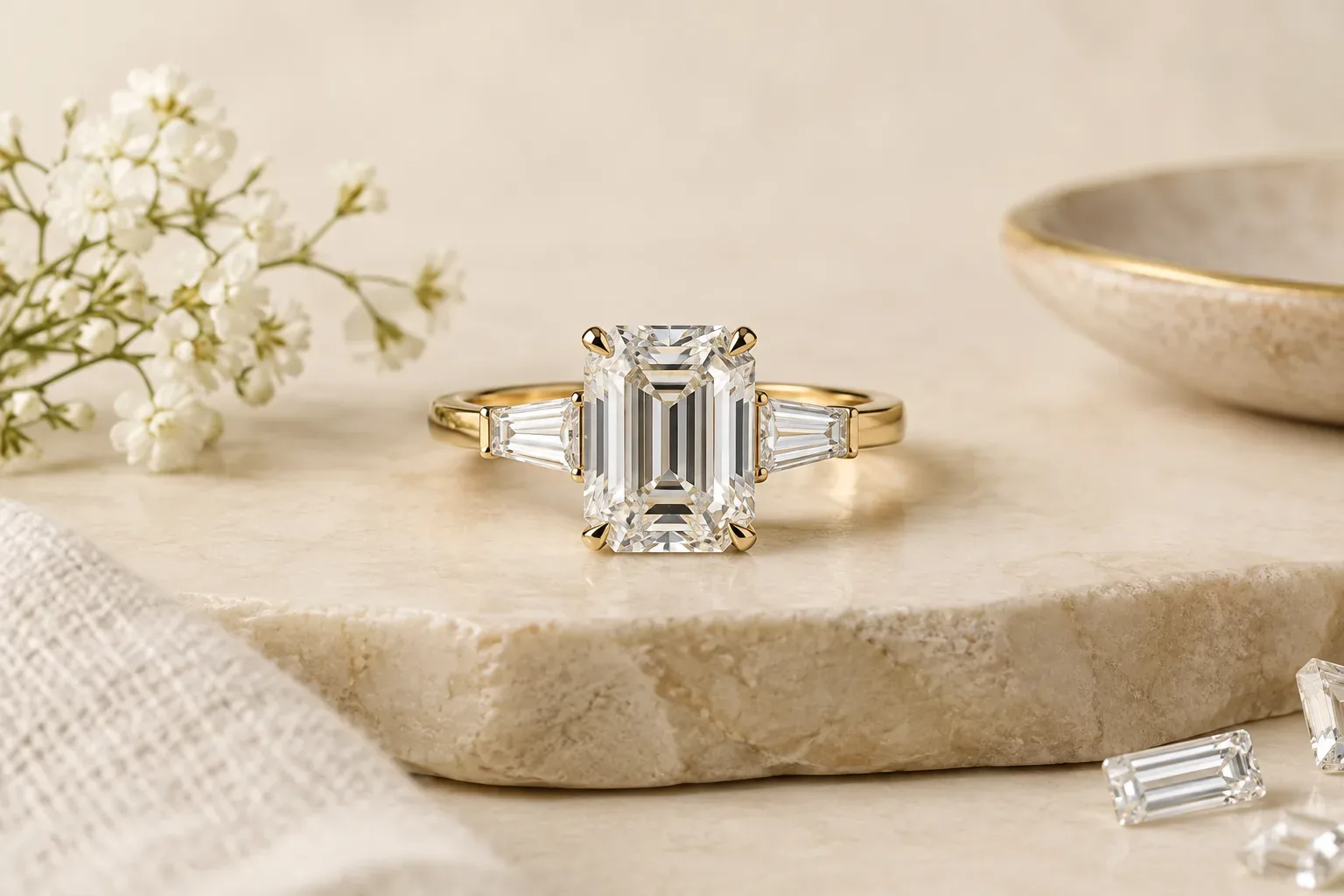
In jewelry practice the term “baguette” describes a narrow, usually rectangular step-cut with straight facets arranged in parallel rows. Jewelers use the cut both as small accent or “side” stones and, less commonly, as the center stone in minimalist rings. The shape emphasizes clean lines and symmetry rather than the high dispersion or “fire” associated with round brilliant cuts.
Historical evidence and precise cultural or period notes
Careful review of the approved trade and consumer sources shows little in the way of formally documented symbolic meanings attached specifically to the baguette cut across distinct historical cultures or periods. Contemporary industry reporting emphasizes changing consumer demand and styling rather than long-standing cultural symbolism. For example, 2026 market observations in the United Kingdom report strong continuing demand for engagement rings among other categories (Imaginaire Digital), while Jewelers Mutual’s 2026 trends note preferences for fluid forms, modern stacking and gender-neutral styling rather than heritage symbolism. Government and gemological guidance (Federal Trade Commission and the Gemological Institute of America) focus on disclosure, treatments and consumer protection rather than cultural meanings. In short, the available evidence documents modern stylistic trends and consumer concerns more reliably than any consistent historical or cultural symbolism for this specific cut.
Documented historical meanings versus modern personal interpretations
Documented historical meanings: among the approved sources there are no authoritative records that assign a long-standing cultural or ritual meaning uniquely to the baguette cut. Regulatory and gemological organizations concentrate on material disclosure and consumer advice rather than symbolism, and trade analyses record style trends rather than symbolic histories.
Modern personal interpretations: today many people associate the baguette cut with minimalist, architectural or Artful modern aesthetics, using its linear form to convey understatement, refinement or complementary contrast to a brilliant center stone. These contemporary meanings are personal and stylistic, not universal. When gifting, treat any symbolic claim as the giver’s or recipient’s interpretation unless you can point to a documented cultural practice in a named source.
How the motif and cut commonly appear in engagement jewelry
Baguette cut stones appear most commonly as tapered or straight side stones flanking a larger center diamond, as channel-set bands, or as slender accent stones in three-stone or trilogy settings. Jewelers also use baguettes in eternity bands and invisible-set designs where a linear, uninterrupted look is desired. Because of the cut’s geometry, baguettes can create strong visual lines that lengthen the finger or emphasize a center stone without competing with it.
Pros and cons — practical trade-offs to weigh
Pros: the baguette’s clean lines produce an elegant, low-profile look and excellent compatibility as accent stones. The step-cut faceting emphasizes clarity and color, so a high-quality baguette can present a serene, architectural appearance that suits minimalist and modern tastes. Baguettes generally use less rough per finished carat than very large brilliants, which can be a budget consideration for side-stone designs.
Cons: because step cuts return light differently than brilliants, they show less “fire” and scintillation; some buyers perceive them as less flashy. The faceting also makes inclusions and color more visible, so higher clarity and color grades are often desirable for baguettes. Rectangular edges can be more susceptible to chipping if left exposed, which increases the importance of a protective setting.
Decision criteria: what to check when comparing rings
Style fit and proportion: consider how the baguette’s length and width balance with the wearer’s finger and with any center stone. Narrow, longer baguettes elongate; shorter, wider baguettes read chunkier.
Clarity and color: because step cuts reveal inclusions and color more readily, prioritize clarity and color when the baguette is visible. If budget is limited, consider using baguettes as side stones where their effect depends on the center stone.
Setting and protection: choose settings that shield the long edges—channel, bezel, or well-placed prongs reduce risk of edge damage. Confirm that any mounting choice suits the wearer’s daily activities.
Documentation and origin: request written disclosures on whether a stone is natural, lab-created, treated, or an imitation. The Federal Trade Commission advises consumers to insist on clear written seller disclosures about origin and treatments.
Certification: for diamonds and valuable colored stones, ask for a grading report from an independent lab (for example GIA or other recognized laboratories) that details cut, clarity, color, carat weight and any treatments. The Gemological Institute of America notes that treatments and their detectability are a central consumer concern and that laboratory testing is the reliable way to learn about them.
What a shopper can and cannot verify without a lab or qualified jeweler
You can verify measurements, weight, the presence of visible chips or damage, the seller’s written return policy, and whether the seller provides a lab report or certificate. You should also be able to confirm the stated metal type and basic mounting quality by inspection.
You cannot reliably verify a stone’s treatment history, whether a stone is natural or lab-grown, or confirm a detailed clarity or color grade without a qualified gemological laboratory or a trained professional using appropriate instruments. The FTC recommends written disclosures for these attributes, and the GIA explains that many treatments require laboratory analysis to detect.
Care and maintenance guidance
Routine care: because baguettes emphasize clarity and have vulnerable edges, clean them gently with mild soap and a soft brush and avoid aggressive mechanical cleaning when the mounting exposes the girdle or corners. Store baguette rings separately or in compartments that prevent rubbing with other jewelry.
Special cautions: if a stone is known to be fracture-filled, dyed, or otherwise treated, many cleaning methods—including ultrasonic cleaners and steam—can damage the treatment. The Gemological Institute of America highlights that treatments affect detectability and durability and that some treatments make standard cleaning unsafe. When in doubt, have a professional jeweler advise on safe cleaning methods for that specific stone.
Inspection and insurance: periodic inspection by a qualified jeweler reduces risk of prong wear or channel loosening. Jewelers Mutual’s consumer guidance on trends and ownership underlines the value of workmanship and maintenance in long-term enjoyment and protection of jewelry.
Practical and respectful selection and gifting guidance
Start with the wearer’s style preferences: observe whether they favor minimalist, showy, vintage or contemporary looks, and choose a baguette proportion that matches. If you are uncertain, select a setting with a reasonable return or resizing policy and ask for a certificate or appraisal so the recipient can make an informed final choice.
Consider lifestyle: for an active wearer or someone who uses their hands frequently, select a protective setting such as channel or low-profile bezel to shield edges. Match the metal to the recipient’s existing jewelry for a cohesive look or choose a contrasting metal deliberately if you know they prefer contrast.
Ask for full disclosures and a reputable report: request written confirmation about whether stones are natural, lab-grown or treated, and obtain any laboratory report the seller can provide. The FTC explicitly recommends that consumers insist on such written information before purchase.
Be respectful with symbolic statements: avoid asserting any universal symbolic meaning for the baguette cut. If you plan to attach a symbolic message, frame it as your personal intention rather than a cultural fact. For inspiration on thoughtful gifting and symbolism research, see our guides on selecting meaningful jewelry and symbols for new beginnings.
Bottom line
A baguette cut engagement ring buying guide should orient you toward the cut’s stylistic strengths—clean lines, understated elegance and excellent performance as side stones—while making clear the trade-offs: greater visibility of inclusions, lower dispersion, and a need for protective settings and higher clarity or color when stones are exposed. Insist on written disclosures about origin and treatments, request laboratory grading when appropriate, and have a qualified jeweler inspect or advise before purchase when questions about treatment or durability arise. Contemporary trade reporting (Imaginaire Digital and Jewelers Mutual) shows the baguette fits many modern tastes, but its symbolic meaning depends on personal interpretation rather than documented historical consensus.
Frequently asked questions
Are baguette-cut diamonds less valuable than round brilliants?
Value depends on multiple factors including carat weight, clarity, color and demand. Baguette cuts typically show inclusions and color more readily, so buyers often prioritize clarity and color; however, as side stones they can be more cost-effective per visual impact than large round brilliants. Request written pricing details and any laboratory reports for apples-to-apples comparison.
Can I clean a baguette-cut ring in an ultrasonic cleaner?
Not always. Some stones and treatments are vulnerable to ultrasonic or steam cleaning. The Gemological Institute of America advises confirming whether a stone has been treated or fracture-filled before using aggressive cleaning methods; when in doubt, use gentle hand cleaning or consult a qualified jeweler.
What documentation should I insist on when buying a baguette-cut engagement ring?
Ask the seller for clear, written disclosures that specify whether the stones are natural, lab-grown, treated, or imitations, as recommended by the Federal Trade Commission. For valuable diamonds or colored gems, request an independent grading report from a recognized laboratory that states treatments and other relevant details.
Do baguette cuts chip more easily than other shapes?
The risk of chipping depends on how exposed the stone’s corners and edges are and on the setting. Because baguettes have straight edges, protective settings such as channel or bezel reduce the risk; exposed corners or thin prongs increase vulnerability. Have a jeweler inspect and recommend an appropriate mounting for active wearers.
Is the baguette cut popular right now?
Contemporary industry reporting in 2026 emphasizes modern, versatile styles and stacking, and notes ongoing demand for engagement rings and complementary designs (Imaginaire Digital and Jewelers Mutual). The baguette cut is often chosen for its minimalist, architectural look and utility as side stones in current styling trends.
Sources and further reading
- Imaginaire Digital — Imaginaire Digital
- Jewelers Mutual — Jewelers Mutual
- Gemological Institute of America — Gemological Institute of America
- Federal Trade Commission — Federal Trade Commission