Meaning at a glance
Baguette cut engagement ring durability depends primarily on the gemstone's inherent toughness, the way the stone is set, and how the wearer uses and maintains the ring; buyers should weigh trade-offs between the slim, geometric look and a greater edge-and-corner vulnerability, prefer protective settings for active wearers, accept that some risks require a qualified jeweler or lab to assess, and follow routine inspection and care.
Short answer
Baguette cut engagement ring durability depends on the stone material, the setting style, and daily habits: baguette stones can be perfectly durable for everyday wear when the gemstone is hard and tough (for example a well-cut diamond) and the stones are set in protective settings such as bezel or deep channel, but their long straight edges and angular corners make them more vulnerable to snags and edge chipping than rounded cuts, and they often require more careful handling and professional inspection than a similar-sized round brilliant.
What the term means and which durability factors matter
A baguette cut describes a long, rectangular step-cut stone with straight facets and typically truncated corners. In jewelry practice the cut emphasizes linear geometry, low profile, and a quieter sparkle compared with brilliant cuts. Durability for any baguette-cut engagement ring is not an intrinsic property of the shape alone; it is a function of the gemstone's hardness and toughness, pavilion and corner geometry, setting type, and the maker's craftsmanship.
Important durability variables include the stone's resistance to scratching and chipping, the exposure of corners and edges, how securely the stone is held (prongs versus channels versus bezels), the metal hardness and finish of the mounting, and whether smaller baguettes are used as accents or as a central stone. Those trade-offs—appearance versus edge exposure and serviceability—are central to choosing a baguette-cut engagement ring.
Historical evidence and what the provided sources say
The set of approved sources for this article does not supply a detailed, culture-by-culture origin story for the baguette cut. Contemporary industry reporting and consumer guidance in our sources focus on present-day preferences, craftsmanship, and the kinds of questions buyers raise rather than on the cut's early cultural history.
For example, Jewelers Mutual reports on current trends emphasizing craftsmanship, versatility and modern forms, which helps explain why geometric cuts such as baguettes are popular in recent collections. Imaginaire Digital's search data highlights strong present-day demand for engagement and other rings, which places baguette styles within current market interest rather than providing a historical timeline. The Gemological Institute of America (GIA) in the provided materials focuses on treatment, detectability, durability and special-care questions for gemstones, which is directly relevant to consumer durability concerns but does not narrate the cut's cultural origin. The Federal Trade Commission material included here clarifies the need for disclosure about natural, lab-created and treated goods, which affects how historical or provenance claims should be supported.
Documented historical meanings versus modern personal interpretations
From the approved sources there is no single documented symbolic meaning assigned historically to the baguette cut that applies across cultures. Historical symbolic claims about shapes are often modern interpretations or marketing narratives. Where documented meaning is important, sellers and buyers should rely on clear provenance and disclosures rather than assumed universal symbolism.
Modern wearers and designers do assign meanings to the baguette look—such as modernism, minimalism, or architectural elegance—but those are personal or cultural interpretations of style rather than verified historical facts in the sources we used. When meaning matters for a gift or heirloom, treat style-based symbolism as a contemporary personal layer added to whatever provenance you can document.
How the baguette motif appears in engagement jewelry
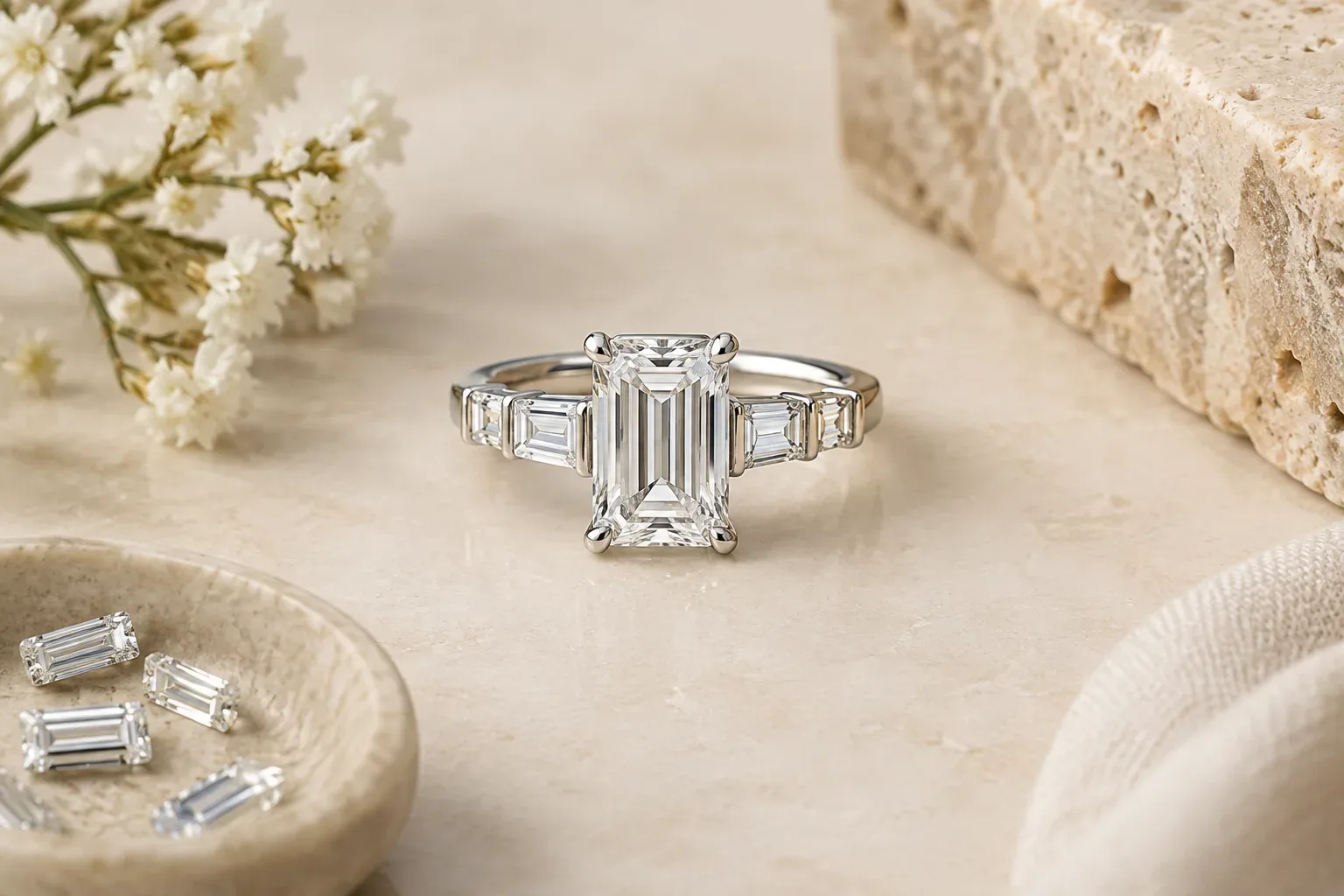
Baguette-cut stones appear in several roles: as a central stone for a low-profile, streamlined ring; as straight-accent stones flanking a center stone; and as part of channel or bar settings in eternity or anniversary rings. Jewelers commonly set baguettes in channels to protect their edges, or alongside round brilliants to create contrast between step and brilliant facets.
The choice of setting strongly influences both the look and the practical durability. Channel and bezel-style settings that hide the stone's edges reduce snagging and the probability of corner chips. Conversely, prong-set baguettes or those with exposed corners may look delicate and striking but carry higher risk if the wearer has an active daily routine or if the ring is subject to knocks and catches.
Decision criteria for shoppers: trade-offs and signals to watch
Decide first whether the aesthetic trade-off of visible edges is worth the increased care. If protection and low maintenance are priorities, prioritize settings that cover edges and corners and choose harder, tougher gemstones. For buyers who want the baguette silhouette but need durability, consider small baguette accents paired with a central, more robust gem or choose wider metal shoulders that shield the stone.
Look for craftsmanship signals and seller disclosures as you shop. The Federal Trade Commission materials included here emphasize the importance of clear written disclosures about whether a gemstone is natural, lab-grown, treated, or an imitation. The GIA guidance in our sources also highlights that treatments and durability concerns create specific consumer questions; require written documentation and ask about setting construction and whether the jeweler offers inspection or maintenance services.
Daily wear risks: snagging and repair realities
Snagging risk is higher for exposed baguette stones because straight edges and corners can catch on fabrics, silicone, or rough surfaces. Repeated snags may loosen settings, bend prongs, or eventually chip a corner. If a baguette is used as a side stone, tension from adjacent stones or a worn channel can allow movement that increases chip risk.
Repair scenarios commonly involve re-tipping or replacing prongs, re-setting stones that have shifted, re-sizing the ring (which in channel settings can be complex), and, in worst-case scenarios, replacing a chipped or fractured stone. Some repairs to channel-set baguettes require removing multiple stones to access the damaged piece, which raises labor cost and increases the chance of further wear to neighbouring stones; this is a practical trade-off to weigh when choosing tightly-set baguette arrangements.
Care, inspection, and when to involve a professional
Routine at-home care reduces risk: remove the ring for heavy manual work, avoid wearing it during sports and while handling harsh chemicals, and clean with gentle, manufacturer-recommended methods. Regular tactile checks—gently wiggling stones to feel for looseness—are sensible but limited in what they can reveal.
For anything beyond a surface check, seek a qualified jeweler. The GIA emphasizes that detectability of treatments and certain durability concerns require trained assessment and sometimes laboratory tools. Jewelers can verify prong integrity, measure stone security, and advise on setting reinforcement; only a gemological laboratory can perform definitive identification and detect some treatments that relate to durability. Ask about inspection frequency and whether the seller provides written reports or service plans.
Practical, respectful selection and gifting guidance
Match the ring to the recipient's lifestyle and priorities. If the wearer is very hands-on or wants a low-maintenance everyday ring, prioritize protective settings such as full bezels, well-engineered channels, or bars that conceal corners, and select durable gemstones and harder metals. If the recipient values a slim, architectural look and is comfortable with occasional careful handling, a more exposed baguette design may be appropriate and meaningful.
When you gift a baguette-cut engagement ring, ask the seller for clear written disclosure about the gemstone's origin and any treatments, request an inspection or sizing plan, and consider having a formal appraisal or lab report for insurance. Jewelers Mutual's information about craftsmanship and versatility suggests that buyers value a maker's quality and support options, so choose a seller who documents their work and offers accessible maintenance.
What a shopper can and cannot verify without a qualified expert
You can verify basic visual and practical features yourself: whether corners are exposed, the setting type (prong, bezel, channel), visible chips or scratches, and whether any written seller disclosures exist. You can also ask about the jeweler's inspection and repair policies and whether the stone comes with a lab report.
You cannot reliably verify treatments that affect durability, the precise gemological identity and origin, or hidden structural weaknesses in a setting without expert tools. The Federal Trade Commission materials stress the need for written disclosures and the limits of unaided inspection. The GIA guidance reiterates that some durability and treatment questions require a trained eye or laboratory analysis. For any purchase where those factors matter, budget for a professional assessment or insist on a lab report.
Final takeaway
Baguette-cut engagement ring durability is a careful balance between aesthetic preference and practical protection. Choose protective settings and durable materials for everyday wearers, rely on seller disclosures and professional inspections for technical judgments, and treat symbolic meanings as contemporary personal layers rather than universal historical fact. With thoughtful selection and routine care, many people wear baguette styles successfully as daily engagement rings, but be realistic about repair trade-offs and verification limits.
Frequently asked questions
Are baguette-cut diamonds less durable than round brilliants?
Baguette cuts are not automatically less durable because durability depends on the gemstone material and setting; however, the long straight edges and exposed corners of many baguettes make them more vulnerable to chipping and snagging than rounded shapes, so protective settings and regular inspections are often recommended.
Which setting best protects a baguette stone from chipping?
Bezel and deep channel settings typically offer the best protection because they conceal edges and corners; solid metal that wraps and supports the stone reduces exposure to knocks and snags compared with exposed prong settings.
Can I tell if a baguette-stone has been treated for durability without a lab?
No. The Federal Trade Commission recommends relying on written seller disclosures, and the Gemological Institute of America notes that detectability of some treatments requires trained assessment or laboratory analysis, so a lab report or qualified jeweler's verification is necessary for definitive answers.
How often should I have a baguette engagement ring inspected?
Have a professional inspection at least once a year or more frequently if the ring is worn daily, the wearer is active with their hands, or you notice any looseness, catching, or visible wear; many jewelers offer annual inspection services.
Are repairs to channel-set baguettes more difficult or costly?
Repairs to channel-set baguettes can be more involved because neighboring stones may need to be removed to access a damaged stone, increasing labor and risk to surrounding stones; this is a trade-off to consider when choosing tightly-set baguette arrangements.
Sources and further reading
- Imaginaire Digital — Imaginaire Digital
- Jewelers Mutual — Jewelers Mutual
- Gemological Institute of America — Gemological Institute of America
- Federal Trade Commission — Federal Trade Commission