Meaning at a glance
An Asscher cut engagement ring is most often chosen for its stepped facets, square footprint, and vintage or Art Deco associations; shoppers should weigh a distinct, elegant look and step-cut trade-offs (subtle brilliance, strong clarity and color sensitivity), insist on written disclosures and a laboratory report, and use a qualified jeweler or gemological laboratory to verify origin, treatments, or graded proportions.
What people mean by 'Asscher cut' and how modern buyers use the term
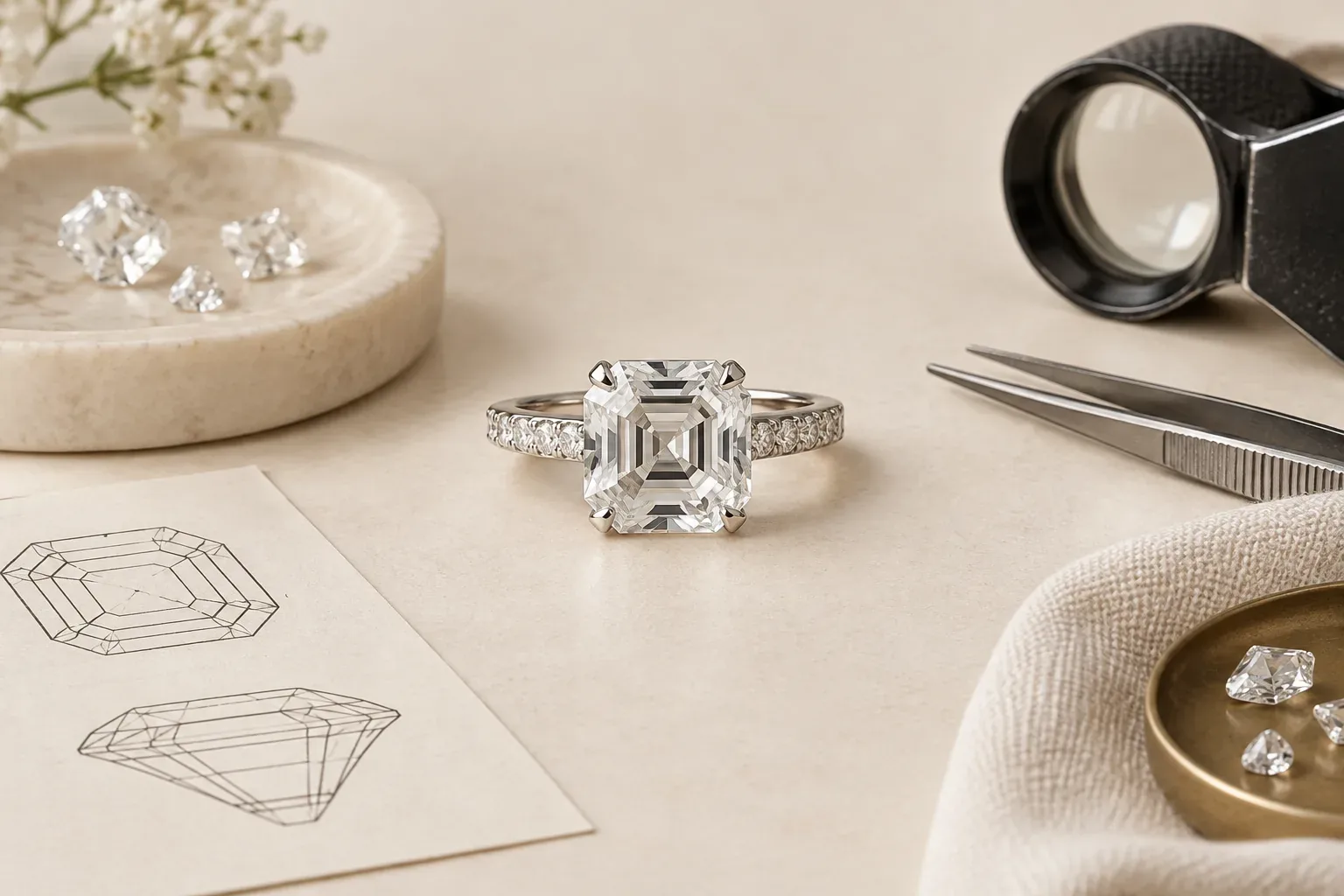
In contemporary jewelry vocabulary an Asscher cut refers to a square, step-faceted stone that presents broad, parallel facets and a geometric, pavilion-driven look. Many buyers describe the effect as architectural or 'hall of mirrors'—a visual character that emphasizes depth and clarity over the scintillating flash typical of brilliant cuts.
Modern shoppers frequently choose Asscher cuts for an intentionally vintage or Art Deco aesthetic, or for a clean, geometric appearance that pairs well with bezel, halo and three-stone settings. These modern uses appear in retail styling and trend reporting and reflect buyer preference rather than a single, universal meaning.
Historical evidence and what our approved sources cover
The approved evidence set for this article does not include a primary historical account of the Asscher cut's invention or early cultural uses. Consequently we cannot provide new, sourced claims about specific inventors, dates or particular historical cultures tied to the cut from the materials available for this piece.
What the provided sources do document is modern consumer behavior and marketplace expectations. Imaginaire Digital reports contemporary UK search demand for engagement rings among other jewelry categories, indicating consumer interest in traditional and alternative shapes. Jewelers Mutual documents 2026 trends such as an emphasis on craftsmanship, versatility and gender-neutral styling, which helps explain why shoppers select distinctive, non-brilliant cuts. For technical consumer protections and disclosure expectations—what you are entitled to know when buying—a GIA resource on gem treatment and an FTC guide on buying gemstones, diamonds and pearls lay out the obligations around treatment disclosure and distinctions among natural, lab-created, treated and imitation materials.
Documented historical meanings versus modern personal interpretations
Because our approved sources do not establish a documented historical meaning for the Asscher cut tied to a specific culture or period, any claim that the cut historically symbolized a particular value would be a modern interpretation rather than a verified historical fact. Many current buyers and designers interpret the Asscher's geometric form as evoking vintage, Art Deco or architectural sensibilities, but those meanings are contemporary associations and styles rather than historically documented symbolism in the materials we used for this guide.
Treat modern associations as personal and cultural interpretation: they are valid for gifting and personal expression, but they should be distinguished from documented historical symbolism when accuracy matters.
How the Asscher look appears in jewelry
Retail and design presentations typically show Asscher-cut stones in solitaire, halo and three-stone engagement settings. Bezel and four-prong settings that protect the corners are common because the square outline with cropped corners benefits from additional protection in everyday wear.
Designers also pair Asscher-cut center stones with tapered baguettes, pavé shoulders or milgrain detailing to enhance a vintage or Art Deco motif. The cut's step facets create planes that interact with light differently than brilliant cuts, so metal choices and surrounding accents matter to the final visual effect.
Pros and cons—practical trade-offs to weigh
Pros: The Asscher look is distinctive, elegant and often chosen for its vintage or architectural character. Step facets tend to emphasize clarity and a deep, crystalline appearance, which many wearers find sophisticated. The square footprint can sit flatter on the hand and pairs cleanly with geometric settings, making it a versatile design choice for gender-neutral styling.
Cons: Step cuts typically show fewer small flashes of colored light (fire) than brilliant cuts, so they appear more subdued in sparkle. Because step facets emphasize internal features, color and clarity have a stronger visual impact; you may need to prioritize higher clarity and better color grades to get a visually clean stone. Additionally, the square outline with corners may require a setting that protects those corners to reduce the risk of chipping in everyday wear.
How to choose an Asscher cut engagement ring—decision criteria
Prioritize a lab report from a reputable gemological laboratory and inspect the stone's clarity and color in person or via high-quality images or video. Because step cuts emphasize clarity and color, you will likely prefer a clearer, less included stone and a color grade that suits your metal choice and personal preference.
Request information about the exact cutting style and proportion data, ask for standardized close-up photographs or videos, and compare stones by viewing them under similar lighting. Confirm the setting and metal type, and decide whether you want a protective bezel or prong setting and whether side stones or a halo will change the appearance and perceived size.
Consider lifestyle and daily wear: if the wearer is active with frequent hand-work, choose a protective setting and discuss durability and maintenance. Think about budget trade-offs: paying more for color and clarity in a step cut often yields a better-looking center stone than increasing carat weight alone.
Verification limits—what you cannot confirm without a lab or qualified jeweler
Do not rely on a sales description alone to confirm whether a stone is natural, lab-grown, treated or imitation. The Federal Trade Commission requires clear distinctions and written disclosures, but independent verification is the gold standard. The GIA guidance on gem treatment explains that detectability and disclosure of treatments are complex consumer questions; a qualified gemological laboratory can identify many treatments and confirm origin when testing methods allow.
Similarly, accurate grading of proportions, symmetry and polish, and testing for undisclosed enhancements usually requires a trained gemologist and laboratory equipment. For any claim about origin, treatment, or a precise grading report, ask for a current laboratory certificate and, when in doubt, have an independent appraisal or verification performed.
Care and maintenance
Routine care for an Asscher-cut engagement ring is similar to other diamond or gemstone rings: clean regularly with a gentle soap and water solution and a soft brush, avoid harsh chemicals and store separately to prevent scratches. Because step cuts emphasize planes and facets, dirt and oils can mute the stone's visible contrast, so regular cleaning keeps the architectural lines crisp.
Arrange periodic inspections with a qualified jeweler to check prongs, settings and any protective elements. If the stone has undergone treatments or is a colored gemstone rather than diamond, consult the laboratory report and the GIA treatment guidance to learn whether special care (restricted heat, chemical exposure limits) is needed.
Gifting and respectful selection guidance
When gifting an Asscher cut engagement ring, prioritize the recipient's aesthetic and lifestyle. If you are unsure about the exact look they prefer, choose a flexible or adjustable approach: select a simple, protective setting that complements a variety of styles, or involve the recipient in choosing the stone to ensure satisfaction and avoid assumptions about vintage versus modern tastes.
Respect cultural and personal meanings: if you intend symbolism, make clear whether the ring is meant to reference vintage style, personal milestones, or shared values. For ethical and legal safety, insist on written disclosures about origin and treatments, secure a laboratory report, and obtain clear return and repair policies in writing.
Where to get help and final checklist
Before purchasing, ensure you have these items in writing: a current gemological laboratory report, seller disclosures required by the FTC about natural versus lab-grown or treated stones, a clear return policy and warranty information, and an explanation of the setting's protective features. Use the lab report and, if needed, an independent appraisal to confirm what the seller asserts.
If you plan to insure the ring, consult your insurer for appraisal requirements. For specialized questions about treatments, testing limits or unusual materials, consult GIA resources and a qualified gemological laboratory—these are the appropriate authorities to confirm technical claims that retail staff cannot verify.
Conclusion
An Asscher cut engagement ring is a compelling choice when you want a distinctive, geometric, and often vintage-feeling center stone. The key buyer actions are the same for any high-value stone: prioritize clarity and color for a step cut, insist on proper written disclosures and a laboratory certificate, protect the stone with an appropriate setting, and consult a qualified jeweler or gemological laboratory for anything beyond the report. The approved sources for this guide emphasize current trends toward craftsmanship and versatile styling as well as the regulatory and technical frameworks that protect consumers; use those frameworks to make a confident, informed purchase.
Frequently asked questions
Is an Asscher cut more likely to show inclusions than a round brilliant?
Step cuts, which include the Asscher-style look, tend to emphasize clarity more than brilliant cuts because their broader, flat facets present internal features plainly. For this reason, many buyers choose higher clarity grades for step cuts to achieve a clean visual appearance. A laboratory report and in-person inspection will help you assess the impact of any inclusions.
Can I tell if an Asscher-cut diamond is natural or lab-grown from photos?
No—photographs and seller descriptions are not reliable ways to determine whether a stone is natural or lab-grown. The FTC requires sellers to disclose these distinctions in writing, but independent confirmation requires a reputable laboratory report or testing by a qualified gemological laboratory.
What setting is best to protect an Asscher cut?
Protective settings that shield the corners—such as bezel or secure four-prong settings—are commonly recommended because the square outline with trimmed corners can be susceptible to impact. Discuss daily wear habits with your jeweler to choose the best balance of protection and style.
Do Asscher cuts look smaller than round stones of the same carat weight?
Different cutting styles distribute weight differently. Step-cut stones often have a deeper pavilion and larger facets, which can affect perceived face-up size. If apparent size matters, compare stones in person or request standardized images and measurements and discuss how side stones or settings will change perceived size.
How should I care for an Asscher engagement ring?
Clean regularly with a mild soap-and-water solution and a soft brush, avoid harsh chemicals, and schedule periodic setting inspections. If the stone has known treatments or is a colored gemstone, follow the specific care guidance in the laboratory report and consult a qualified jeweler for any repairs.
Sources and further reading
- Imaginaire Digital — Imaginaire Digital
- Jewelers Mutual — Jewelers Mutual
- Gemological Institute of America — Gemological Institute of America
- Federal Trade Commission — Federal Trade Commission