Meaning at a glance
Ask about certification, natural versus lab origin, treatments and disclosure, cut and setting protection, lifestyle fit and return/repair policies; rely on qualified jewelers and gemological labs for any claims you cannot verify yourself.
Short answer
A concise, evidence-led checklist for buying a princess cut engagement ring: confirm the stone’s certification and any treatments in writing, decide the trade-offs you accept for cut, carat, color and clarity, choose a setting that protects the cut’s sharp corners and suits lifestyle, verify return, repair and insurance options, and understand which claims require a qualified jeweler or a gemological laboratory to confirm.
What the documentary evidence shows about history and cultural meaning
The sources available for consumer guidance in 2026 emphasize modern market behavior, disclosure standards and gem treatment issues rather than long-form cultural histories for specific modern cuts. Imaginaire Digital reports strong consumer search interest in engagement rings and related styles in recent UK data, showing present-day demand patterns rather than historical origin stories. Jewelers Mutual frames current industry trends around versatility, craftsmanship and gender-neutral styling, again reflecting contemporary commerce and taste rather than ancient symbolism. Regulatory and technical guidance from the Federal Trade Commission and the Gemological Institute of America focuses on disclosure, treatments and detectability for gemstones and diamonds, not on cultural meanings from prior centuries.
Because the approved evidence set does not provide detailed primary-source histories that tie a named culture or period to the introduction of the princess cut, it is appropriate to treat cultural or period claims about the cut’s origin as modern interpretive context rather than established historical fact. In short, the available documentation here supports present-day consumer and regulatory concerns; it does not supply a precise archaeological or cultural provenance for the princess cut.
Documented historical meanings versus modern personal interpretation
The documentation cited in the approved sources is primarily commercial and technical. The Federal Trade Commission’s guidance instructs sellers and buyers to distinguish natural, lab-created, treated and imitation materials and to provide written disclosures. That record concerns transaction integrity rather than symbolic meaning.
Modern symbolic meaning—such as interpreting a princess cut’s square silhouette as a statement of modernity or a preference for clean lines—is a personal or stylistic interpretation, not a documented historical meaning in these sources. If you value a ring for symbolic reasons, treat that symbolism as a contemporary personal choice and separate it from seller claims about origin, treatment or certification, which are verifiable technical facts.
How the princess cut appears in jewelry
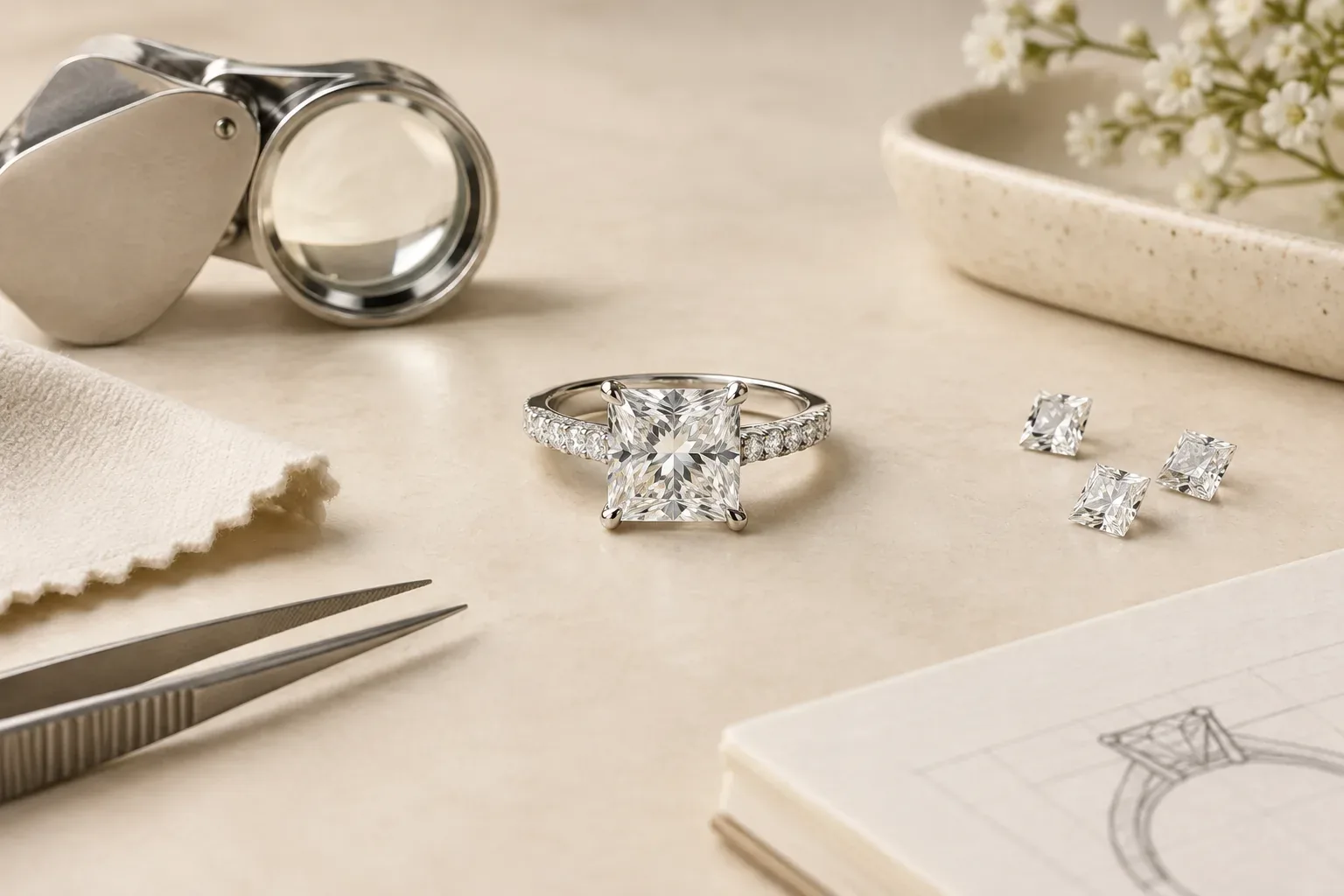
In marketplace use the term 'princess cut' typically refers to a square to rectangular faceted brilliant-style stone commonly set as a center stone in engagement designs. Retail presentations and trend commentary show that princess cut stones are used in solitaire mounts, halo settings, channel-set bands and three-stone rings, often chosen to emphasize straight lines and a compact face-up appearance.
Because the cut has relatively sharp corners compared with round styles, retail and trade guidance frequently pairs princess cuts with settings that protect corner prongs or use bezel or halo elements to guard against impact. The contemporary design choices described by industry sources reflect current consumer styling and durability considerations rather than historical symbolism.
Checklist: questions to ask the seller before you buy
Can I see a current, independent certificate for the center stone? If the stone is a diamond, request a grading report from a reputable laboratory; a certificate documents the gem’s identity and the grading observations that underpin value. For any substantive claims about color, clarity or treatments you should receive written documentation; the Federal Trade Commission expects sellers to make clear distinctions among natural, lab-created and treated materials.
Is the stone natural, lab-created, treated, or imitation? The FTC requires disclosure of these differences. Ask the seller to put the origin and any known treatments in writing and to explain how those treatments affect durability and care. The Gemological Institute of America notes that treatments, disclosure and detectability create specific consumer questions for gemstones and that some treatments can be stable while others require special care.
Who graded the stone and what methodology did they use? Different laboratories use different grading protocols. When value and resale are concerns, preference for widely recognized laboratory reports reduces uncertainty. Be aware that some aspects of appearance and durability require laboratory instruments to verify and cannot be fully assessed by eye alone.
What are the cut and finish trade-offs for this princess cut? Ask how the cutter balanced depth, table and facet arrangement. The visual performance of a princess-cut stone depends on those proportions, producing trade-offs: a shallower stone can look larger face-up at a given carat weight but may lack depth of brilliance, while a deeper stone can appear smaller but may return light differently. These are visual trade-offs you should inspect in person or via high-quality imaging.
How are the corners protected in this setting? Because princess cuts have corners that can be vulnerable to chips, request information about prong design, bezel protection or halo elements. If you lead an active life, prioritize protective settings and durable mounting methods to reduce risk.
What metal and band construction is recommended for my lifestyle? Discuss metals and band profiles. Softer metals scratch more easily; settings and prong thickness affect long-term stability. Jewelers Mutual’s trend guidance reminds buyers that craftsmanship and versatility are important to modern wearers, so prioritize a setting that matches the wearer’s daily activities.
What is the return, resizing and repair policy? Confirm the time window for returns or exchanges, the cost and timing for resizing, and whether the seller offers a repair warranty. Also ask if they provide routine maintenance services such as prong tightening and polishing.
Does this purchase include an appraisal or insurance recommendation? For replacement cost or coverage, get a written appraisal from a qualified appraiser and ask about insurance options. Jewelers Mutual offers industry perspective on contemporary buyer priorities including coverage and craftsmanship preservation.
Can I see the ring in similar lighting conditions to the ones where it will be worn? Stones can look different under showroom lights than in daylight. Request to view the ring in multiple lighting situations or ask for verified, color-accurate images so you can judge real-world appearance.
What is the provenance and chain of custody? If origin, ethical sourcing or traceability matter to you, ask the seller about supply-chain documentation and any third-party responsible-sourcing certifications they can produce.
Trade-offs to understand when choosing a princess cut
The primary trade-offs are visual size versus light performance, clarity versus price, and protection versus setting style. A square princess cut can appear larger face-up for a given weight than some other cuts, but cut proportions affect sparkle differently than round brilliants. Choosing a higher clarity grade minimizes visible inclusions along the crown and corners, which is worth considering when the stone will be set in exposed styles.
Budget decisions often involve balancing carat weight against color and clarity grades. If you prioritize face-up size, you may accept a slightly lower grade in color if the stone looks white to the naked eye in typical lighting, but written grading and seller disclosure remain essential to avoid surprises.
Care, inspection and what you cannot verify yourself
Routine care for any faceted center stone includes gentle cleaning with mild soap and water and regular inspection of prongs and mountings for wear. Avoid exposing treated or porous gemstones to harsh chemicals without specific care guidance from the seller. The Gemological Institute of America explains that treatments affect detectability, durability and special-care requirements, so always ask what maintenance the stone needs.
There are clear limits on what a shopper can verify without expert tools. You cannot reliably identify many treatments, confirm precise grading differences or authenticate origin claims with the naked eye. Laboratory instruments and gemological expertise are required for definitive determinations about treatment, origin and certain clarity or color grading disputes. The Federal Trade Commission advises buyers to seek written disclosures from sellers and to rely on third-party laboratory reports for material claims.
Before finalizing the purchase, plan for a baseline verification step: ask for the laboratory report, get an independent appraisal if value or insurance is a concern, and, when in doubt, have an experienced independent jeweler inspect the stone and setting.
Practical and respectful guidance for selecting or gifting
When selecting a ring as a gift, prioritize the recipient’s style and lifestyle. Consider whether they prefer bold, modern lines or more traditional rounded shapes, and whether they use their hands for work or sport. Jewelers Mutual notes the contemporary emphasis on versatility, craftsmanship and gender-neutral styling; align your choice with those preferences where appropriate.
Be respectful of cultural or familial customs surrounding engagement rings. Expectations about timing, the presence of family members, or the type of ring used can vary widely; when in doubt, ask a trusted family member or friend, or choose a neutral approach such as selecting a convertible or adjustable presentation that can adapt to local customs.
If you plan a surprise, secure clear return and resizing terms before proposing so the recipient has options afterward. Consider documenting the purchase with certificates and receipts and include a note about care and the recommended inspection schedule to help the recipient understand maintenance expectations.
Where to get independent verification and next steps
If the stone’s grade, treatment status or origin matter to you, obtain a current report from a reputable gemological laboratory. Laboratories provide the instruments and protocols necessary to substantiate many seller claims. The Federal Trade Commission recommends written seller disclosures and lab reports where material differences affect value, and the Gemological Institute of America details how treatments and detectability create distinct consumer questions.
After purchase, arrange for routine maintenance with a qualified jeweler and consider insurance coverage for loss, theft or damage. Jewelers Mutual’s industry guidance underscores that contemporary buyers value practical protections for workmanship and durability as much as stylistic decisions.
Frequently asked questions
Do I need a lab certificate for a princess cut diamond?
Yes; if value, resale, or treatment status matters to you, request a recent independent laboratory report. The Federal Trade Commission advises buyers to get clear written disclosures regarding origin and treatments, and laboratories provide the instruments and protocols needed to substantiate many seller claims.
Can I tell if a stone has been treated just by looking?
No. Many treatments are not visible to the naked eye and require laboratory instruments to detect. The Gemological Institute of America explains that detectability and disclosure are technical matters; therefore, ask for written information and a lab report when treatment status affects your decision.
Are princess cuts more likely to chip than round cuts?
Princess cuts have corners that can be more exposed than fully rounded cuts. Because of that, protective settings such as corner prongs, bezels or halos are often recommended for people with active lifestyles. Ask the jeweler how the setting protects the stone.
What questions should I ask about resizing and returns?
Confirm the seller’s resizing policy, costs and lead times before purchase, as well as the return or exchange window and any conditions that void return eligibility. Having these terms in writing protects both buyer and seller.
Is a lab-created princess cut diamond a reliable alternative?
Lab-created diamonds are chemically and optically similar to natural diamonds but differ in origin. The FTC expects sellers to disclose origin clearly. Lab-created stones are often less expensive and can be an ethical or budgetary choice depending on your values.
How often should I have my ring inspected?
Arrange an inspection at least once a year for prong integrity and wear, and more frequently if you engage in manual activities. Jewelers can tighten prongs, check settings and advise on cleaning and repairs.
Sources and further reading
- Imaginaire Digital — Imaginaire Digital
- Jewelers Mutual — Jewelers Mutual
- Gemological Institute of America — Gemological Institute of America
- Federal Trade Commission — Federal Trade Commission