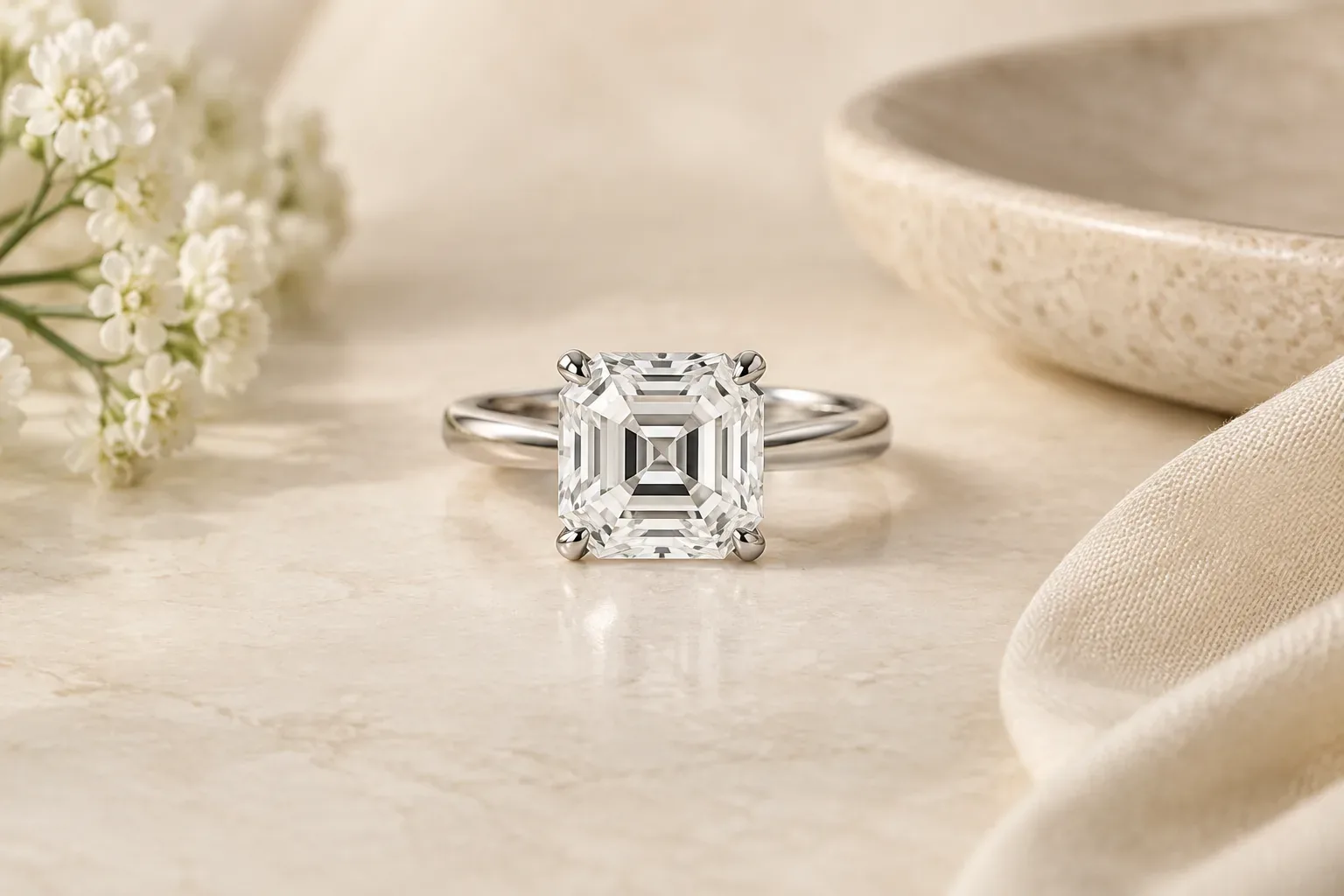
Meaning at a glance
Asscher cut engagement ring durability depends on the stone material and setting more than the name of the cut: for diamonds and well-set stones, daily wear is practical but the step-cut pavilion and cropped-square profile can be more prone to showing scratches and edge chips than rounded cuts; verify material, treatment, and setting quality with a qualified jeweler or gemological lab before purchase.
What the approved evidence can and cannot tell you
Useable evidence for shoppers comes from consumer-protection and gemological organizations. The Gemological Institute of America (GIA) explains how treatments, disclosure, detectability and special care affect gemstone durability and what laboratories can and cannot determine about a stone’s stability and treatments. The Federal Trade Commission (FTC) instructs consumers to seek clear seller disclosures about natural versus lab-created, treated, cultured, or imitation materials. Jewelers Mutual provides industry perspective about the kinds of designs and craftsmanship buyers are demanding today, which affects how people choose sturdy settings. Market research published by Imaginaire Digital confirms ongoing, high consumer interest in engagement rings and related styles in 2026, which drives both supply and variety.
What these approved sources do not provide is a detailed historical timeline for the Asscher cut itself or specific engineering tests for a single ring’s edge strength. For historical origin claims, manufacturing-era dates, or precise cut measurements, ask a qualified independent jeweler or a gemological laboratory report, since the named public sources in this article are focused on consumer guidance, treatments, disclosure and market trends rather than original-cut provenance.
Historical evidence and cultural context
Within the scope of the approved sources, there is no authoritative historical narrative for the Asscher cut provided. The approved sources are focused on consumer trends (Imaginaire Digital; Jewelers Mutual), gem-treatment and durability principles (GIA), and buyer protections (FTC). Because the Asscher style is a specific lapidary design name, any precise cultural or period attribution requires primary historical references or archival material outside these four sources. If historical provenance matters to you (for example, vintage or antique origin, maker’s mark, or period-specific cutting techniques), request documentary provenance from the seller and an independent gemological or appraisal report before purchase.
Documented historical meanings versus modern personal interpretations
Documented historical meanings for specific cuts or designs are unevenly recorded in public consumer and regulatory literature. The approved sources emphasize disclosure and consumer understanding rather than symbolic meanings tied to a cut. Modern symbolic or personal meanings—such as an Asscher-style square representing clarity, balance, or Art Deco affinity—are contemporary interpretations that individuals, designers, and retailers apply today. Those interpretations are valid as personal or stylistic meanings but are not documented as universal historical facts in the consumer- and gemology-focused sources used here.
In practice, treat historical meanings as contextual: if a seller attributes a particular cultural meaning or age to a ring, ask for supporting provenance or a certified appraisal. Rely on documented lab reports for material and treatment claims, and treat symbolic associations as part of personal gifting language rather than verifiable physical attributes.
How the Asscher-style cut appears in ring design and why that matters for durability
In contemporary jewelry, the term "Asscher-style" is commonly used to describe step-cut square or near-square stones with cropped corners and visible step facets. Retailers and designers frequently set such stones in solitaire, halo, and three-stone mounts and pair them with modern or vintage-inspired settings. Jewelers Mutual’s reporting on 2026 trends notes increased interest in craftsmanship and versatility, which affects how cutters and setters present step-cut stones in engagement rings.
From a durability perspective, two features matter most regardless of marketing name: the gem’s hardness and toughness (how it resists scratching and breakage), and the setting’s protection of vulnerable edges and corners. The GIA emphasizes that treatments and material properties affect durability and special care. The FTC emphasizes that clear disclosure matters where materials or treatments could change care instructions or expected longevity.
Daily wear: practical expectations and visible wear
What daily wear looks like depends on activity level and setting security. For hard stones with high scratch resistance, such as diamonds, daily wear typically shows more polished facet abrasion over years than sudden failure, provided the setting protects the stone’s girdle and corners. Step-cut facets in an Asscher-style stone produce broad, flat planes that show surface scratches and dulling more readily than brilliant-cut facets, so you may notice a change in brilliance before structural damage occurs.
If your lifestyle involves heavy manual work, frequent contact sports, or abrasive environments, a sturdier setting—such as a protective bezel or heavier prongs—reduces the chance of edge chips or snag-related damage. Jewelers Mutual’s guidance about craftsmanship and versatility highlights that choosing the right setting tailored to wear patterns reduces repair needs.
Snagging and edge risk
Cropped corners and square silhouettes can create catch points on sleeves, lace, and fabric. A four-prong setting leaves corners more exposed than a full bezel or halo. If snagging is a concern, prioritize settings that shield the corners or use lower-profile mounts that present fewer raised edges above the mounting plane.
A careful visual and tactile inspection by a jeweler will reveal how much corner or girdle is exposed. This inspection is an important pre-purchase step because the approved consumer sources emphasize disclosure and seller transparency: sellers should disclose setting types and any known vulnerabilities, and buyers should ask for a demonstration of how the ring sits and moves with a gloved hand or garment sample.
Repair risk and what to expect from servicing
Repair risk depends on damage type. Surface scratches, facet polishing needs, or minor prong wear are routine workshop services. Edge chips or fractures in the stone can be more complicated: repairs for chip removal, re-cutting or re-polishing can change a stone’s weight and appearance, and, for historically or sentimentally significant stones, such interventions are major decisions.
The GIA notes that disclosure and laboratory testing are central where treatments or structural stability affect care. Before authorizing significant repair work, insist on an appraisal and ask whether the work will alter grading or documented attributes. Jewelers Mutual’s industry perspective suggests that quality workmanship and regular maintenance checks reduce the frequency of reactive repairs.
Decision criteria for buyers: what to verify and when to consult professionals
Prior to purchase, verify the gemstone material and any treatments in writing. The FTC recommends clear seller disclosures about natural versus lab-grown and about treatments; ask to see a lab report for higher-value stones. For durability questions, request information on hardness/toughness characteristics if the stone is not a diamond, and ask the seller to explain how the setting protects the stone’s corners and girdle.
If the ring is vintage, request provenance, condition notes, and an independent appraisal. For a new ring, insist on a warranty or service policy and documentation of the setting metal and prong construction. For any technical questions about cut proportions, edge thickness, or risk of chips, have the ring evaluated by a qualified bench jeweler or a gemological laboratory that can provide a written assessment.
Care and practical tips to extend longevity
Routine care reduces repair risk and preserves appearance. Clean the ring regularly with non-abrasive solutions recommended by the seller or a jeweler, inspect prongs and settings every six to twelve months, and remove the ring during activities that spike impact, abrasive contact, or chemical exposure. The GIA’s guidance on treatments and care reinforces that some materials and treated stones require special handling.
If you plan to wear the ring daily, consider a low-profile or protective setting and discuss preventive maintenance plans with the retailer or repair shop. Jewelers Mutual’s trend reporting underscores that buyers increasingly prioritize craftsmanship and versatility—investing in a quality setting is consistent with that trend and can reduce long-term costs.
Practical and respectful guidance for selection and gifting
Match the ring choice to the wearer’s lifestyle and preferences. If the recipient prefers a bold square look but has an active lifestyle, select a protective setting or a halo design that guards corners. If the recipient values vintage aesthetics, request condition reports and documented provenance; be transparent about any repairs or treatments. Use the FTC’s recommendation to obtain clear written disclosures about material, origin, and treatments so the recipient can make informed decisions about care and insurance.
When gifting, present the ring with realistic care expectations rather than idealized permanence. Offer options for routine maintenance, such as scheduled cleanings or a service plan, and encourage the recipient to get an independent appraisal or lab report if the ring is high-value. Those steps honor both the sentiment of the gift and the practical need to preserve it.
Limits on what shoppers can verify without experts
You can visually inspect setting quality, test basic fit and comfort, and request written seller disclosures at the point of sale. However, you cannot reliably verify treatments, exact material origin, internal clarity characteristics, or subtle durability properties without a qualified jeweler or gemological laboratory report. The GIA describes what laboratories can and cannot detect about treatments and stability, and the FTC requires firms to disclose material and treatment status. For any material or treatment claims that affect durability, request a current laboratory report or a certificate from a recognized gemological authority.
Frequently asked questions
Is an Asscher cut engagement ring durable enough for daily wear?
Durability depends primarily on the gemstone and setting. For a diamond in a well-made protective setting, daily wear is realistic. The Asscher-style step facets and cropped corners can show scratches or edge wear more readily than rounded cuts, so choose a secure setting and plan regular inspections.
Will a halo or bezel setting make an Asscher-style stone more durable?
Yes. A halo adds a protective buffer around corners and can reduce direct impact contact, while a bezel wraps the girdle and offers more uniform edge protection. Both settings reduce the chance of snagging and corner chips compared with exposed-prong mounts.
Can I tell whether an Asscher-cut stone has been treated by looking at it?
No. According to the Gemological Institute of America (GIA), many treatments are not reliably detectable without laboratory testing. Request written disclosure from the seller and a lab report for any treatment or origin claims.
What maintenance should I schedule for an Asscher-cut ring?
Inspect prongs and settings every six to twelve months, clean with non-abrasive cleaners as recommended, and remove the ring during high-impact or abrasive tasks. Follow any specific care guidance provided with the stone’s documentation.
How can I verify the stone’s material and origin before buying?
Ask the seller for a current laboratory report from a recognized gemological lab or an independent appraisal. The FTC advises that sellers provide clear written disclosures about whether a stone is natural, lab-grown, treated, or an imitation.
If a ring is vintage, does that change repair or durability considerations?
Yes. Vintage rings may have prior repairs, thinner prongs, or older setting techniques. Request provenance, condition notes, and an appraisal. Consider restoration and whether re-setting in a sturdier mount is appropriate before regular wear.
Sources and further reading
- Imaginaire Digital — Imaginaire Digital
- Jewelers Mutual — Jewelers Mutual
- Gemological Institute of America — Gemological Institute of America
- Federal Trade Commission — Federal Trade Commission