Meaning at a glance
Distinguish blue gemstone identity and material history from modern associations such as calm, loyalty, or communication.
Direct answer: What "blue jewelry meaning" refers to
Concise answer: The phrase blue jewelry meaning can refer to two different things—first, the material identity and history of blue gemstones and colored materials used in jewelry (how they were sourced, worked, traded, or treated), and second, later personal or cultural associations such as calm, loyalty, or communication. Good practice is to separate documented, material history from modern symbolic interpretations when describing a piece.
This article follows that distinction: it summarizes what professional research and museum documentation say about blue materials in jewelry, and then treats contemporary symbolic meanings as interpretive, not universal statements.
Documented historical evidence (what the record actually shows)
Museum documentation and professional gemological research are the most reliable sources for the material history of blue jewelry. The Metropolitan Museum of Art’s publication on Islamic Jewelry explains the historical use of colored materials, including blue pigments and enamel techniques, in a regional and chronological context; that work documents how artisans deployed color for aesthetic, technical, and status purposes in Islamic courts and workshops, rather than presenting a single symbolic meaning for blue across cultures.
Gemological research from the Gemological Institute of America (GIA) provides the scientific foundation for identifying blue gemstones and understanding how their physical properties affect value and use. GIA’s work on colored stone research explains methods used to identify mineral species, geographic origin where possible, and modern or historical treatments that alter color and durability. GIA’s guidance on value factors emphasizes that hue, tone, saturation, and color uniformity are critical technical attributes that determine how and why particular blue stones were selected for jewelry.
Which parts are documented history and which are modern interpretation
Documented history (material, technique, trade): Scholarly and museum sources document which blue materials were available to specific cultures, what working techniques were used, and how trade and technology affected availability. For example, museum studies show that certain enamel and pigment techniques were practiced in Islamic contexts and that craftsmen chose colors for visual and technical reasons. GIA research documents how gem species are identified and how treatments—both ancient and modern—can change a stone’s color and how it is perceived in jewelry.
Modern interpretations (symbolism and personal meaning): Statements that blue “means” calm, loyalty, or improved communication are modern, culturally contingent interpretations rather than universal historical facts. Those associations are widely circulated today in marketing, popular culture, and personal belief, but they are not a single documented historical meaning that applied across times and places. Treat symbolic claims as personal or culturally specific rather than factual properties of the material.
How blue materials and motifs actually appear in jewelry
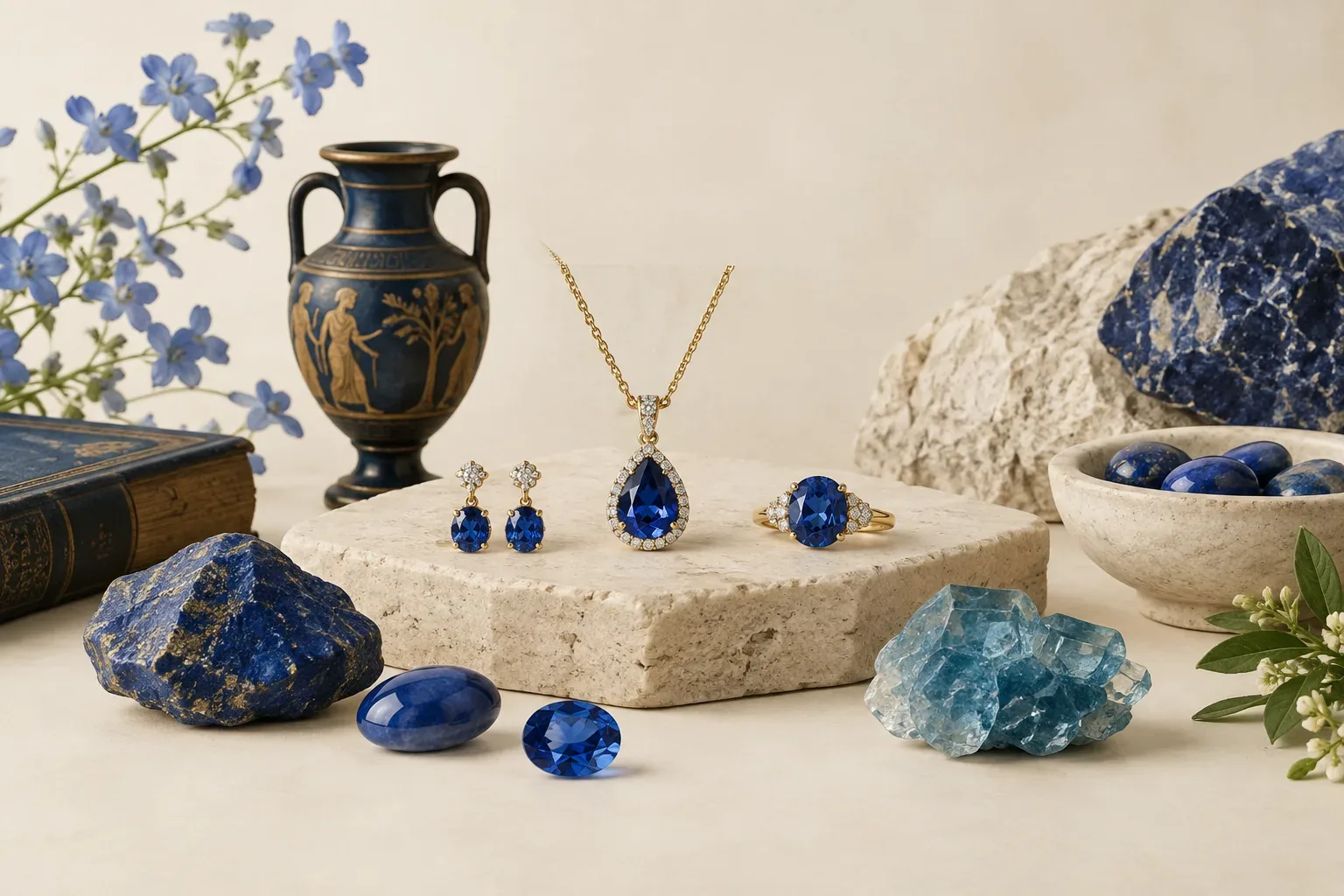
Blue appears in jewelry through three broad categories of material: natural minerals and gemstones, ground pigments and enamels, and modern imitations or treatments. Gemological research describes how mineral identity (for example, different species that yield blue color) and the stone’s optical properties produce the range of blue tones jewelers work with. GIA’s work on value factors shows why certain hues and saturations are prized and informs how cutters and setters present blue stones in rings, necklaces, and other settings.
Museums document decorative techniques as well: enamel and inlay allowed artisans to introduce stable, vivid blue surfaces where suitable gemstones were rare or expensive. The Met’s work on Islamic Jewelry outlines contexts in which enamel and colored decoration were favored for surface ornamentation. In modern commercial jewelry, blue is commonly represented by sapphires, aquamarines, topaz, turquoise, lapis, and various treated or lab-grown materials; professional gemological resources discuss how to identify these materials and recognize treatments that affect color and value.
How to read claims about a blue piece: identity, treatment, and value
When assessing a blue jewel, separate three practical questions: what material it is, whether the color has been enhanced, and what visible color qualities it exhibits. GIA research explains standard identification techniques and the importance of disclosure around treatments that alter color or durability. A reliable description from a seller or lab report naming the gemstone species, any enhancement (heat, dye, irradiation, coating), and grading of color attributes is the documented information that supports any claim about the piece.
Color descriptions matter: professional value factors focus on hue, tone, saturation, and uniformity. Two pieces with the same gem name can communicate very different visual impressions, and those visual differences are what historically made certain blue materials more desirable or appropriate for particular functions—status display, ceremony, or everyday wear—depending on availability and cost.
Modern symbolic meanings and personal interpretation
Many people today attach symbolic meanings to blue—calmness, trust, fidelity, or communication—based on cultural narratives, marketing, or personal experience. These are valid as contemporary symbolic uses, but they are not universal or necessarily rooted in the documented material history of any specific culture. Present such associations as contemporary interpretive layers rather than as historical facts.
If you value symbolism, explicitly state whether you are using a modern, personal, or culturally specific framework. For example, wearing a sapphire to symbolize a personal commitment or choosing a turquoise piece because it feels grounding are contemporary choices about meaning; they are meaningful to the wearer and recipient but should not be presented as historically universal truths.
Practical and respectful selection or gifting guidance
Choose based on material transparency first. Ask the seller for clear identification of the blue material, any treatments, and a reputable lab report if the piece is high value. GIA research underscores why those disclosures matter for long-term enjoyment and resale value. If you prefer untreated natural stones, request written confirmation; if you accept treated or lab-grown stones, identify the type and how it affects care and durability.
Consider cultural sensitivity. Some communities have long-standing uses for specific materials and techniques; consult knowledgeable sources or specialists if you plan to borrow or reference a traditional motif. Museum publications like the Met’s work on Islamic Jewelry show that color and technique choices had particular meanings and functions in specific cultural settings; treat those traditions respectfully and avoid assuming that a symbol or color has the same value or meaning outside its original context.
Match the symbolic intention to the recipient when symbolism matters. If you want a modern symbolic message (calm, trust, communication), communicate that intention when gifting so the recipient understands your meaning. If the gift should reflect historical continuity—such as supporting traditional craftsmanship—seek makers or dealers who document provenance and technique.
Care, authenticity checks, and further learning
Care for blue jewelry according to the material. Some blue stones are relatively hard and durable, while others are softer or porous and need gentle handling. Ask about care instructions and any recommended cleaning methods from the seller. GIA’s guidance on identification and treatment helps explain why different materials need different care.
For further research, consult authoritative resources. Use gemological laboratories and museum catalogs for technical and historical questions, and read seller disclosures critically. Our related articles on choosing meaningful jewelry, researching jewelry symbols, and understanding natural versus lab-grown birthstones can help you form an evidence-based approach to meaning and material.
Frequently asked questions
Does blue always mean calm or loyalty historically?
No. Those are modern and culturally specific associations. Historical records show that artisans and patrons selected blue materials for practical, aesthetic, trade, or status reasons. Museum documentation—such as work on Islamic Jewelry at The Metropolitan Museum of Art—shows color use in context rather than a single universal symbolic meaning.
How can I tell if a blue gemstone has been treated?
Ask for laboratory identification and treatment disclosure. The Gemological Institute of America’s colored stone research explains standard identification methods and why disclosure about heat, dye, irradiation, or coating is important for value and care.
Is lab-grown blue gemstone jewelry less meaningful than natural?
Meaning is personal. Lab-grown stones can carry deliberate symbolic meaning for the giver or wearer and often have clearer disclosure about origin and treatments. If historical continuity or natural origin matters to you, request documentation; if symbolism or budget matters more, lab-grown can be a legitimate choice.
How should I respect cultural traditions when gifting blue jewelry?
Research the specific tradition and consult authoritative museum or community sources if you plan to use traditional motifs or materials. Respectful gifting includes accurate attribution of origin, clear intent, and avoiding appropriation of sacred or highly specific cultural symbols without permission.
Where can I learn more about a particular blue gem’s history or value?
Start with professional gemological bodies for material and treatment information (for example, GIA) and museum publications for cultural and historical context (for example, the Met’s catalogues). Our related articles listed in the links can help you approach both material and symbolic research.
Sources and further reading
- Colored Gemstone Value Factors — Gemological Institute of America
- GIA Colored Stone Research — Gemological Institute of America
- Islamic Jewelry in The Metropolitan Museum of Art — The Metropolitan Museum of Art