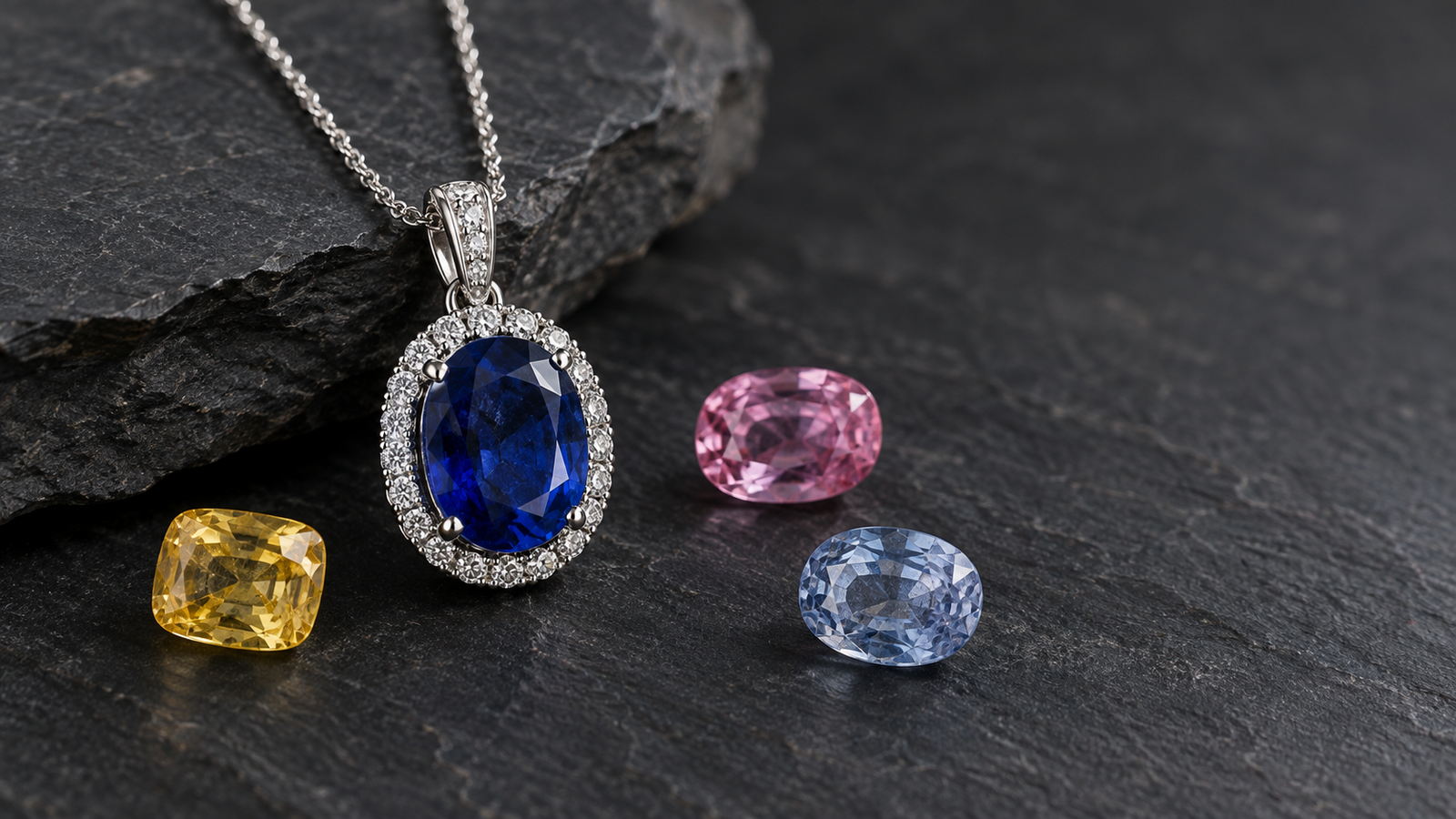
Meaning at a glance
Sapphire is the non-red variety of the mineral corundum that occurs in blue and many 'fancy' colors; its long-standing cultural associations with status, protection, and fidelity are cultural interpretations rather than mineral facts, and buyers should pay attention to color, treatments, certification, and appropriate care.
Quick answer
Sapphire is the non-red gem variety of the mineral corundum, occurring in blue and a wide range of 'fancy' colors; historically it has been associated with status and fidelity in many modern accounts, but those symbolic meanings are cultural interpretations separate from the mineral facts, treatments, buying choices, and care practices that a buyer should consider.
Documented mineral facts
Professional gemological sources describe sapphire in mineralogical terms. The Gemological Institute of America (GIA) identifies sapphire as the gem variety of corundum that is not red, meaning the red variety is called ruby. This definition places sapphire within a single mineral family and distinguishes it by color rather than by a different chemical species.
Natural history collections and museum records echo the same core facts and add information about how color forms. The Smithsonian National Museum of Natural History describes corundum (var. sapphire) and notes that sapphires occur in many different colors. The blue color most commonly associated with sapphire relates to trace amounts of iron and titanium in the crystal lattice, a chemical explanation recorded in museum and gemological literature.
Historical evidence and what the provided sources say — and don’t say
The authoritative sources provided for this article are professional and museum publications focused on gemology and mineralogy. They document what sapphire is and how its colors arise, and they provide practical guidance about treatments and buying. Those sources do not comprehensively document every cultural belief, ritual use, or literary reference to sapphire across time and place.
Because the available evidence in this article comes from gemological and museum records rather than primary historical texts, I do not attribute specific ritual uses, dates, or single-culture claims about symbolic meaning to any named historical period or culture. Many popular accounts and jewelry histories mention long cultural associations—for example, links with royalty, protection, or marital fidelity—but those cultural attributions are not contained in the GIA or Smithsonian mineralogical descriptions used here and should be treated as interpretive or secondary material rather than as direct documentary evidence from the provided professional bodies.
Separating documented history from modern and personal interpretation
Documented: From the GIA and the Smithsonian we can state with confidence that sapphire is corundum that occurs in blue and in a range of other colors, and that blue color commonly relates to iron and titanium. We can also state, based on the GIA buyer's guidance, that gem treatments exist and that knowledge of treatments affects buying choices.
Interpretation: Statements that sapphire universally symbolizes fidelity, divine favor, or royal status are cultural or modern symbolic readings. Those meanings appear in later jewelry literature and popular culture and are useful when they match a recipient’s beliefs or the buyer’s intent, but they are not universal facts about the mineral. When presenting a piece as a gift, treat those symbolic claims as personal or cultural rather than objective truths.
How sapphire appears in jewelry: motifs, cuts, and settings
Sapphire is commonly used as a center stone and as accent stones. Jewelers cut sapphire in a wide variety of shapes—round, cushion, oval, emerald, and fancy designer cuts—to maximize color and minimize visible imperfections. Because sapphires occur in many colors, designers use them in everything from monochrome color schemes to multicolored palettes in statement pieces.
In traditional and contemporary jewelry, sapphire may appear in rings, necklaces, earrings, bracelets, and brooches. The gem is often set as a solitaire to showcase color, mounted with accent diamonds to increase contrast, or paired with other colored gems for a vibrant effect. Motifs that use sapphires range widely: from classic solitaires and halo engagement ring designs to floral, celestial, and geometric settings in modern and vintage-inspired work.
Treatments and enhancements commonly affect how sapphires are cut and set. When a stone has been heat-treated to improve color or clarity, cutters sometimes maximize yield in ways that influence the final proportions and brilliance. Because treatments can alter appearance, jewelers and buyers should discuss any known treatments when choosing a setting and when planning long-term wear.
Buying and gifting guidance: practical and respectful considerations
Start with the recipient in mind. Choose color, size, and style that fit the person’s everyday life, cultural background, and personal aesthetic. If the buyer wants the piece to carry a particular symbolic meaning, check whether that meaning is meaningful to the recipient or their community; do not assume symbolic claims are shared by everyone.
Ask the seller about treatments and certification. The GIA Sapphire Buying Guide emphasizes that treatments and disclosures influence value and care. Request clear written information about any heat treatment, diffusion treatment, or other enhancement, and ask for any laboratory report or seller documentation that supports origin, treatment, or grading claims.
Match metal and setting to the recipient’s lifestyle. A low-profile setting or bezel can be more secure for someone who uses their hands a lot, while prong settings tend to be more open and show color strongly but may require occasional maintenance. For heirloom or investment purchases, consider a detailed report from a recognized lab and retain receipts and documentation.
Respect cultural and ethical concerns. If the recipient has cultural associations with certain colors or gemstones, ask discreetly or consult a trusted advisor from that community. For high-value purchases, inquire about sourcing and ethical practices from the dealer, and prefer vendors who are transparent about origins and supply chain standards.
Care and maintenance
Because sapphires can vary in treatment history, straightforward, conservative care is a practical approach. Routine gentle cleaning with warm, soapy water and a soft brush is effective for most set stones, but confirm with the seller if a stone has a surface treatment or filling that might be sensitive to detergents or heat.
Have settings and mounts checked periodically by a trusted jeweler to prevent loss from worn prongs or loose bezels. Avoid exposing treated stones to extremes of heat or to harsh household chemicals; when in doubt, consult the seller or a professional gemologist for advice tailored to the specific stone and its treatment status.
When storing sapphire jewelry, keep pieces separately to prevent contact with harder gems or abrasive metals that could affect polish or finish over time. For valuable or heavily worn pieces, consider professional cleaning and inspection at regular intervals.
Final thoughts
Sapphire combines well-documented mineral properties with a layered cultural life that varies by time and place. Use the reliable, science-based facts—sapphire is corundum that occurs in blue and many other colors, with blue relating to iron and titanium, and treatments influencing appearance and value—as the working foundation for buying and care decisions.
Overlay symbolic meaning intentionally and respectfully, recognizing that associations with status, protection, and fidelity are cultural and personal interpretations rather than universal or scientific truths. When in doubt, ask questions of sellers, request documentation, and choose pieces that reflect both the recipient’s tastes and the buyer’s intent.
Frequently asked questions
What exactly is a sapphire?
Sapphire is the gem variety of the mineral corundum that is not red; the red variety of corundum is called ruby. This definition comes from professional gemological sources such as the Gemological Institute of America.
Are all sapphires blue?
No. Sapphires occur in blue and a wide range of 'fancy' colors. The blue color commonly attributed to sapphire is related to trace elements such as iron and titanium, as described by museum and gemological records.
Do treatments change a sapphire’s value or care needs?
Yes. Gem treatments can affect both the price and the recommended care of a sapphire. The GIA’s sapphire buying guidance emphasizes that awareness and disclosure of treatments are important for purchasing decisions and long-term care.
Is sapphire suitable for everyday jewelry?
Sapphires are commonly used in everyday pieces, but suitability depends on the individual stone and the setting. Ask your jeweler about treatment status and appropriate settings for active wear, and plan for occasional professional inspection.
How should I clean my sapphire jewelry?
A conservative approach is to clean set sapphires with warm, soapy water and a soft brush and to have settings checked regularly. If a stone has unusual surface treatments or fillings, check with the seller or a gemological professional before using any chemical cleaners or ultrasonic devices.
Should I ask for a lab report when buying a sapphire?
Yes. Requesting written information about treatments and, where relevant, a laboratory report helps document what you have purchased and supports responsible resale or inheritance decisions later.
Sources and further reading
- Sapphire — Gemological Institute of America
- Sapphire Buying Guide — Gemological Institute of America
- Corundum (var. sapphire) — Smithsonian National Museum of Natural History