Meaning at a glance
Red in jewelry can be traced through documented materials and objects in museum collections and gemological study; modern attributions such as passion, courage, and celebration are context-dependent interpretations rather than universal facts.
What the historical evidence actually shows
When we look for documented history rather than modern metaphors, the strongest, directly cited evidence comes from museum catalogues and gemological research. For example, The Metropolitan Museum of Art’s publication on Islamic Jewelry catalogs objects where red materials—both gems and colored enamels—appear within identifiable techniques and object types. That catalogue situates red within the material and decorative practices of specific Islamic-period objects rather than asserting a single symbolic meaning for red across all Islamic cultures.
Gemological study complements museum documentation by clarifying what materials people used to make red jewelry and how those materials affect appearance and preservation. The Gemological Institute of America (GIA) describes the factors that determine a colored gemstone’s appearance and value—hue, tone, saturation, and color uniformity—and provides research tools for identifying a stone’s species, origin, and treatments. Those technical facts help explain why different red materials were chosen historically (for example, for their durability, brilliance, or availability) and how those choices shaped the visual language of jewelry in different places and periods.
Cultures and periods with documented red jewelry objects
The Metropolitan Museum of Art’s work documents red materials in Islamic jewelry collections and places them within a clear object- and technique-based context. Museum catalogues like that are reliable references for how red appears in a specific corpus of objects and what techniques—such as enameling and inlay—were used alongside gemstones.
Beyond any single catalogue, museum collections worldwide preserve objects that show red stones and red surface color appearing across many cultures and periods. Gemological research, such as that produced by the GIA, helps curators and scholars identify whether a historic red gem is a natural ruby, garnet, spinel, or a treated stone, which in turn clarifies the object’s materials history. When assessing historical meaning, it is safest to attribute the object-level documentation to the museum or research publication that examined that object rather than to claim a universal cultural meaning.
Documented materials vs. modern interpretation
Documented materials are the physical facts you can verify in object catalogues and gemological reports: the type of stone or enamel, the setting technique, the presence of treatment, and the object's archaeological or collection provenance. Those facts are the base level of historical evidence and are what institutions such as The Metropolitan Museum of Art and the GIA record and analyze.
Modern interpretations—words like passion, courage, love, or celebration—are often layered onto those objects by later viewers, marketers, or contemporary wearers. These meanings can be powerful and personally significant, but they are not intrinsic, universal properties of red. The thesis here is explicit: treat contemporary symbolic claims about red (for example, that it always means passion or bravery) as context-dependent interpretations rather than as historical certainties.
How red appears in jewelry: materials and motifs
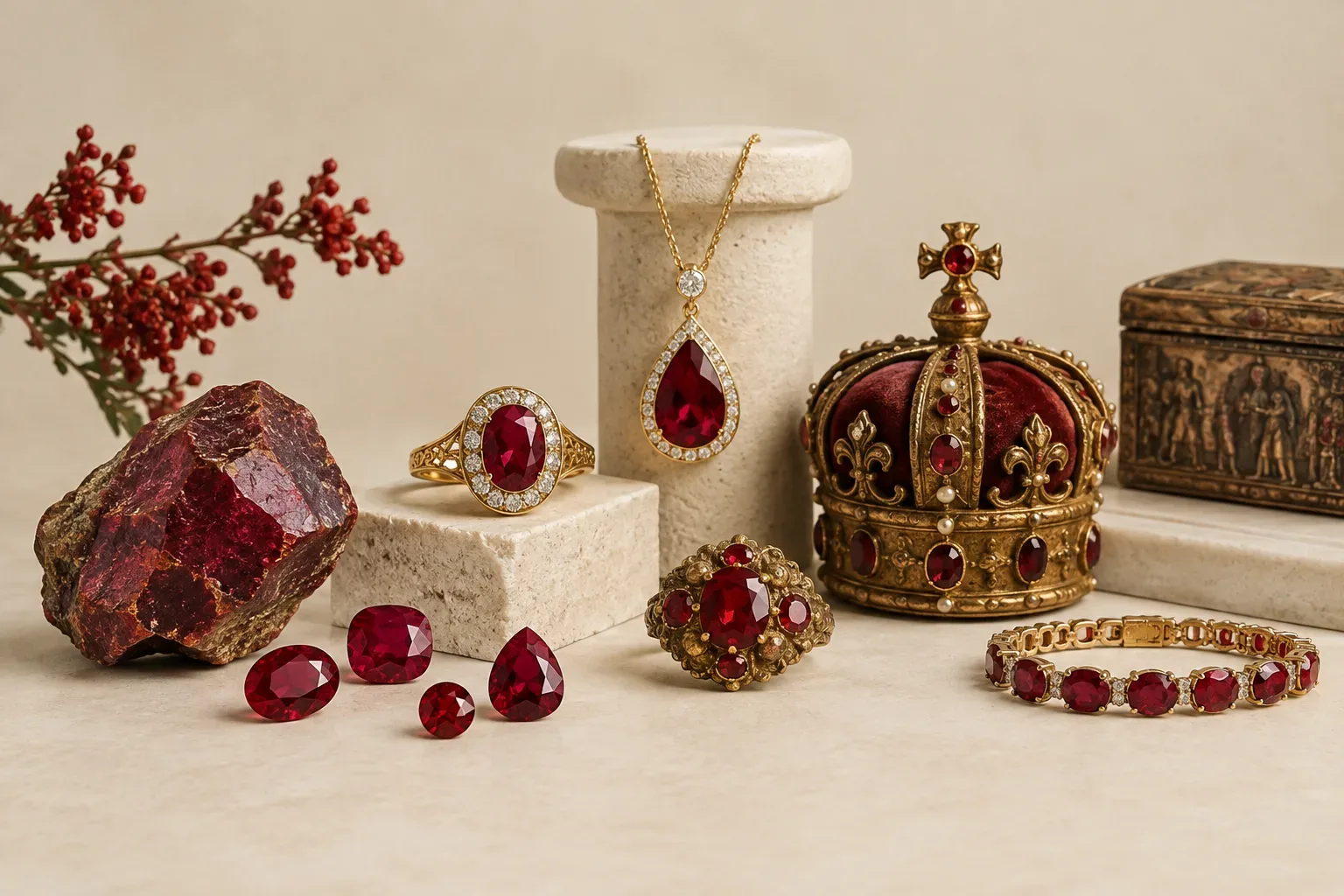
Red appears in jewelry through a combination of gemstone selection, surface color techniques, and design motifs. Gemstones such as ruby, spinel, and garnet have historically provided saturated red hues in faceted or cabochon forms; gemological research from the GIA explains how hue, tone, and saturation determine a stone’s perceived color and value and how treatments or enhancements can change appearance.
Red also appears through vitreous techniques such as enamel, which museum catalogues document in specific cultural contexts. Enamel allows a jeweler to apply a stable, colored surface that can be combined with metalwork and inscriptions. In curated objects, red surfaces and red gems often coexist, producing a layered visual effect that can highlight a focal motif, emphasize contrast, or follow a set decorative program dictated by the object’s maker or patron.
Reading meaning respectfully: what to ask about a piece
When you encounter red jewelry—whether at auction, in a museum, or as a gift—ask two kinds of questions. First, factual questions about materials and object history: what is the stone species, has it been treated, what is the object’s provenance, and how was the color produced? The Gemological Institute of America’s resources help with the technical side of these questions and explain why they matter for durability and value.
Second, contextual questions about meaning: who made the piece, who owned or commissioned it, and how was it used? Museum labels and catalogue entries often provide short object histories that can reveal whether color choices were ceremonial, decorative, or tied to identifiable cultural practices. If an object lacks a well-documented provenance, avoid asserting a single cultural meaning for its color.
Practical guidance for choosing or gifting red jewelry
Match the material to the recipient’s lifestyle and the intended use. Some red gemstones are harder and more resistant to wear than others; GIA guidance on colored-gemstone value and durability factors is useful when selecting a stone for daily-wear pieces versus occasional-wear pieces. If you want a durable everyday ring, consult gemological information on hardness and stability before committing.
Respect cultural and personal associations. Because red can carry different connotations across cultures and families, ask about preferences where appropriate. For example, in private gifting situations you can ask whether a recipient prefers a certain gemstone or color meaning; in public or formal presentations, rely on neutral descriptors (type of stone, cut, color quality) rather than assuming symbolic intent.
Disclose known treatments and provenance. When gifting or selling, be forthcoming about whether a red stone is natural, treated, or lab-grown; the GIA’s research resources are the industry standard for identification and disclosure. Transparency is both ethical and practical: it helps the recipient understand care needs, value expectations, and any cultural considerations tied to origin.
Design considerations: how makers use red today
Contemporary makers use red strategically to draw attention, create contrast, or reference cultural motifs. Red gemstones are often set as focal stones, used as accent stones to create rhythm, or paired with metals and enamel for color contrast. Modern designers also borrow historical techniques—such as enamel inlay or small-gem pavé—to evoke an antique aesthetic while using present-day materials and standards of disclosure.
If you are commissioning or buying a piece because of its color symbolism, discuss design choices with the maker. Ask whether the red will come from a natural gem, a lab-grown stone, or colored enamel, and whether the maker will document materials. That way you preserve both the intended visual message and an accurate material history for future owners.
Summary and how to proceed
Red jewelry meaning is best understood as a dialogue between material evidence and contemporary interpretation. Use museum catalogues and gemological research to ground claims about materials and historical use, and treat modern symbolic labels like passion, courage, or celebration as context-dependent interpretations rather than universal facts. When selecting, gifting, or interpreting red jewelry, prioritize material disclosure, cultural respect, and clear communication between giver, maker, and recipient.
Frequently asked questions
Does red always mean love or passion in jewelry?
No. While modern marketing and personal use often connect red with passion or love, those meanings are interpretations applied in specific contexts. Historical objects and museum catalogues record materials and techniques but do not support a single, universal symbolic meaning for red across all cultures or periods.
Which red gemstones should I choose for everyday wear?
Choose a red gemstone by balancing hardness and durability with aesthetic preference. The GIA provides guidance on colored-gemstone value and durability factors; use that information to decide whether a stone is suitable for daily-wear settings such as rings or for occasional-wear items like pendants.
How can I tell if a red stone has been treated or is lab-grown?
Gemological testing is required to determine treatments or whether a stone is lab-grown. The Gemological Institute of America offers research and identification tools that specialists and reputable dealers use to confirm species, origin, and treatment status. Always request documentation from sellers.
Is it culturally insensitive to give red jewelry?
Not inherently, but it depends on context. Different cultures and individuals attach different meanings to color. When in doubt, ask the recipient about preferences or choose a design and materials with clear provenance and transparent disclosure. If the piece references specific cultural motifs, consult resources or experts to ensure respectful use.
Where can I find historically documented red jewelry to study?
Museum catalogues and online collections are good starting points. The Metropolitan Museum of Art’s publication on Islamic Jewelry is an example of a catalogued group of objects that documents materials and techniques; museum resources often include photographs and object histories that scholars use for study.
Sources and further reading
- Colored Gemstone Value Factors — Gemological Institute of America
- GIA Colored Stone Research — Gemological Institute of America
- Islamic Jewelry in The Metropolitan Museum of Art — The Metropolitan Museum of Art