Meaning at a glance
Compare turquoise, tanzanite, and zircon as three distinct December birthstone choices with clear identification, disclosure about common treatments and imitations, plus practical durability and care guidance.
Quick answer
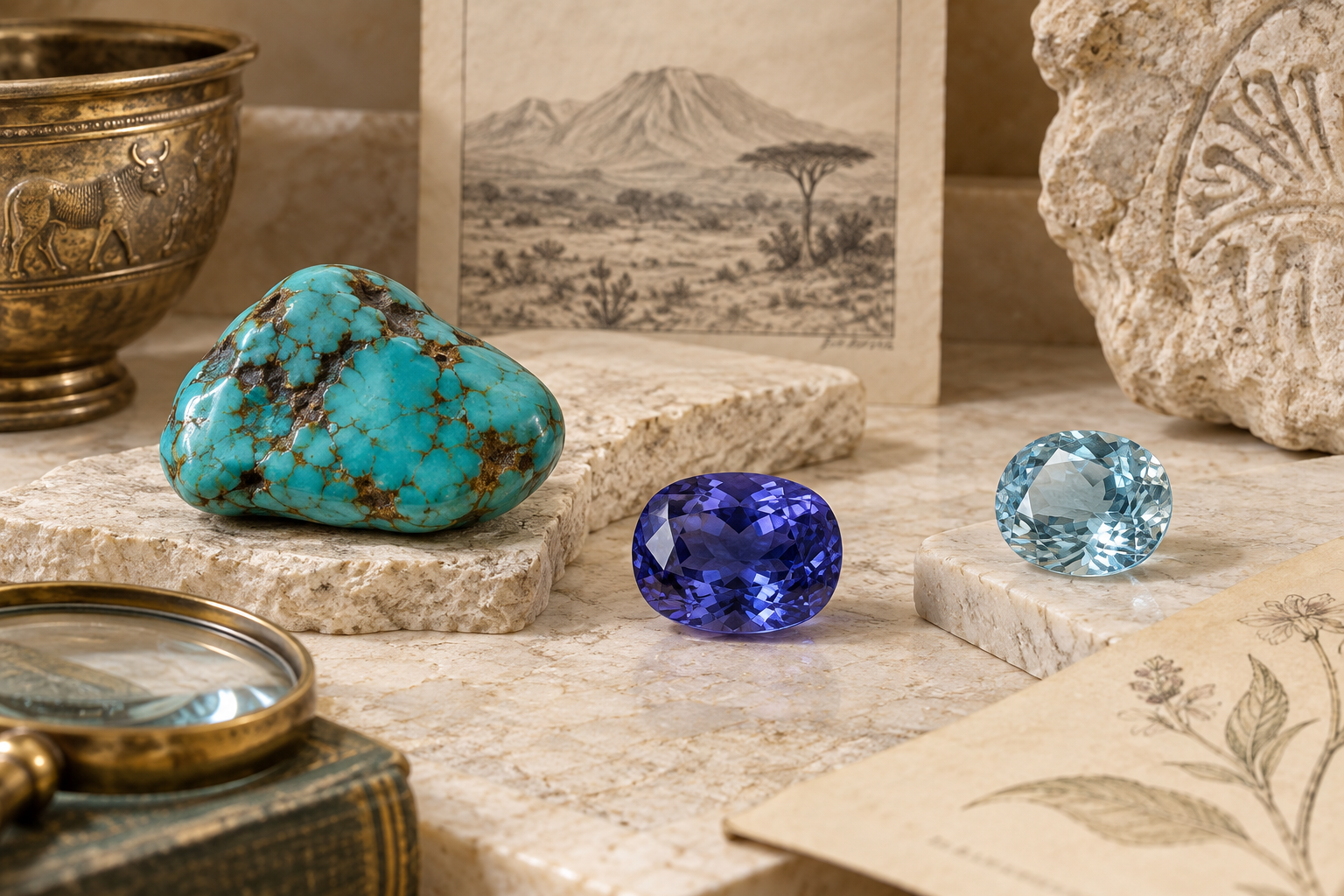
Compare turquoise, tanzanite, and zircon as three distinct December choices with clear identification, treatment disclosure, durability, and care: turquoise is an historic, porous blue-green phosphate that is often stabilized for jewelry; tanzanite is a relatively recent gem from Tanzania usually heat-treated to produce its blue-violet color; and zircon is an ancient natural gem available in several colors that is distinct from the synthetic material cubic zirconia. Each stone has different historical associations, different requirements for care, and different expectations for disclosure when buying, so choose and gift with both aesthetic and practical considerations in mind.
What the historical record documents
When we talk about historical meanings we separate recorded uses and attributions from later or personal interpretations. The Gemological Institute of America (GIA) documents the long and varied history of birthstone traditions and notes that different cultures and eras recognized different stones for months. GIA’s museum overview explains that the practice of associating specific gems with months, planets, or tribes evolved over centuries and was not uniform across regions.
For turquoise, GIA records archaeological and historical evidence of its use in ancient Egypt, in Persia (modern Iran), and by Indigenous peoples in the American Southwest, where turquoise appears in jewelry and ritual objects. These uses establish turquoise as a gem with long cultural and ornamental significance in those places, but the meanings assigned to it have varied by time and culture.
Tanzanite is a twentieth-century geological discovery from the Merelani area of northern Tanzania. GIA and related sources identify tanzanite as a modern addition to popular birthstone lists and explain that its use and symbolism are contemporary rather than ancient.
GIA’s materials on birthstones and gemstones also discuss natural zircon, which has been known and used historically in various cultures. The gem called zircon has a long record as an individual mineral used in jewelry, distinct from the later invention of the synthetic material cubic zirconia, which is a different substance entirely.
Documented meanings versus modern personal interpretations
Documented historical meanings come from archaeological context, inventories, and written descriptions noted by institutions such as the GIA. For example, turquoise’s presence in Egyptian and Persian artifacts is archaeological evidence of its importance in those cultures, which GIA records as part of the gem’s documented history. Those records do not prescribe a single, universal symbolic meaning.
Modern personal interpretations — such as wearing turquoise for protection, choosing tanzanite for spiritual transformation, or selecting zircon for clarity — are contemporary, individual, or market-driven attributions. These modern meanings may draw loosely on historical associations but are not the same as historically documented beliefs and should be treated as personal or cultural preferences rather than universal facts.
When choosing or gifting, be explicit about whether a meaning you attach to a stone is a historical claim with cited provenance or a modern personal sentiment you are expressing to the recipient.
Identification, common treatments, and disclosure
Accurate identification matters. Turquoise is a hydrated phosphate of copper and aluminum with a characteristic blue-to-green color. Because it is naturally porous, turquoise is frequently stabilized with resins or other impregnations to improve color and toughness for jewelry use. GIA’s guidance on birthstones and gem trade practice highlights the need for disclosure of such treatments.
Tanzanite is a blue-violet variety of the mineral zoisite and is almost always heat-treated to produce the saturated blue-violet color expected in jewelry. GIA describes tanzanite as a modern gem that is typically presented after heat treatment; sellers should disclose this treatment to buyers as part of transparent trade practice.
Natural zircon is a distinct mineral species available in a range of colors including colorless, yellow, orange, brown, blue, and green. Natural zircon is not the same as cubic zirconia, a man-made imitation. Zircon specimens may be heat-treated to alter color, and again, the Federal Trade Commission requires disclosure of treatments, lab-grown origins, or imitation status when selling gemstones.
Durability and care — what buyers should know
Durability differs among these three stones and dictates routine care and jewelry settings. GIA’s birthstone guidance emphasizes that softer and porous gems require gentler handling. Turquoise’s natural porosity and lower toughness mean it can be scratched, discolored, or damaged by household chemicals and should be worn with care; many turquoise gems are stabilized to improve durability, but those treatments can affect cleaning recommendations.
Tanzanite, while visually striking, can be brittle and has cleavage planes that make it vulnerable to sharp blows or abrupt temperature changes. GIA advises protective settings and avoiding ultrasonic or steam cleaners unless a professional gemologist confirms it is safe for the specific stone and setting.
Zircon can range in toughness and stability depending on color and origin; some zircons are hard enough for frequent wear but others are more fragile. Because zircon can be heat-sensitive in certain conditions, GIA recommends conservative cleaning methods and professional advice for ultrasonic or steam cleaning. Across all three stones, GIA’s guidance supports using mild soap, warm water, and a soft brush for routine cleaning and storage that prevents scratches or knocks.
How these stones appear in jewelry
Turquoise appears in a wide range of jewelry forms from inlay work and bead strings to cabochon rings and pendants. Its opaque, often matrix-bearing surface has been used for both casual and ceremonial pieces. In contemporary jewelry turquoise is commonly cut en cabochon to show color and matrix patterns; stabilized material is frequently used for rings and bracelets where durability is a concern.
Tanzanite is prized for faceted cuts that emphasize its blue-violet color and pleochroism. It is commonly set as the focal gem in rings, pendants, and earrings, often in protective settings such as bezel or halo mounts or paired with harder accent stones to reduce risk. Its gem appeal is largely about color and sparkle, which make faceted tanzanite a popular choice for special-occasion jewelry.
Natural zircon is versatile: colorless zircon can be faceted and used as a bright, brilliant center stone, while colored zircons are often faceted to emphasize hue and brilliance. Jewelers use natural zircon in both classic and contemporary designs. Importantly, natural zircon must be described accurately in sales materials to avoid confusion with cubic zirconia imitations.
Practical selection and gifting guidance
Decide first whether durability or color and historical resonance is your priority. If the recipient leads an active life or intends to wear the piece daily, choose a setting and gem that match practical needs. For everyday wear consider a protective setting and, where appropriate, stabilized turquoise or a harder zircon variety. If you prefer tanzanite for its color, choose designs that offer physical protection and accept that occasional professional maintenance may be needed.
Ask the seller for full disclosure about treatments, origin, and whether the gem is natural, lab-grown, or an imitation. The Federal Trade Commission requires that sellers disclose treatments and imitation status; make disclosure a buying checklist item so there are no surprises later.
When you want to emphasize history or symbolism in a gift, state clearly what you mean by that symbolism. If you tell the recipient you chose turquoise because of its role in particular cultures, indicate that this is a cultural connection recorded in museum and gemological literature rather than a universal spiritual claim. Personalize the gift with an explanation card that distinguishes documented history from your own sentiments.
Budget and certification matter. Obtain an independent appraisal or a gemological report for higher-value purchases and keep receipts and any treatment disclosures with the gift. For lower-cost items, verify seller reputation and read descriptions carefully, especially to confirm whether a blue stone labeled as 'zircon' is natural zircon or a synthetic substitute.
Short comparative summary
Turquoise: historic, porous, often stabilized, typically opaque cabochon use, needs gentle care and disclosure of treatments. Tanzanite: modern, usually heat-treated to produce blue-violet color, faceted to display color, requires protective settings and careful cleaning. Zircon: ancient natural gem available in multiple colors and often heat-treated, distinct from synthetic cubic zirconia, and used in both faceted and classical jewelry forms with moderate care.
Each makes a valid December birthstone depending on what you value: cultural history and color variety for turquoise, vivid modern color for tanzanite, and gemological brilliance or historical continuity for zircon. Follow GIA’s guidance on care and the FTC’s rules on treatment disclosure when you buy or gift any of these stones.
Frequently asked questions
Are turquoise, tanzanite, and zircon all official December birthstones?
Different modern lists include different stones for December; the Gemological Institute of America documents turquoise, tanzanite, and zircon as recognized December options in contemporary contexts. Birthstone lists have changed over time and vary by source.
How should I clean these gemstones at home?
GIA recommends gentle cleaning: mild soap, warm water, and a soft brush for routine care. Turquoise is porous and can be damaged by chemicals, so avoid soaking and ultrasonic cleaners. Tanzanite and some zircons can be sensitive to heat and ultrasonic cleaners; consult a professional if unsure.
Should sellers disclose treatments and imitations?
Yes. The Federal Trade Commission requires disclosure of known treatments, lab-grown origins, and imitations. Ask the seller for written disclosure about any stabilization, heat treatment, or whether the stone is natural, synthetic, or an imitation.
Is natural zircon the same as cubic zirconia?
No. Natural zircon is a natural mineral with its own gemological properties. Cubic zirconia is a synthetic, lab-made material created as an affordable diamond simulant. Sellers should not conflate the two.
What jewelry settings are best for tanzanite and turquoise?
Choose protective settings for tanzanite, such as bezels or halo settings that reduce the chance of knocks; for turquoise, prefer settings that limit exposure and consider stabilized material for rings, or use turquoise in pendants and earrings if the wearer wants less daily abrasion.
Sources and further reading
- December Birthstone Guide — Gemological Institute of America
- Birthstones — Gemological Institute of America
- Birthstones: Gems Through the Ages — Gemological Institute of America
- Buying Gemstones, Diamonds, and Pearls — Federal Trade Commission