Meaning at a glance
Topaz and citrine are both commonly associated with November; they are different minerals with different color origins and durability. This article compares their gemology, treatments, historical evidence from museum and gemological sources, how they appear in jewelry, and practical shopping and care guidance.
Direct answer: short comparison
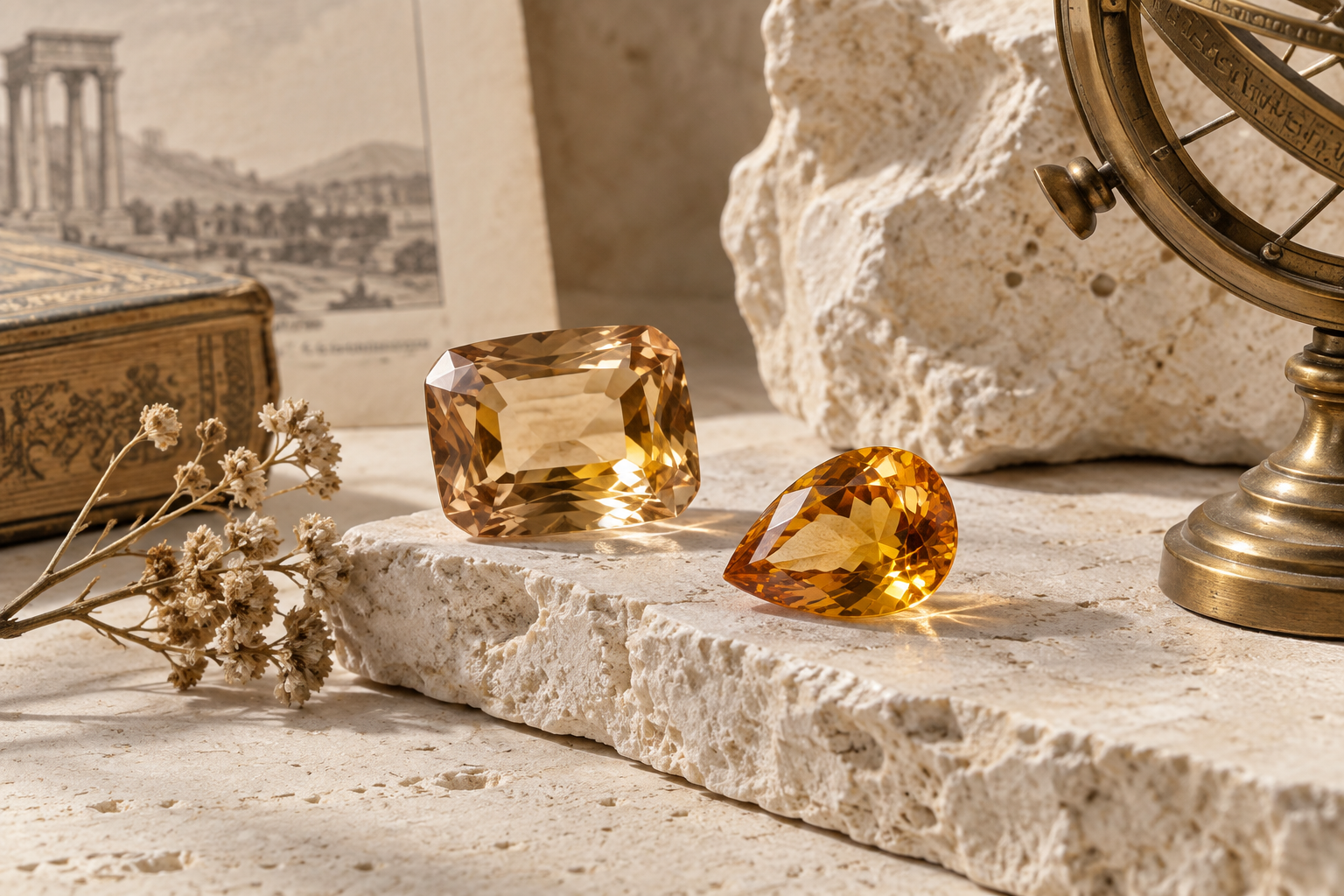
Topaz and citrine are both accepted as November birthstones today, but they are distinct gems: topaz is a silicate mineral (aluminium fluoro-silicate) that commonly appears in yellows, browns, and, after treatment or in certain natural examples, blues; citrine is a yellow-to-orange variety of quartz. Their color causes and common treatments differ, and so do their practical properties for everyday jewelry—topaz is harder than citrine and therefore more scratch resistant, while citrine is more affordable and widely used as a warm yellow gemstone. The rest of this article explains the documented historical record, the science behind color and treatments, how these stones are used in jewelry, and practical guidance for choosing, gifting, and caring for them.
Historical evidence and changing traditions
The idea of assigning gemstones to months has evolved. The Gemological Institute of America (GIA) documents that what we call birthstones reflects changing lists and fashions rather than a single continuous ancient tradition. The GIA’s museum and historical summaries explain how commercial, religious, and cultural factors reshaped which gems were linked to particular months over centuries, and how modern lists were standardized in the 20th century to help retail and gift-giving.
Because the assigned birthstones for a month have varied by place and period, the best-documented historical claim is that modern associations—such as listing topaz and citrine for November—are recent, institutional choices rather than universal ancient meanings. The GIA’s materials provide the primary historical evidence used here for those changes in birthstone traditions.
Documented historical meanings versus modern personal interpretations
Documented historical meanings tied to birthstones are sparse and inconsistent. The GIA notes that historical references to gems often mix religious, medicinal, and symbolic uses, but that these references do not translate into a single, verifiable ancient meaning for a modern birthstone list. In other words, statements that a particular culture universally regarded a gem as protective or healing need careful scrutiny and specific sourcing.
Modern personal interpretations—what people feel a gem symbolizes today—are widespread and varied. Many people choose topaz or citrine for qualities they associate with the stone’s color: citrine’s sunny yellow is commonly linked by wearers to optimism and warmth, while golden or blue topaz may be chosen for clarity, calm, or energy. Those contemporary meanings are personal, cultural, and contemporary, not universal historical facts, and should be presented as individual or cultural associations rather than proven ancient attributes.
What each gem is and why it has its color
Topaz is a distinct mineral species (aluminium fluorosilicate). Natural topaz forms in a range of colors. Some of the attractive blue topaz commonly seen today receives laboratory irradiation and heat treatment to produce or improve blue tones; other hues such as brownish or golden topaz are natural or may be enhanced. The GIA’s November Birthstone Guide explains these identity and treatment facts and emphasizes that many present-day blue topaz results from treatment.
Citrine is a yellow-to-orange variety of quartz. Much of the citrine on the market is either natural pale yellow quartz or material produced by heat-treating amethyst or smoky quartz to generate a stable yellow or orange color. The GIA notes that heat treatment is a common and accepted practice for producing citrine tones. Because citrine is quartz, its color origins and treatment pathways differ from those of topaz.
Durability, care, and what that means for wear
Durability matters when you plan to wear a gemstone often. The GIA explains that topaz generally rates about 8 on the Mohs hardness scale while quartz (including citrine) rates about 7. That difference means topaz is more resistant to scratching than citrine, but neither is impervious to damage. Both can chip if struck, and both can suffer from sudden temperature changes or harsh chemicals.
Care recommendations follow from those properties. Clean either gem with mild dish soap and warm water and a soft brush and avoid ultrasonic cleaners or steam unless you have written confirmation from a reputable gemological laboratory that the specific stone and its treatments tolerate those methods. Because many topaz and citrine stones have been treated, ask the seller about treatments and avoid exposing treated stones to high heat or chemicals that could affect color or clarity. The GIA’s guidance on birthstone care and the FTC’s consumer guidance on gemstone buying together recommend that buyers seek clear treatment disclosure and simple, gentle cleaning routines.
How these stones appear in jewelry
Both topaz and citrine appear in a wide range of jewelry styles but are used differently according to color, size, and budget. Citrine’s warm yellow and orange shades are popular in classic rings, cocktail rings, pendants, and earrings where a sunny color is desired at a modest price. Citrine is often cut as large faceted gems and set in both casual and formal designs.
Topaz is versatile across color ranges. Natural golden topaz and treated blue topaz are frequent choices. Blue topaz, in particular, became popular when reliable treatments produced vivid blue shades affordably, and designers often use it in everything from everyday studs and solitaires to larger statement rings and necklaces. Because topaz can be found in larger sizes with good clarity, it is also common in bold, fashion-forward pieces as well as classic settings.
Shopping and selection guidance
When shopping for a November birthstone, start with the recipient’s taste: do they prefer warm yellow tones or cooler blues? If you prioritize durability for a daily-wear ring, topaz’s higher hardness can be an advantage; if you value a warm, sunny color on a budget, citrine offers attractive options. Consult the seller about the stone’s origin and any treatments. The Federal Trade Commission advises consumers that treatments, lab-grown stones, and imitations must be disclosed, and the GIA recommends that buyers seek reputable documentation when the treatment materially affects value or care.
Ask for a clear description in writing. For higher-value purchases, consider a report from a recognized gemological laboratory. If the stone is heat-treated citrine or irradiated topaz, disclosure should be explicit because treatments influence value and how you care for the gem. Finally, shop with a return policy and an invoice that records the stone’s identity and any treatments so the gift recipient can have the piece appraised or serviced later if desired.
Gifting respectfully and practically
Gifting a birthstone is a personal gesture. Respect the recipient’s cultural and personal preferences and avoid assuming that a birthstone choice carries a universal meaning. A simple way to make a birthstone gift feel thoughtful is to choose a style that fits the recipient’s daily life and aesthetic, include a short note explaining why you selected that stone (color, symbolism, or family connection), and present any written documentation about the gem’s treatment or origin if available.
If the recipient is active or works with their hands, consider a pendant or earrings rather than a ring, or choose a protective setting such as a bezel. For heirloom intent, opt for higher-quality material with clear disclosure and, when possible, a gem report. These practical considerations make the gift both beautiful and lasting.
Care specifics for buyers and owners
Routine care for citrine and topaz is similar because both are silicate minerals. Use warm water, mild soap, and a soft brush for cleaning, and rinse thoroughly. Dry with a soft cloth and store pieces separately to avoid scratches. Avoid prolonged exposure to intense sunlight or heat sources that might affect treated colors, and keep jewelry away from harsh chemicals such as bleach or strong acids.
If a piece is set in a delicate mounting, bring it to a jeweler for occasional inspection of prongs and settings. If you are unsure about a stone’s treatment history, ask the seller for documentation or have the gem examined by a qualified lab. The GIA and FTC materials both advise transparency about treatments and recommend consumers keep receipts and descriptions for insurance or future resale.
Final perspective
Topaz and citrine each offer distinct advantages as November stones: citrine for warm, affordable yellows and versatile cuts; topaz for harder gems and a broader color range including popular treated blues. Historical associations are varied and best understood through the GIA’s documentation of changing birthstone traditions, while modern symbolic meanings are personal and culturally variable. Choose based on taste, lifestyle, and clarity about treatments, and follow gentle care practices to keep either gem looking its best.
Frequently asked questions
Are both topaz and citrine officially November birthstones?
Modern lists commonly name topaz and citrine as November birthstones. These modern associations are the result of evolving lists and standardizations described by the Gemological Institute of America, rather than a single ancient assignment.
How can I tell if a citrine or topaz has been treated?
Ask the seller for written disclosure and any lab reports. The GIA explains that heat treatment is commonly used for citrine and irradiation plus heat is often used to produce blue topaz. The FTC advises that material treatments, lab-grown stones, and imitations should be disclosed to buyers.
Which stone is more durable for everyday wear?
Topaz is generally harder (about 8 on the Mohs scale) than citrine (quartz, about 7), so topaz is more scratch resistant. Both can chip if struck and both require reasonable care to avoid damage.
How should I clean and store these stones?
Clean citrine and topaz with warm water, mild soap, and a soft brush; rinse and dry with a soft cloth. Store pieces separately to avoid scratches and avoid exposing treated stones to high heat or harsh chemicals.
Is citrine the same as yellow topaz?
No. Citrine is a yellow-to-orange variety of quartz, while topaz is a different mineral species. They can look similar in color but differ in chemical composition, hardness, and common treatments.
Sources and further reading
- November Birthstone Guide — Gemological Institute of America
- Birthstones — Gemological Institute of America
- Birthstones: Gems Through the Ages — Gemological Institute of America
- Buying Gemstones, Diamonds, and Pearls — Federal Trade Commission