Meaning at a glance
This article provides a month-by-month reference of the modern birthstones recognized by major gemological authorities, acknowledges variations between lists, and directs readers to fuller monthly guides while offering historical context and practical selection advice.
Quick answer
Use this page as a navigational birthstone chart by month: it lists the modern gem most commonly associated with each month according to gemological authorities, acknowledges that multiple traditions and alternative stones exist, and points readers to detailed monthly guides rather than attempting to duplicate lengthy, month-specific histories and buying advice.
How to read this chart and why lists differ
Modern birthstone lists are not fixed worldwide. The Gemological Institute of America (GIA) documents that birthstone traditions changed over time and that modern lists—those most commonly used by jewelers and the public today—have been standardized in different ways by trade groups and cultural practices. Use the month entries here as a practical starting point rather than an authoritative final word, and follow the links to monthly pages if you want deeper historical background, symbolism, or buying guidance.
Historical evidence and cultural sources
Recorded links between gems and months or zodiac signs appear in multiple historical sources, and the GIA treats these traditions as evolving rather than originating from a single universal system. The GIA's overview notes that some stones appear in ancient lists while others were added, removed, or swapped as gem availability and trade changed. Where I refer to a documented historical association in this article, I attribute it specifically to the Gemological Institute of America so readers can trace the evolution of the lists through their museum and reference material.
Month-by-month reference (modern first, alternatives noted)
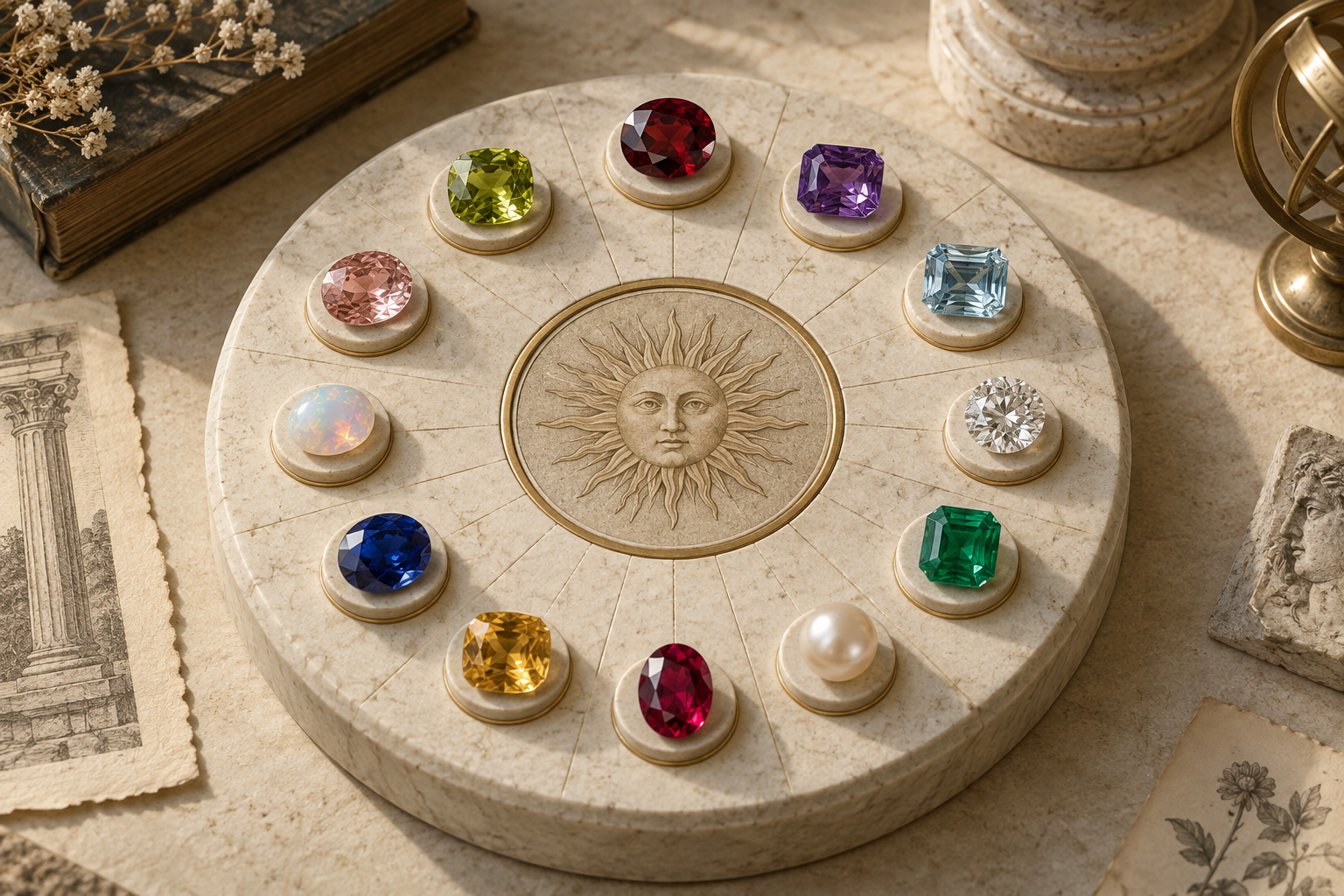
January — Garnet. The modern and widely cited choice for January is garnet, a group of gems valued for a range of colors. Garnets are commonly set in rings, necklaces, and earrings and are often chosen for classic, understated birthstone pieces. GIA lists garnet as the modern stone for January.
February — Amethyst. Amethyst is the modern gem most often associated with February according to contemporary gemological lists. It appears in both vintage-inspired and modern settings, frequently as faceted stones in rings or cabochons in pendants. The GIA recognizes amethyst in the modern month list.
March — Aquamarine. Aquamarine is commonly listed as the modern March birthstone by gemological authorities. Jewelers often use aquamarine in delicate rings and drop earrings to emphasize its pale blue tones. GIA identifies aquamarine as March’s modern stone.
April — Diamond. Diamond is the modern birthstone for April in the lists used by many jewelers and gemological sources. Diamonds are used in virtually every jewelry format and are often combined with other gems in personalized birthstone pieces. The GIA notes diamonds’ central place in modern lists.
May — Emerald. Emerald is the widely cited modern stone for May according to GIA references. It is commonly used in statement rings, pendants, and vintage-style jewelry where its richer green color is highlighted by complementary metals and cuts.
June — Pearl (and other traditional options). Pearls are commonly listed by modern sources as one of June’s birthstones. Pearls appear in classic string necklaces, stud earrings, and as accents in mixed-gem designs. The GIA documents that some months have more than one traditional or modern option, and June is an example where alternatives appear in many lists.
July — Ruby. Ruby is the gem most often associated with July on contemporary lists recognized by gemological organizations. Rubies feature prominently in rings, necklaces, and heirloom pieces and are prized for their vivid red hues.
August — Peridot. Peridot is the modern gem most commonly linked to August. Jewelers often use peridot in bright, open settings to highlight its green color. As with other months, trade lists and cultural traditions have included alternative stones at times, which the GIA discusses in its historical overviews.
September — Sapphire. Sapphire is the modern stone most frequently named for September by gemological references. It is widely used across jewelry types, from engagement rings to studs and pendants, and is valued for its range of blues and other colors.
October — Opal (and tourmaline). Opal commonly appears as the October birthstone on modern lists, with many guides noting tourmaline as an alternative in some traditions. Opals are often set in bezels and cabochon mounts due to their play-of-color, while tourmaline is used both faceted and cabochon-cut. GIA coverage acknowledges such multiple-stone months.
November — Topaz (and citrine). Topaz is a frequently listed modern birthstone for November, and citrine is commonly offered as an alternative on many modern lists. Both stones appear in a range of jewelry formats from rings to pendants.
December — Turquoise (and other options). Turquoise is among the modern stones most often linked to December; some lists also include gems such as tanzanite and zircon as alternatives. Turquoise is commonly fashioned into bead and cabochon jewelry and is prominent in both contemporary and traditional designs.
Documented meanings versus modern personal interpretation
When discussing meaning, distinguish documented historical associations from contemporary personal or cultural interpretation. The GIA’s museum and reference materials describe how different stones were connected to months or rituals over time, but the GIA does not present any single symbolic meaning as universally true. In modern practice, many people assign personal or familial significance to a birthstone—choices driven by color preference, birth heritage, or sentimental stories rather than historical prescription. Treat symbolic attributions as individual or culturally specific rather than authoritative facts.
How birthstone motifs and gems appear in jewelry
Birthstones are used in almost every jewelry format: rings, necklaces, bracelets, earrings, and charm-style pieces. The Jewelers of America buying guides explain common formats and settings and how jewelers choose cuts and mounts to suit each gemstone’s characteristics. Harder, facetable gems frequently appear in rings and engagement-style settings, while softer or more brittle materials—often included among traditional birthstones—are used in pendants, earrings, and protective bezel mounts or cabochon settings to reduce wear. Birthstone jewelry can be a single-stone accent, a cluster of multiple stones for family or sibling pieces, or incorporated into designs that mix metals and motifs for personalized meaning.
Practical and respectful selection and gifting guidance
Start with the recipient’s taste and daily life rather than assuming a single traditional choice. If the person works with hands or prefers low-maintenance jewelry, choose durable settings and stones suitable for everyday wear, and consider pendant or earring formats if rings are impractical. Jewelers of America guidance on formats and settings can help match stone choice to use.
Be transparent about origin, treatments, and whether a gem is lab-grown. The Federal Trade Commission requires truthful disclosure about treatments, synthetic materials, and imitations and provides consumer guidance for buying gemstones and pearls. Ask the seller for clear information on whether a gem is natural, lab-grown, heat-treated, dyed, or enhanced so you can match expectations and price to the gift.
Respect cultural variations. Some stones hold particular cultural or familial importance; if you are choosing a birthstone for someone from a different cultural background, ask or research respectfully rather than assuming the modern mainstream list applies. The GIA’s histories show that lists have changed across regions and eras, so sensitivity to personal tradition is important.
Consider alternatives and personalization. If a recipient prefers a color other than their month’s conventional stone, select an alternative gem that aligns with their style. Multiple-stone jewelry that combines birthstones for family members or commemorates multiple dates can honor relationships in a way a single traditional stone may not.
Budget and certification. Decide on budget and whether you prefer a natural stone with certification, a responsibly sourced or lab-grown alternative, or a lower-cost option such as a smaller carat weight or a less rare gem. Use Jewelers of America and FTC consumer guides to help evaluate warranties, return policies, and verifiable information about the gems you buy.
Where to go next
For a deeper dive into the history, symbolism, buying tips, and care for a particular month’s stone, follow the monthly guides linked from our Birthstones category. Our January page is a good example of the kind of detailed, month-specific coverage you’ll find for every month, including historical notes, buying checklists, and style ideas.
Frequently asked questions
Are birthstone lists the same everywhere?
No. Birthstone lists have changed over time and vary by region and tradition. The Gemological Institute of America documents these historical changes and notes that modern lists used by jewelers are one of several traditions. Treat any list as a practical guide rather than a universal rule.
Can I give a different gem than the traditional month stone?
Absolutely. Many people choose alternative gems based on color preference, lifestyle needs, or cultural tradition. Personalized choices and family stories often matter more than strict adherence to a list.
Should I buy natural or lab-grown birthstones?
Both natural and lab-grown gems can be good choices. The Federal Trade Commission requires sellers to disclose whether a gem is lab-grown, treated, or dyed. Ask the seller for clear information and any available certification so you can match your expectations and budget.
How do I choose a setting for a birthstone?
Match the setting to how the piece will be worn. Jewelers of America recommends protective settings such as bezels or lower-profile mounts for softer or more fragile stones and classic prong or halo settings for harder, facetable gems. Consider daily wear and the recipient’s activities.
Where can I learn more about a specific month’s stone?
Use the Birthstones category and the individual monthly guides linked from our site for detailed history, symbolism, and buying advice. The GIA’s birthstone resources also provide historical context for how lists developed.
Sources and further reading
- Birthstones — Gemological Institute of America
- Birthstones: Gems Through the Ages — Gemological Institute of America
- Buying Gemstones, Diamonds, and Pearls — Federal Trade Commission
- Jewelry Guides — Federal Trade Commission
- Jewelry Buying Guides — Jewelers of America