Meaning at a glance
This Akoya pearl cleaning guide gives a concise home-care protocol using gentle soap, lukewarm water, and a soft cloth; lists treatments and cleaning methods to avoid; explains decision points for DIY versus professional care; and clarifies what a shopper can verify without a gemological lab.
Quick answer
For routine home care, gently wipe your Akoya pearls with a soft, slightly damp cloth using mild soap and lukewarm water, then dry them flat away from heat; avoid ultrasonic and steam cleaners, jewelry dips, household chemicals, and abrasive cloths. If pearls are set in delicate mountings, show visible damage, or need re‑stringing, stop and consult a professional jeweler or a gemological laboratory for testing or repair.
What this guide covers and why it matters
The purpose of this akoya pearl cleaning guide is to answer the different needs behind the search term: clear, evidence-led definitions of safe care; decision criteria for DIY cleaning versus professional intervention; trade-offs when choosing cleaning methods; and what you cannot reliably confirm without a qualified jeweler or gemological laboratory. The Gemological Institute of America (GIA) highlights that treatments, detectability, durability, and special care raise distinct consumer questions for gems, which is the framework used here.
Defining Akoya pearls and key consumer decision points
Akoya pearls are a category of cultured saltwater pearls most commonly associated with the Pinctada (Akoya) oyster. Consumers typically choose Akoya pearls for their classic white or cream appearance, strong luster, and traditional use in strands and studs. The Gemological Institute of America (GIA) explains that cultured versus natural status, treatments, and durability are central concerns for buyers.
Decision points for care and cleaning include how often the pearls are worn, whether they are a loose pair, a strung necklace, or set into metal, the age and condition of the stringing or setting, and whether visible residue (makeup, oils, perfume) is present. These factors determine whether you can safely clean at home or should seek professional servicing.
A note on historical evidence and cultural contexts
Pearls have a long cultural history across many regions, but the approved reference materials used for this article are focused on gem treatment, disclosure, and modern market trends rather than primary cultural histories. The Federal Trade Commission (FTC) emphasizes that consumers need clear distinctions among natural, lab-created, treated, cultured and imitation materials and written seller disclosures, while the GIA focuses on treatments and detectability. For detailed, culture‑by‑culture historical provenance and symbolic meanings, consult museum catalogues, specialist historians, or primary historical sources because those topics are outside the scope of the cited consumer and trade references used here.
To keep interpretations transparent, this article separates documented, verifiable technical facts (damage mechanisms, cleaning safety, and what labs can test) from broader cultural or symbolic claims about pearls, which are best treated as modern or historical interpretations rather than verifiable cleaning guidance.
Safe home cleaning method — step by step
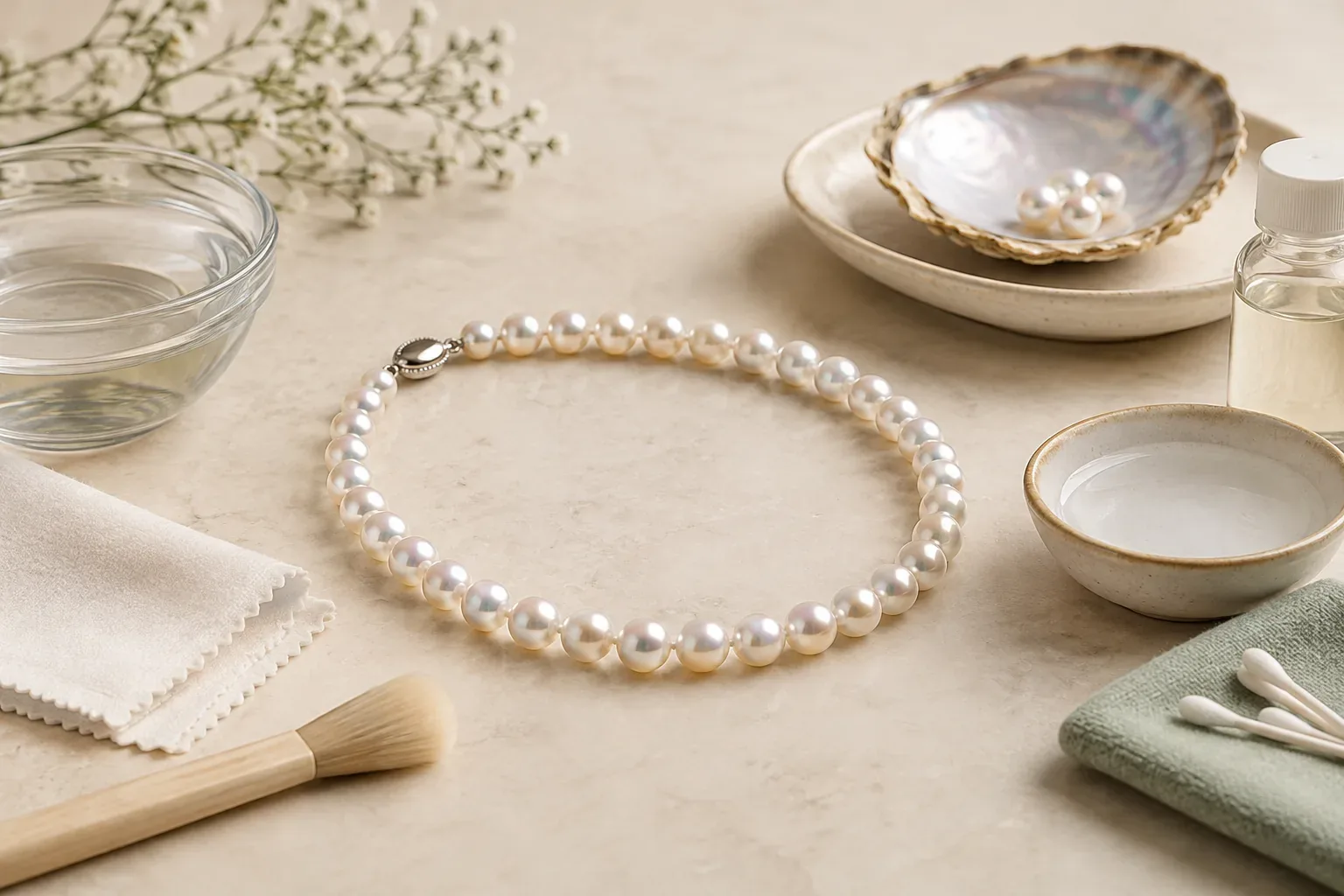
Prepare a mild cleaning solution by mixing a drop or two of gentle, non-detergent soap (for example, a mild dish soap) in a small bowl of lukewarm water. Do not use hot water, which can damage nacre or soften glue used in some settings.
Using a soft, lint-free cloth or a very soft brush, dip the cloth in the solution, wring it so it is just damp, and gently wipe each pearl. Avoid submerging strung necklaces for long periods, particularly if the strand uses silk or natural fibre that can weaken when soaked.
Rinse the cloth in clean lukewarm water and wipe the pearls again to remove any soapy residue. Pat the pearls with a separate dry soft cloth and lay a strung necklace flat on a towel to air dry completely before storing. Make sure clasps are fully dry to prevent metal corrosion.
For pearls set into metal (rings, pendants, or stud backs), protect the setting by working with a barely damp cloth and avoid getting substantial moisture into the mount. If the mounting blocks drying or is delicate, ship or bring the piece to a qualified jeweler for cleaning.
What to avoid — cleaning methods and chemicals that harm Akoya pearls
Do not use ultrasonic cleaners or steam cleaners on Akoya pearls. Ultrasonic machines can widen drill holes and detach nacre layers, while steam cleaners expose pearls to rapid heat and moisture that can damage nacre or adhesives.
Avoid household cleaners, bleach, vinegar, ammonia, alcohol, jewelry dips, abrasive cleaners, and toothpaste. These substances can dull or dissolve the organic protein matrix of nacre, leave permanent etching, or strip surface luster.
Do not soak a strung necklace for long periods; repeated soaking can stretch and weaken the stringing material. Avoid excessive heat (radiators, car dashboards) and prolonged exposure to chemicals such as perfume, hairspray, and sweat. Apply cosmetics and sprays before putting on pearls, and wipe pearls after wearing to remove residues.
Practical trade-offs: home cleaning versus professional care
Home cleaning is appropriate for routine maintenance—removing body oils, light cosmetics, or brief environmental grime. It is inexpensive and low risk when you follow the gentle method described above. The trade-off is that home methods cannot safely fix deep surface etching, worn nacre, damaged drill holes, loose settings, or compromised stringing.
Professional care is the correct choice when a strand needs re‑stringing and re‑knotting, when pearls are set in complex or fragile mountings, when visible surface damage exists, or when you require gem testing or treatment disclosure. Jewelers or gemological laboratories can re‑knot, replace weakened silk, test for treatments, and use controlled professional cleaning that may involve specialized solvents or ultrasonic equipment under supervised conditions where appropriate.
What a shopper can and cannot verify without a lab
You can visually inspect pearls for luster, surface blemishes, matching, size, colour consistency, drill hole condition, and the security of clasps and settings. These observations inform purchasing and immediate care decisions.
You cannot reliably determine whether a pearl is natural or cultured, the presence and extent of a bead nucleus, nacre thickness, or many treatments without specialized equipment and testing. The GIA recommends laboratory analysis for identifying treatments and for precise durability assessments, and the FTC requires written seller disclosures that distinguish natural, cultured, treated, and imitation materials. If the type or treatment status matters to you, request written disclosure from the seller or a lab report from an accredited gemological laboratory.
How Akoya pearls commonly appear in jewelry and why that affects cleaning
Akoya pearls are most commonly used in single and multi‑strand necklaces, chokers, stud earrings, drop earrings, and occasionally rings and bracelets. They are often matched for size and luster in formal strands and paired in stud earrings. Professional Jeweller and market trend reports show continuing consumer interest in classic pearl pieces such as necklaces and earrings, which affects how frequently these items are worn and therefore how often they require cleaning.
The piece construction matters for cleaning. Strands and loose pearls tolerate gentle wiping and careful damp cleaning. Pearls set into rings or pendants require extra caution because settings can trap moisture, and heat or solvents used on the metal may damage the pearl. If a pearl is glued into a setting, avoid solvents entirely and seek professional servicing.
Selection and gifting guidance — practical and respectful advice
When selecting or gifting Akoya pearls, ask the seller for written disclosure about whether pearls are natural, cultured, treated, or imitation, as the FTC advises. Request information about nacre quality and matching, and inspect the strand for consistent luster and secure knotting between pearls. For vintage pieces, ask about previous repairs or re‑stringing.
Present a care card with the gift describing simple steps: wipe pearls with a soft cloth after wear, avoid contact with perfumes and sprays, store them flat and separated from harder gems, and have a frequently worn strand re‑knotted every one to two years depending on use. If the recipient wears jewelry frequently, consider a gift certificate for professional re‑stringing or a gentle care kit with a soft cloth and storage pouch.
Closing summary and clear limits
This akoya pearl cleaning guide offers a safe, low‑risk home method: mild soap, lukewarm water, and a soft cloth, plus drying flat and storing properly. Avoid ultrasonic and steam cleaners, harsh chemicals, jewelry dips, and abrasive cloths. Use a jeweler for structural repairs, re‑stringing, or testing when the piece shows damage or when authenticity or treatments must be confirmed.
Remember the limits of what you can verify at home: visible condition and fit are testable, but treatment status, natural versus cultured origin, nacre thickness and other technical attributes require qualified gemological testing. The GIA and the FTC outline the consumer questions and the role of laboratory verification and seller disclosure in resolving them.
Frequently asked questions
How often should I clean my Akoya pearls?
Wipe pearls with a soft, dry cloth after each wear. For light cleaning, use the mild soap and lukewarm water method every few months if worn often; increase frequency if pearls are exposed to cosmetics or sweat frequently.
Can I use ultrasonic or steam cleaners on Akoya pearls?
No. Ultrasonic and steam cleaners can damage nacre, widen drill holes, loosen settings, or affect adhesives and should be avoided for Akoya pearls.
Is it safe to soak a pearl necklace in soapy water?
Short, careful damp wiping is safe. Do not soak a strung necklace for prolonged periods, because soaking can weaken silk or natural fibre threads and stretch knots.
What should I do if a pearl in a strand feels loose?
Stop wearing the strand and take it to a professional jeweler for inspection and likely re‑stringing and re‑knotting. Continued wear risks loss or further damage.
Can I use commercial jewelry cleaning solutions on pearls?
Most commercial jewelry dips and cleaners contain chemicals that can dull or etch pearl nacre and should be avoided unless the product is explicitly labeled safe for pearls and you have verified ingredients.
How can I tell if a pearl is natural or cultured at home?
You cannot reliably determine natural versus cultured status at home. The GIA recommends laboratory testing for accurate identification, and the FTC requires sellers to provide written disclosures about the type.
How should I store Akoya pearls?
Store pearls flat, separately from harder gemstones and metals in a soft pouch or lined box. Avoid airtight plastic for long-term storage because pearls are organic and benefit from a bit of humidity to avoid drying out.
Are there safe polishing cloths for pearls?
Use only very soft, non-abrasive, lint-free cloths specifically intended for pearls or delicate jewelry. Avoid abrasive or silver-polishing cloths that can scratch nacre.
Sources and further reading
- Imaginaire Digital — Imaginaire Digital
- Professional Jeweller / PRYA Jewellery Search Insights — Professional Jeweller / PRYA Jewellery Search Insights
- Gemological Institute of America — Gemological Institute of America
- Federal Trade Commission — Federal Trade Commission