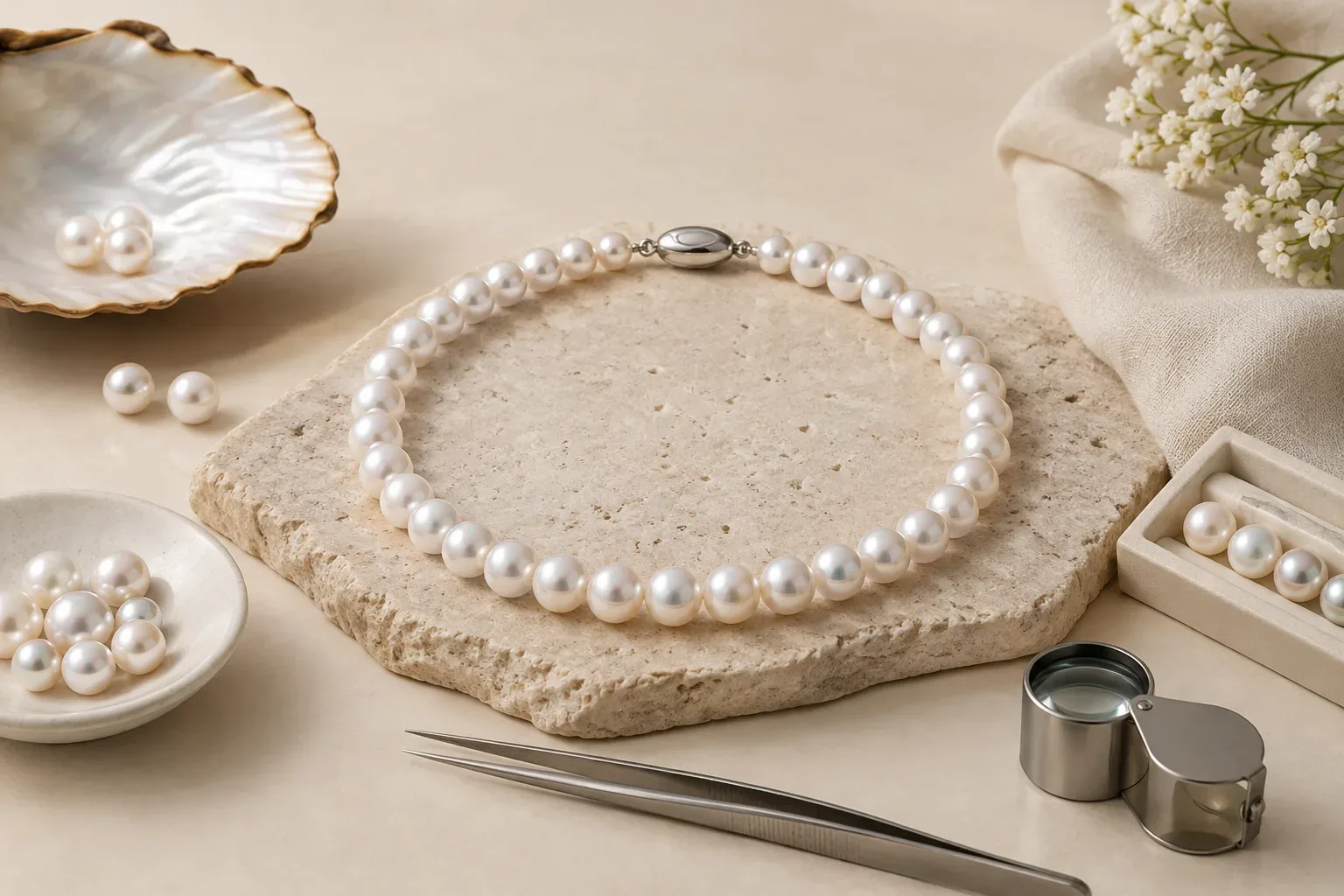
Meaning at a glance
When shopping for Akoya pearls, prioritize luster and surface quality first, then size and shape; insist on written seller disclosures and, for high-value pieces, an independent appraisal or certificate because certain attributes (natural vs treated, nacre thickness) cannot be reliably verified without a qualified jeweler or gemological laboratory.
Quick, direct answer
An effective Akoya pearl buying guide helps you evaluate luster (shine), surface clarity (spots and blemishes), size and shape (roundness and millimetres), and how well pearls are matched when set as a strand or pair. Visually you can judge color, overtone, luster and surface under good light and request close-up photos or a return window; however, determining treatments, whether a pearl is natural or cultured, or measuring nacre thickness requires a qualified jeweler or gemological laboratory and written disclosure from the seller.
What we can define, and what the sources cover
This guide follows an evidence-led approach: GIA’s general guidance on gem treatments and disclosure informs what consumers need to know about detectability and lab verification, and the U.S. Federal Trade Commission’s consumer guidance underscores the legal expectation for clear written seller disclosures about whether a gem is natural, cultured, treated, or imitation. Market trend context in this piece comes from industry publishers that report contemporary consumer interest in specific jewelry categories and styles.
Historical evidence and cultural context — what the sources say (and do not say)
The approved sources for this article provide clear consumer-facing advice about disclosure, treatment detection, and recent market trends, but they do not provide a primary historical account specific to Akoya pearls. Therefore this guide separates general historic observations that are widely known from what can be documented within our source set. Contemporary trend reporting from Imaginaire Digital and Professional Jeweller documents demand patterns and stylistic influences in the jewelry market today, but they are not historical primary sources for the origins of specific pearl types.
Because the available sources here do not supply detailed historical claims about Akoya pearls’ origins or cultural use, this article avoids asserting dated historical narratives that are not supported by those sources. Where cultural meanings or historical attributions are mentioned in other contexts, treat them as modern or conventional interpretations rather than verified historical facts unless accompanied by primary historical evidence.
How Akoya pearls appear in jewelry today
Akoya pearls are most often encountered in classic pearl strands and pearl stud earrings, and they are commonly paired with simple metal settings that emphasize luster and symmetry. Contemporary industry reporting shows strong consumer interest in necklaces and earrings, which aligns with Akoya’s common uses in those pieces.
Beyond classic strands and studs, Akoya pearls appear in cluster earrings, pendants and mixed-material modern designs influenced by current trends such as sculptural forms or vintage styles. Industry sources that track search and retail demand highlight growth in categories like necklaces and earrings and note stylistic trends (for example, Art Deco references and charm clusters) that can inform how designers feature pearls.
Color and overtone: what to evaluate
Color for Akoya pearls is a combination of the body color and the overtone (a subtle secondary color seen on the surface). Examine pearls under natural daylight or neutral white light to judge the true body color and overtone. Luster interacts with color: a high-luster pearl will show more reflected detail and make colors appear crisper.
As a shopper you can verify color and overtone visually and by requesting accurate photos or a return policy. You cannot rely on photographs alone for final judgment; demand in-person inspection for higher value purchases and ask the seller for explicit color descriptions in writing.
Clarity (surface quality) and how it affects value
Clarity in pearls refers to surface blemishes, spots, pits or irregularities. Buyers commonly prefer pearls described as 'clean' or 'near-clean' for higher-value pieces, especially for matched strands and stud earrings. A small surface flaw will typically lower value more for smaller pearls than for larger ones, because blemishes become more obvious on diminishing surface area.
You can inspect surface quality with the naked eye and with simple magnification under strong, diffuse light. For high-value purchases, ask for magnified images and a written condition report. The FTC’s consumer guidance emphasizes that sellers must clearly disclose material differences, which includes treatments or enhancements that affect appearance and durability.
Shape, size and the role of 'cut' for pearls
Unlike faceted gemstones, pearls are assessed for shape and roundness rather than a traditional 'cut.' Perfectly round Akoya pearls are rarer and often command higher prices; near-round and drop shapes are common alternatives that may offer better value for similar luster and surface quality. Size is measured in millimetres and is an important price driver: larger Akoya pearls typically carry a premium.
Buyers can verify shape visually and measure size with basic tools (calipers) or rely on stated millimetre sizes from reputable sellers. For expensive pieces, request a professional appraisal or measurement from a qualified jeweler.
Value: the trade-offs shoppers should weigh
Price is driven most strongly by luster and surface condition, then by size, roundness, and matching. Buyers often face trade-offs: for a given budget one can choose a smaller pearl with exceptional luster and clean surfaces, or a larger pearl with slightly lower luster and more surface character. Matching (how well pearls in a strand or pair align in color, size and luster) is another major factor for strands and sets.
Modern market demand and stylistic trends also affect price: industry reporting shows that demand patterns for specific jewelry categories influence what styles sell and at what price points. When value is a primary concern, prioritize luster and matching for pieces intended as classic, long-term wearables.
Care, durability and treatments
Pearls are organic and require gentle care. Avoid exposure to acids, perfumes, cosmetics and household chemicals. Clean pearls with a soft damp cloth after wearing, store them separate from harder gemstones and metals to prevent scratching, and have knotted strands restrung periodically to prevent loss from broken silk or nylon thread.
GIA’s guidance on treatments and care underlines that different gems and treatments have distinct durability and care needs. The FTC requires sellers to disclose treatments and enhancements, because treatments can change both care needs and long-term stability. Do not use harsh ultrasonic cleaners on pearl jewelry unless the maker explicitly states that such cleaning is safe for that specific piece.
Verification: what you can check and what needs an expert
You can check luster, overtone, surface condition, basic size and matching yourself using good lighting and, if possible, a jeweler’s loupe and calipers. You can also confirm seller policies in writing: return windows, written descriptions, and any issued certificates.
Attributes that typically require a qualified jeweler or a gemological laboratory include confirming whether a pearl is natural or cultured, detecting certain treatments, measuring nacre thickness reliably, and providing an independent valuation. The FTC states that consumers should expect written disclosure distinguishing natural, lab-created, treated and imitation materials, and GIA notes that detectability and disclosure are central to treatment discussions.
Practical selection and respectful gifting guidance
For a classic gift such as a single strand or stud earrings, prioritize high luster and close matching; choose a size appropriate to the recipient’s usual jewelry scale (smaller studs for daily wear, larger pearls for formal pieces). Select a metal color for the setting that complements the pearl overtone—warm overtones pair well with yellow gold, cool overtones with white metals—but do not assume a metal choice based on any presumed cultural symbolism.
Respect personal and cultural meanings when gifting. Pearls can carry different associations for different people; avoid claiming a universal symbolic meaning. When in doubt, ask gently about the recipient’s preferences or choose a versatile style such as a simple stud or a short single-strand necklace that suits many wardrobes.
A short buyer’s checklist
Inspect luster under natural light, examine surface condition up close, confirm size in millimetres, ask for written disclosures on natural vs cultured vs treated, request magnified images for online purchases, confirm return and appraisal policies, and for high-value items obtain an independent appraisal or laboratory report. Follow basic care steps and schedule restringing for knotted pieces as needed.
Frequently asked questions
Are Akoya pearls natural or cultured?
Akoya pearls sold in the retail market are overwhelmingly cultured rather than natural, but confirmation should come from the seller in writing. The Federal Trade Commission requires clear disclosure distinguishing natural, cultured, treated and imitation materials, and you should not rely on visual inspection alone to establish origin for higher-value items.
How can I tell if an Akoya pearl is real or an imitation?
You can check luster and surface texture under good light, look for minor surface irregularities, and request magnified photos. For a definitive answer, seek a qualified jeweler or laboratory report because some imitations and treated pearls are designed to closely mimic natural appearances and require professional testing to detect.
What should I ask the seller before buying?
Ask for written disclosures about whether the pearl is natural, cultured, treated or imitation, request exact size in millimetres, detailed images or in-person inspection, the return policy, and any certificates or appraisals. The FTC emphasizes that sellers should provide clear written distinctions about materials and treatments.
How do I care for Akoya pearl jewelry?
Wipe pearls gently with a soft damp cloth after wearing, keep them away from acids, perfume and cosmetics, store them separate from harder gemstones and metals, avoid ultrasonic cleaning unless explicitly allowed by the maker, and have knotted strands restrung periodically. GIA guidance highlights that different gems and treatments require specific care.
Can I verify nacre thickness or treatment at home?
No. Measuring nacre thickness reliably and detecting certain treatments generally requires specialized tools and expertise available to a qualified jeweler or gemological laboratory. For high-value purchases, obtain an independent appraisal or laboratory report.
Sources and further reading
- Imaginaire Digital — Imaginaire Digital
- Professional Jeweller / PRYA Jewellery Search Insights — Professional Jeweller / PRYA Jewellery Search Insights
- Gemological Institute of America — Gemological Institute of America
- Federal Trade Commission — Federal Trade Commission