Meaning at a glance
This guide defines the durability concepts shoppers need, outlines decision criteria and practical trade-offs for wearing and caring for fire opals, and explains what only a qualified jeweler or lab can verify.
What 'durability' means for a gemstone
Durability is not a single number. For practical decisions you need to separate at least three concepts: surface hardness, which determines resistance to scratches; toughness, which governs resistance to chips and breaks from impact; and chemical or thermal stability, which affects how a stone reacts to heat, solvents, and household chemicals. Recognizing these separate qualities helps you choose settings and care routines that protect a specific gem in everyday life.
Authoritative gemology references highlight that treatments, disclosure and special care are part of durability decisions and consumer questions. The Gemological Institute of America (GIA) explains that treatments and detectability shape what wear and care consumers should expect and what they should be told at sale.
Historical evidence and cultural associations
Among the approved sources provided for this article, contemporary industry reports note renewed interest in opal and gemstone rings, but they do not supply a detailed, sourced cultural history of the fire opal specifically. Professional Jeweller's trend research and campaign summaries identify opal and gemstone rings as part of current consumer demand, and Imaginaire Digital's search estimates show broad consumer interest in gem-related categories, but neither source provides primary historical documentation of ancient meanings or ceremonial uses tied specifically to fire opal.
Because the approved evidence set does not include primary historical texts or specialist academic histories of fire opal, this guide does not attempt to attribute precise ancient cultural beliefs or ritual uses to named societies. Where historical claims exist outside this collection, consult specialized gemological histories or museum publications before accepting a cultural attribution as documentary fact.
Documented historical meanings versus modern personal interpretations
Documented historical meanings are those supported by primary sources, museum records, or peer-reviewed scholarship. The material available to this article does not present such documentary historical meanings for fire opal, so the guide does not assert any specific ancient symbolic role that is traceable through the approved evidence.
Modern personal interpretations—what buyers, makers, or social media communities say a fire opal 'means' today—are common and vary widely. Contemporary trend reporting shows renewed interest in opal jewelry, but that interest reflects aesthetic and market preferences rather than a single, universal symbolic meaning. Treat modern symbolic claims as personal or brand-driven interpretations rather than universal truths.
How fire opal typically appears in jewelry and why that matters for durability
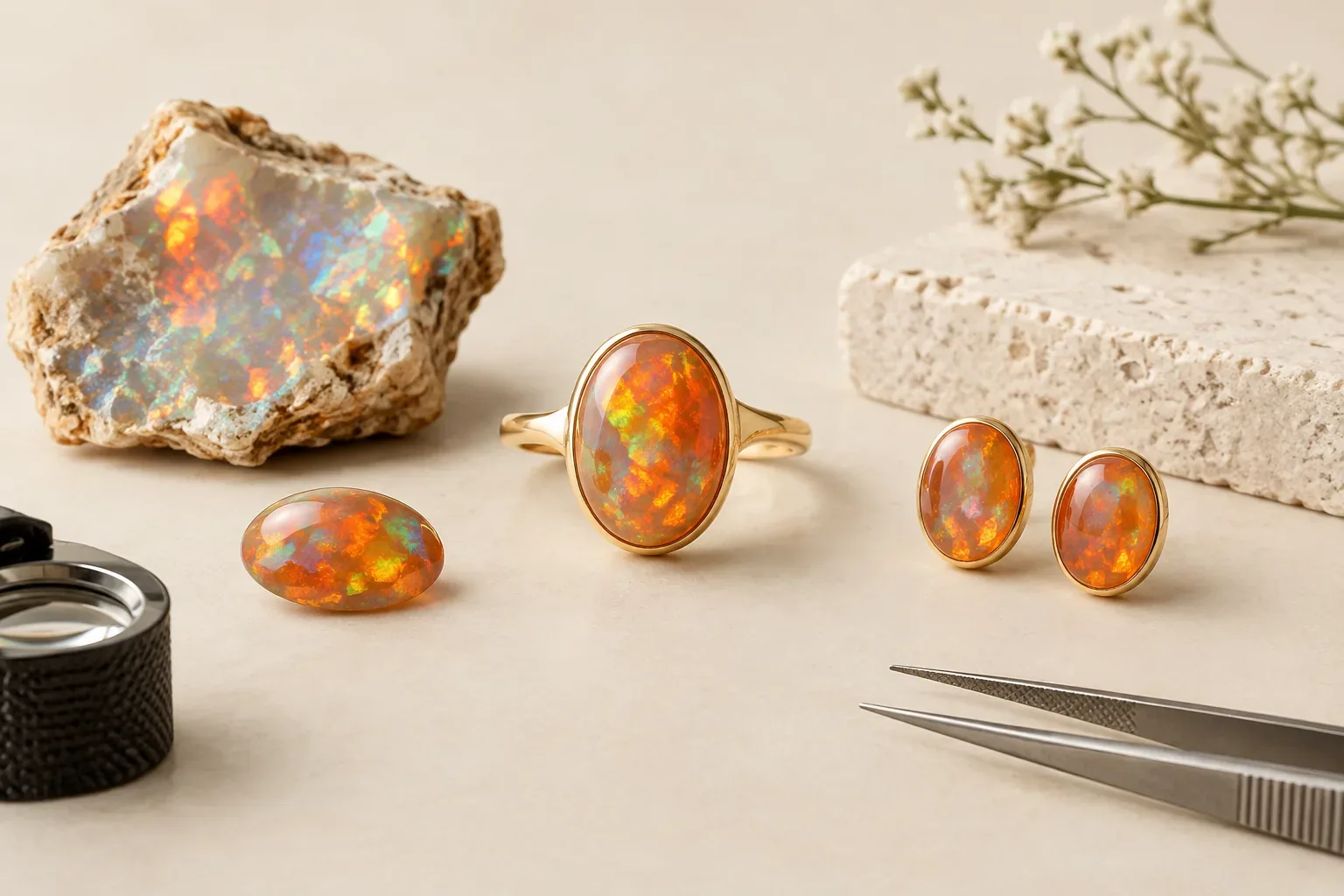
Trade reporting on current jewelry trends identifies opal and gemstone rings among popular categories, and designers often use fire opals in rings, pendants, and accent stones where their color and light are visible. Where durability matters most is in the choice of setting and the type of jewelry: rings and bracelets face frequent knocks and abrasion, while pendants and earrings usually experience less direct impact.
Because settings and mounting styles materially affect everyday risk, many jewelers prefer protective settings for softer or more fragile stones. Options such as bezel settings, raised bezels, partial bezels, and protective halo work to shield a stone's girdle and edges from direct knocks. In contrast, exposed prong settings show more of the stone but require careful use and occasional rebending or maintenance by a jeweler to keep the stone secure.
Decision criteria and practical trade-offs for daily wear
When deciding whether a fire opal is suitable for daily wear, weigh three practical factors: the wearer's daily activities, the chosen setting, and the seller's disclosure about treatments or stability. A low-contact lifestyle and a protective setting reduce risk; an active lifestyle or frequent hand-use increases the chance of damage and argues for more protective mounting or limiting wear to occasional use.
Expect trade-offs. A fully protective setting lowers the risk of chips or impact damage but hides more of the stone and can change the look. An open or prong setting showcases color and brilliance but increases vulnerability. Similarly, choosing a smaller stone reduces exposure and the chance of damage, but may alter the intended visual impact.
Safe care guidance and routine maintenance
Routines that reduce risk include removing the piece for housework, exercise, and gardening; storing it separately to avoid abrasion against harder gems and metals; and avoiding sudden temperature changes, harsh solvents and ultrasonic cleaners unless a qualified jeweler has confirmed the stone can tolerate them. Professional gemology sources emphasize that treatments and special-care needs create distinct consumer questions, so assume that specialized care guidance may apply.
For maintenance, periodic professional checks are valuable. A jeweler can inspect settings for loose prongs, rebend secure mountings, and advise on polishing or repolishing. If you notice cracks, clouding, or sudden changes in appearance, stop wearing the piece and consult a qualified jeweler or gemological laboratory for assessment and possible stabilization or repair.
What you should ask a seller and what only labs or qualified jewelers can verify
Ask any seller for clear, written disclosure about whether the stone is natural, treated, lab-created or an imitation. The Federal Trade Commission advises consumers to expect written seller disclosures that distinguish natural, lab-created, treated, cultured and imitation materials. Sellers should also state any known treatments and provide guidance on recommended care.
Understand the limits of consumer verification. Visual inspection and asking questions are useful but limited. Only a qualified jeweler with proper tools or an accredited gemological laboratory can reliably verify treatments, identify whether a stone is natural or lab-grown in ambiguous cases, and test for internal fractures or stability under heat. If the durability of the stone is a primary purchase criterion, request a laboratory report or independent appraisal before completing a purchase.
Selection and gifting guidance
If you are selecting or gifting a fire opal for frequent wear, choose a protective setting and ask the seller to confirm whether any treatments affect care. For an active recipient, consider designs that keep the stone low-profile or choose jewelry types that are less likely to be banged—pendants and earrings often present lower risk than rings or bracelets.
When gifting, include practical care instructions and recommend an annual check by a trusted jeweler. If the gift is intended as an heirloom or investment, purchase from a reputable source that offers transparent disclosure and, when available, a laboratory report. If you cannot obtain a lab report, make sure the seller provides clear written statements about authenticity and treatment so the recipient can seek independent verification later if necessary.
Final practical checklist
Before buying: request written disclosure about natural versus treated or lab-created status, ask about recommended settings for daily wear, and request or budget for a professional inspection if durability is a priority. During ownership: avoid harsh chemicals and extreme temperature changes, store pieces separately, and have settings inspected regularly by a jeweler. When in doubt about a stone's stability or treatment, consult an accredited gemological laboratory for authoritative testing.
This guide follows the evidence-led thesis to prioritize clear decision criteria, careful trade-offs, safe care guidance, and explicit limits on what consumers can verify without expert help. For trend context and market interest in opals and gemstone rings, see the reporting by Professional Jeweller and Imaginaire Digital; for treatment and disclosure principles consult the GIA; and for consumer disclosure expectations consult the Federal Trade Commission.
Frequently asked questions
Can I wear a fire opal every day?
Daily wear is possible but depends on your lifestyle, the setting, and any treatments the stone has received. Protective settings and low-impact daily routines reduce risk. If in doubt, ask the seller for written guidance and have a jeweler inspect the mounting regularly.
How should I clean a fire opal?
Avoid harsh solvents and ultrasonic cleaners unless a qualified jeweler confirms they are safe for your specific stone and any treatments. Gentle cleaning with a soft cloth and mild soapy water is a conservative approach; always dry thoroughly and avoid extreme temperature changes.
How can I verify whether a fire opal is natural or treated?
Request written disclosure from the seller and, when possible, a laboratory report. Only a qualified jeweler with the right tools or an accredited gemological laboratory can reliably detect many treatments or distinguish ambiguous cases.
What setting is best to protect a delicate gemstone?
Protective settings such as bezels or designs that shield the stone's edges reduce the chance of chips and impact damage compared with exposed prong settings. Discuss trade-offs between protection and visibility with your jeweler.
Can a jeweler resize a ring set with a fire opal?
A jeweler can often resize rings that contain gemstones, but resizing may require temporary removal or special precautions to avoid stress on the stone. Ask your jeweler in advance about their recommended process and any potential risks.
What documentation should I expect when buying a fire opal?
Expect clear written statements about whether the stone is natural, treated, lab-created or an imitation, and any known treatments. For higher-value pieces, seek an independent laboratory report or appraisal before purchase.
Sources and further reading
- Imaginaire Digital — Imaginaire Digital
- Professional Jeweller / PRYA Jewellery Search Insights — Professional Jeweller / PRYA Jewellery Search Insights
- Gemological Institute of America — Gemological Institute of America
- Federal Trade Commission — Federal Trade Commission