Meaning at a glance
This opal authenticity guide defines natural, lab-created, treated and imitation opals; explains what visual checks and seller disclosures can reasonably show; summarizes trade-offs for buyers and gifters; gives safe-care tips; and makes clear what only a qualified jeweler or gemological laboratory can verify.
Definitions and how they differ
Natural opal: material that formed in nature and was mined. Natural opals can be sold untreated, or they may have undergone treatments intended to improve stability or appearance. Because treatments affect value and care, the Gemological Institute of America (GIA) explains that treatments, detectability, and disclosure are central consumer concerns.
Lab-created opal: a synthetic product manufactured to reproduce opal’s internal structure and play-of-color. Lab-created opals are real opal material in the sense that their chemistry or structure imitates natural opal, but their origin is man-made. They can offer a lower-cost and more uniform alternative, and disclosure of lab origin is important under consumer-protection guidance.
Treated opal: a natural or assembled stone that has been deliberately altered after mining to change or stabilize its appearance. Treatment examples include dyeing, stabilization, or assembling with adhesives, and the GIA describes treatments and the need for disclosure because treatments affect durability and detectability.
Imitation opal: a non-opal material made to look like opal, such as glass, resin, or painted composites. These are not opal by composition and should be disclosed as imitators or simulants under Federal Trade Commission (FTC) guidance about buying gemstones and the need for clear distinctions among natural, lab-created, treated, and imitation materials.
Documented historical associations (what we can say safely)
Opal’s cultural and symbolic history has varied widely in different places and periods; those historical meanings are discussed in jewelry history literature and specialist sources rather than in consumer-protection or gem-treatment briefs. Today’s shoppers should treat historical symbolism as separate from authenticity. The contemporary marketplace interest in opals—seen in search and trend reports—reflects renewed popularity rather than a single, universal historical meaning. For example, trend analyses show rising consumer interest in opal and gemstone rings in 2026, indicating practical demand rather than a single cultural interpretation, as reported by Professional Jeweller / PRYA Jewellery Search Insights and Imaginaire Digital.
How opal appears in jewelry and what to look for
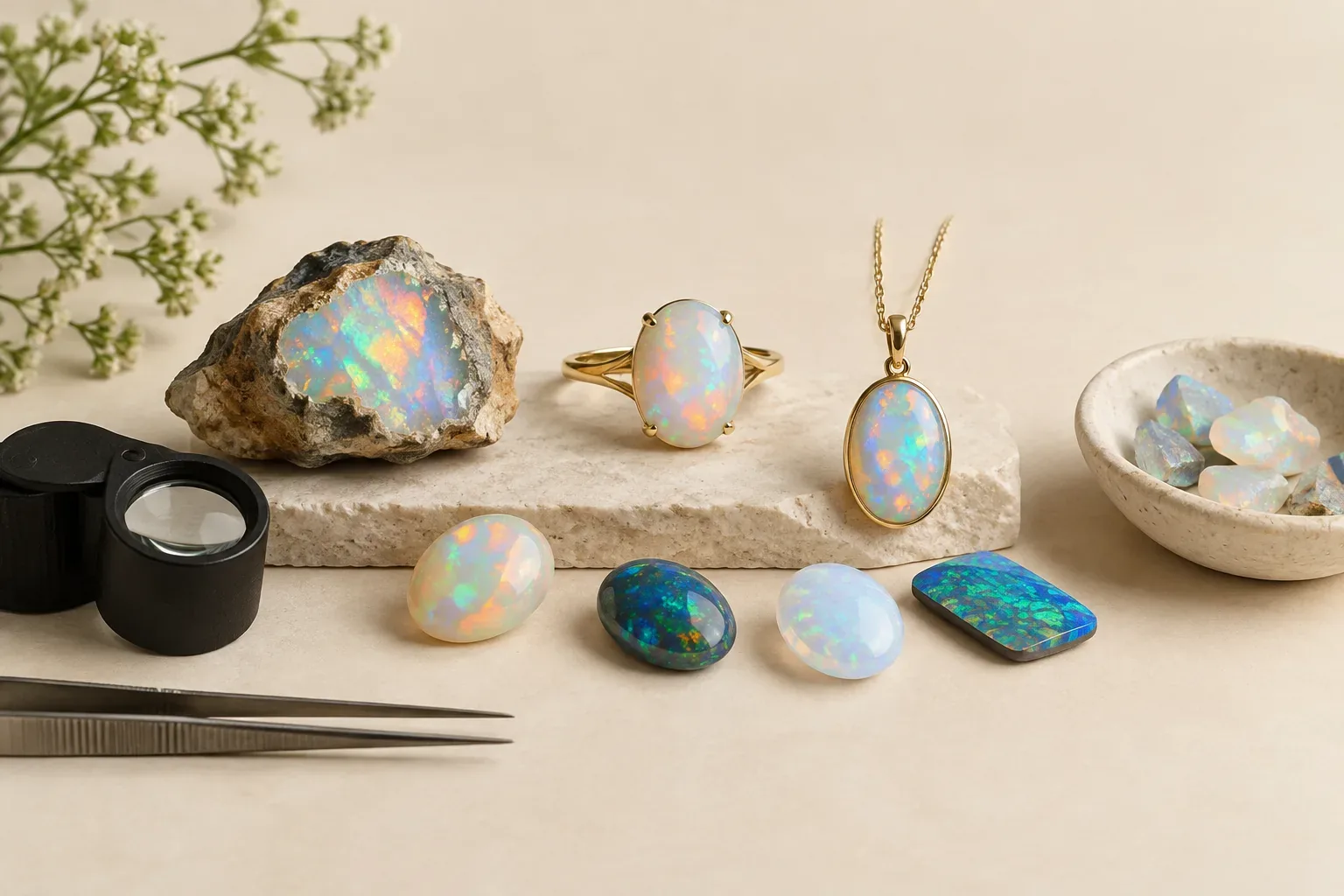
Opal appears in jewelry as solid cabochons, faceted stones (less common), doublets, triplets, inlays, and accent stones. Solid opals are single pieces of opal material. Doublets and triplets are assembled stones: a thin slice of opal is backed with another material (doublet) or backed and capped with a protective layer such as clear quartz or glass (triplet). The assemblies are lighter and less expensive than solid opal and can show strong play-of-color because a thin slice is used.
Visually, assembled stones often show a dark backing, a visible seam where layers meet, or a very uniform thin color layer around the edge when viewed under magnification. Imitations such as glass or resin can display bubbles, an overly even color pattern, or a lack of natural variation in play-of-color. Lab-created opals tend to have more regular internal patterns than natural opal; however, pattern regularity alone is not definitive.
Reasonable checks you can do as a shopper
Start with seller disclosure. The Federal Trade Commission requires clear distinctions among natural, lab-created, treated, and imitation materials and recommends written disclosure of origin and treatment where applicable. Ask for that in writing before purchase. Next, inspect under magnification: look for seams, visible backing, a clear cap (indicative of triplets), or tiny air bubbles (indicative of glass imitations). Observe play-of-color from different angles; lab-created opals may show a more regular pattern, while natural stones often show more randomized color patches.
Ask for weight and compare price against market expectations. Very low prices for a large, flawless opal should prompt caution and requests for disclosure. For higher-value purchases, request a gemological laboratory report that states origin and treatments. Only an accredited gem lab or qualified gemologist can reliably distinguish some treatments and confirm natural origin with instrumentation such as spectroscopy, specific gravity measurement, and microscopic analysis.
Trade-offs when choosing natural, lab-created, treated, or imitation opals
Natural untreated opal: valued for uniqueness and potentially greater resale value, but generally costlier and sometimes more fragile. Natural opals are more likely to show irregularities in pattern, inclusions, or color zoning that some buyers prize as indications of authenticity.
Lab-created opal: usually more affordable, consistent in appearance, and widely available. Lab-created opals make attractive choices for fashion jewelry or buyers who prioritize durability and price predictability, but they lack the rarity premium of natural stones.
Treated opal and assembled stones (doublets/triplets): lower in cost and often designed for durability or intensified appearance. These are practical choices for statement pieces or jewelry intended for occasional wear, but treatments and assemblies reduce intrinsic value and can affect repair and long-term care.
Imitations: the least expensive option for an opal look. Appropriate when appearance is the sole concern, but purchasers should not be misled into thinking the piece is real opal; FTC guidance emphasizes accurate labeling and disclosure.
Safe care guidance
Opal care depends on origin and treatment. The GIA emphasizes that treatments and durability vary by gemstone and that care instructions should reflect any known treatments. As a general rule, avoid thermal shock, strong chemicals, and ultrasonic cleaners for opal or assembled pieces, and remove opal jewelry before heavy or abrasive activity. Triplets and doublets are vulnerable at the seams and may separate if exposed to prolonged moisture, heat, or solvents.
Store opal jewelry separately in a padded box to prevent scratching from harder gems and metals. If a seller has disclosed a treatment, ask how that treatment changes cleaning and storage recommendations. For valuable pieces, ask your jeweler for a conservation plan and for contact information for a qualified watchmaker or jeweler experienced with opal repairs.
Selection and gifting guidance
When selecting or gifting opal: ask the seller for written disclosure of whether the stone is natural, lab-created, treated, assembled, or an imitation. For special-occasion gifts such as engagement rings, consider requiring a gemological report for any opal of significant value. Think about the recipient’s lifestyle: choose solid opal set in a protective bezel or choose lab-created opal if daily wear and low maintenance are priorities.
Be respectful about symbolism: historical or personal meanings vary, so present any symbolic message as personal rather than universal. If the recipient prefers ethical sourcing, ask the seller about origin documentation and traceability, and be prepared that for many opals only industry-standard invoices or mining-region statements may be available rather than formal chain-of-custody certificates.
What only a jeweler or gemological laboratory can confirm
Several important authenticity questions require professional equipment and expertise. A gem laboratory can distinguish natural from lab-created opal using spectroscopy and microscopic features, identify many types of treatments, determine whether an opal is a solid or an assembled doublet/triplet, and sometimes determine the geographic origin of high-value stones. Home checks and visual inspection are useful filters for initial skepticism, but they do not replace laboratory testing for provenance, treatment identification, or valuation.
If a seller claims a stone is untreated natural opal or that a lab report exists, ask to see the certificate and verify the issuing laboratory’s credentials. The FTC underscores that consumers deserve clear, written disclosures; the GIA explains that detectability and disclosure of treatments are central to responsible selling and buying.
Frequently asked questions
How can I tell if an opal is natural or lab-created?
Visual checks such as pattern regularity, visible seams, bubbles, or a layered construction can raise suspicion but are not definitive. Ask the seller for written disclosure and, for high-value stones, a gemological laboratory report. Only a qualified gemologist or lab can reliably confirm natural origin through instrumented testing.
What is an opal doublet or triplet and how do I spot one?
A doublet is an assembly with an opal slice bonded to a backing; a triplet adds a clear cap. Look for a visible seam at the edge, a dark backing, or a thin color layer under magnification. Sellers should disclose assemblies; if they do not, request written confirmation.
Do sellers have to disclose treatments or origin?
Yes. The Federal Trade Commission expects sellers to clearly distinguish natural, lab-created, treated, and imitation gemstones and to provide written disclosure of origin and treatments where applicable.
Can I clean my opal at home?
Avoid ultrasonic cleaners and harsh chemicals. Gentle cleaning with a soft, damp cloth is the safest general advice, and you should follow any specific care instructions tied to disclosed treatments. For valuable or treated pieces, ask the seller or a qualified jeweler for specific cleaning guidance.
Are lab-created opals 'real' opals?
Lab-created opals are man-made but designed to replicate opal’s structure and appearance. They are authentic as lab-grown products but are not mined natural material; their origin should be disclosed and considered when assessing value and resale expectations.
What should I ask for when buying an opal as a gift?
Ask for written disclosure of whether the stone is natural, lab-created, treated, assembled, or an imitation; request any available gemological report for higher-value pieces; choose a durable setting for everyday wear; and verify return and repair policies before purchase.
Sources and further reading
- Imaginaire Digital — Imaginaire Digital
- Professional Jeweller / PRYA Jewellery Search Insights — Professional Jeweller / PRYA Jewellery Search Insights
- Gemological Institute of America — Gemological Institute of America
- Federal Trade Commission — Federal Trade Commission