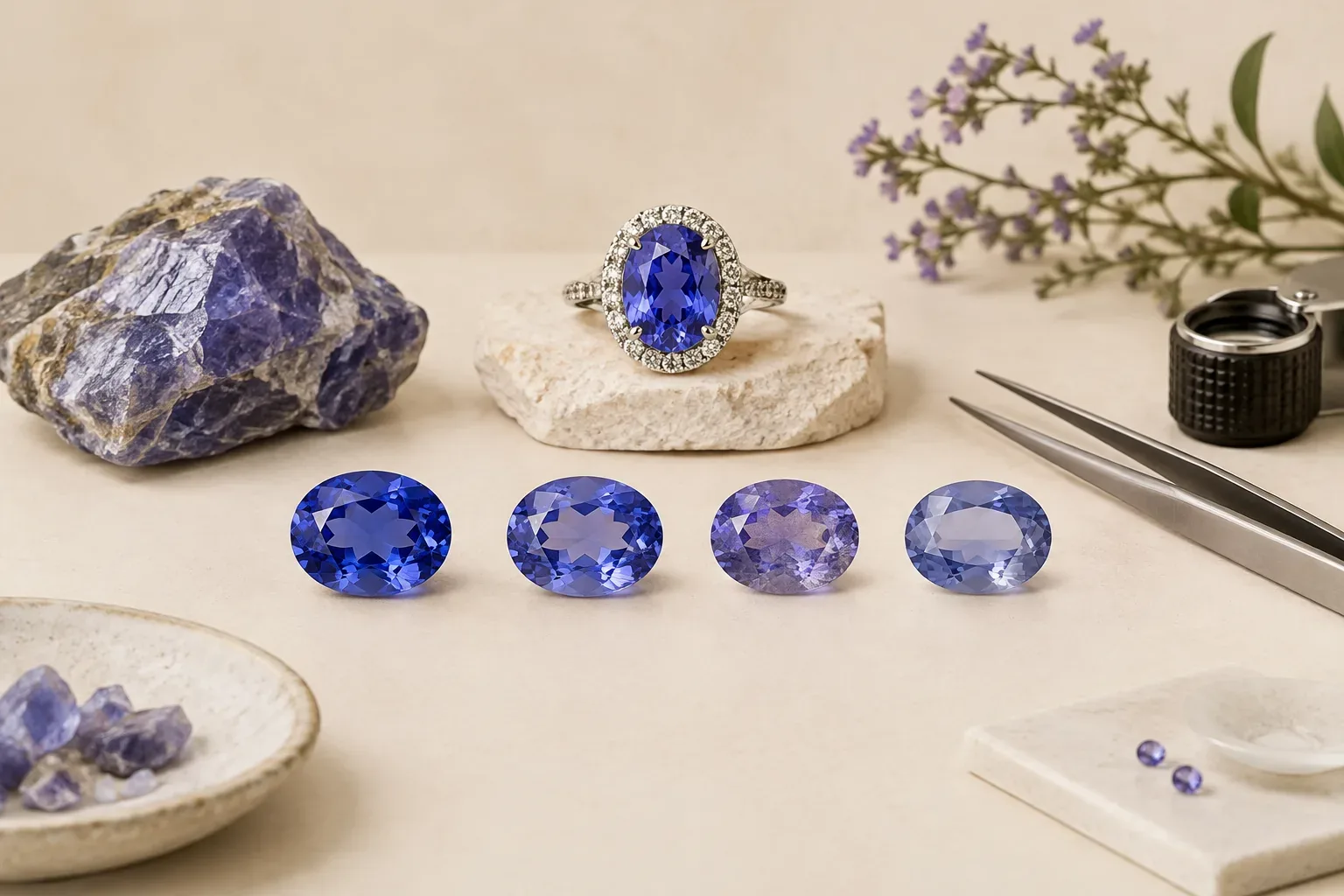
Meaning at a glance
This tanzanite authenticity guide defines natural, lab-created, treated and imitation stones; explains practical verification limits for shoppers; lists decision trade-offs; offers safe care advice; and recommends the documentation and seller practices the FTC and GIA say buyers should expect.
What 'authenticity' means and why it matters
When people ask whether a tanzanite is authentic they may mean any of several claims: that the stone is the mineral zoisite of natural origin; that it was not created in a laboratory; that it received no enhancement; or that it is not a glass or synthetic substitute. Each claim has different implications for value, care and resale, so a clear, evidence-based definition matters before purchase.
Regulatory guidance from the Federal Trade Commission emphasizes written seller disclosure and clear language differentiating natural, lab-created, treated, and imitation materials. The Gemological Institute of America explains that treatments, their detectability, and durability are central consumer concerns, and that disclosure and laboratory testing are the reliable ways to resolve them.
Historical context and cultural associations
Tanzanite does not have an extensive pre-modern cultural history recorded in the sources used for this article. The stone’s presence in modern markets and marketing is a contemporary phenomenon rather than an ancient cultural tradition according to the trade and gemological literature available here.
Modern associations—such as tanzanite’s place in birthstone or fashionable gemstone jewelry—are part of late 20th and early 21st century gem trade practices and consumer trends. Trade and retail analyses show growing consumer interest in colored gemstones and birthstone necklaces, and professional jewelry reporting lists gemstone rings and sculptural gemstone pieces among current market trends. These are modern cultural patterns tied to the contemporary jewelry market, not ancient symbolic systems.
Documented meanings vs modern personal interpretations
Documented historical meanings are minimal for tanzanite in the sources used for this guide. There is no body of ancient ritual or long-standing cultural symbolism for tanzanite cited here, so claims of centuries-old meanings should be treated cautiously unless supported by specific historical scholarship.
Modern personal interpretations are common and valuable as individual expressions. Buyers and gift-givers commonly assign meanings such as calming energy, spiritual insight, or a modern birthstone association. These contemporary meanings reflect personal or marketing choices rather than documented historical traditions, and should be described as modern interpretations.
Natural, lab-created, treated, and imitation: clear definitions
Natural: A natural tanzanite is a mineral specimen formed in nature. Natural stones can vary widely in color, clarity and inclusions and may have been enhanced by heat or other treatments after mining. The FTC makes a clear distinction between natural and lab-created gems and expects accurate labeling by sellers.
Lab-created (synthetic): A lab-created gemstone has the same chemical and physical species as the natural mineral but was grown in controlled conditions. Lab-created stones can be visually similar or identical to natural stones and must be disclosed as lab-grown. For important purchases, a laboratory report will state whether a stone is natural or laboratory-grown.
Treated: Many colored gemstones are treated to improve or stabilize color and clarity. Heat treatment is a common enhancement for various gems; the Gemological Institute of America highlights that some treatments are pervasive and that their detectability varies. Sellers should disclose treatments, and some treatments have implications for how the stone should be cared for.
Imitation: An imitation is a different material (glass, cubic zirconia, or another simulant) fashioned to resemble tanzanite. Imitations are not the same mineral and should be labeled as simulants or imitations.
How tanzanite appears in jewelry
Tanzanite is used across many jewelry types including rings, pendants, earrings and bracelets. Trade reporting and search trend data indicate continued consumer interest in gemstone rings, birthstone necklaces and sculptural or cluster settings, which often feature colored gems like tanzanite. Jewelry designers use tanzanite as center stones in engagement rings, as accent stones in cluster or halo settings, and as matched pairs in earrings.
Design choices affect how a stone is set and cared for. Deep settings and protective halos are common for more fragile or softer jewels, while open prong settings maximize light return but expose the stone to knocks. When selecting a piece, consider how the setting protects the stone and whether the piece suits the wearer’s daily activities.
What you can reasonably verify yourself and what requires a professional
Plainly visible evidence a buyer can check includes seller disclosure statements, the presence of a written return policy or guarantee, and the existence of any accompanying laboratory report. Inspect the mounting for obvious glue, inconsistencies, or mismatched polish that might indicate a simulant or composite piece. Ask whether the seller will guarantee authenticity in writing.
However, distinguishing a natural tanzanite from a visually identical lab-grown example, detecting some heat or other treatments, or confirming geographic origin usually requires gemological instruments and an experienced analyst. The Gemological Institute of America notes that detectability and the need for specialized testing vary by treatment; the Federal Trade Commission states that consumers should expect accurate labelling and that certain claims cannot reliably be verified without laboratory analysis.
Practical selection and gifting guidance
Ask the seller for clear, written disclosures specifying whether the stone is natural, lab-created, treated, or a simulant, and request accompanying paperwork such as a gem lab report for larger purchases. Follow the FTC’s guidance that sellers should use plain language and provide accurate descriptions so you can compare offers on an apples-to-apples basis.
For gifts, consider the recipient’s priorities. If provenance and natural origin matter, budget for a stone with an independent laboratory report. If visual appearance and value-for-money are the priority, a disclosed lab-created stone can be an attractive and more affordable option. Make sure any retailer offers a reasonable return policy and post-purchase support including cleaning and care guidance.
Trade-offs buyers should weigh
Natural stones typically carry a premium for perceived rarity and resale value, but they vary more in appearance and may require documentation to support origin claims. Lab-created stones are often lower in price for the same size and visual quality and can be an ethical or budget-conscious choice when fully disclosed. Treated natural stones may look better and cost less than untreated naturals, but the type of treatment can affect durability and care requirements.
Imitations will be significantly less expensive but are different materials entirely. If appearance is the only concern, an imitation may satisfy a budget; if authenticity, investment or heirloom potential matter, insist on natural material with verifiable documentation.
Safe care guidance
Because treatments and material hardness differ, follow the seller’s care instructions and avoid high heat, harsh chemicals, or ultrasonic cleaners if the seller or lab report warns against them. The Gemological Institute of America emphasizes that treatment and durability considerations create specific care needs for gemstones, and that proper cleaning and handling extend a gem’s life.
A sensible baseline is to remove jewelry before activities that risk knocks, store pieces separately to avoid abrasion, and use gentle soap with a soft brush for routine cleaning unless a lab report or seller indicates otherwise. For valuable or treated stones, consult a qualified jeweler before using mechanical or steam cleaning methods.
When to ask for a laboratory report and a qualified jeweler
Request a gemological laboratory report for significant purchases or when the seller’s disclosures are unclear. A reputable report will state whether a stone is natural or lab-grown, list detected treatments, and sometimes provide information about weight and measurements. The FTC’s guidance and the GIA’s materials both support the use of lab reports as the standard means of resolving technical authenticity questions.
If a seller resists providing reasonable documentation or a written return policy, consider walking away. For stones intended as investments or heirlooms, the extra cost of testing and clear paperwork is usually justified by the greater certainty it provides.
Final practical checklist before buying
Obtain written seller disclosure that uses plain language to say whether a stone is natural, lab-created, treated, or an imitation. Request any available laboratory reports and examine the retailer’s return and repair policies. Consider how the setting protects the stone and whether the piece suits the wearer’s lifestyle.
When in doubt about origin or treatment, seek a qualified independent gemologist or a recognized gem lab. The FTC and GIA recommend relying on lab testing and professional assessment for claims consumers cannot verify visually or with simple inspection.
Frequently asked questions
Can I tell if a tanzanite is natural just by looking at it?
Not reliably. Visual inspection can reveal whether a piece is obviously an imitation, but distinguishing a natural stone from a lab-created one or detecting many treatments generally requires gemological instruments or a laboratory report. The FTC and GIA advise buyers to rely on written seller disclosure and lab reports for those determinations.
What documentation should I ask for when buying tanzanite?
Ask for clear written disclosure stating whether the stone is natural, lab-created, treated, or an imitation, and request any available independent laboratory reports for larger purchases. Also confirm the seller’s return policy and any warranties in writing, consistent with FTC guidance on transparent disclosure.
Are treated tanzanites less valuable or harder to care for?
Treatment affects both value and care depending on the specific process. Some common treatments improve color and are widely accepted in trade, but they can alter durability or cleaning recommendations. The GIA recommends buyers be informed about treatments and follow care guidance specific to any enhancements disclosed by the seller.
Is a lab-created tanzanite a good option?
A lab-created tanzanite can offer the same species and visual appeal at a lower price and with potentially fewer inclusions. If you value natural origin, a lab-created stone is not a substitute. Sellers must disclose lab-grown status, and the choice depends on your priorities for budget, appearance and provenance.
When should I get an independent lab report?
Obtain a lab report for significant purchases, stones of substantial size or value, or when a seller’s disclosures are incomplete. Independent reports resolve technical questions such as natural versus lab-grown status and detected treatments, which are matters the GIA and FTC identify as requiring expert analysis.
Sources and further reading
- Imaginaire Digital — Imaginaire Digital
- Professional Jeweller / PRYA Jewellery Search Insights — Professional Jeweller / PRYA Jewellery Search Insights
- Gemological Institute of America — Gemological Institute of America
- Federal Trade Commission — Federal Trade Commission