Meaning at a glance
Clean spinel gently with warm water, mild soap and a soft brush when the stone and setting are intact and the seller confirms no risky treatments; avoid harsh chemicals, silver dips, and ultrasonic or steam cleaning unless a qualified jeweler or laboratory has confirmed those methods are safe for that specific piece.
Quick answer
This spinel cleaning guide: for routine dirt and oils, use warm water, a mild dish soap, and a soft brush or cloth after confirming the stone and setting are sound and that there are no undisclosed treatments. Avoid harsh chemicals, silver dips, and aggressive cleaning methods such as ultrasonic or steam unless a qualified jeweler or gemological laboratory has inspected the stone and confirmed such methods are safe for that specific piece. For any doubt about treatments, adhesive mounts, loose stones, or visible damage, stop and consult a professional.
What the historical evidence shows (and what it doesn't)
The approved references for this guide focus on consumer protection, gem treatments, and contemporary trends rather than documenting cultural symbolism for individual stones. The Gemological Institute of America (GIA) frames consumer questions around treatments, detectability, durability, and special care, rather than providing a catalog of historical meanings. The Federal Trade Commission (FTC) emphasizes clear seller disclosure so buyers understand whether a gemstone is natural, treated, lab-created, or an imitation, which affects how it should be cared for.
Trade and trend reports from Imaginaire Digital and Professional Jeweller highlight modern market interest in gemstone rings, sculptural jewelry, and birthstone pieces, showing that gemstones including spinel are part of current consumer demand. These publishers document market presence and popularity in recent years but do not substitute for primary historical or cultural scholarship about symbolic uses of spinel in specific eras or cultures.
Documented historical meanings versus modern personal interpretations
Because the approved sources do not provide detailed historical accounts of spinel’s symbolic uses in particular cultures or periods, this guide does not attribute any universal historic meaning to the stone. Where historic symbolism is absent from the cited material, any claims about long‑standing cultural meanings would be modern interpretation or modern retail storytelling rather than evidence from the sources in this brief.
Modern personal interpretations of spinel—what an individual wearer attributes to the stone—are valid as personal meaning, but they are distinct from documented historical facts. The FTC guidance reminds shoppers to distinguish seller claims about origin, treatment and identity from subjective claims about symbolism, and the GIA guidance makes the same point in the context of treatments and durability.
How spinel typically appears in jewelry today
Contemporary jewelry trade reporting shows a clear presence of colored gemstones in rings, necklaces, and cluster compositions, which is the context in which spinel commonly appears in modern designs. Trade publishers note growth in sculptural jewelry, gemstone rings and clustered designs, and spinel fits naturally into those categories due to its range of colors and availability in faceted and cabochon cuts, as sellers and designers adopt colorful stones in place of or alongside traditional diamonds and other gems.
In practice, spinel is used as a center stone in engagement-style rings, as accent stones in multi-gem designs, and in pendants and earrings. The stone’s use in a piece affects how the piece should be cleaned; for example a delicate cluster setting can trap dirt and require more frequent gentle cleaning, while a bezel setting may protect the stone but complicate access to the girdle for inspection.
Decision criteria before you attempt home cleaning
Before you clean any gemstone, verify four things: disclosure status, the mount or setting type, the presence of visible damage or loose stones, and the value or rarity of the piece. The FTC specifically recommends that consumers seek clear disclosure from sellers about whether a gem is natural, lab-created, treated, or an imitation because those facts affect durability and care.
If the seller or paperwork is unclear about treatment or the stone is unset, fractured, visibly filled, glued into the setting, or set with delicate surrounding materials, do not proceed with home cleaning. The GIA warns that treatments and certain stabilizing processes create special care needs and can be difficult or impossible to identify without proper testing, so uncertain cases should be evaluated by a qualified jeweler or gemological laboratory.
Safe at-home cleaning methods
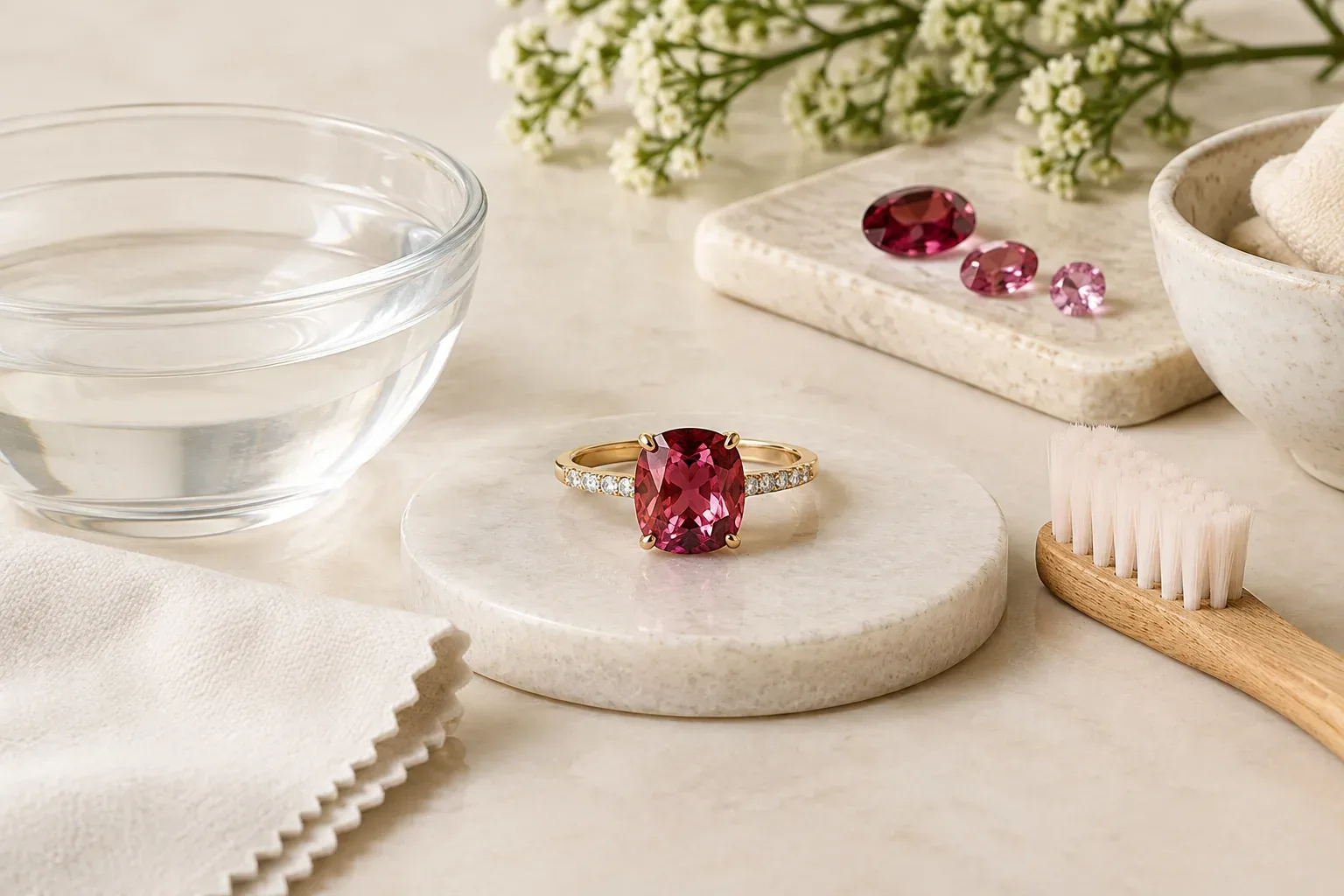
For routine cleaning of a spinel that a seller has confirmed is stable and properly set, use warm tap water, a drop or two of mild dish soap, and a soft brush such as a clean soft toothbrush. Work gently to remove oils and surface dirt, rinse thoroughly with warm water, and dry with a soft lint-free cloth. Allow any moisture trapped under settings to evaporate fully before storing.
Handle the piece over a soft surface or a bowl so stones cannot bounce away if a prong fails, and clean pieces one at a time to avoid mixing small components. Remove jewelry before activities that expose it to harsh chemicals, heavy impact, or prolonged immersion so that the stone and its setting are not stressed between cleanings.
What to avoid
Avoid bleach, acetone, ammonia-based cleaners, household silver dips, and jewelry cleaners intended for plated or porous materials, because those products can attack metal finishes, remove plating, or react with any stabilizing treatments. The FTC’s consumer guidance about products and disclosures applies: unless the seller has explicitly confirmed compatibility, do not use aggressive chemical cleaners on gemstones.
Avoid ultrasonic and steam cleaners unless a qualified jeweler has inspected the stone and confirmed it is free of fracture fills, adhesives, porous treatments, or other vulnerabilities. Ultrasonic and steam cleaners are effective but can worsen or reveal damage in treated or fragile stones, and GIA guidance highlights that treatment detection and special-care needs are a key reason to consult experts when in doubt.
When to seek professional help or laboratory testing
Seek professional cleaning or laboratory testing if the spinel is of high value, if you suspect treatments, or if the stone is loose, chipped, has cracks, or is held with adhesives. A qualified jeweler can perform a safe ultrasonic or steam clean when appropriate and can check prongs, solder joints, and settings. If identity, origin, or treatment status is important to the purchase or gift, request written disclosure from the seller or a gemological report from an accredited laboratory.
Remember that some treatments and origin claims cannot be definitively confirmed by visual inspection alone. Per the FTC and the GIA, only trained gemological laboratories can reliably test for certain treatments or origin particulars, so use a lab report when the stone’s condition materially affects its value or your cleaning options.
Practical trade-offs: speed, cost, and risk
Home cleaning is inexpensive and effective for routine dirt but offers limited assurance about internal condition or hidden treatments. Professional cleaning costs more but reduces the risk of damaging the stone or its setting and provides an opportunity for inspection and maintenance. Ultrasonic and steam methods can deliver superior cleanliness but carry higher risk for treated or fractured gems.
When choosing how to proceed, weigh the stone’s monetary and sentimental value against the cost of expert service. For a casual fashion piece with clear seller disclosure of stability, gentle home care is sensible. For heirlooms, engagement rings, or pieces whose treatment status is uncertain, professional evaluation before aggressive cleaning is the safer long-term choice.
Selection and gifting guidance
If you plan to buy or gift a spinel, ask the seller for written disclosure about whether the stone is natural, lab-created, treated, or imitation, because those facts determine suitable cleaning methods and affect long-term care costs. The FTC requires clear distinctions among these categories, and having written information helps you give the recipient accurate care instructions.
Consider the recipient’s lifestyle when selecting a setting. A bezel or low-profile setting offers protection for active wearers, while prong-set stones are more exposed and will need more frequent inspection. Include a printed care note recommending mild soap and water cleaning and advising the recipient to avoid harsh chemicals and to seek professional inspection if the stone appears loose or damaged.
Final thoughts
This spinel cleaning guide emphasizes careful decision-making and conservative home care for routine cleaning, while highlighting the limits of what a buyer or owner can safely verify without an expert. Use warm water and mild soap for everyday cleaning, avoid aggressive chemicals and unverified ultrasonic or steam methods, and rely on written disclosures or a qualified jeweler or gem lab when treatment status or structural integrity is uncertain.
Following these principles protects the stone and the setting and reduces the risk of inadvertently damaging a piece whose internal condition or treatment history you cannot conclusively determine at home.
Frequently asked questions
Can I use an ultrasonic or steam cleaner on spinel?
Only when a qualified jeweler has inspected the stone and confirmed it is free of fracture fills, adhesives, porous treatments, or other vulnerabilities. The Gemological Institute of America highlights that treatments and special-care needs can make ultrasonic and steam cleaning risky, and the Federal Trade Commission recommends relying on clear seller disclosures or professional assessment if the treatment status is unclear.
What is the safest at-home cleaning method for spinel?
For routine cleaning, use warm water with a small amount of mild dish soap, a soft brush or cloth, a thorough rinse, and a soft lint-free cloth to dry. Handle the piece over a soft surface and avoid aggressive scrubbing or chemicals.
How can I tell if a spinel has been treated or needs special care?
You cannot reliably determine many treatments by visual inspection alone. The FTC advises buyers to request written disclosure from the seller about whether a gem is natural, lab-created, treated, or imitation, and the GIA notes that certain treatments affect durability and care and often require laboratory testing to detect.
When should I take a spinel to a jeweler instead of cleaning it myself?
If the stone is loose, chipped, cracked, glued into its setting, or if you suspect it has been treated, stop home cleaning and consult a qualified jeweler. Also consult a jeweler before using ultrasonic or steam cleaning.
Are household silver dips or bleach safe for cleaning spinel jewelry?
No. Avoid bleach, acetone, ammonia-based cleaners, and silver dips because they can damage metal finishes, remove plating, or react with treatments. Use only mild soap and water unless you have documented confirmation that other products are safe for that specific piece.
How often should I clean spinel jewelry?
Clean routinely as needed for light dirt and oils, which for most wearable pieces means every few weeks or monthly depending on use. Remove jewelry for activities that expose it to chemicals, heavy wear, or prolonged immersion to reduce the need for cleaning.
What documentation should I request when buying spinel as a gift?
Request written disclosure about whether the gem is natural, lab-created, treated, or imitation, any available care instructions, and a warranty or return policy. For higher-value stones, ask for a gemological report from an accredited laboratory to confirm identity and treatment status.
Sources and further reading
- Imaginaire Digital — Imaginaire Digital
- Professional Jeweller / PRYA Jewellery Search Insights — Professional Jeweller / PRYA Jewellery Search Insights
- Gemological Institute of America — Gemological Institute of America
- Federal Trade Commission — Federal Trade Commission