Meaning at a glance
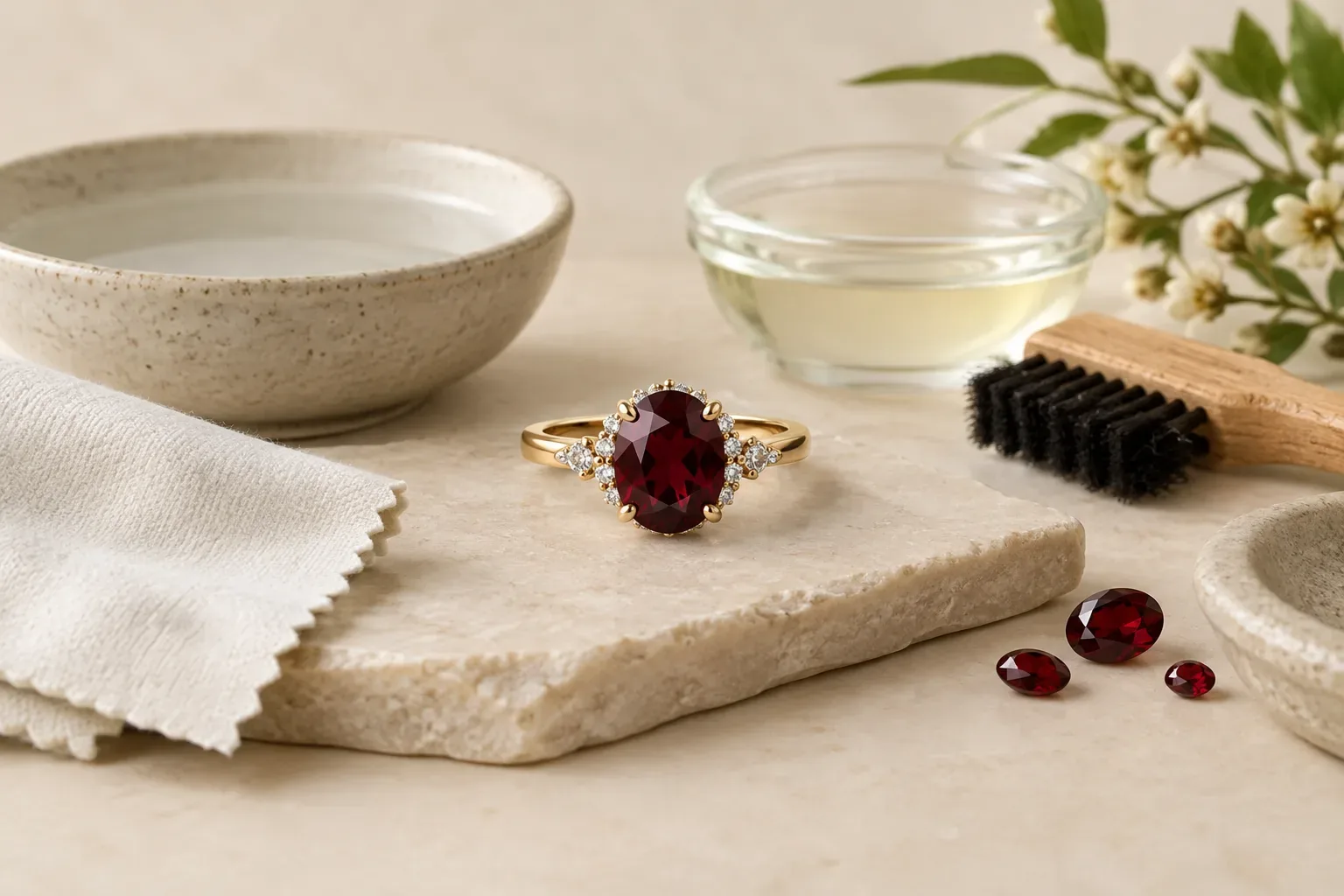
Use gentle warm soapy water, a soft brush, and a lint-free cloth for most garnets; avoid harsh chemicals, unknown ultrasonic or steam cleaning for stones of uncertain treatment or condition; for identification, treatments, or repairs, seek a qualified jeweler or gemological laboratory.
Direct answer: the short, evidence-led recommendation
For most garnet jewelry the safest home method is warm (not hot) water with a mild liquid dish soap, a soft toothbrush or cloth to remove dirt from settings, followed by a thorough rinse and gentle drying with a lint-free cloth. This balances effective cleaning with low risk to the stone and metal. Avoid strong chemicals (bleach, ammonia), abrasive cleaners and household ultrasonic or steam cleaners when the stone’s identity, treatments, or internal condition are unknown. The Gemological Institute of America (GIA) emphasizes that treatments and durability create distinct consumer questions, and the Federal Trade Commission (FTC) requires sellers to disclose material facts that affect care and value; when you need certainty about treatment, origin or repair, rely on a qualified jeweler or a gemological laboratory for testing.
What the historical evidence shows — and what it doesn’t
Many popular summaries and non‑specialist reference works associate garnet with several historical periods and cultures—Ancient Egypt, classical Rome, medieval Europe and Victorian‑era jewelry are frequent attributions in general trade writing. Those associations appear widely in consumer literature and decorative arts summaries, but the set of approved sources for this article do not provide primary historical documentation for those claims.
Specifically, the four authoritative sources used for this guide focus on modern consumer issues, trade trends and gem treatment and disclosure rather than producing a catalogue of historical uses. The Gemological Institute of America (GIA) material used here addresses treatments and care questions rather than tracing cultural symbolism, and the Federal Trade Commission (FTC) guidance covers buyer protections and disclosure rather than historic meanings. Because primary historical evidence is not present in these approved sources, readers should treat common historical attributions as popular or trade‑level summaries unless verified in museum catalogues, specialist gemological histories or primary archival material.
Documented historical meanings versus modern personal interpretation
Documented historical meanings require documentary or archaeological evidence in specialist sources. Because the approved sources supplied for this article do not include those specialist historical records, this guide does not claim any particular historical symbolism for garnet as a documented universal fact. When selling or buying, sellers should provide written disclosures about provenance or claimed historical significance, as the FTC advises for any material facts that affect value.
Modern interpretations and personal meanings are common and widely used in marketing and gift giving. Contemporary trade reports and search insights show growing demand for gemstone pieces that carry personal meanings—birthstone necklaces, charm clusters, sentimental lockets and rings are specifically noted by Professional Jeweller and PRYA Jewellery Search Insights and by Imaginaire Digital as consumer trends. Those modern uses reflect personal and cultural tastes today rather than certified historical symbolism.
How garnet typically appears in jewelry today
Garnets appear across a broad range of jewelry types: rings, earrings, pendants, bracelets and cluster charms. Trade research reported by Professional Jeweller highlights growth in gemstone rings and necklaces and a renewed interest in sculptural and clustered settings that often incorporate colored stones such as garnet. Imaginaire Digital’s search insights for 2026 also show continuing demand for staple categories that often include gemstones—engagement rings, necklaces and stud earrings—which informs how garnet is being used commercially.
In practice you will see garnets set in everything from minimalist bezel settings to vintage cluster rings. The stone’s deep red varieties are most familiar to shoppers, but garnet is a family with multiple species and colors; modern jewelry design often uses different garnet tones for contrast or to match metalwork. Because these trade patterns come from contemporary market reporting, they reflect what buyers and designers are choosing now rather than historical prescription.
Safe home cleaning methods — step by step
Start by assessing the piece. Look for loose prongs, cracks, heavy surface dirt, or glued repairs. If you see any of those, stop and take the piece to a qualified jeweler before attempting to clean it at home. For intact pieces without apparent damage, prepare a basin of warm water and add a few drops of a mild, non‑bleach liquid dish soap.
Gently place the jewelry in the soapy water and let it soak for a few minutes. Use a soft toothbrush or a soft cloth to remove dirt from beneath the stone and around the setting; work slowly and avoid forcing the brush into prong areas. Rinse thoroughly under warm running water to remove soap residues, and dry by patting with a lint‑free cloth. Allow the piece to air dry fully before storing.
For delicate settings (antique pieces, filigree, glued cabochons) or pieces containing multiple stone types, use a soft cloth only; do not soak. Always remove jewelry before bathing, swimming, gardening or heavy exercise to reduce exposure to chemicals and knocks.
What to avoid — clear limits and why they matter
Avoid bleach, household degreasers, acetone, and other harsh chemicals. These compounds can damage metal finishes, remove plating, or interact unpredictably with adhesives and certain treated stones. Do not use abrasive polishes or pads on stones or settings, as they can scratch metal and some gem surfaces.
Do not use an ultrasonic cleaner or steam cleaner unless you are sure of the stone’s identity, treatment history and internal condition. The GIA notes that treatments, detectability and durability vary among gemstones; ultrasonic and steam machines can dislodge stones, worsen fractures, or remove surface treatments. If a seller cannot confirm that a garnet is safe for ultrasonic or steam cleaning, treat it as if it could be vulnerable.
Avoid thermal shock—rapid temperature changes such as moving a hot piece into cold water—because sudden shifts can crack some stones or damage settings.
When to seek professional testing or repair
If a stone is chipped, cracked, loose in its setting, or appears cloudy after cleaning, stop home treatments and consult a professional jeweler. For any question about whether a garnet has been treated, assembled from multiple components, or substituted with an imitation, formal identification is required. The GIA emphasizes that many material questions require laboratory tests, and the FTC requires clear disclosure of material differences such as treatments or synthetic origin.
Request written documentation from sellers for any high‑value garnet or when provenance, treatment and origin materially affect value. For valuable or unusual stones, ask your seller for a gemological report or a referral to a recognized laboratory.
Practical and respectful selection or gifting guidance
When selecting a garnet as a gift, consider the recipient’s style and daily activities. Choose protective settings—bezel or halo settings, lower profiles or secure prongs—for rings and frequently worn pieces to reduce the chance of knocks. For sentimental gifts that reference personal meaning, be explicit about whether the symbolism is a modern sentiment (for example, as a birthstone or Valentine’s color) rather than an asserted historical truth.
Ask the seller for written disclosures covering whether the stone is natural, treated, lab‑created or an imitation, and whether any repairs or alterations have been performed. The FTC specifically requires sellers to disclose material facts that would influence a buyer’s decision. If the piece is antique or has uncertain provenance, consider professional documentation or a condition report before gifting.
A simple care checklist to follow
Clean with warm soapy water and a soft brush when needed, then rinse and dry thoroughly. Inspect settings periodically and remove jewelry for heavy work and swimming. Store pieces separately in soft pouches or compartments to avoid metal and stone abrasion. For valuable, fragile, or historically significant items, schedule professional cleanings and inspections rather than attempting home repairs.
Limits on verification you can do at home
At home you can check for obvious issues: loose settings, chips, discoloration, or surface residue. You cannot reliably determine treatment history, species within the garnet family, origin or whether a stone is natural versus lab‑created or an imitation using only visual inspection. The GIA and the FTC both make clear that treatment detectability and truthful disclosure are specialized tasks; accurate identification often requires gemological testing such as spectroscopy or microscopy performed by a qualified lab.
If knowing the stone’s authenticity, treatment history or origin is important to value or care, plan to obtain a written report from a recognized gemological laboratory or a qualified, independent appraiser.
Frequently asked questions
Can I clean my garnet in an ultrasonic cleaner?
Only if you are certain of the stone’s identity, treatment status and internal condition. Ultrasonic cleaners can dislodge stones, worsen fractures or affect some treatments. If you do not have reliable information from the seller or a gemological report, avoid ultrasonic cleaning and consult a qualified jeweler.
Is steam cleaning safe for garnet jewelry?
Steam cleaning should be avoided unless a gem professional has confirmed the stone is stable and untreated in ways that make it safe. Steam can damage fragile settings, adhesives and some treated stones, and laboratory confirmation is the only reliable way to know whether steam is safe.
How can I tell if a garnet is real at home?
At home you can inspect for obvious signs of damage, look for consistent color and check settings, but you cannot reliably determine natural versus lab‑created, treated versus untreated, or origin with visual inspection alone. For those determinations, request written disclosure from the seller or a laboratory report.
How often should I clean garnet jewelry?
Clean garnet jewelry as needed—when it looks dull or has surface dirt. For frequently worn pieces, a gentle cleaning every few months is common; for delicate, antique or high‑value pieces, ask a professional jeweler for a recommended schedule.
What should I do if my garnet becomes loose or chipped?
Stop wearing the piece and take it to a qualified jeweler for inspection and repair. Do not attempt to re‑set or glue the stone yourself; improper repairs can reduce value and cause further damage.
Sources and further reading
- Imaginaire Digital — Imaginaire Digital
- Professional Jeweller / PRYA Jewellery Search Insights — Professional Jeweller / PRYA Jewellery Search Insights
- Gemological Institute of America — Gemological Institute of America
- Federal Trade Commission — Federal Trade Commission