Meaning at a glance
Short answer: A garnet can be a beautiful, affordable, and distinctive choice for an engagement ring when chosen with attention to color, durability, and disclosure; buyers should use decision criteria (color, cut, treatment, setting, budget), follow safe-care recommendations (see GIA guidance on treatments and durability), and rely on a qualified jeweler or gemological laboratory to verify identity and provenance (see FTC guidance on seller disclosures).
Historical evidence and what you can verify
Many shoppers search for garnet engagement rings because garnet has a long visual and decorative history. This article does not reproduce primary archaeological or museum catalog records. The approved evidence sources for this guide do not provide a catalog of historical instances tied to specific cultures, so readers who need precise attributions should consult specialist gemological and museum publications or primary archaeological reports.
For practical purposes, the documentary evidence you can verify for a particular antique or historically claimed garnet piece is the same standard collectors use: museum or auction catalogue entries, period hallmarks on the metal, provenance paperwork, and independent gemological reports that test the gemstone’s identity and possible treatments. Those are verifiable facts; assertions about symbolic meanings or cultural beliefs are interpretive and require separate specialist citation.
Documented historical meanings versus modern personal interpretations
Documented historical meanings belong in academic records and primary sources; this article does not claim a single historical meaning for garnet across cultures. Historical meanings attributed to garnet vary by region and period in the specialist literature. If you encounter statements saying that garnet always represented X in culture Y, ask for the primary source or museum reference that supports the claim.
Modern personal interpretations—what a giver or wearer feels a garnet symbolizes today—are valid but different from documented history. Modern interpretations often emphasize love, courage, or protection because these themes resonate with buyers. Treat modern symbolism as personal expression rather than universal or historically proven fact.
How garnet appears in jewelry and common motifs
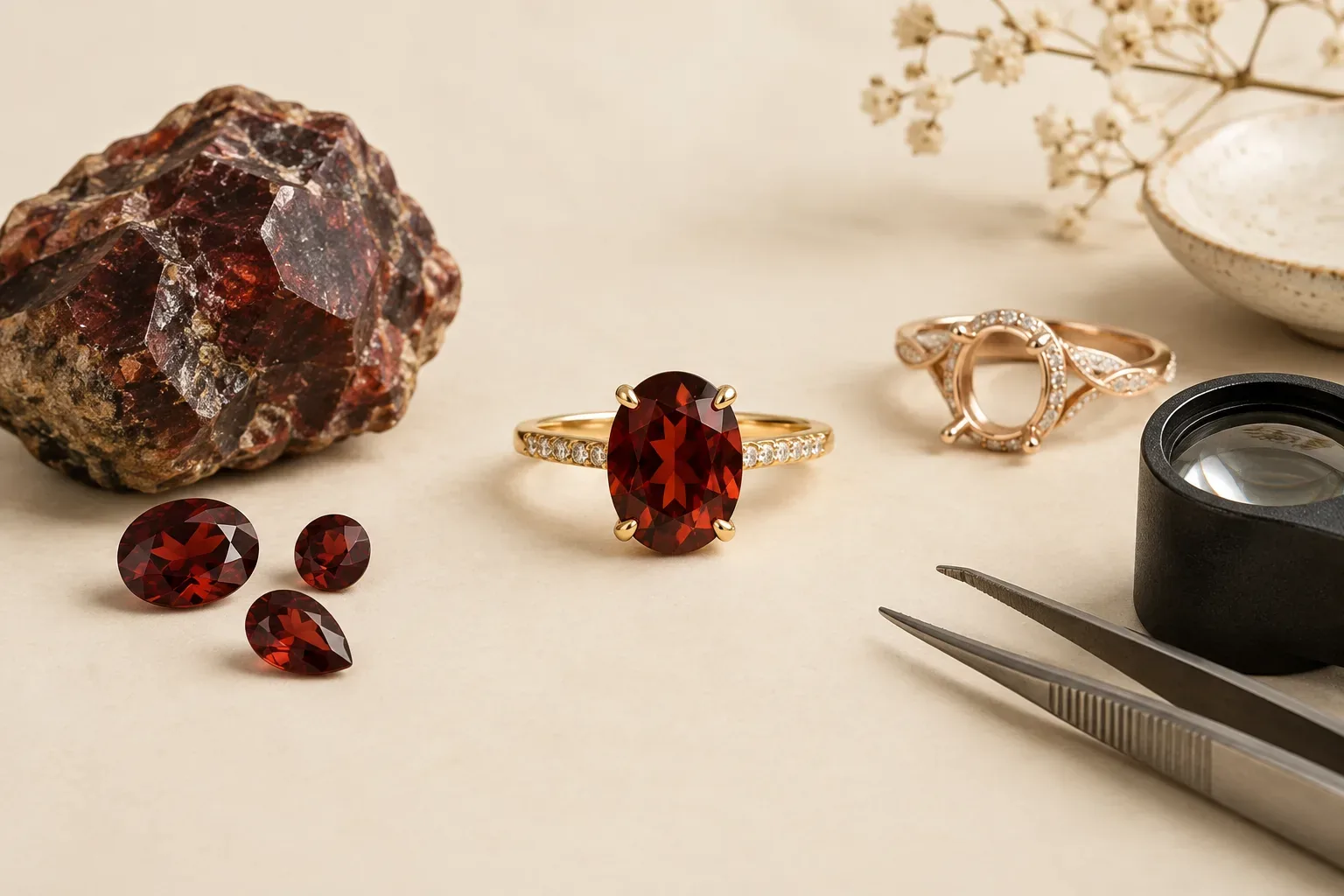
In contemporary jewelry garnet is most familiar in warm red tones, but garnet group minerals include a wider color range that jewelry designers use for different looks. Garnets are cut and set like other transparent colored gemstones: popular presentations include solitaire centers, halo arrangements with accent diamonds or gems, cluster rings (where multiple smaller garnets form a visual motif), and vintage-inspired bezels or closed-back settings.
Design motifs vary by style. A solitaire garnet emphasizes color and cut; a halo or cluster can visually enlarge the center and add sparkle; bezel or low-profile gallery work helps protect the stone from knocks. Contemporary trends show growing interest in colored gemstone engagement rings—industry trend sources note increased consumer demand for gemstone rings and sculptural or vintage-inspired settings—which makes garnet a stylistically current choice.
Suitability: decision criteria and practical trade-offs
When deciding whether a garnet is suitable as an engagement center stone, weigh color preference, durability for daily wear, treatments and disclosure, and budget. Color and saturation are primary aesthetic drivers: choose the hue and intensity you prefer and evaluate the cut for brilliance and face-up color. Because garnets come in a range of hues, prioritize the specific tone you want before other factors.
Durability is a practical trade-off. Buyers should consider how often the ring will be worn daily and whether the setting provides mechanical protection. The Gemological Institute of America highlights that treatments, detectability, durability, and special care create distinct consumer questions for gemstones; follow GIA guidance on durability and care when assessing whether a stone suits everyday wear.
Treatments and origin claims affect value and care. The Federal Trade Commission requires clear seller disclosure about natural, lab-created, treated, and imitation stones. If treatment status, origin, or age materially affects your decision, obtain written disclosures and, when warranted by price or claimed provenance, an independent laboratory report.
Settings and mounting choices that reduce risk
Choose settings that shield the table and girdle of the garnet for everyday wear. Bezel and semi-bezel settings wrap the stone’s edge and offer superior protection against chipping. Low-profile prong settings with secure prongs reduce the chance of catching; a four-prong solitaire shows more stone and can be secure when prongs are sturdy, while a six-prong setting adds redundancy.
If your priority is to emphasize color, a halo of small accent stones can make the garnet appear larger and more brilliant without exposing it to additional impact. For antique or vintage garnet rings, have settings inspected and reinforced by a qualified jeweler before daily wear.
Selection and gifting guidance
When selecting or gifting a garnet engagement ring, start by clarifying the recipient’s style preferences and lifestyle. If the wearer is very active with hands-on activities, choose a protective setting and consider reserving garnet for less exposed styles or for a secondary ring. If they prefer bold color, select a richly saturated garnet and a setting that showcases color over maximum brilliance.
Ask the seller for written details: the gem’s identity, whether it is natural or lab-created, any treatments applied, country of origin claims, and the return policy. The Federal Trade Commission recommends that consumers require clear distinctions among natural, lab-created, treated, cultured, and imitation materials, so treat those disclosures as part of your decision checklist.
For gifts tied to symbolism, explain the modern meaning you intend in a card or conversation rather than relying on unverified historical claims. That keeps the gift personal and respects the difference between sentimental interpretation and documented history.
Care, maintenance, and verification limits
Cleaning and care: follow conservative cleaning methods appropriate for colored gemstones. The Gemological Institute of America notes that treatments, detectability, durability and special care create consumer questions; when cleaning, use mild soap, a soft brush, and avoid ultrasonic or steam cleaners unless a qualified jeweler confirms they are safe for that particular stone and setting. Store the ring separately from harder gems to avoid scratches.
Maintenance: have prongs, bezels and settings inspected annually (or more often if you wear the ring daily) by a reputable jeweler. Re-tipping prongs and re-seating stones are routine preventive measures that extend the life of a garnet ring.
Verification limits: a retail jeweler can perform many useful visual and instrument checks, but absolute confirmation of treatments, origin, and age sometimes requires a recognized gemological laboratory report. Use the laboratory report when the purchase price, claimed rarity, or provenance justifies that expense. The FTC emphasizes written seller disclosures; if a seller refuses written details about identity or treatments, walk away.
Practical summary
Garnet engagement rings are a contemporary and historically resonant option for buyers who want color and value. Make the purchase decision on explicit criteria—color, cut, treatment disclosure, setting protection, and verification level—and follow conservative cleaning and maintenance practices. If provenance or specific treatment information materially affects value or meaning for you, secure written disclosure and a qualified gemological laboratory report before purchase.
Frequently asked questions
Is garnet durable enough for an engagement ring I’ll wear every day?
Garnet can be used for everyday engagement rings, but it is not as hard as the most durable gem options; choose a protective setting (bezel or sturdy prongs) and plan for periodic inspections. For specific durability and treatment-related care, consult a qualified jeweler and follow guidance from gemological authorities such as the GIA.
How can I verify a garnet’s identity and whether it has been treated?
Ask the seller for written disclosures and, for high-value or provenance-sensitive purchases, request an independent gemological laboratory report. The Federal Trade Commission requires clear disclosure about natural, lab-created, and treated gemstones; when in doubt, a recognized laboratory report provides the most reliable verification.
What setting types keep a garnet safer during daily wear?
Bezel and semi-bezel settings provide strong edge protection, while low-profile secure prong settings reduce snagging risk. If you plan frequent manual or outdoor work, a bezel or protected setting is the safer choice.
Can I clean my garnet ring at home?
Use warm soapy water and a soft brush for routine cleaning, and avoid steam or ultrasonic cleaners unless a qualified jeweler confirms they are safe for your specific stone and setting. The GIA recommends conservative cleaning practices for gemstones with uncertain treatment status.
Should I buy a garnet engagement ring online or in person?
Both are possible, but insist on clear written disclosures, a generous return policy, and independent verification for higher-value buys. Market trends show increased online search interest in gemstone rings, yet verification and inspection are easier in person or when a reputable lab report accompanies the online listing.
Sources and further reading
- Imaginaire Digital — Imaginaire Digital
- Professional Jeweller / PRYA Jewellery Search Insights — Professional Jeweller / PRYA Jewellery Search Insights
- Gemological Institute of America — Gemological Institute of America
- Federal Trade Commission — Federal Trade Commission