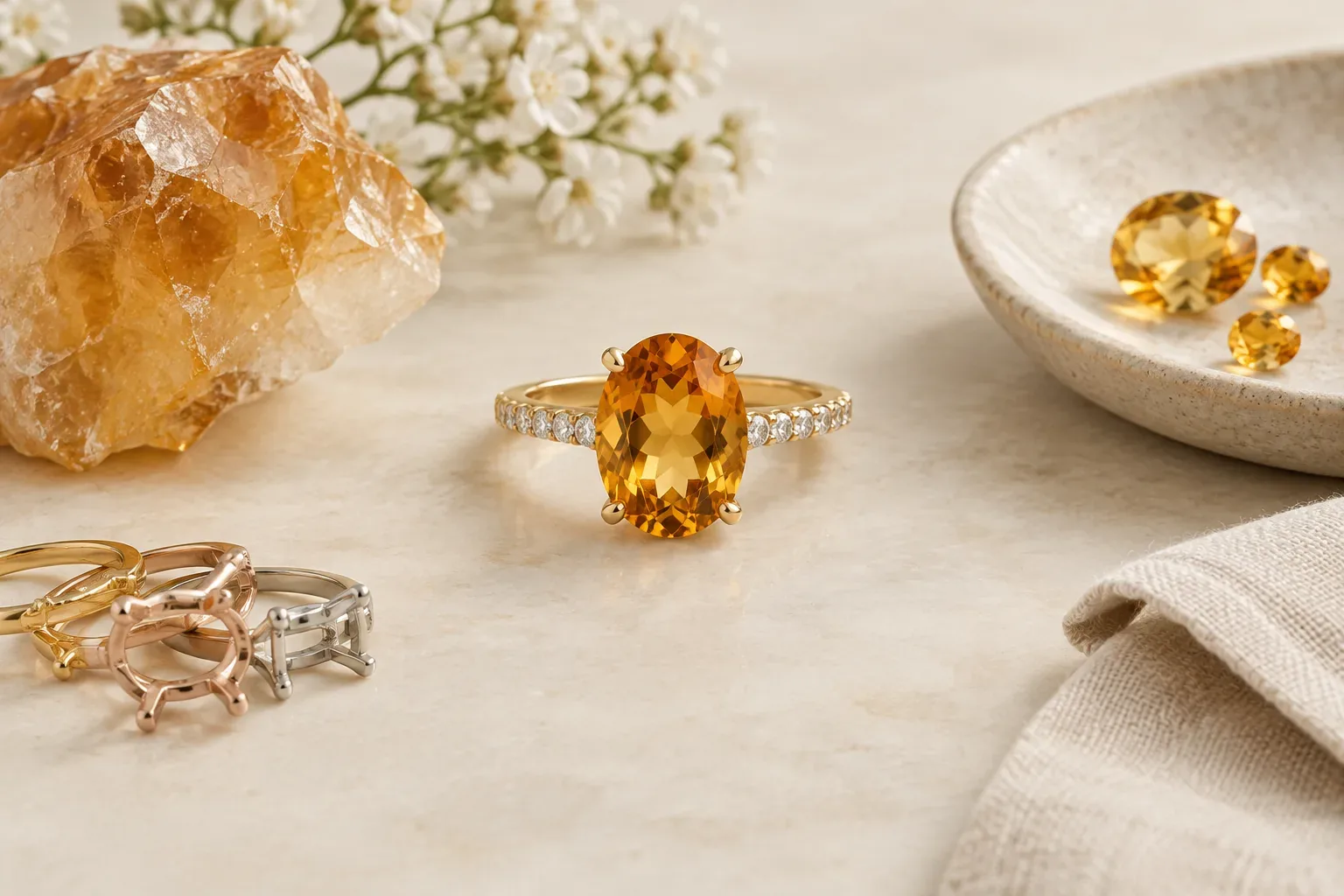
Meaning at a glance
This guide defines when a citrine engagement ring is a suitable choice, compares settings and trade-offs, explains common appearances in jewelry, gives safe care instructions, and clarifies which claims require a jeweler or gem lab to verify.
What the historical evidence shows
Approved sources for this article do not provide robust primary documentation tying citrine specifically to engagement rituals in any single culture or historical period. Contemporary trade and search reports note growing consumer interest in gemstone engagement rings generally, but they do not assert a continuous historical tradition for citrine as an engagement stone. For example, market and trend analyses published by Imaginaire Digital and Professional Jeweller / PRYA Jewellery Search Insights document rising interest in gemstone rings and various period styles in recent years, but they do not claim historical ceremonial use for citrine embedded in marriage practices.
Because the available, approved evidence focuses on modern market behavior and on technical consumer protections rather than ancient practices, any historical narrative connecting citrine to a particular culture or era should be treated cautiously unless it is supported by primary historical research or a specialist publication. This means shoppers and writers should avoid presenting a single historical origin for citrine engagement use as a fact when such documentation is not cited.
Documented meanings versus modern personal interpretations
Documented meanings in the approved sources concern consumer questions about treatments, disclosure and durability rather than symbolic claims about citrine's romantic or spiritual properties. The Gemological Institute of America (GIA) explains why treatments, detectability and durability matter to buyers, and the U.S. Federal Trade Commission (FTC) sets expectations for seller disclosure of natural, lab‑created, treated, or imitation materials. These are verifiable, documented aspects of the modern gemstone market.
Modern personal interpretations—such as assigning citrine a symbolic meaning of prosperity, creativity, or emotional warmth—are widely shared in contemporary popular culture and among buyers and sellers, but they are personal or cultural attributions rather than universal facts. If you or a gift recipient place meaning on citrine, treat that as a personal symbol rather than a documented, historically uniform meaning.
How citrine appears in jewelry and common settings
Citrine commonly appears as faceted oval, round, cushion and emerald cuts in rings, where its warm yellow to amber hues are the primary visual appeal. Jewelers set citrine in a range of metals, including sterling silver, yellow gold and rose gold, often pairing it with accent diamonds, white sapphires or decorative metalwork to balance color and perceived value. Contemporary trend reporting from Professional Jeweller highlights growth in gemstone rings and sculptural settings, which helps explain why citrine features in both simple solitaire styles and more ornate cluster or Art Deco–inspired rings.
Because citrine is typically less expensive per carat than diamond or sapphire, designers often use larger stones or creative settings to make a visual statement while keeping overall cost lower. Protective settings—such as bezel or halo designs—are commonly used when the goal is daily wear, while open prong settings emphasize color and light return at the expense of some protection.
Suitability and decision criteria: what to weigh
Decide first whether aesthetic priorities or long‑term technical concerns are paramount. If warm yellow‑to‑orange color, budget efficiency, and a distinctive look are the main goals, citrine is an excellent candidate. If maximum hardness, long‑term resale value, or absolute chip resistance are top priorities, corundum (sapphire) or a diamond remain superior technical choices.
Evaluate the following trade‑offs when choosing a citrine engagement ring. Color and size deliver immediate visual impact but larger stones expose more surface area to potential knocks. Setting choice affects protection: bezel and low‑profile settings reduce the risk of chipping, while high prong settings showcase light performance. Metal selection influences aesthetics and wear patterns; harder metals such as platinum or 18K gold can offer stronger claws and settings than softer metals. Finally, confirm any treatments (for example, heat treatment) and ask for documentation because treatments affect both appearance and care requirements.
Practical and respectful selection or gifting guidance
Begin by discussing style preferences and lifestyle. Ask whether the wearer uses their hands for manual work, sports, or activities that increase the risk of impact. If daily, active wear is expected, choose a protective setting and consider a smaller stone or a center stone surrounded by a bezel or halo. If the ring is intended for occasional or symbolic wear, open settings and larger carat weights can be appropriate.
When gifting, be explicit about expectations for alteration or exchange. Many buyers want the option to have a ring resized or upgraded later; confirm resizing policies, whether the metal and setting allow resizing, and what warranties or service plans are offered. Respect cultural preferences about engagement symbols; because meanings and customs differ by community, ask gently if there are expected stones, metals or styles rather than assuming a choice is universally appropriate.
Care, maintenance, and safe cleaning
Follow conservative care practices: clean citrine jewelry with warm water, mild dish soap and a soft brush, and dry with a soft cloth. Avoid high‑heat steam cleaning and ultrasonic cleaners unless the seller or a qualified gemologist confirms the specific stone and any treatments are stable under those conditions. The Gemological Institute of America emphasizes that treatments and durability influence appropriate care and that buyers should seek guidance for treated stones.
Store citrine rings separately from harder gemstones and metal edges to reduce abrasion risk and inspect the setting periodically for loose claws or chips. For any repair, sizing or suspected damage, consult a qualified jeweler rather than attempting home repair.
Verification: what only a jeweler or a gemological laboratory can confirm
There are limits to what a buyer can verify visually. Only a qualified gemological laboratory can reliably distinguish natural citrine from heat‑treated amethyst that has been altered to produce yellow tones, or from certain synthetic or imitation materials. Sellers must disclose treatments and origins under FTC guidance, but independent laboratory reports provide scientific confirmation and are the strongest evidence of identity and treatment.
A trained jeweler can assess mounting security, recommend protective settings, and often identify obvious imitations or damage. For claims about long‑term durability, treatment stability, or material origin, request a written report from an accredited gem lab and ask the seller to disclose any known treatments in writing before purchase.
Final practical checklist before you buy
Before completing a purchase, obtain clear written disclosures that name whether the stone is natural, lab‑created, heat‑treated, or an imitation. Ask for photographs of the actual stone in the proposed setting, inquire about resizing and return policies, and confirm warranty or service options. If certification is important to you, request a gemological report from an accredited lab. Treat market trend recommendations and stylistic inspiration from trade publications as guidance rather than proof of historical or cultural significance.
Frequently asked questions
Is citrine durable enough for an engagement ring worn every day?
Citrine is a commonly used gemstone for rings, but it is not as hard or as chip‑resistant as corundum (sapphire) or diamond. For everyday wear choose protective settings such as bezels or low profiles and inspect the setting regularly. Ask a qualified jeweler about durability for your specific lifestyle and confirm any treatments that may affect toughness.
How can I tell if a citrine is natural or heat‑treated?
Determining whether citrine is natural or heat‑treated, or whether it is lab‑created or an imitation, generally requires gemological testing. The Federal Trade Commission requires sellers to disclose treatments and origin, but for scientific confirmation ask for a report from an accredited gem laboratory.
Are citrines commonly treated and does that matter?
Treatments such as heat alteration are common in many colored gemstones to enhance color. The Gemological Institute of America stresses that treatments affect detectability, care, and value. Ask the seller for written disclosure about any treatments and follow care instructions accordingly.
What cleaning methods are safe for citrine rings?
Safe cleaning usually involves warm soapy water and a soft brush. Avoid steam or ultrasonic cleaning unless a qualified jeweler or the stone's certification confirms the particular citrine and any treatments are safe with those methods. When in doubt, rely on conservative cleaning and professional servicing.
Should I get a laboratory report for a citrine engagement ring?
If identity, origin, or treatment status matters to you—either for insurance, resale, or personal assurance—request a gemological report from an accredited laboratory. Sellers must disclose known treatments under FTC guidance, but a lab report provides independent verification.
Sources and further reading
- Imaginaire Digital — Imaginaire Digital
- Professional Jeweller / PRYA Jewellery Search Insights — Professional Jeweller / PRYA Jewellery Search Insights
- Gemological Institute of America — Gemological Institute of America
- Federal Trade Commission — Federal Trade Commission