Meaning at a glance
For routine cleaning of amethyst jewelry, the safest approach is mild dish soap, warm water, a soft brush, and careful drying; avoid harsh chemicals and consult a qualified jeweler before using ultrasonic or steam cleaners, or if the stone is antique, treated, or mounted in fragile settings.
Direct answer — concise guidance to the search intent
If you searched for an amethyst cleaning guide, the practical answer is this: clean most amethyst jewelry with a soft brush, warm water and a mild detergent, rinse thoroughly, and dry with a lint-free cloth. Avoid strong chemicals and abrasive cleaners and do not use steam or ultrasonic cleaning unless a qualified jeweler has inspected the stone and setting for treatments, fillings, fractures or insecure mounting. For purchases or gifts, ask the seller for written disclosures about treatments or origin and, when in doubt, request a professional inspection or lab report.
What the approved evidence does—and does not—say about history
The approved sources for this article emphasize consumer questions about treatments, disclosures and market trends rather than detailed ancient history. The Gemological Institute of America (GIA) focuses on treatments, disclosure and durability considerations for gemstones, which directly affect cleaning choices. The Federal Trade Commission (FTC) guidance is about clear seller disclosures for gemstones and treatments. Professional Jeweller and Imaginaire Digital report on modern market and search trends for jewelry categories and birthstone demand, which is relevant when choosing and gifting amethyst today.
Because the approved sources do not provide primary historical records about amethyst’s cultural meanings in specific antiquities or medieval contexts, this article does not assert precise historical beliefs or dates about amethyst use in particular cultures. If you need documented historical claims about amethyst in a named culture or period, consult specialized historical or archaeological publications and primary sources rather than the consumer- and trade-focused sources cited here.
Documented historical meanings versus modern personal interpretations
Documented historical meanings require primary or scholarly sources that record how a culture described a gemstone. The approved evidence set for this article does not include those primary historical sources, so this guide does not present specific historical meanings as proven facts.
Modern personal interpretations and market meanings are visible in trade reporting and consumer behavior. Professional Jeweller’s trend reporting and Imaginaire Digital’s market search analysis show renewed interest in birthstone jewelry, gemstone rings and sculptural styles. Those modern trends influence how people choose amethyst today and how sellers position it for gifts, but they are not the same as verified historical symbolism.
How amethyst commonly appears in jewelry today
In contemporary jewelry, amethyst is used in rings, necklaces, earrings and bracelets and is often featured as a colored center stone, accent stone or in clusters. Trade reporting from Professional Jeweller highlights growth in gemstone rings and birthstone necklaces as categories, and Imaginaire Digital’s search analysis indicates ongoing consumer demand for gemstone and birthstone styles. These market signals explain why amethyst is frequently offered as an affordable purple option in many modern settings.
Manufacturers and retailers may offer natural, lab-created, treated or imitation amethyst or quartz alternatives. Because treatments and origin can affect appearance and durability, the GIA’s guidance on treatments and the FTC’s emphasis on disclosure are relevant to shoppers wanting to understand exactly what they are buying.
Safe cleaning methods — step-by-step, with decision checkpoints
Step 1 — Inspect the piece: Before any cleaning, examine the setting and stone. If the amethyst has visible cracks, loose prongs, glued settings, opaque fillings or looks antique, stop and seek a jeweler’s advice. These conditions change what cleaning methods are safe.
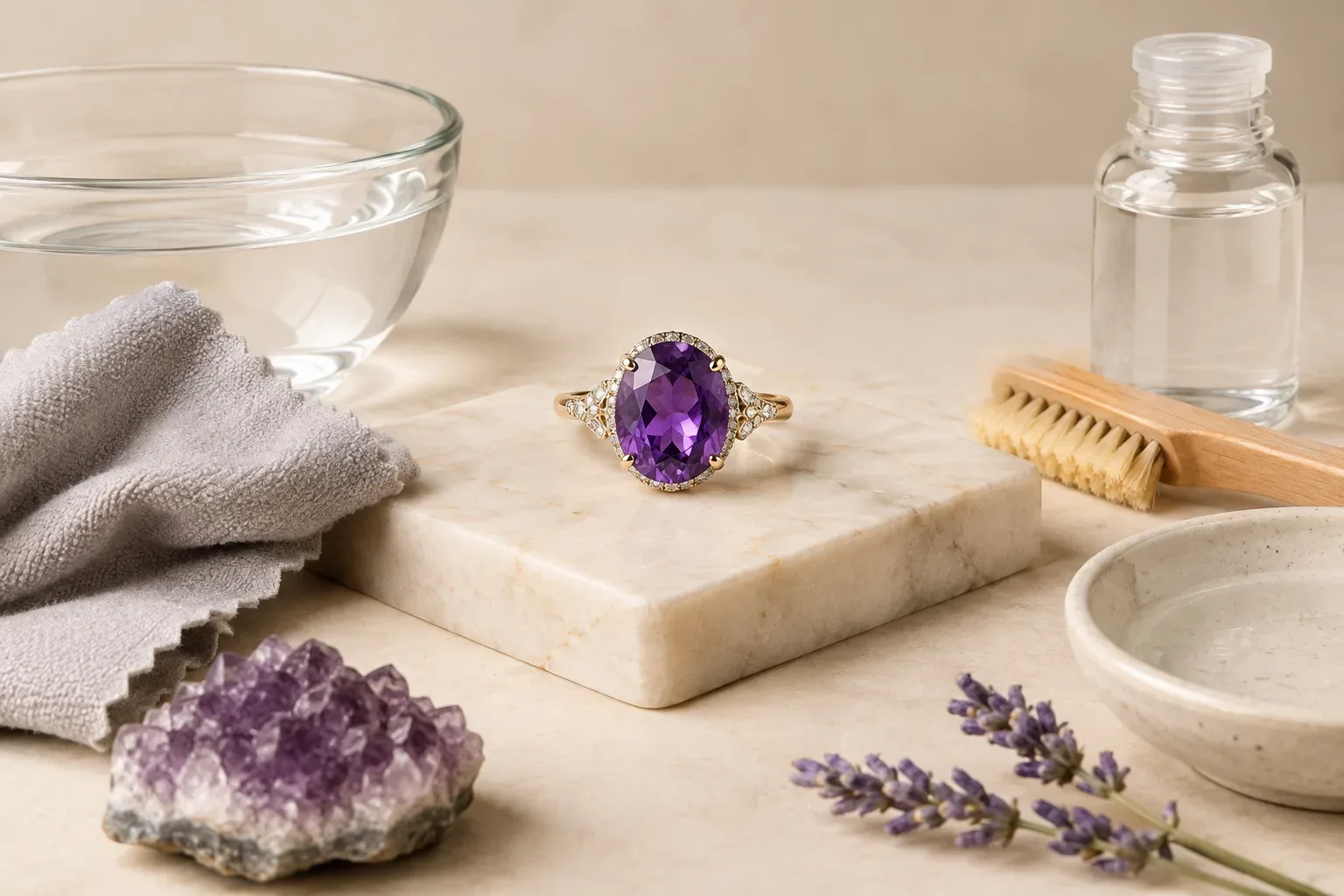
Step 2 — Use mild cleaning for routine care: Prepare a bowl of warm water with a drop or two of mild, phosphate-free dish soap. Gently brush the stone and setting with a soft brush (for example, a soft toothbrush) to remove oils and surface dirt. Rinse under a gentle stream of warm water to remove soap residue and pat dry with a clean, lint-free cloth.
Step 3 — Clean the setting, not just the stone: Dirt often accumulates under and around a stone. Rotate the jewelry gently under the cleaning solution and use the soft brush to reach the setting. Avoid forcing water into hollow or glued areas.
Step 4 — Frequency and routine maintenance: For pieces worn often, a weekly gentle wash and periodic professional cleaning every 6–12 months is reasonable. For infrequently worn or antique pieces, less frequent cleaning and professional inspection is safer.
Step 5 — Storage between cleanings: Store amethyst separately from harder gemstones and metals that could scratch it. Keep jewelry in soft pouches or lined boxes to minimize exposure to dust, sunlight and chemical vapors from cosmetics or household cleaners.
What to avoid — clear limits and trade-offs
Avoid harsh chemicals and household cleaners. Bleach, ammonia, oven cleaners and other aggressive agents can damage the stone, the setting or any adhesives used in the piece. The FTC’s guidance about proper disclosure underscores that you should know whether a stone has been treated or assembled before exposing it to chemicals.
Avoid steam and ultrasonic cleaning until you have confirmation that the stone and setting are stable. The GIA’s treatment and durability guidance makes clear that treatments and internal fractures change whether high-energy cleaning methods are appropriate. If you cannot verify that a stone is untreated and free of internal fissures, do not use ultrasonic or steam cleaners.
Avoid rough abrasion and hard scrubbing. Even if amethyst is relatively hard compared with organic gems, abrasive cleaners and aggressive scrubbing can dull polish and damage delicate settings. Also avoid prolonged direct sunlight or intense heat exposure for long-term storage, and check with a professional if the stone shows color changes after heat.
Decision criteria: how to choose the right care for your amethyst
Consider these factors when choosing a cleaning method: the setting type (prong, bezel, glued), the apparent condition of the stone (cracked, chipped, filled), whether the piece is antique or modern, and whether the seller disclosed treatments or enhancements. When any of these raise concerns, preference should be given to conservative, low-risk cleaning and to a professional inspection.
Trade-offs: Professional cleaning can be pricier and requires time, but it reduces risk for valuable or uncertain pieces. At-home cleaning is inexpensive and effective for stable, disclosed pieces but carries a small risk if treatments or internal damage are present. Use the GIA and FTC guidance to prioritize disclosure and verification before deciding how aggressive to be with cleaning.
Selection and respectful gifting guidance
If you are selecting or gifting amethyst jewelry, ask the seller for written disclosures about whether the stone is natural, lab-grown, treated, or an imitation. The FTC’s consumer guidance emphasizes the importance of these disclosures for informed buying. For a gift intended for everyday wear, prioritize securely set stones and durable mountings over purely decorative but fragile designs.
When buying on trend or for a symbolic reason, consult trade reporting to understand current styles. Professional Jeweller and Imaginaire Digital note strong consumer interest in birthstone necklaces and gemstone rings; if the recipient values trend relevance, choose a reputable retailer who provides clear product information and return policies. For heirloom or antique-style pieces, consider professional appraisal and gentle care instructions included with the gift.
When you need a jeweler or gemological laboratory
You will need a qualified jeweler or a gemological laboratory report to verify treatments, confirm whether an amethyst is natural or lab-created, or identify fills or stabilizing adhesives. The GIA explains that treatments, detectability and disclosure affect both value and care. The FTC also recommends that sellers provide clear written information.
Seek professional advice before using steam or ultrasonic cleaners, before polishing or re-tipping prongs, and before exposing an unknown or antique amethyst to any chemical. A professional inspection can flag invisible damage that would make otherwise safe methods risky.
Quick routine care checklist
Wipe amethyst jewelry with a soft cloth after wearing to remove oils. Clean with mild soap and warm water and a soft brush for routine maintenance. Rinse and dry carefully and store away from harder stones and heat sources. Request written treatment or origin disclosures when buying or accepting a gift. Consult a qualified jeweler or laboratory for verification or before using steam or ultrasonic machines.
Frequently asked questions
Can I use an ultrasonic cleaner on amethyst?
Only after a qualified jeweler confirms the stone is intact and free of fractures, fills or uncertain treatments. The GIA advises caution with high-energy cleaning methods because treatments and internal damage change what is safe.
Is steam cleaning safe for amethyst jewelry?
Do not steam clean unless a professional has inspected the piece. Steam can force water into cracks, affect certain treatments or harm fragile settings, so inspection is recommended first.
How often should I clean my amethyst jewelry at home?
For pieces you wear regularly, a gentle cleaning with mild soap and warm water about once a week and a professional inspection every 6–12 months is a practical routine. For occasional or antique pieces, clean less frequently and seek professional care.
How can I tell if an amethyst has been treated or is lab-created?
You cannot reliably determine treatments or origin by sight alone. The FTC recommends asking the seller for written disclosures, and the GIA notes that a qualified laboratory report is needed to confirm treatments or origin.
What should I avoid when storing amethyst jewelry?
Avoid prolonged direct sunlight, extreme heat, exposure to chemical vapors from cleaners or cosmetics, and contact with harder stones that could scratch the surface. Store pieces separately in soft pouches or lined boxes.
Sources and further reading
- Imaginaire Digital — Imaginaire Digital
- Professional Jeweller / PRYA Jewellery Search Insights — Professional Jeweller / PRYA Jewellery Search Insights
- Gemological Institute of America — Gemological Institute of America
- Federal Trade Commission — Federal Trade Commission