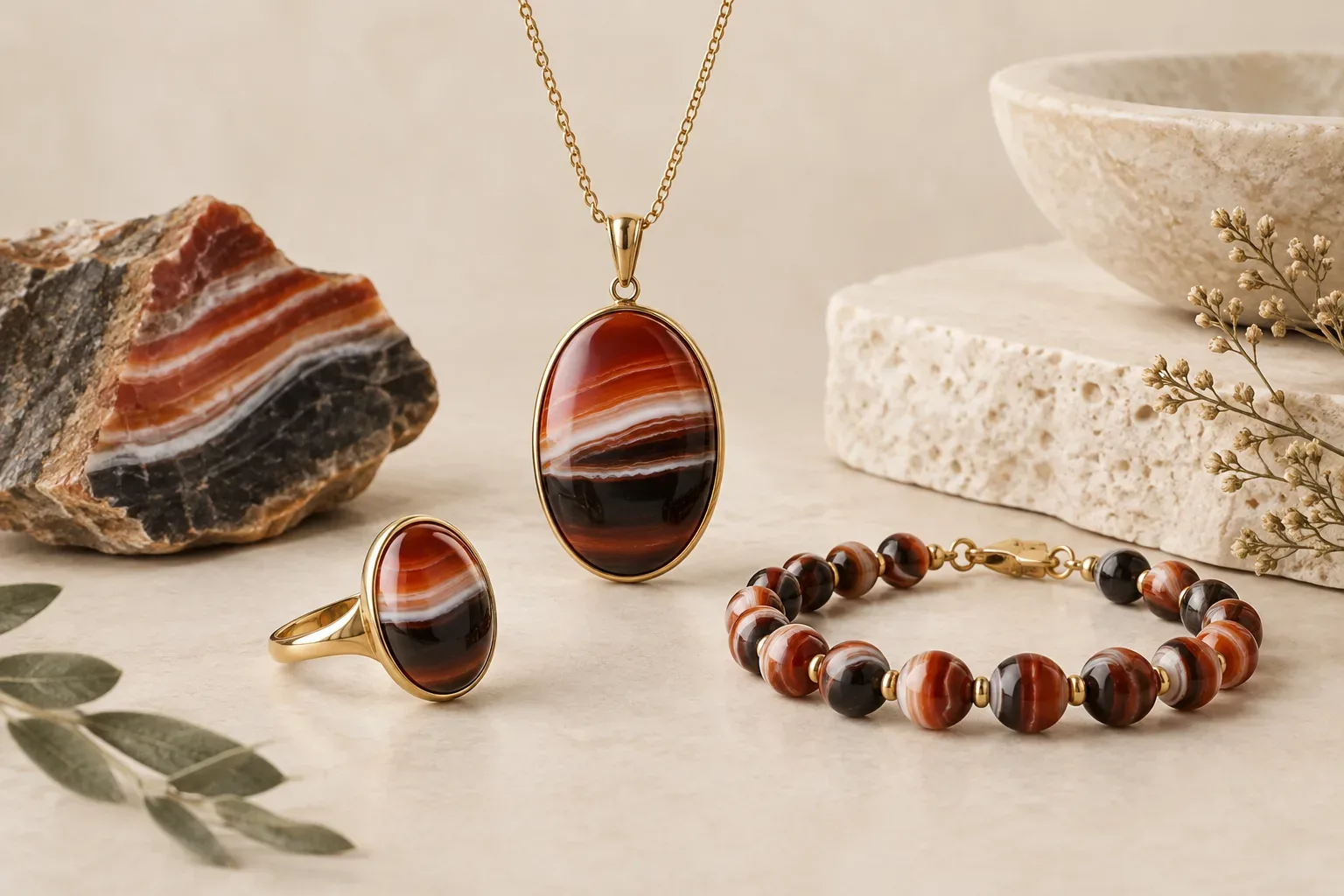
Meaning at a glance
Sardonyx is a banded variety of chalcedony that combines sard (reddish-brown) and onyx (usually black) layers; documented uses include ancient carved cameos and beads, and it is associated with the August birthstone tradition, while modern interpretations (for example, of confidence or stability) are personal or contemporary rather than historically universal.
What sardonyx is and why the bands matter
The term sardonyx describes chalcedony with alternating layers of sard and onyx. Sard contributes reddish-brown tones and onyx provides darker bands, creating the striping that makes the material visually striking. The layered structure is an intrinsic physical feature of the stone and is what jewelry designers exploit when cutting cameos, intaglios, cabochons, or inlay pieces.
Documented historical use — what the evidence says
Published gemological summaries attribute the carved and banded uses of sardonyx to ancient gem traditions. The Gemological Institute of America (GIA) notes that banded chalcedony varieties, including sardonyx, appear in historical jewelry and carving practices across ancient Mediterranean societies, where artisans used the layered colors for cameos and engraved gems.
Those historical uses were primarily decorative and functional: craftsmen took advantage of the contrasting layers to produce portraits, religious motifs, seals, and signet impressions. The recorded evidence in gemological literature emphasizes technique and appearance rather than a single consistent spiritual or cultural meaning applied across different peoples.
Separating documented meanings from modern interpretations
When discussing 'meaning' it is important to separate what is documented in historical sources from what people attribute to sardonyx today. GIA and other gemological authorities document the material characteristics, historical uses in carving, and its place in birthstone lists; they do not establish universal metaphysical properties.
Modern symbolic statements—such as claims that sardonyx universally confers courage, confidence, or long-term stability—are contemporary or personal interpretations. These contemporary meanings can be meaningful to wearers and gift-givers, but they are not the same as historically documented functions like sealing documents or serving as portrait cameos.
Sardonyx and birthstone tradition
In modern birthstone lists, sardonyx appears in association with August in some contemporary compilations. The Gemological Institute of America includes sardonyx when describing birthstone options linked to that month. This placement in birthstone tradition is a modern convention rather than evidence of an ancient, universally observed practice assigning a single gemstone to each month.
How sardonyx appears in jewelry today
Jewelry uses the banding of sardonyx in predictable artistic ways. Carvers orient the layers so that a cameo's subject contrasts with its background, using the darker and lighter bands to create relief. Jewelers also use sardonyx as cabochons, beads, intaglios, and inlay because the bands can add graphic linear interest to a piece.
Design choices often hinge on band orientation and contrast. A well-cut sardonyx cameo will show neatly layered colors and careful carving; a clean cabochon will emphasize symmetrical banding. Because the bands are part of the stone, settings that expose or frame the striping—such as bezel settings or open-back pendants—are common to showcase its layered look.
Buying sardonyx: quality, disclosure, and practical tips
When selecting sardonyx, prioritize strong, even banding and a good contrast between sard and onyx layers: cleaner, well-defined bands generally make more visually striking carvings or stones. Look for smooth surface finish and well-executed carving if you are buying a cameo or intaglio.
Ask sellers about treatments, imitations, and origin. The U.S. Federal Trade Commission advises consumers to request clear disclosure about whether a gem is natural, lab-grown, treated, or an imitation. That guidance applies to chalcedony varieties like sardonyx: full transparency about enhancements and whether components have been dyed, assembled, or otherwise modified matters for both value and care.
If the piece is being purchased as a birthstone or symbolic gift, confirm that the recipient values that association. Because modern symbolic meanings vary by individual and culture, a short conversation can avoid unintentionally imposing a meaning the recipient may not share.
Caring for sardonyx jewelry
Gemological care guidance applicable to chalcedony varieties emphasizes routine cleaning, safe storage, and periodic professional inspection. The Gemological Institute of America recommends gentle cleaning with mild soap and water, careful drying, and storing pieces separately to avoid scratches and knocks.
Avoid exposing sardonyx to harsh chemicals, abrasives, or extreme temperature changes. If a piece is a carved or assembled artifact (for example, a cameo mounted over a backing), have a jeweler inspect settings and adhesives periodically. When in doubt about ultrasonic or steam cleaning, consult a professional jeweler; those methods can be inappropriate for certain carvings, settings, or treated stones.
Selection and gifting guidance—practical and respectful
Choose a design that reflects the recipient’s aesthetic and cultural sensibilities. A classical carved cameo might suit someone who appreciates historical forms; a modern, minimalist setting could better fit someone who prefers contemporary jewelry. Think about proportion and lifestyle: a ring worn daily should have secure settings and low-profile design, while a pendant or brooch may show off larger carvings safely.
Be mindful of cultural meanings and personal associations. Not every culture views specific stones or motifs the same way, and what feels meaningful in one context can be neutral or inappropriate in another. If the gift is meant to convey a particular sentiment, explain your intention in a card or conversation rather than relying solely on assumed gemstone symbolism.
Request honest documentation and return policies. Follow the FTC’s advice to seek full disclosure about treatments and any guarantees the seller provides. A clear receipt describing materials and any treatments helps preserve the gift’s value and the recipient’s ability to care for it.
When to see a professional
If you suspect a stone has been altered, if a cameo or setting looks unstable, or if you want an appraisal for insurance, consult a qualified jeweler or gemological laboratory. Professional advice is useful for verifying authenticity, confirming whether repair or conservation is needed, and recommending appropriate cleaning or restoration methods.
Frequently asked questions
Is sardonyx the same as onyx?
Sardonyx is a banded variety of chalcedony that combines sard (reddish-brown) and onyx (darker) layers; while related to onyx by its banding, the term sardonyx specifically refers to the combined sard and onyx layering rather than plain onyx alone.
Is sardonyx a birthstone?
Sardonyx appears among modern options associated with August in contemporary birthstone lists; the Gemological Institute of America includes it when describing August birthstone choices.
How should I clean sardonyx jewelry?
Follow general gem-care guidance: clean with mild soap and water, dry carefully, store pieces separately to avoid scratches, and consult a professional before using ultrasonic or steam cleaning—GIA recommends professional inspection for delicate or assembled items.
Can sellers legally hide treatments or imitations?
No. The Federal Trade Commission advises consumers to seek clear disclosure about whether gems are natural, lab-grown, treated, or imitations; reputable sellers provide this information up front.
What should I look for when buying a sardonyx cameo?
Look for clear, well-contrasted bands oriented to enhance the carving, a crisp carving execution, secure mounting, and written disclosure about any treatments or assembly.
Sources and further reading
- August Birthstones: Peridot, Spinel, and Sardonyx — Gemological Institute of America
- Buying Gemstones, Diamonds, and Pearls — Federal Trade Commission
- Tips on Caring for Jewelry — Gemological Institute of America